Menu & categories

Goulash

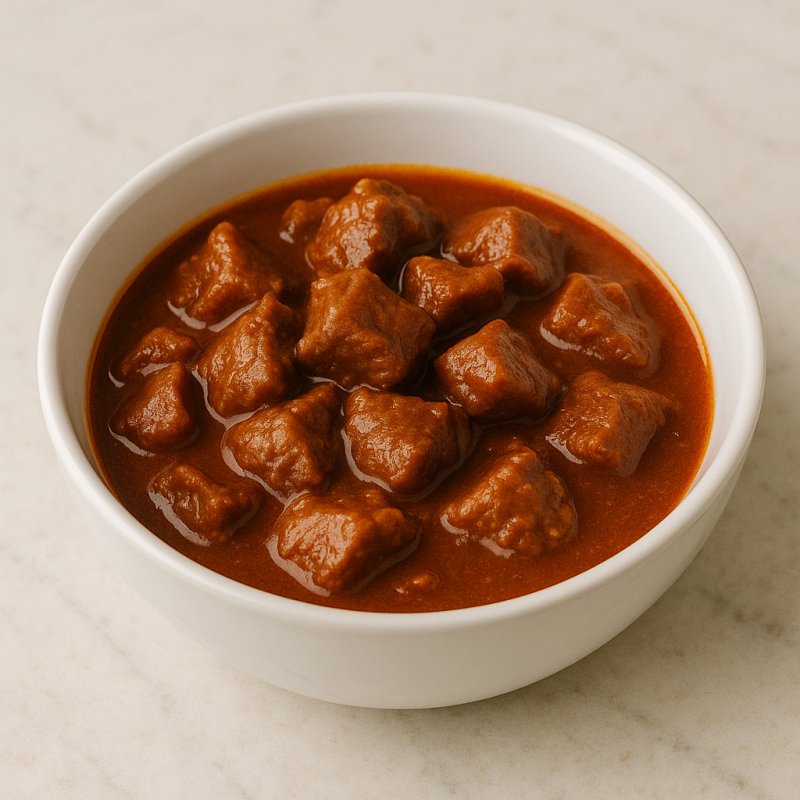
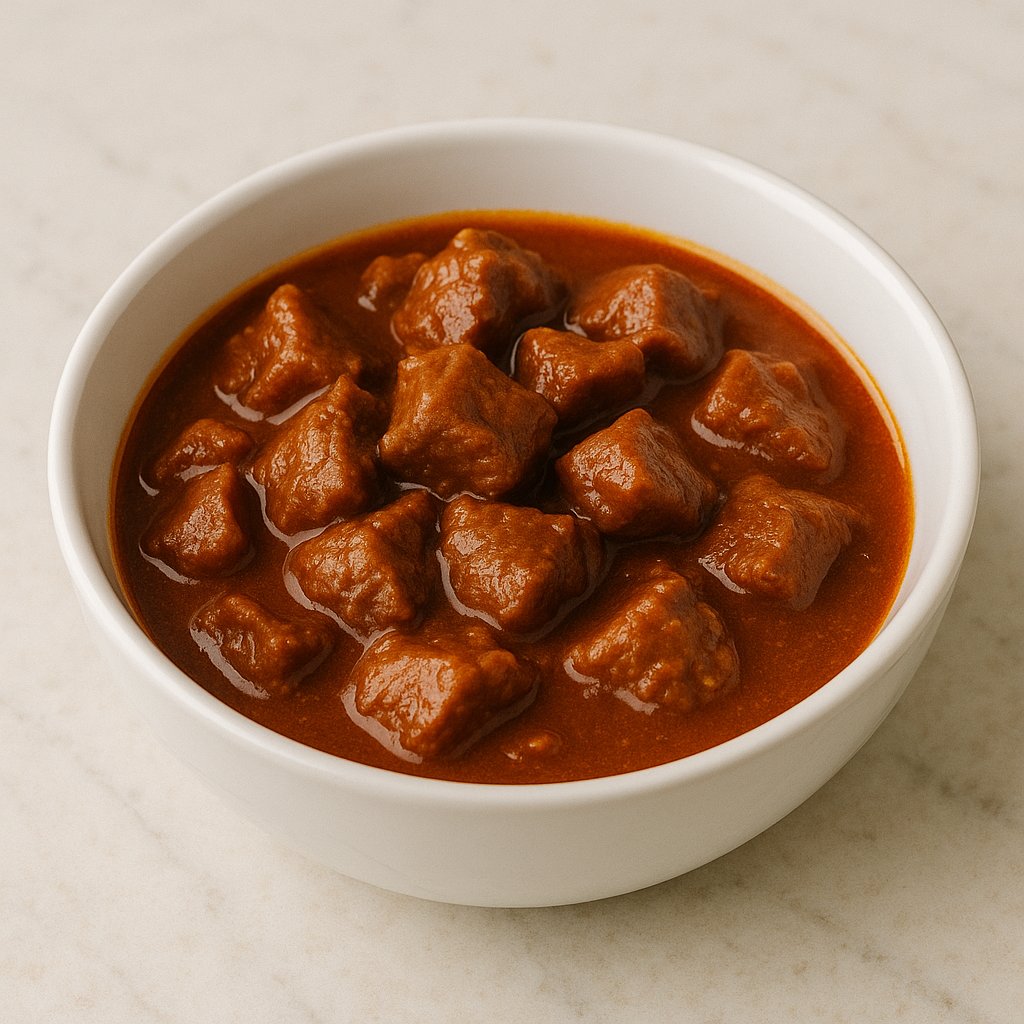
Hearty beef dish

Wiki about goulash Nutri-Score C Vegan No Gluten-free Yes Lactose-free Yes Nut-free Yes
NUTRITION / 100 g
150 kcal 22 g Protein 5 g Kohlenhydrate 7 g Fett

Introduction

A plate of steaming goulash
I still remember well the first times I made goulash myself. It was an exciting time when I tried to recreate my grandmother's cooking, whose goulash was a true masterpiece. With a steaming pot full of aromatic meat and a perfectly balanced spice mixture, she always managed to bring a piece of home to the table. Goulash is not just a dish; it is a culinary hug that carries memories and traditions.

Goulash has its roots in Hungarian cuisine, but I found that every region has its own variant. Whether as a hearty beef goulash, a tender pork goulash, or even a vegetarian version with vegetables and legumes – the possibilities are almost endless. A colleague of mine from Budapest often talks about how his mother makes the perfect paprika goulash that fills the whole room with an enticing aroma. I can only imagine his family's faces as they gather around the table waiting for the first bite.

Preparing goulash is a true feast for the senses. You start by browning onions and meat cut into large pieces. The smell of onions browning is simply irresistible. Then the spice mix comes into play: paprika, caraway and sometimes a touch of garlic – they give the dish its distinctive note. I vividly remember the moment I used fresh paprika for the first time. It was as if I had taken the recipe to a whole new level.

An important tip I always pass on is that goulash needs time. The longer it simmers, the better the flavors become. When I cook with friends, I like to explain that goulash is really a dish of patience. Often I put a large pot on the stove and invite everyone to cook with me. We spend hours preparing the ingredients and exchange stories in the meantime. In the end the whole group sits around the table, and the goulash steams invitingly in the middle.

For me goulash is not just a recipe but an invitation to celebrate life. It brings people together; it is a dish that spreads warmth and joy. Whether you enjoy it in a restaurant or cook it at home, goulash is always a good idea. The next time you plan a cozy meal, think of this wonderful dish. It will enchant you and your guests!

Availability & types

Goulash is a tasty dish that is especially popular in Hungary. It is made from meat, onions and various spices. But what makes goulash so special? It is not just the recipe, but also the ingredients that make goulash so delicious. In this section we will take a closer look at the availability and the types of ingredients for goulash.

The most important ingredient for a good goulash is the meat. Traditionally beef is used, but you can also use pork or lamb. Beef is particularly popular because it becomes tender and juicy when cooked. If you go to the supermarket, you will find different cuts of beef that are suitable for goulash. These include:

  • Brisket: This cut has a lot of connective tissue and becomes very tender with slow cooking.
  • Chuck/Shoulder: Another cut that is well suited because it has a lot of flavor.
  • Beef tenderloin: This cut is very tender but also more expensive. It is often used for fine dishes.
Now let's look at the origin of goulash. Originally goulash comes from Hungary and there it is often seasoned with paprika. Paprika is a red spice that gives goulash a nice color and a delicious flavor. In Hungary goulash is often very thick and almost like a stew. In other countries, such as Germany, goulash can be a bit more liquid.

The growing regions for the ingredients are very important because they determine the quality of the food. For example paprika is grown in many countries, but the best quality often comes from Hungary or Spain. You can also find different varieties of paprika suitable for goulash. These include:

  • Sweet paprika: This variety has a mild, sweet flavor and is perfect for goulash.
  • Smoked paprika: This variety has a distinctive smoky flavor and gives the goulash an interesting note.
But goulash is not made of meat and paprika alone. You also need onions, which give the dish a sweet note. Onions are grown in many countries and are available all year round. When you buy onions you can choose between different varieties, for example:

  • Yellow onions: These are the most commonly used onions for goulash.
  • Red onions: They are a bit milder in taste and give the dish a nice color.
There are also many variants of goulash. In some regions goulash is prepared with potatoes or carrots, while other recipes simply include more spices. Sometimes a splash of wine is added to intensify the flavor.
Details & nutrition

Property Value
Unit g
Calories per 100 150
Protein per 100 22
Carbohydrates per 100 5
Sugar per 100 1
Fat per 100 7
Saturated fat per 100 3
Monounsaturated fat 2
Polyunsaturated fat 1
Fiber per 100 0
Vitamin C (mg) per 100 0
Vitamin D (IU) per 100 0
Calcium (mg) per 100 10
Iron (mg) per 100 2.5
Nutri-Score C
CO₂ footprint 2.5
Origin EU
Gluten-free Yes
Lactose-free Yes
Nut-free Yes
Vegan No
Note Goulash is a traditional dish often prepared with paprika and onions.

Technical & scientific information

Goulash is a traditional dish that originated mainly in Hungarian cuisine but is also widespread in many other countries in various variations. It is a stew typically made from meat, onions, paprika, tomatoes and spices. The preparation of goulash can vary by region and preference, with the most common meats being beef, pork or lamb.

Chemical composition and ingredients

The main components of goulash are the following:

  • Meat: Beef is the most common choice because it becomes tender with slow cooking. It contains proteins, iron, zinc and B vitamins, which are essential for the human body.
  • Onions: They contribute not only to taste and aroma but also contain antioxidants, vitamins (such as vitamin C) and minerals.
  • Paprika: Paprika is a characteristic spice in goulash and provides capsaicin, which has anti-inflammatory properties, as well as vitamin A and C.
  • Tomatoes: Tomatoes are rich in lycopene, an antioxidant that has been associated with various health benefits.
  • Spices: Typical spices in goulash are caraway, marjoram and pepper, which enhance both the flavor and the health benefits of the dish.
Nutritional values

The nutritional values of goulash can vary greatly depending on the recipe. In general, one portion of goulash (approx. 250 g) contains the following nutrients:

  • Calories: About 300 to 500 kcal, depending on the type of meat and the ingredients used.
  • Protein: Approx. 25 to 35 g, depending on the meat content.
  • Fat: Approx. 15 to 25 g, with the fat content influenced by the choice of meat.
  • Carbohydrates: Goulash typically has a low carbohydrate content, unless sides such as potatoes or noodles are added.
Processing methods

The preparation of goulash usually takes place in several steps:

  1. The meat is cut into cubes and browned to develop roasted flavors.
  2. Onions are added and fried together until they are golden brown.
  3. Paprika and other spices are added to intensify the flavors.
  4. Tomatoes and liquid (e.g., broth or water) are added to form the stew.
  5. The goulash is then slowly braised, often for several hours, to achieve a tender texture.
Health aspects

Goulash can be a nutrient-rich meal when prepared with fresh, high-quality ingredients.

Wiki entry for: goulash
Active now: 20 visitors of which 2 logged-in members in the last 5 minutes