Menu & categories

Giotto balls

Hazelnut pralines with a crispy wafer shell

Wiki about Giotto ball Nutri-Score E Vegan No Gluten-free No Lactose-free No Nut-free No
NUTRITION / 100 g
540 kcal 8.0 g Protein 50.0 g Kohlenhydrate 33.0 g Fett

Introduction

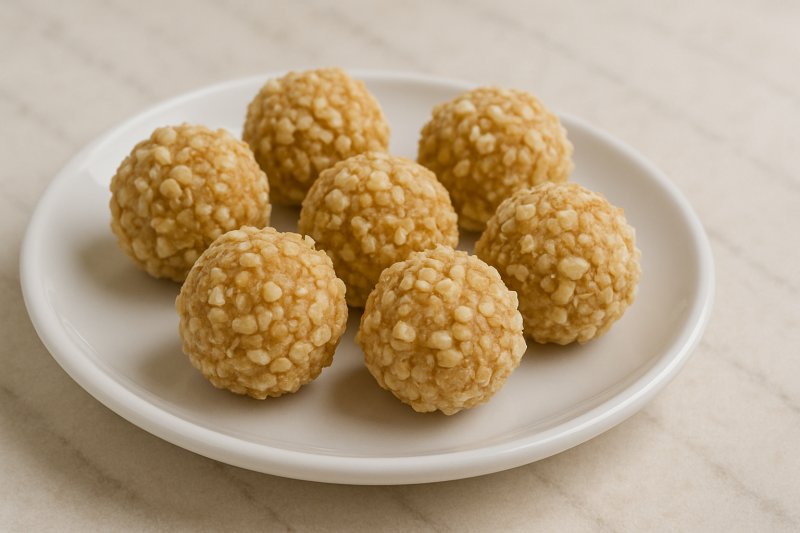
Several Giotto balls with a crispy wafer shell and hazelnut filling
I still clearly remember the moment I opened a tin of Giotto balls for the first time: the scent of hazelnut and chocolate rose up toward me like a small temptation from the supermarket shelf. Since then these spherical pralines have become one of my favourite secret weapons for quick desserts, unexpected guests and moments when I just need a little luxury without much effort. Giotto balls are crispy on the outside, creamy inside and often contain a core of the finest hazelnut – a combination that elicits a contented purr in any kitchen.

What I particularly appreciate about them is their versatility. You can enjoy them plain, but also use them as dessert decoration or as an aromatic ingredient. A colleague of mine once claimed that Giotto balls were the missing element to turn a simple yogurt into a festive dessert. I had to test it: a dollop of Greek yogurt, a few chopped balls and a drizzle of honey — suddenly my breakfast looked like it belonged on Instagram, but tasted much better.

For anyone who likes to play with textures, Giotto balls are a small wonder. The combination of a crunchy shell, creamy filling and the occasional nutty bite creates contrasts that bring desserts to life. I have already used them in:

  • as a crunchy garnish on crème brûlée
  • as a topping on chocolate mousse
  • crumbled into ice cream
However, portion control should be kept in mind: these balls are so tasty that they can easily become a calorie trap. At a small dinner party I learned to hide the packet because guests would snack on them secretly. A pinch of restraint pays off, as does knowing the ingredients in case allergies are involved. The hazelnut component makes them unsuitable for people with nut allergies, and the sugar content, as with many sweets, should not be underestimated.

In conclusion: Giotto balls are for me more than just a confection; they are a versatile kitchen companion that achieves great impact with little effort. Whether as a quick comfort, creative decoration or surprising ingredient — they always bring a little festive feeling to everyday life.

Availability & types

Availability and types

What are Giotto balls?
Giotto balls are small, round pralines with a crunchy outer layer and a creamy filling in the center. They come from well-known confectionery manufacturers and are popular as a snack or a small dessert. You can think of them as tiny chocolate spheres – crunchy outside, soft inside and often nut-flavoured.

Origin
The idea for these balls comes from the European confectionery tradition, especially from countries like Italy and Germany, where sweets with nuts and chocolate have long been popular. Manufacturers took classic recipes and turned them into a convenient spherical form. That is why some brands have names that recall places or people or simply sound familiar.

Growing regions of the main ingredients
Two plant-based ingredients are particularly important for Giotto balls: cocoa and hazelnuts. Both do not grow equally well everywhere:

  • Cocoa: Cocoa grows mainly in warm, tropical countries near the equator. Important growing regions include West Africa (for example Ivory Coast and Ghana), South America and parts of Asia. Cocoa is the basis for chocolate.
  • Hazelnuts: Hazelnuts prefer a temperate climate. Large harvests come from countries such as Turkey, Italy and some regions of Europe and North America. Hazelnuts give many sweets their nutty flavour.
Available varieties and variants
Giotto balls are available in different styles. Manufacturers have developed several variants so there is something for every taste. Here are the most common types explained simply:

  • Original / Hazelnut: The classic version with a hazelnut cream filling. The outside is usually a crunchy layer or fine chocolate. This variety tastes strongly of hazelnut, similar to hazelnut spread.
  • Milk chocolate: For those who prefer it sweeter and milder, there are variants with a higher proportion of milk chocolate. These are softer and sweeter than the nuttier types.
  • White chocolate: Some balls have a light, creamy filling of white chocolate. They appear paler and taste more delicate.
  • Dark chocolate / bittersweet: For people who like less sweet and slightly more bitter flavours, there are dark chocolate variants. The taste is more intense and less sugary.
  • Filled with whole nuts: Some varieties have a whole hazelnut or almond in the centre – this gives a crunchy experience when bitten into.
  • Special editions: For special occasions or seasonally there are limited variants, for example with cocoa nibs, caramel or slightly salty notes. These are like new flavour adventures to try.
Where can you buy them?
Giotto balls and similar pralines can be found in supermarkets, confectionery sections, department stores and often at service stations. Some varieties are sold in small bags, others in larger packages. They can also be ordered online and delivered directly to your home.

Conclusion
In summary Giotto balls are small, easy-to-find pralines with various flavours. The main ingredients come from different parts of the world: cocoa from tropical countries and hazelnuts from temperate regions. There are classic hazelnut variants, more chocolate-forward versions, dark variants and special editions – many options to find a favourite. Each variant is like a small taste test: feel free to try different kinds to find which you like best.

Details & nutrition

Property Value
Unit g
Average weight per piece 5
Calories per 100 540
Protein per 100 8.0
Carbohydrates per 100 50.0
Sugar per 100 45.0
Fat per 100 33.0
Saturated fat per 100 13.0
Monounsaturated fat 14.0
Polyunsaturated fat 3.0
Fiber per 100 3.0
Vitamin C (mg) per 100 0
Vitamin D (IU) per 100 0
Calcium (mg) per 100 80
Iron (mg) per 100 2.0
Nutri-Score E
CO₂ footprint 3.5
Origin Industrial product, typically manufactured in Europe
Gluten-free No
Lactose-free No
Nut-free No
Vegan No
Note Giotto balls are sweet hazelnut pralines with a wafer shell and contain gluten, milk and hazelnuts; traces of other nuts and sesame are often indicated.

Technical & scientific information

Giotto balls are small, round confections used as decorative and flavour components in sweets, baked goods and desserts. Originally popularised as a branded product by a well-known manufacturer, the term typically describes crunchy, coated spheres with a sweet shell and an inner core of almond, hazelnut or cocoa mass. The following sections provide a technical-scientific overview of the composition, nutritional value, manufacture and health aspects of this ingredient.

Composition and constituents
Giotto balls consist of several functional layers that should be distinguished chemically and technologically:

  • Core: Often based on nut pastes (hazelnut or almond paste), cocoa powder and sugar. The nut components supply lipids (predominantly mono- and polyunsaturated fatty acids), proteins and fibre, while cocoa powder can contribute polyphenolic compounds such as flavonoids.
  • Crispy layer: Often an expanded cereal product (e.g. puffed rice) or a sugar-rich, caramelised aggregate. This layer is mainly composed of rapidly available carbohydrates (sugar, starch) and small amounts of protein.
  • Coating: Sugar- or fat-based glaze, frequently with cocoa components, milk powder and emulsifiers such as soy lecithin. The coating phase provides shine, flavour and barrier properties against moisture.
Nutritional values and energetic properties
Nutritional values vary according to formulation, but typical figures per 100 g fall within the following ranges:

  • Calories: 500–600 kcal
  • Fat: 25–35 g (of which saturated fatty acids 8–12 g)
  • Carbohydrates: 50–60 g (of which sugars 30–45 g)
  • Protein: 5–10 g
  • Dietary fibre: 2–6 g
The high energy density is mainly due to the elevated sugar and fat content. Nut fractions also supply trace minerals such as magnesium, copper and vitamin E, which contribute to the nutrient profile in small amounts.

Manufacturing process
Industrial production involves several distinct process steps:

  • Mixing and grinding of the nut pastes and fillers to obtain a homogeneous paste. Wet and oil-containing components are combined with solids to achieve appropriate particle sizes for texture and flow control.
  • Shaping of the core, often by extrusion, cold forming or drop forming, depending on the viscosity of the mass.
  • Encapsulation with a crispy layer, realised by tumbling in sugar or starch syrup, or by layer build-up in drums. Subsequent drying or baking stabilises the structure.
  • Coating with chocolate or sugar glaze, tempering of chocolate and finishing with polishing or printing for visual enhancement.
Physical and microbiological aspects
Important technological parameters include water activity (aw), particle size and fat distribution. Low water activity (<0.6–0.7) contributes to long-term stability and reduced microbial growth. Fat migration between layers can affect texture and crispness; emulsifiers and appropriate layer thicknesses are used to limit this.

Health aspects and consumer risks
As a confectionery product, Giotto balls are primarily an indulgence food with the following relevant points:

  • Caloric density: The high sugar and fat content can contribute to weight gain if consumed in excess.
  • Allergens: Nuts (hazelnut, almond), milk components and soy-based emulsifiers are common allergens; labelling is therefore essential.
  • Dental aspects: Sugar-containing coatings promote cariogenic microorganisms in the absence of adequate oral hygiene.
  • Functional ingredients: Nut components such as unsaturated fatty acids and phytochemicals may show beneficial effects when consumed in moderation, however these fractions are relatively small compared with nut spreads or whole nuts.
Storage and shelf life
Optimal storage conditions are cool, dry and protected from light to minimise fat oxidation and flavour loss. Antioxidants (e.g. tocopherols, ascorbates) can be used to extend shelf life. Packaging with barrier properties against oxygen and moisture improves sensory stability.

In summary, Giotto balls are a technically complex confectionery product whose quality depends on raw material selection, layer structure and process control. Their nutritional characteristics reflect the nature of a sugar- and fat-rich indulgence, while microstructural and physicochemical measures are applied to secure texture, shelf life and safety.

Wiki entry for: Giotto ball
Active now: 15 visitors of which 2 logged-in members in the last 5 minutes