Menu & categories

Garlic

Aromatic bulb with intense pungency

Wiki about garlic Nutri-Score A Vegan Yes Gluten-free Yes Lactose-free Yes Nut-free Yes
NUTRITION / 100 g
149 kcal 6.4 g Protein 33.1 g Kohlenhydrate 0.5 g Fett

Introduction

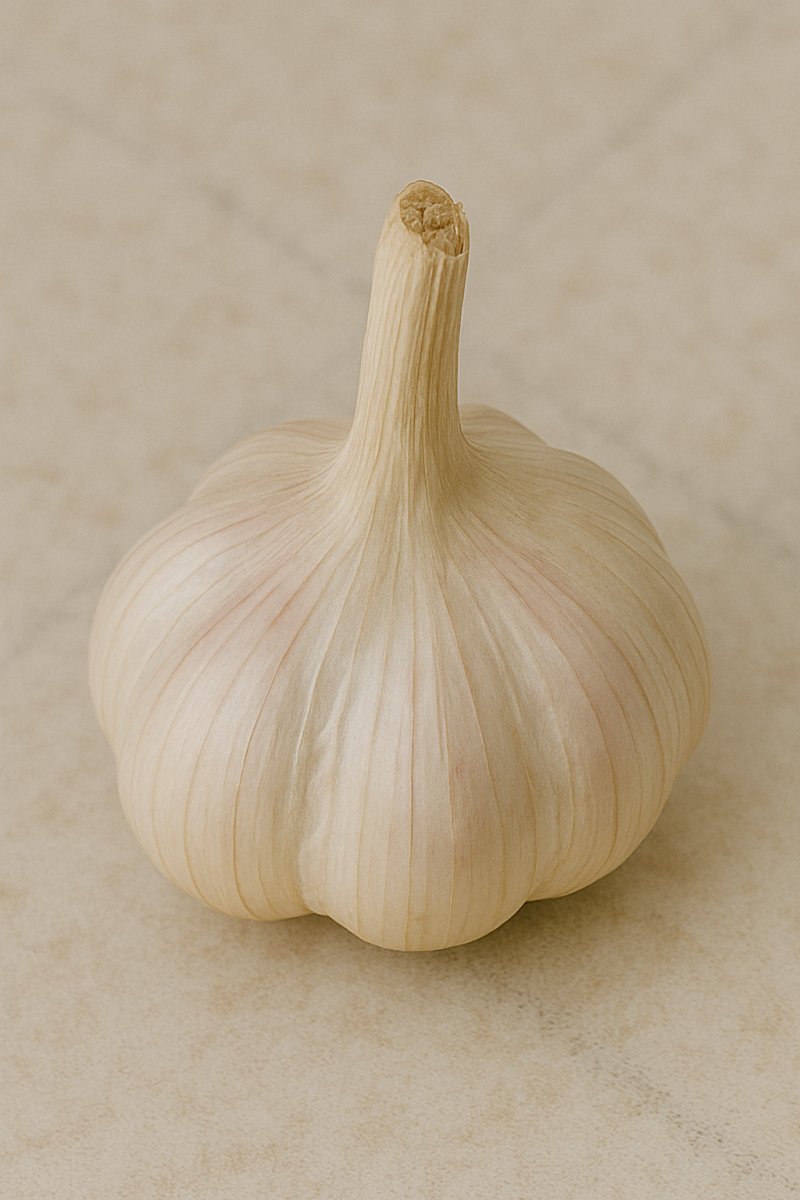
Fresh garlic cloves
Garlic for me is more than just an ingredient; it is a culinary compass that gives dishes direction, depth and character. As a 35-year-old editor from Europe I have encountered garlic in countless kitchens – from simple country inns in Tuscany to urban street-food stalls in Berlin. This small, aromatic bulb brings not only flavor but also history, tradition and a certain magic. In my family the scent of freshly crushed cloves was always a reliable sign that something delicious was in the making.

Botanically, garlic (Allium sativum) belongs to the leek family. Its characteristic aromas are due to sulfur-containing compounds like allicin that are produced when cutting, pressing or chopping. This chemical dance is what turns an inconspicuous clove into an intense taste experience. Garlic is surprisingly versatile: it can be used raw, whole, sliced, finely chopped, pressed, roasted, fermented or pickled. Each preparation teases out a different note – from sharp and peppery to soft, nutty and caramelized.

In my editorial office we often have passionate discussions about the perfect use. A colleague of mine swears by briefly sautéing whole garlic with the skin in olive oil to give the oil a gentle aroma without dominating the dish. A colleague, however, presses it raw into yogurt with lemon zest and mint for a fresh dip that pairs with grilled vegetables. I myself love to roast a whole head of garlic in the oven until the cloves are buttery soft. Then I spread them on crusty bread, sprinkle a few flakes of sea salt on top – and there you have a simple but irresistible snack.

The question of how to tame the intense smell after eating has accompanied me since my student days. A team leader at a previous editorial office claimed that fresh parsley and green tea work wonders. Others swear by raw produce like apple or cucumber. A small trick I learned in a restaurant kitchen: rub your hands on a stainless-steel surface after cutting garlic and then wash them thoroughly

Availability & types

Availability and types of garlic

Garlic is one of the oldest and most well-known culinary ingredients in the world. It grows as a bulbous plant in the ground and is related to onions, leeks and chives. If you look for garlic in the supermarket or at the weekly market, you will find it almost all year round. This is because it is grown in many countries and harvested at different times. In addition, garlic stores well, so it remains available outside of harvest seasons.

The origin of garlic is very interesting: it probably originally comes from Central Asia. From there it spread through the Near East, the Mediterranean region and finally to the whole world. Today important producing countries include, for example, China, Spain, France, Italy, Egypt, the USA and also some regions in Germany and Austria. Each growing region has its own varieties and flavor notes – some are sharper, others milder or more fragrant.

Availability throughout the year:
Fresh garlic is usually harvested in late spring and summer. Immediately after harvest it is often called “young” or “fresh garlic”. Later in the year you will predominantly find dried bulbs, which have a longer shelf life. In large supermarkets garlic is available all year because it is imported from different countries. At the weekly market you often get regional produce in season – which is particularly aromatic and fresh.

Important types and variants of garlic:

  • Hardneck garlic
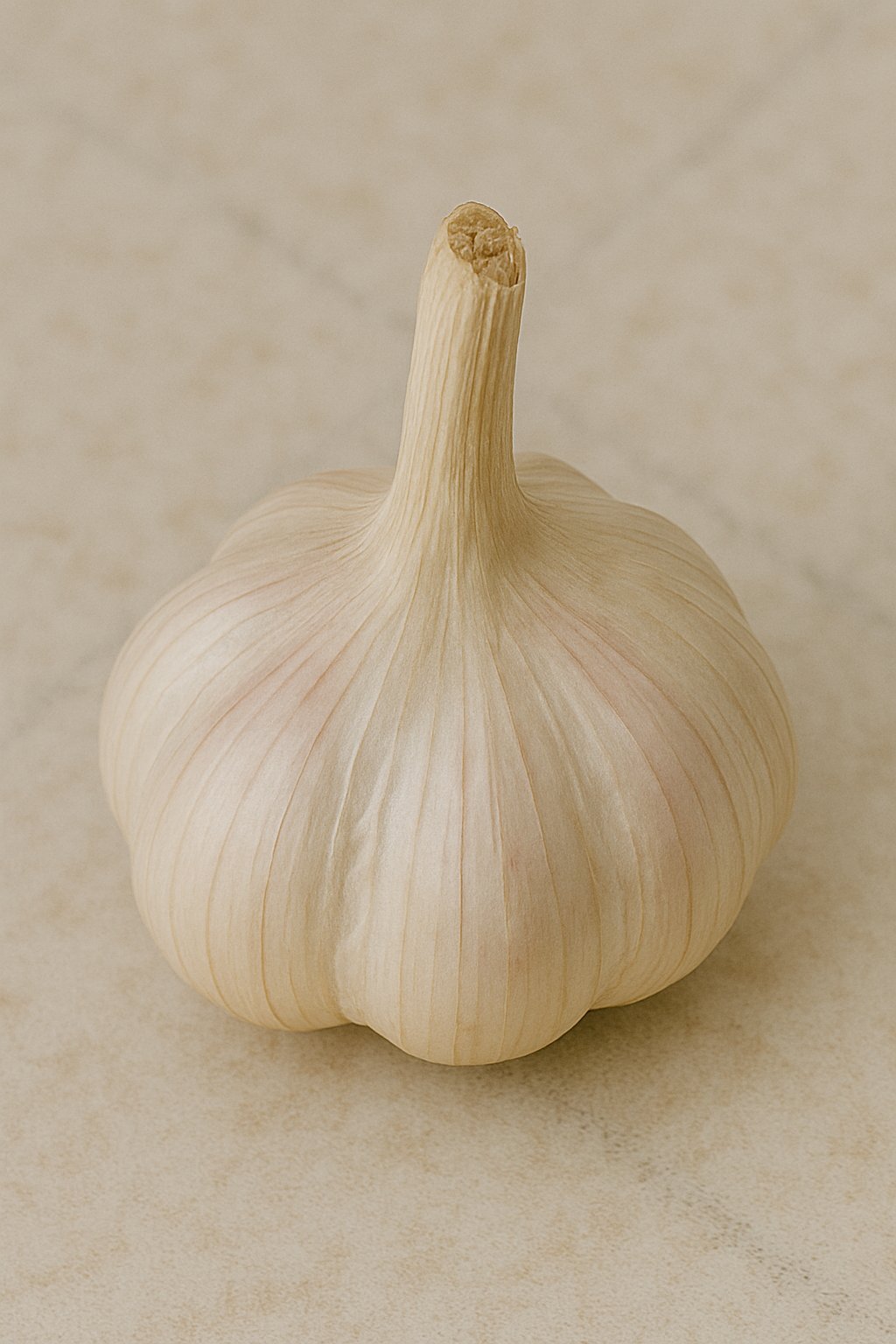
    This type forms a firm flowering stalk in the centre. It is often more aromatic and has larger, evenly arranged cloves. Many gourmet varieties belong to this group. However, it usually stores a little less well than softneck garlic.
  • Softneck garlic
    Here the hard central stalk is absent. The cloves are more numerous and can vary in size. These bulbs are well suited for braiding and are very long-lasting. Supermarkets often carry softneck varieties,
Details & nutrition

Property Value
Unit g
Average weight per piece 5
Calories per 100 149
Protein per 100 6.4
Carbohydrates per 100 33.1
Sugar per 100 1.0
Fat per 100 0.5
Saturated fat per 100 0.1
Monounsaturated fat 0.0
Polyunsaturated fat 0.2
Fiber per 100 2.1
Vitamin C (mg) per 100 31
Vitamin D (IU) per 100 0
Calcium (mg) per 100 181
Iron (mg) per 100 1.7
Nutri-Score A
CO₂ footprint 1.2 kg CO2e/kg
Origin Global, commonly China, Spain, Italy
Gluten-free Yes
Lactose-free Yes
Nut-free Yes
Vegan Yes
Note Intense aroma; sharp when raw, milder when cooked. May cause digestive discomfort in sensitive individuals.

Technical & scientific information

Garlic (Allium sativum) is a perennial herbaceous plant of the family Amaryllidaceae, subfamily Allioideae. The cultivated species forms a bulb (corm) composed of numerous daughter bulbs, the cloves, which are enclosed by papery tunics. Close botanical relatives are onion (Allium cepa), leek (Allium porrum) and chives (Allium schoenoprasum). The characteristic smell results from volatile sulfur-containing compounds produced by enzymatic reactions after tissue damage.

Botany and morphology:
The plant develops from an underground bulb flat, linear leaves with parallel venation. The scape (flower stalk) is hollow, cylindrical and can, depending on the variety, reach a height of 50–120 cm. The flowers are hermaphroditic, usually white to pinkish, but in cultivated lines often sterile; instead bulblets (bulbils) are formed in the inflorescence. The bulb consists of 4–20 cloves, whose size and number vary by variety. Hardneck and softneck types differ in inflorescence, storability and mechanical harvestability.

Systematics and genetics:
Allium sativum is diploid with a chromosome number of 2n = 16. Extensive vegetative propagation leads to clonal diversity shaped by somatic mutations, epigenetic effects and selection over centuries. Genomic studies describe a large, repetitive genome with numerous transposable elements; marker-based analyses are used for variety differentiation, disease-resistance selection and origin determination.

Constituents and biochemistry:
Fresh garlic contains 60–70% water, 25–33% carbohydrates (mainly fructans/inulin-type oligosaccharides), 1.5–2.5% proteins, small amounts of fats as well as minerals (potassium, phosphorus, selenium, sulfur) and vitamins (including B6, C). Characteristic are the organic sulfur compounds:

Wiki entry for: garlic
Active now: 20 visitors of which 2 logged-in members in the last 5 minutes