Menu & categories

Fruits

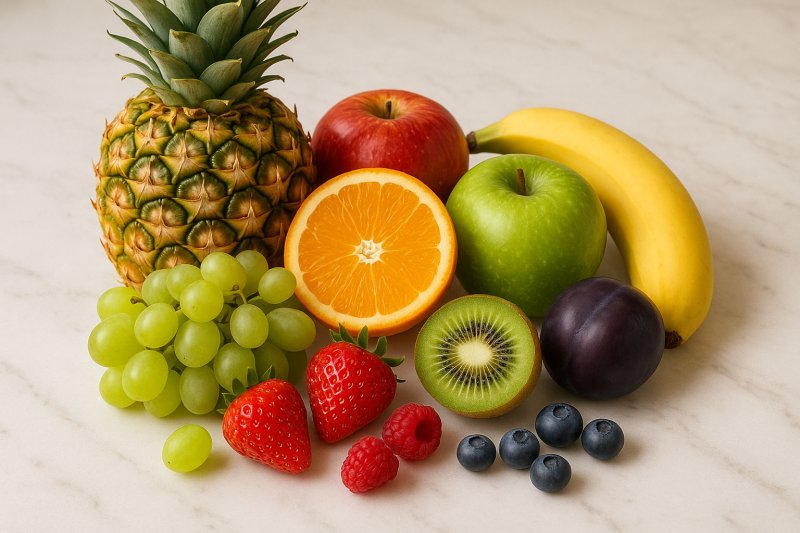
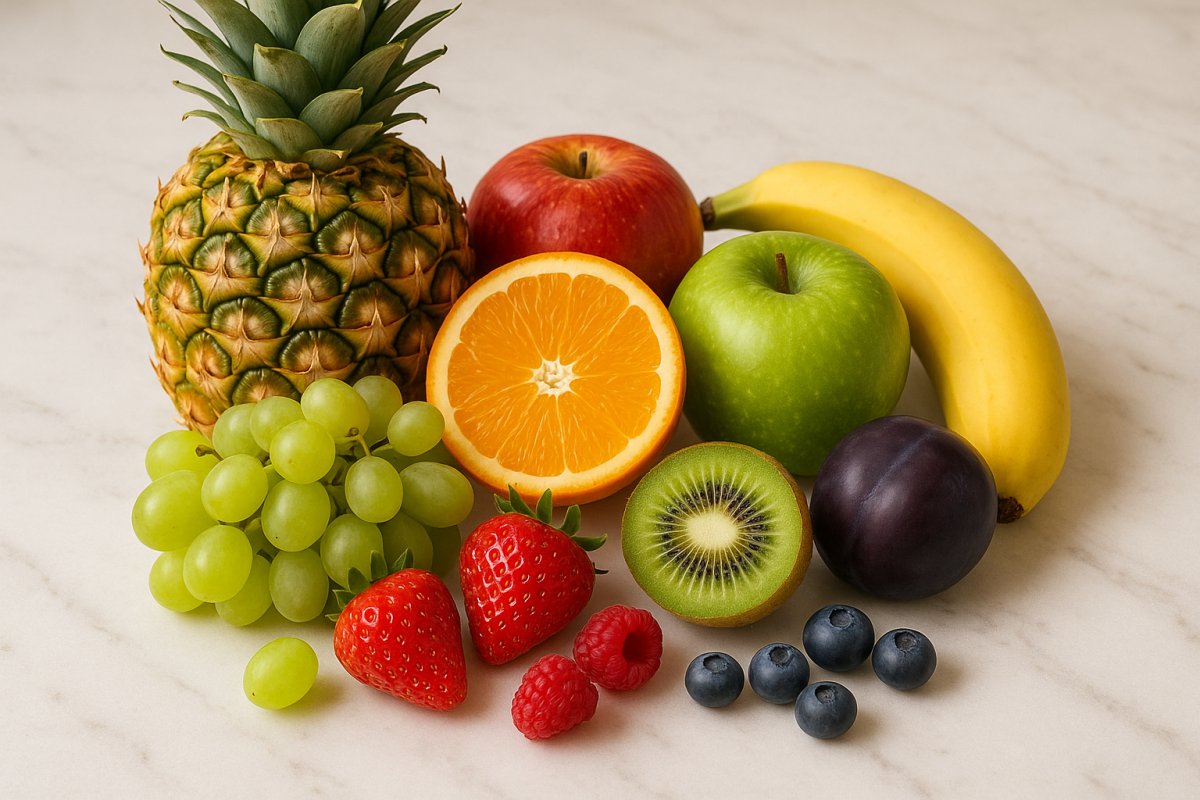
Colorful mix of various fruit varieties with vitamins and dietary fiber

Wiki about fruit Nutri-Score A Vegan Yes Gluten-free Yes Lactose-free Yes Nut-free Yes
NUTRITION / 100 g
60 kcal 0.7 g Protein 14 g Kohlenhydrate 0.3 g Fett

Introduction

Various fresh fruits such as apples, berries and grapes
I have a weakness for fruit that began in my childhood: the smell of ripe peaches at the weekly market, which still makes me feel like it's summer. Fruit is for me more than just a sweet snack; they are stories in color and texture, small parcels of memory and flavor that make every dish instantly more lively.

I still remember a rainy afternoon when I forgot a handful of dried apricots in my coat pocket and later found them warm and sticky while reading a report. It was a strange but comforting discovery how texture and aroma changed with warmth. Such small experiences have shaped my love of fruit: their versatility, their ability to delight both raw and processed.

Fruits offer an astonishing range of flavors and uses. Some of my favorite ways to use fruit are:

  • Fresh and raw – as a snack, at breakfast or as a crisp splash of color on a salad.
  • Cooked or reduced – as compote, chutney or sauce for savory dishes.
  • Baked – in cakes, tarts or as a caramelized crust on desserts.
  • Dried or preserved – ideal for pantry stores, baked goods or surprising textures.
I can't count how often a simple jar of jam has sparked a conversation in my kitchen. A colleague once brought a strange but wonderful mix of figs and lemon to a brunch, and we promptly argued affectionately about which dish it paired best with. Such culinary experiments show how fruit can build bridges: between sweet and sour, between breakfast and dinner, between memory and the new.

Nutritionally, fruits are true all-rounders. They provide important vitamins, fiber and secondary plant compounds that are often missing in the daily diet. At the same time they are an uncomplicated way to refine dishes without needing complicated techniques. I particularly like the creative freedom fruit allow: a squeeze of lemon here, a spoonful of berry sauce there, and a simple dish immediately gains depth.

In the end fruit are a constant companion in the kitchen and in life: uncomplicated, surprising and always ready to lift mood and flavor. When I'm standing in a supermarket or at a market stall, I'm more likely to consider taking an unfamiliar variety than resisting it — for I have rarely regretted bringing a piece of nature home.

Availability & types

Availability and types

Fruits are available almost everywhere in the world, but which varieties you find at the supermarket or the market depends on where and when you look. Some fruits grow only in warmer countries with lots of sun, others prefer cooler regions. Thanks to trade, refrigeration and transport, you can today buy many fruits almost year-round, even if they were not harvested locally.

Origin and growing regions
Many fruits originally come from specific regions where the climate is particularly suitable. For example, bananas and mangoes usually come from tropical countries like Costa Rica, Ecuador or India because they need warmth and humidity. Apples, pears and berries are often grown in cooler areas, such as Europe, North America or China. Citrus fruits like oranges and lemons prefer rather warm but not tropical regions, for example Spain or California. Growing regions are chosen so that the plants receive enough sun, water and the right temperature.

Available varieties and types
Fruits come in many different varieties. A fruit species is like a large family; within that family there are many different members. Here are a few simple examples:

  • Apples: There are sweet varieties like "Golden Delicious" and tart varieties like "Granny Smith". Some are good for eating raw, others perfect for baking.
  • Bananas: The common yellow bananas are called dessert bananas and are sweet. There are also cooking bananas (plantains), which are starchier and are prepared like a vegetable.
  • Berries: These include strawberries, raspberries, blueberries and blackberries. They are usually small, juicy and very aromatic.
  • Citrus fruits: Oranges, mandarins, lemons and grapefruits – some are sweet, others rather sour. Mandarins are often easier to peel than oranges.
  • Mangoes: There are many varieties with different sizes, colors and tastes. Some are very sweet, others slightly tart.
  • Kiwis: Green kiwis are most common, but there are also yellow-fleshed varieties that are sweeter.
  • Grapes: Some grapes are small and sweet as a snack, others are larger and used for wine production.
Seasonal vs. year-round
Simply put: seasonal fruits are like birthday cakes — they are especially tasty when they are "in season", that is ripe and fresh from the field. Strawberries taste best in early summer, apples in autumn. Thanks to modern refrigeration, greenhouses and long transport routes you can find many fruits year-round. These year-round available fruits often come from other countries where it is harvest time.

Fresh, dried and processed
Fruits are not only available fresh: they can also be dried, frozen or bought as juice and preserves. Dried fruits such as raisins or dates last longer and are very sweet. Frozen fruits retain many vitamins and are practical when fresh fruit is not available. Fruit juices and compotes are another variant, but they often contain more sugar or involve more processing.

Simple conclusion
Fruits come in many types and varieties depending on where they grow and which climate they prefer. Some are especially fresh seasonally, others you can find year-round thanks to imports. Whether fresh, dried or frozen — there are suitable fruits for every taste and occasion.
Details & nutrition

Property Value
Unit g
Calories per 100 60
Protein per 100 0.7
Carbohydrates per 100 14
Sugar per 100 12
Fat per 100 0.3
Saturated fat per 100 0.05
Monounsaturated fat 0.05
Polyunsaturated fat 0.1
Fiber per 100 2.2
Vitamin C (mg) per 100 30
Vitamin D (IU) per 100 0
Calcium (mg) per 100 20
Iron (mg) per 100 0.3
Nutri-Score A
CO₂ footprint 0.4
Origin Different countries of cultivation depending on the fruit variety and season
Gluten-free Yes
Lactose-free Yes
Nut-free Yes
Vegan Yes
Note Average values for a mixed selection of fresh fruits (e.g. apples, berries, grapes, citrus fruits). Individual fruit varieties can differ significantly in nutritional values and vitamin content.

Technical & scientific information

Fruits are the mature seed-bearing structures of flowering plants, formed from the ovary after fertilization and protecting seeds or spores while promoting their dispersal. Botanically, fruit types are distinguished by structure and origin, for example berries, aggregate fruits, nut fruits and pods. The term "fruit" covers both water-rich, fleshy organs like apples and berries and dry, hard forms like nuts. Ecologically, fruits serve as a link between plants and potential dispersal mechanisms such as animal consumption, wind or water.

Chemical composition and constituents
Fruits consist predominantly of water (typically 70–95%) and contain soluble and insoluble carbohydrates, organic acids, fiber, vitamins, minerals and secondary plant compounds. The main carbohydrates are monosaccharides (glucose, fructose) and disaccharides (sucrose), which determine the sweet taste. Organic acids such as citric acid, malic acid or tartaric acid influence the acid–base balance and the sensory profile. Fiber includes pectin, hemicelluloses and cellulose; pectin is particularly functionally effective in citrus fruits and applesauce for gelling and texture.

Nutrient values and micronutrients
Fruits provide rapidly available energy through sugars, but contain relatively few calories per volume due to their high water content. They are significant sources of vitamin C (ascorbic acid), provitamin A (carotenoids), some B vitamins and minerals such as potassium, magnesium and trace elements. In addition many fruits contain polyphenols (flavonoids, anthocyanins, tannins) with antioxidant properties. Nutrient composition varies greatly between species; berries often show high concentrations of anthocyanins, while citrus fruits are particularly rich in vitamin C.

Functional properties and processing methods
Pectin and other soluble fibers give fruits technological properties used in food processing, such as gelling, stabilizing and viscosity regulation. Common processing methods include waxing, pasteurizing, concentrating, freeze-drying and canning. Pasteurization partially destroys heat-sensitive vitamins, while drying or concentration processes increase sugar and nutrient density. Fermentation (e.g. for the production of fruit juices, wine or fermented preserves) modifies carbohydrate profiles and can form biogenic amines or organic acids.

Health aspects
Regular consumption of fruits is associated with a lower incidence of chronic diseases such as cardiovascular disease, certain cancers and type 2 diabetes. These effects are primarily attributed to the combination of fiber, micronutrients and secondary plant compounds, which can have antioxidant, anti-inflammatory and metabolically regulating effects. For people with metabolic disorders the glycemic effect of individual fruits should be considered; however, fiber and fruit bulk slow the absorption of sugars in the intestine.

Safety and quality aspects
Fruits can be carriers of microbial contamination (bacteria, molds) and pesticide residues. Hygienic harvesting, storage at appropriate temperatures and gentle processing reduce microbiological risks. During storage biochemical processes such as ripening can be influenced by ethylene; therefore the industry uses ethylene management and cold chains to control quality and shelf life.

Application and nutritional-scientific context
In nutrition fruits serve both as fresh foods and as raw materials for juices, preserves, dried fruit and ingredients in baked goods, desserts and beverages. From a scientific perspective fruits are an interesting subject of study because of their complex matrix — interactions between sugars, fiber and secondary plant compounds — for research on bioavailability, the gut microbiome and preventive nutrition. Selecting a variety of fruit species contributes to a broad nutrient supply and to flavor diversity in the diet.

Wiki entry for: fruit
Active now: 6 visitors of which 2 logged-in members in the last 5 minutes