Menu & categories

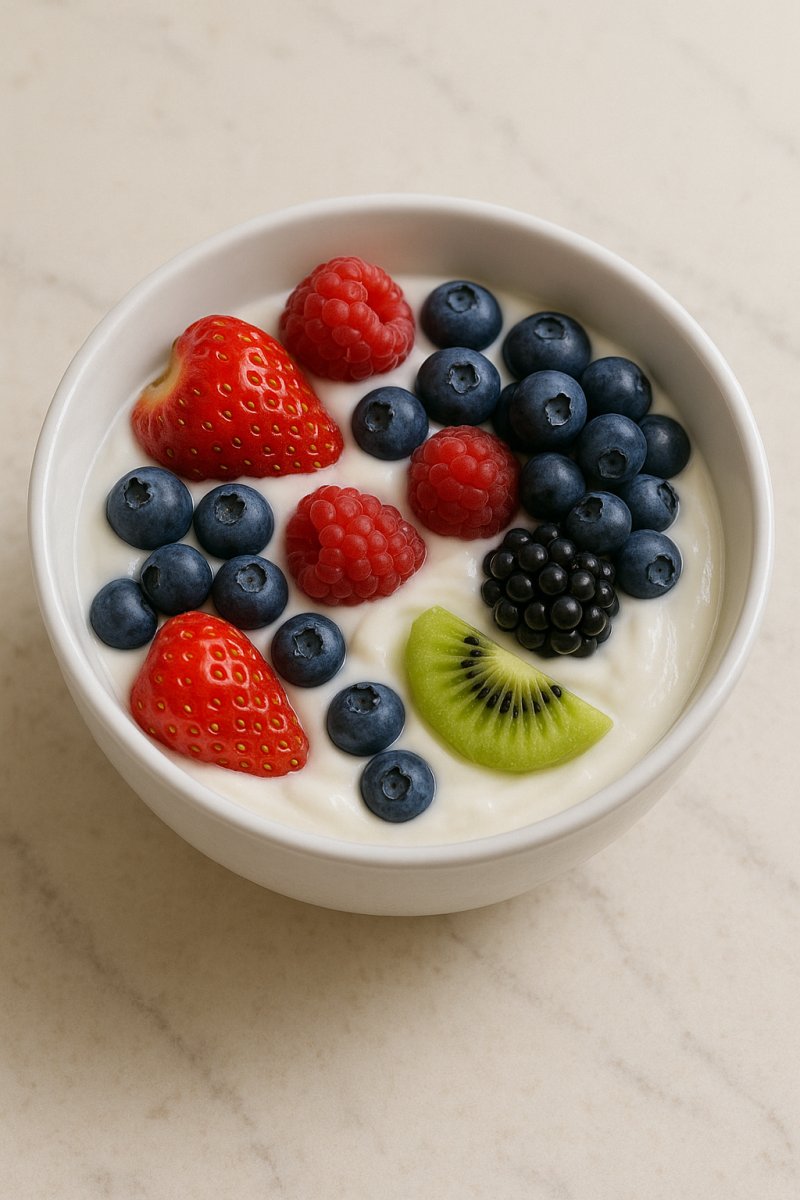
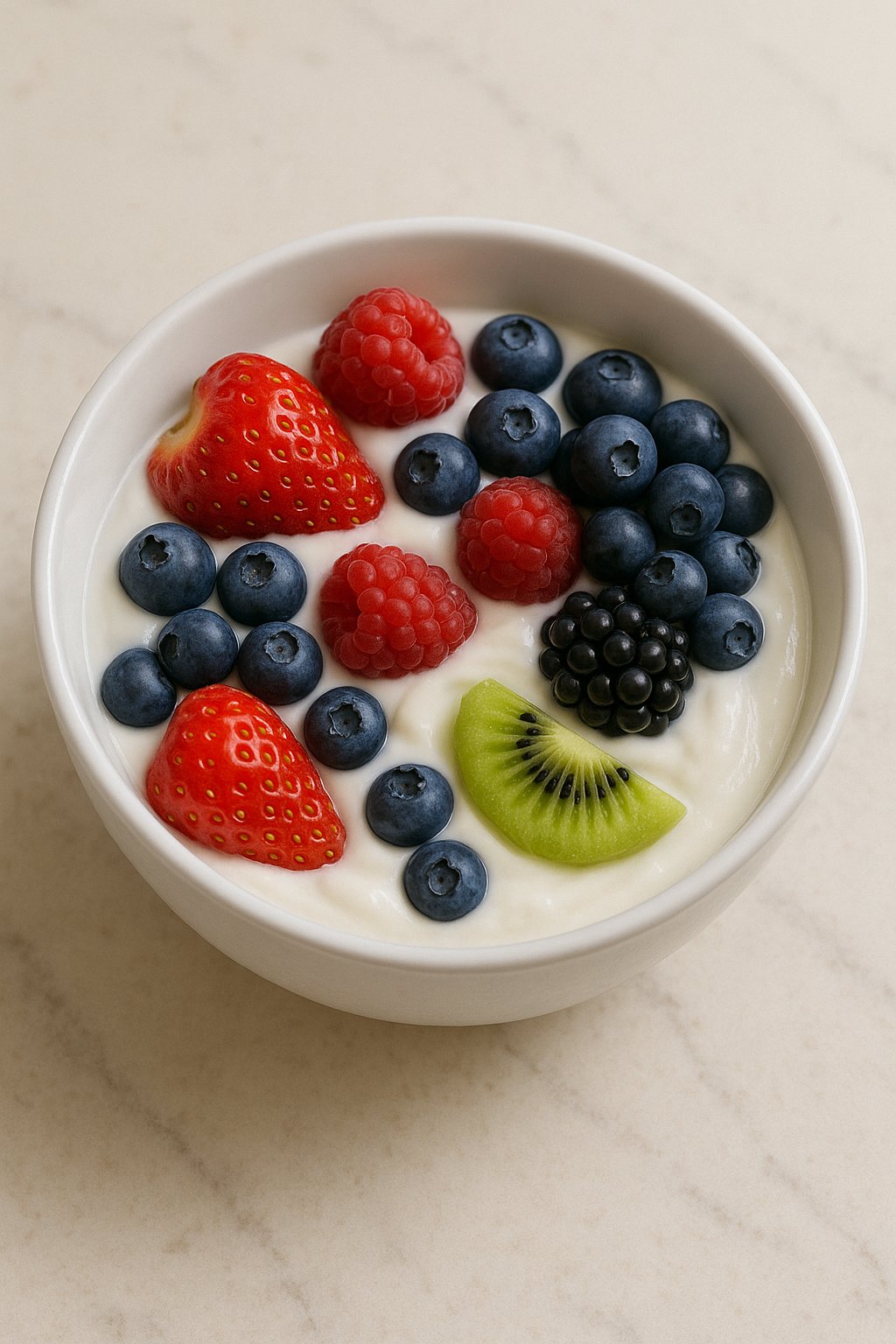
Yogurt with fruit

Creamy yogurt with fruity sweetness and pieces of fruit.

Wiki about fruit yogurt Nutri-Score C Vegan No Gluten-free Yes Lactose-free No Nut-free Yes
NUTRITION / 100 g
95 kcal 3.5 g Protein 13.0 g Kohlenhydrate 3.0 g Fett

Introduction

Yogurt with colorful fruit

I still remember the morning meetings in the kitchen of my first apartment, when I discussed life holding a spoonful of fruit yogurt. That small jar was always more to me than a quick snack. It was a companion for sudden ideas, a rescue on hectic workdays and occasionally a sweet comfort after a long walk.

Fruit yogurt brings together two simple ingredients into something both practical and sensual. The creamy texture of the yogurt meets the juicy sweetness of the fruit, creating harmonious contrasts. I particularly love combinations with berries because they bring a pleasant acidity, while stone fruit adds warmth to the whole.

When I have guests, I sometimes serve it in small jars with a layer of crunchy muesli on top. A colleague of mine was so enthusiastic that he promptly entrusted me with the recipe for his own fermented pear compote. Small anecdotes like that show how versatile this ingredient can be.

I appreciate practical advantages as much as taste. Fruit yogurt is quick to portion, convenient to take along and integrates wonderfully into smoothies, dressings or desserts. I even once refined a curry with a dollop of fruit yogurt, and the guests were greatly surprised.

  • Versatile for breakfast, snack and dessert.
  • Good balance of protein and natural sugars.
  • Easy to upgrade with nuts, honey or spices.
A tip from me: pay attention to the freshness of the fruit and the sweetness of the yogurt, because both determine the final result. If you like to experiment, try seasonal combinations and local fruits. That way this simple classic stays exciting time and again.

In the end fruit yogurt for me is a small everyday wonder that combines comfort, taste and creativity, and that's exactly what makes it so lovable.

Availability & types

Fruit yogurt is a very common ingredient that you can find in many stores. Yogurt is usually made from cow’s milk, sometimes from goat’s or sheep’s milk. The fruits can be added fresh, frozen or as fruit purée. You can buy fruit yogurt at the supermarket, find it at the weekly market from small farms or even make it yourself at home by mixing natural yogurt with fresh berries.


Origin and growing regions of the ingredients
The milk for yogurt often comes from the region, i.e. from nearby farms, but sometimes from other countries. The fruits come from different countries depending on the variety:

  • Blueberries, strawberries, raspberries: often from local fields or from more southern countries in summer. Berries are typical of warm, sunny places in spring and summer.
  • Apples and pears: frequently from temperate zones and well storable, therefore available year-round.
  • Mango, pineapple, passion fruit: mostly come from tropical countries because these fruits need a lot of sun to become sweet.
  • Dried or puréed: Some fruits are processed into purée or dried so they can be used out of season.

Available types and variants
There are many kinds of fruit yogurt. Here are some main groups, explained simply:

  • Fruit yogurt in a pot: This is a regular pot of yogurt, often with fruit pieces or fruit sauce at the bottom. Sometimes you see small pieces, sometimes only a smooth fruit layer.
  • Greek yogurt with fruit: This is thicker and creamier. It feels almost like pudding and pairs well with honey or nuts.
  • Drinking yogurt: More liquid yogurt that you drink from a small beverage cup – practical on the go.
  • Skyr: An Icelandic, very firm yogurt similar to Greek, often low in fat.
  • Organic and regional variants: These yogurts come from farms that follow particular rules. “Organic” often means animals have more space and less chemical use in cultivation.
  • Lactose-free and low-sugar: For people who do not tolerate milk sugar well, there are lactose-free yogurts. There are also variants with less sugar that taste less sweet.
  • Plant-based alternatives: Yogurt from soy, almond, oat or coconut with fruit preparations – for people who don't eat dairy.
  • Frozen fruit yogurt: Like an ice cream, but based on yogurt. It is cold and creamy, good as a snack in summer.
When you buy fruit yogurt, you can check whether there are pieces in the pack or only purée, how much sugar it contains and whether it comes from your region. At home it is also very easy: take natural yogurt and mix in fresh fruit – this is often the healthiest and tastes fresh. That way you can decide exactly how sweet or fruity your yogurt should be.
Details & nutrition

Property Value
Unit g
Average weight per piece 150
Calories per 100 95
Protein per 100 3.5
Carbohydrates per 100 13.0
Sugar per 100 12.0
Fat per 100 3.0
Saturated fat per 100 2.0
Monounsaturated fat 0.8
Polyunsaturated fat 0.1
Fiber per 100 0.5
Vitamin C (mg) per 100 1
Vitamin D (IU) per 100 0
Calcium (mg) per 100 120
Iron (mg) per 100 0.1
Nutri-Score C
CO₂ footprint 1.6 kg CO2e/kg
Origin Germany/EU (depending on manufacturer)
Gluten-free Yes
Lactose-free No
Nut-free Yes
Vegan No
Note Nutritional values may vary depending on fat level, added sugar and fruit content.

Technical & scientific information


Fruit yogurt is a dairy product made from fermented cow’s milk or alternative milk types and a portion of fresh fruit or fruit preparations. Products differ in manufacturing method, fruit content, degree of sweetening and composition, but technically they are characterized by the fermentation of the milk and the integration of a fruit component.

Chemical composition and ingredients. Major chemical constituents are proteins (mainly casein and whey proteins), fats (saturated and unsaturated fatty acids), carbohydrates in the form of lactose and added sucrose or glucose syrup, as well as organic acids such as lactate and fruit-specific acids (e.g. citric acid). Fruit components additionally provide fructose, fruit pectins, secondary plant compounds (e.g. anthocyanins in berries), provitamins and vitamin C. Predominant minerals are calcium, phosphorus and potassium.

Nutritional values (typical per 100 g). These values vary widely with fat content and added sugars. A typical fruit yogurt contains about 60–120 kcal, 3–5 g protein, 0.1–4 g fat (low-fat vs. full-fat), and 10–18 g carbohydrates, of which a relevant portion is free sugars (lactose plus added sucrose/glucose/fructose). Calcium content is usually around ~100–150 mg per 100 g.

Processing methods. Production is divided into several steps:

  • Pasteurization of raw milk to reduce microbial load.
  • Enriching or adjusting the dry matter content if necessary with milk powder.
  • Inoculation with starter cultures, typically Lactobacillus delbrueckii subsp. bulgaricus and Streptococcus thermophilus, optionally with probiotics such as Lactobacillus acidophilus or Bifidobacterium.
  • Fermentation at defined temperatures until the desired pH is reached (often pH 4.0–4.6), during which milk proteins coagulate and texture forms.
  • Production and pasteurization of fruit preparations (purees, concentrates, sugar additions), which are later mixed in or added separately.
  • Mixing, filling and cold storage.
Technical additives. Commonly used aids are pectin, modified starch, gelatin or cellulose to stabilize texture, as well as sweeteners and flavor extracts. These substances affect water binding, viscosity and syneresis tendency (whey separation).

Microbiology and probiotics. Traditional yogurt contains live lactic acid bacteria, whose activity is an important part of product quality. Some products are enriched with probiotic strains that are attributed health benefits such as modulation of gut flora or immunomodulatory effects. The survival of these strains depends on pH, sugar content, oxygen level and the cold chain.

Health aspects and risks. Fruit yogurt is a source of high-quality protein, calcium and, in fruit-rich variants, vitamin C and secondary plant compounds. Fermentation partially reduces lactose concentration, making yogurt better tolerated by some lactose-intolerant people. At the same time, added sugars and energy-dense fruit preparations can significantly increase the calorie content. Allergies to milk proteins remain a contraindication. Furthermore, additives or high sugar contents can be disadvantageous from a nutritional point of view.

Storage and shelf life. Fruit yogurt is a refrigerated product; storage at about 4 °C prolongs sensory quality and the viability of the cultures. Unopened, shelf life is typically several weeks; opened pots should be consumed within a few days.

Wiki entry for: fruit yogurt
Active now: 12 visitors of which 2 logged-in members in the last 5 minutes