Menu & categories

Fruit juice

Vitamin-rich juice from various fruits

Wiki about fruit juice Nutri-Score C Vegan Yes Gluten-free Yes Lactose-free Yes Nut-free Yes
NUTRITION / 100 ml
45 kcal 0.5 g Protein 11 g Kohlenhydrate 0.2 g Fett

Introduction

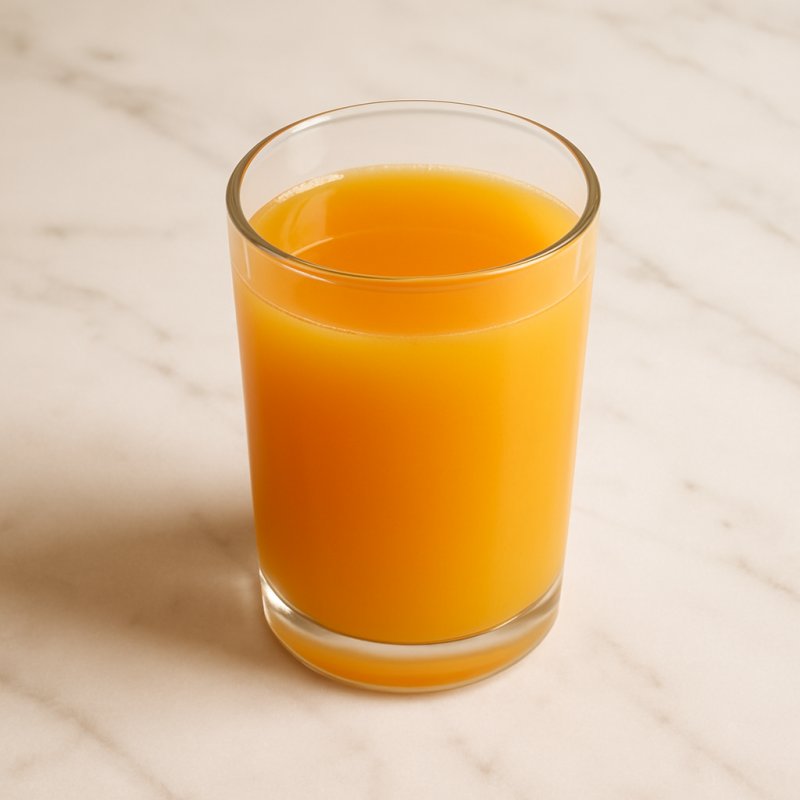
Glass of mixed fruit juice
Fruit juice for me is more than just a drink; it is memory, taste and a small portion of joy of life in a glass. I still remember Sundays at my family's when the juice was freshly pressed and the whole house smelled of oranges. This aroma is both comforting and invigorating. Sometimes, on hectic mornings, a single sip is enough to ground me and send me into the day.

Over the years I have learned to appreciate fruit juice in many roles: as a companion to breakfast, as a base for sauces, as a secret ingredient in dressings, or as a refreshing aperitif with a sprig of mint. A colleague of mine swears by using apple juice in red cabbage, and I agree: the acidity lifts the spices, the sweetness rounds things off. Such small, invented kitchen experiments have shown me how versatile juice can be.

Quality matters to me. I pay attention to the following points:

  • Purity: Direct juices or 100% juices without additives are often more aromatic and honest in flavor.
  • Origin: Seasonally harvested fruit from good cultivation tastes noticeably better.
  • Freshness: The shorter the path from fruit to glass, the more intense the aroma.
I am tempted to experiment with juices: a splash of lemon juice to enliven tomato dishes, or pomegranate juice as a contrasting ingredient in a marinade. I even once used orange juice in a braised dish — the result surprised me with its fine balance of sweetness and acidity. Such combinations tell stories of regions, seasons and personal preferences.

Sometimes fruit juice is also a matter of the moment: a glass of freshly pressed juice after a long walk, a chilled drop on a hot afternoon or a warming juice in a winter punch. My recommendation is to stay curious, try and combine different juices. That way you not only discover new tastes but also creative ways to elevate everyday dishes and make daily life more enjoyable.

Availability & types

Availability and types of fruit juice

Fruit juice is a beverage made from the juices of fruit. It can be found in many supermarkets, small shops and also at weekly markets. Some juices come from countries where certain fruits grow particularly well, others are produced close to where the fruit was harvested. If you think of an orange, many oranges come from warm countries such as Spain, Italy or Egypt. Apples are often grown in cooler regions, for example in Germany, France or the USA. Banana juice (or banana purée for juices) usually comes from tropical countries like Ecuador or Costa Rica.

Growing regions explained simply

Fruits need different conditions to grow well. Some like lots of sun and warmth, such as oranges or mangoes. Others need cooler temperatures and more rain, such as apples or pears. Farmers therefore plant fruit where the climate fits. Imagine: an apple tree feels comfortable like a child in a cozy jacket, while an orange tree is more like someone on a sunny beach.

Available varieties and types

  • 100% fruit juice: This is juice that has been pressed only from the fruit. No added flavors, no sugar. The bottle often says “100% juice”. It is like freshly pressed juice, only sometimes produced in a factory.
  • Direct juice: This juice is bottled as fresh as possible immediately after pressing. It tastes very natural because it has not been stored for long.
  • Concentrate juice: Here the water is first removed from the juice, leaving a thick “concentrate”. Water is added again during bottling. This saves space during transport and is cheaper. Think of it like apple juice: first a lot of water is evaporated, then later it is added back.
  • Fruit juice drinks: These usually contain less real juice and instead water, sugar or flavors. They are often cheaper and taste sweeter.
  • Organic juice: Organic juices come from organic farming. That means farmers do not use synthetic pesticides or chemical fertilizers. For many people this is important because it can be better for the environment and the soil.
  • Mixed juices and smoothies: These are mixtures of several fruits or also contain pulp. A smoothie is often thicker and can act like a small meal.
Seasonal availability

Some juices are available year-round because fruits are traded internationally or juices are preserved. Other juices taste especially good in their season: freshly pressed orange or apple juice is often best in late autumn and winter because that is harvest time. Remember: even if something is on the shelf, the best time for fresh flavor may be a particular season.

Tips when buying

On the label you can look for words like “100% juice”, “direct juice”, “concentrate” or “organic”. If you like to taste, you can compare different types: direct juice often tastes fresh, while juices from concentrate can sometimes taste a bit different. For children fruity mixes or light fruit drinks are popular, but 100% juice contains more real vitamins.

In summary: fruit juice comes in many variants, from different growing regions and with different production methods. So you can always find something that suits your taste and budget.
Details & nutrition

Property Value
Unit ml
Calories per 100 45
Protein per 100 0.5
Carbohydrates per 100 11
Sugar per 100 10
Fat per 100 0.2
Saturated fat per 100 0.02
Monounsaturated fat 0.03
Polyunsaturated fat 0.05
Fiber per 100 0.2
Vitamin C (mg) per 100 25
Vitamin D (IU) per 100 0
Calcium (mg) per 100 10
Iron (mg) per 100 0.2
Nutri-Score C
CO₂ footprint 0.3
Origin Varies depending on the fruits used
Gluten-free Yes
Lactose-free Yes
Nut-free Yes
Vegan Yes
Note Nutritional values for an average mixed fruit juice without added sugar; exact values may vary depending on the type of fruit and processing.

Technical & scientific information

Fruit juice refers to the liquid product obtained by mechanical treatment of fruits and consists primarily of the intracellular fluid fraction and dissolved components of the fruit. It is a complex mixture of water, saccharides, organic acids, phenolic compounds, vitamins, minerals and aroma compounds. Chemically, monosaccharides and disaccharides such as glucose, fructose and sucrose dominate, whose ratio determines the perception of sweetness and the osmotic effect. Organic acids, for example citric acid, malic acid or tartaric acid, shape the acidity and pH value, which are important factors for taste, microbiological stability and chemical reactions.

Ingredients and nutritional values
Fruit juices provide primarily energy in the form of sugars; typical concentrations range between 8 and 15 g/100 ml, depending on the type of fruit and dilution. In addition to carbohydrates, juices contain small to moderate amounts of fiber, especially in juices with pulp content. Vitamins are characteristic: vitamin C (ascorbic acid) is high in many citrus juices, while other vitamins such as provitamin A (carotenoids) occur in mango or apricot juices. Minerals such as potassium, magnesium and trace elements are present, but usually at lower concentrations than in whole fruits. Polyphenols and flavonoids provide antioxidant properties that can vary greatly depending on the fruit and processing.

Processing methods
Classic juice production includes washing, crushing/pressing, filtration and, if necessary, removal of the turbidity fraction. Heat treatment by pasteurization is common to reduce pathogenic and spoilage organisms and to increase shelf life. Alternatively, microbiological stability and sensory properties can be influenced by ultrahigh-temperature treatment (UHT), cold microfiltration, high-pressure processing (HPP) or sterilizing irradiation. Concentrate production is carried out by gentle evaporation under vacuum, followed by freezing or pasteurization prior to transport. To stabilize sensory properties and shelf life, additives such as ascorbic acid (as an antioxidant), sorbates (as preservatives) or acidulants may be used; legal regulations govern permitted additives and mandatory declarations.

Physicochemical processes
During storage and heating various reactions occur: Maillard reactions between reducing sugars and amino acids can change colour and aroma, especially in concentrated or heated juices. Oxidation leads to the degradation of sensitive compounds such as vitamin C and to loss of aroma; these reactions are promoted by contact with oxygen and catalytic metal ions. Cloudiness arises from polysaccharides, pectin and proteins, whose aggregation is influenced by pH changes, enzymes (e.g. pectinases) or temperature.

Health aspects
Fruit juices can contribute to nutrient supply, especially vitamin C and secondary plant compounds. At the same time they contain concentrated sugars, whose excessive consumption is associated with an increased risk of tooth decay, weight gain and metabolic disorders. The fiber content is usually low, which makes the glycaemic effect stronger than when consuming whole fruits. Special recommendations apply to infants and young children: undiluted juices are usually not recommended before a certain age, as high sugar and acid contents can be detrimental. Furthermore, caution is required in certain conditions such as fructose intolerance.

Quality assessment and labelling
Quality criteria include sensory properties (colour, smell, taste), the °Brix value to determine sugar content, acidity and the ratio of sugar to acid. Microbiological tests and detection methods for residues, added sugars or proofs of concentrate origin are common. Legal definitions distinguish, for example, 100% fruit juice from fruit juice drinks with added water, sugar or flavours; labels must list ingredients and nutritional information.

Overall, fruit juice is a technically versatile product with a characteristic chemical composition and challenges in shelf life and quality preservation. The choice of processing method affects nutrient content, sensory properties and health impact, so consumers should balance preference for minimally processed juices against products with longer shelf life, depending on needs and dietary goals.

Wiki entry for: fruit juice
Active now: 20 visitors of which 2 logged-in members in the last 5 minutes