Menu & categories

Fruit cocktail

Colorful mix of cut fruit, often packed in juice or sugar syrup.

Wiki about fruit cocktail Nutri-Score C Vegan Yes Gluten-free Yes Lactose-free Yes Nut-free Yes
NUTRITION / 100 g
70 kcal 0.5 g Protein 17.0 g Kohlenhydrate 0.2 g Fett

Introduction

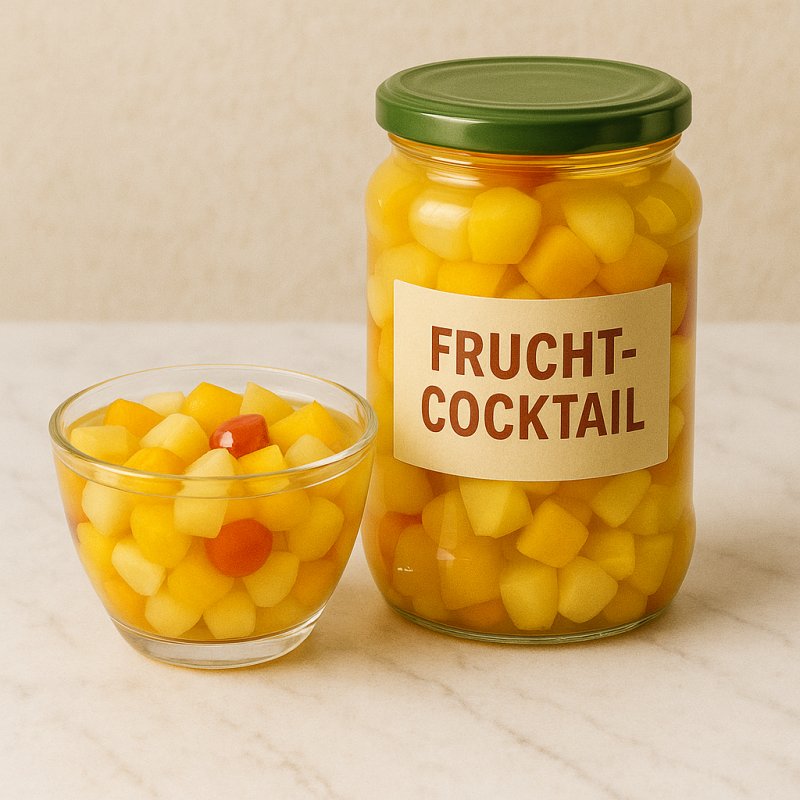
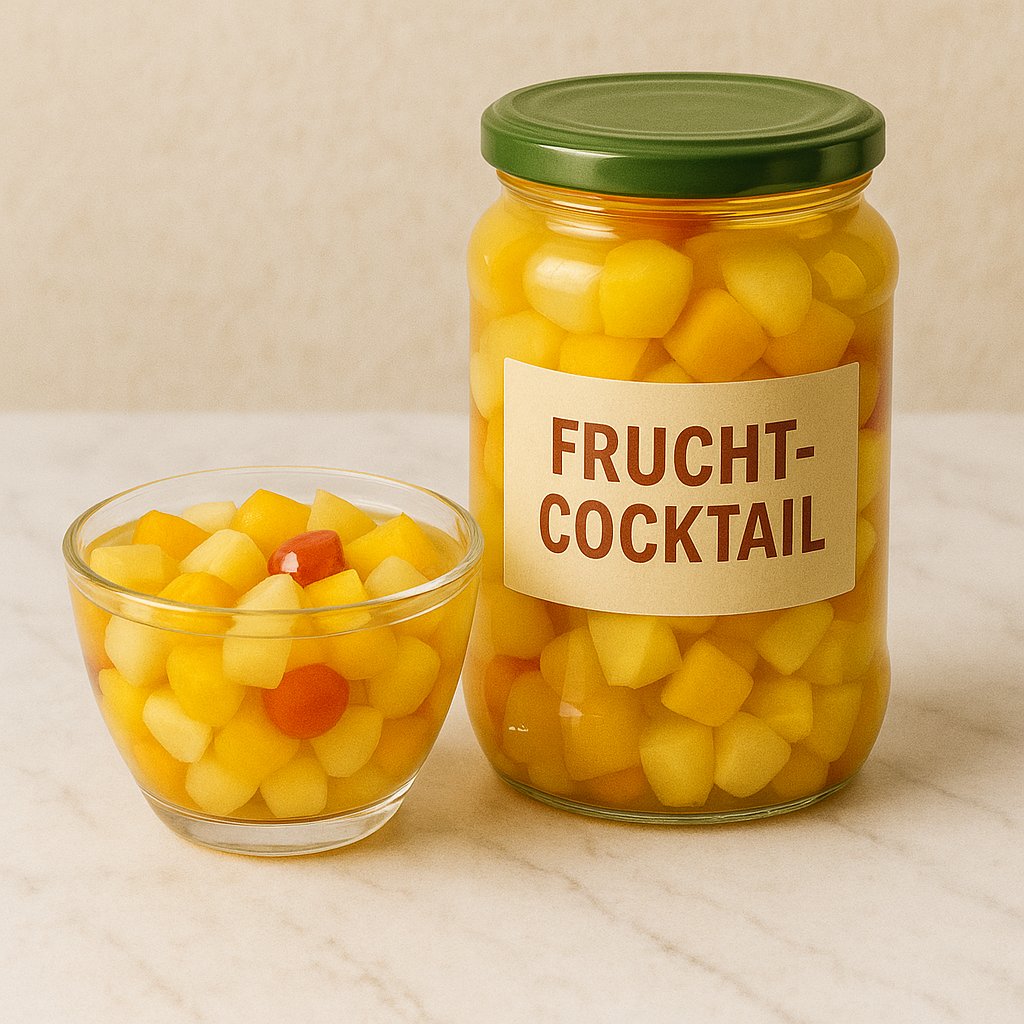
Bowl with fruit cocktail made of mixed fruit pieces

I still remember exactly the first time I opened a can of fruit cocktail and the sweet‑sour scent immediately brought back memories of lavish coffee tables. To me, fruit cocktail is a small all‑rounder that can do more in the kitchen than many expect at first glance. It adds colour and texture to desserts, creates quick fruit bowls and is a secret hero in savoury sauces when you want to work with a sweet counterpoint.

Fruit cocktail usually consists of pineapple, peach, pear, cherries and grapes. The fruits are already bite‑sized and preserved in syrup or juice. That makes the ingredient especially practical because you save the peeling and chopping without sacrificing flavour. I really like the balance between the soft texture and the crisp bite of some grapes. A colleague of mine swears by using the liquid for granita. I tried it and was delighted by the surprisingly intense aroma.

I've collected practical tips over the years. First, always let it drain when filling cake batters or cheesecakes so the batter doesn't become too wet. If you need to be quick, a rough dab with kitchen paper is enough. When used in cocktail glasses or refreshing bowls, the syrup can be included. I also recommend choosing high‑quality cans without unnecessary additives.

Popular uses

  • As a filling for sheet cakes or quick fruit tarts.
  • In yogurt, quark or as a topping on pancakes.
  • As a base for fruit salads, bowls or ice cream fillings.
  • Enhances sauces for poultry or as a sweet‑spicy accent in salads.
I'm always fascinated by how versatile this simple ingredient is. Sometimes I mix it with fresh herbs or a squeeze of lemon to refresh the sweetness. And to be honest, my appreciation for canned goods like this grows with every small kitchen experiment. Fruit cocktail is a reliable friend in hectic kitchen moments and a small bringer of pleasure on Sunday afternoons.

Availability & types


Availability and types of fruit cocktail

A fruit cocktail is a mixture of different fruits that you can buy ready in a jar or a can. You can find it year‑round in supermarkets because the fruits either come from different countries or have been preserved. Preserved here means the fruits were packaged so they last longer — for example in cans with juice or syrup.

Origin and growing regions
The individual fruits in the cocktail grow in different places depending on the type of fruit. It's like inviting friends from many countries, because each brings something special:

  • Peaches and pears: Often grown in Europe, for example in Spain, Italy or Greece. These countries have warm summers that make the fruits sweet.
  • Pineapple: Comes from tropical countries like Costa Rica, the Philippines or Thailand. Tropical means it's warm and humid all year — pineapple thrives there.
  • Tangerines and canned fruits like plums: Often come from Spain, Morocco or China. They are harvested in winter and then exported.
  • Grapes and cherries: Grow in many countries, including Germany, Turkey or the USA. Cherries have a short season in summer and are therefore sometimes harder to get fresh.
Available varieties and variants
Fruit cocktail comes in many variants. Here are the main ones, explained like in a simple recipe book:

  • Classic fruit cocktail: Usually with peach, pear, pineapple, grape and cocktail cherry. Often in thick syrup (sweetened liquid) or in fruit juice.
  • Light / less sugar: The same fruits, but in light syrup or in their own juice. It's like cake with less sugar — it tastes sweet but is a bit lighter.
  • No added sugar / in fruit juice: For people who want less sugar. The fruits are in 100% fruit juice instead of syrup.
  • Organic fruit cocktail: Here the fruits were grown without synthetic pesticides. Organic means the farmers tried to pay more attention to nature and animals.
  • Tropical mix: With mango, pineapple, papaya or passion fruit — fruits that come from warmer countries.
  • Fresh vs. preserved: Fresh fruit salads in the refrigerated section are ready to eat, cans or jars keep long and are practical for stocking up. There are also frozen mixes that can be thawed.
Packaging and practical notes
Fruit cocktails come in cans, jars or small single‑serve cups. Cans and jars last a long time because they are sealed airtight. Single‑serve cups are practical for school or packed lunches. If the label says “in its own juice”, that is usually the lower‑sugar choice. Check the best‑before date and store opened jars in the refrigerator.

In summary: fruit cocktail is flexible because it combines different fruits from many countries. You can get it year‑round in various flavours and packages — from the sweet classic to lower‑sugar or organic products. That makes it easy to create something tasty, whether as a dessert, in muesli or as a quick snack.
Details & nutrition

Property Value
Unit g
Calories per 100 70
Protein per 100 0.5
Carbohydrates per 100 17.0
Sugar per 100 15.0
Fat per 100 0.2
Saturated fat per 100 0.0
Monounsaturated fat 0.0
Polyunsaturated fat 0.1
Fiber per 100 1.3
Vitamin C (mg) per 100 8
Vitamin D (IU) per 100 0
Calcium (mg) per 100 10
Iron (mg) per 100 0.3
Nutri-Score C
CO₂ footprint 0.8 kg CO2e/kg
Origin Depending on the mix EU/non-EU (often from canned production)
Gluten-free Yes
Lactose-free Yes
Nut-free Yes
Vegan Yes
Note Nutritional values can vary greatly depending on the packing liquid (juice vs. sugar syrup). For canned products, note the drained weight where applicable.

Technical & scientific information


Fruit cocktail refers to a standardized mixture of several fruit types that are usually peeled, pitted, cut and then preserved in a liquid — typically syrup or fruit juice. In industry the term is mainly used for products sold in cans or jars, which typically contain peach, pear, pineapple pieces, grapes (or halved grapes) and cocktail cherries. There is also frozen fruit cocktail without added sugar.

Chemical composition and constituents. The fruit components provide mainly carbohydrates in the form of free sugars (fructose, glucose, sucrose), organic acids (especially citric and malic acid), plant fibres (cellulose, hemicellulose, pectins) as well as secondary plant compounds (polyphenols, carotenoids). Minerals such as potassium, magnesium and trace elements are present, but in varying concentrations depending on the fruit used. Vitamins are mainly present as vitamin C and provitamin A (beta‑carotene), with heat‑sensitive vitamins partially reduced during the preservation process.

Nutritional values (typical ranges). Energy content varies greatly with the addition of syrup: untreated, fresh fruit mix provides about 40–60 kcal per 100 g; in light syrup it often ranges 70–90 kcal/100 g, in heavy syrup values up to about 120 kcal/100 g can be reached. Total sugar content is usually 10–20 g/100 g, fibre typically ranges between 1 and 3 g/100 g.

Processing methods. Industrial production includes several standardized steps:

  • Selection and incoming goods inspection: sensory and microbiological checks.
  • Mechanical processing: washing, peeling, pitting and shaping (slices, cubes).
  • Preprocessing: enzyme activity is reduced by blanching or using antioxidants (ascorbic acid) to prevent browning.
  • Immersion in solution: water, fruit juice or sugar syrup; additives may include citric acid, ascorbic acid (antioxidant) and calcium chloride (firming agent).
  • Thermal preservation: pasteurization or can sterilization reduces microorganisms and enzymes.
  • Filling and sealing under hygienic conditions; storage at room temperature possible.
Microbiological and chemical safety. The combination of heat, reduced water activity (through syrup) and usually acidic pH prevents growth of most pathogenic microbes, including the spore‑forming Clostridium botulinum, provided the pH is below about 4.6. Preservatives such as sorbates or benzoates are sometimes used but are not necessary in many products. For canned goods the quality of the internal coating is relevant, since low‑contaminant (e.g. BPA‑free) coatings are recommended.

Health aspects. Fruit cocktail supplies micronutrients and secondary plant compounds, however added sugar increases energy density and can enhance the glycaemic effect. For people with diabetes or those following a calorie‑conscious diet, variants without added sugar are preferable. Furthermore texture and fibre content are reduced compared with whole fruit due to peeling and cutting. Gentle processing and short storage times are beneficial to retain vitamins and antioxidants.

In summary, fruit cocktail is a versatile, shelf‑stable food with nutritional advantages and disadvantages that depend largely on the recipe (syrup vs. juice vs. sugar‑free) and the applied processing methods.

Wiki entry for: fruit cocktail
Active now: 18 visitors of which 2 logged-in members in the last 5 minutes