Menu & categories

Frankfurter sausages

Finely smoked cooked sausage made from pork

Wiki about frankfurter Nutri-Score D Vegan No Gluten-free Yes Lactose-free Yes Nut-free Yes
NUTRITION / 100 g
270 kcal 12 g Protein 2 g Kohlenhydrate 25 g Fett

Introduction

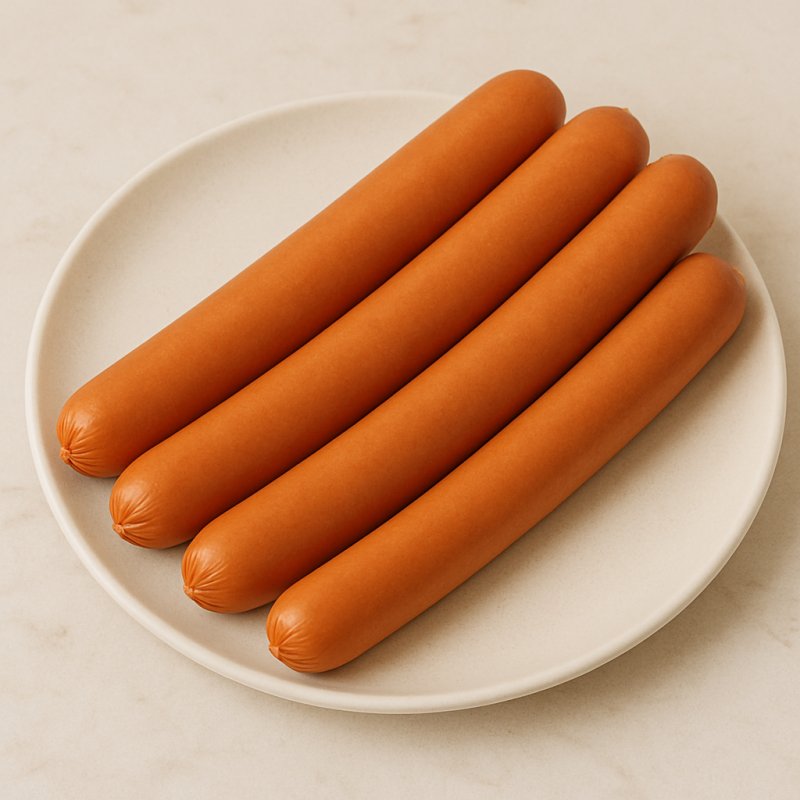
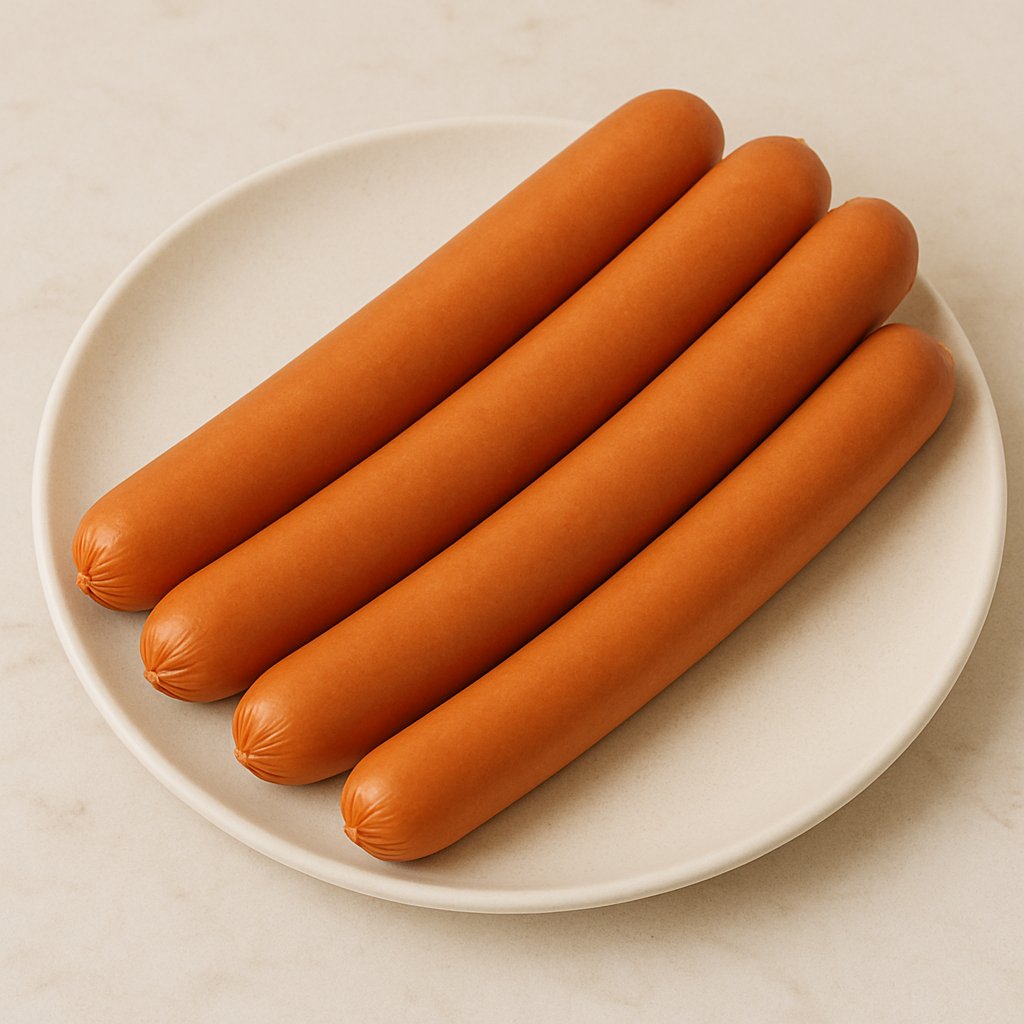
Several frankfurters on a plate
I still remember the smell of freshly sliced rolls and the soft sizzle when a Frankfurter sausage landed in hot water; this simple moment is one of the small rituals of everyday life for me. To me Frankfurter sausages are not just an ingredient but a piece of culinary history that moves elegantly between tradition and quick, uncomplicated cooking. Often they have saved a quick dinner, and just as often they were the secret star of a picnic or a late crossover evening with friends.

The classic Frankfurter sausages are tender, flavorful and remain juicy when gently warmed. I especially like how versatile they are: as part of a simple hot dog, in a hearty soup or thinly sliced on a mixed platter. A colleague of mine swears by briefly poaching them in mustard – a trick I have since used repeatedly because it lifts the flavors in a surprisingly subtle way. Sometimes I fry them in a little butter until the casing turns golden brown; then a completely different, slightly caramelized depth unfolds.

When choosing, I pay attention to where the sausages come from, because quality often makes the difference between a bland snack and a truly satisfying bite. I have learned to read labels and check ingredient lists. When I talk with friends about favorite recipes, the question of creative side dishes always comes up. Personally I like combinations that complement the sausage without overpowering it:

  • Homemade potato salad with a light vinaigrette
  • Spicy coleslaw for a contrasting freshness
  • Rustic rolls that are crispy on the outside and fluffy inside
A small anecdote: at a street festival I once watched an older gentleman keep a whole crate of Frankfurter sausages as a gift for his grandchildren – not out of need, but out of principle. For him they meant memory, reliability and a piece of home. Moments like that remind me that ingredients are more than mere building blocks of dishes; they connect people and stories.

So the next time I open a jar of mustard and warm a sausage, it is for me a conscious pause, a short pleasure that brings uncomplicated happiness. Frankfurter sausages are not haute cuisine, and that is precisely their strength: they are familiar, adaptable and always ready to be part of a good moment.

Availability & types

Availability and types

The Frankfurter sausages are a very well-known type of sausage from Germany. Although their name sounds like the city of Frankfurt am Main, they are produced and sold in many places today. You can often buy them in supermarkets, at the butcher (that's the meat seller) or at festivals such as Christmas markets and folk festivals. They are popular because they can be heated quickly and go well with bread, rolls or potato salad.

Origin
Frankfurter sausages originally come from the area around Frankfurt. In the past butchers in this region made a specific kind of sausage that could be heated over an open fire or in hot water. The name remained, even if today not all Frankfurter sausages come exactly from Frankfurt. Important: Many people associate the name with a thin, lightly smoked sausage made of pork or beef.

Production areas / places of manufacture
Sausages do not grow like vegetables – they are manufactured. The ingredients (meat) come from animals kept on farms. In Germany there are many butcher shops and meat plants that make Frankfurter sausages. Large factories produce them for supermarkets, while small artisanal butchers often have their own traditional recipes. That's why you find Frankfurter sausages:

  • in the state of Hesse (where Frankfurt is located)
  • throughout Germany, at butchers and supermarkets
  • in other countries where German meat products are popular
Available varieties and variants
Frankfurter sausages are available in different variants. Here are some examples so you can get an idea:

  • classic Frankfurters – thin, lightly smoked, usually made from pork or from a mixture of pork and beef. They are often heated in hot water.
  • beef Frankfurters – made from pure beef for people who do not want to eat pork.
  • poultry variants – sausages made from chicken or turkey, which taste lighter and often contain less fat.
  • vegetarian and vegan "Frankfurter" – made from plant ingredients such as soy, peas or seitan. They are intended to taste like real sausages but without meat.
  • cured and smoked – some sausages are first salted (cured) and then smoked; this gives a particular flavor that many people like.
  • colorful variants or children's versions – for children there are sometimes milder sausages or those in colorful packaging that are particularly appealing.
How to find them
If you want to buy Frankfurter sausages, you can:

  • go to the butcher and ask how the sausages were made (there you often find the best quality)
  • look in the supermarket, where different brands and types are often displayed side by side
  • try them at markets or stands, where they are sometimes freshly grilled or kept warm
A simple comparison: imagine Frankfurter sausages are like a popular toy sold in many colors and versions. The basic shape remains the same, but there are slight differences – sometimes it's bigger, sometimes smaller, sometimes made of wood (that is, plant-based), sometimes of metal (that is, beef). That way you can choose the variety you like best.

In summary: Frankfurter sausages are widespread and available in many variants – from the traditional butcher product to the vegetarian alternative. They originate in the Frankfurt region but are produced everywhere and are easy to find and prepare.
Details & nutrition

Property Value
Unit g
Average weight per piece 30
Calories per 100 270
Protein per 100 12
Carbohydrates per 100 2
Sugar per 100 1
Fat per 100 25
Saturated fat per 100 9
Monounsaturated fat 11
Polyunsaturated fat 3
Fiber per 100 0
Vitamin C (mg) per 100 0
Vitamin D (IU) per 100 0
Calcium (mg) per 100 10
Iron (mg) per 100 1.2
Nutri-Score D
CO₂ footprint 4.5
Origin Europe
Gluten-free Yes
Lactose-free Yes
Nut-free Yes
Vegan No
Note Nutritional values for classic pork frankfurters, smoked in natural casing; exact values may vary slightly depending on the manufacturer.

Technical & scientific information

Frankfurter sausages are a traditional scalded sausage finely cured and smoked, made from minced pork or blends of pork and beef. Characteristic are their thin, usually edible casing and the smooth, finely textured structure achieved by a specific chopping and emulsifying process. Historically they originate from the region around Frankfurt am Main; today the term refers to both traditional and industrially produced variants with a similar production principle.

Chemical composition and ingredients. At the molecular level Frankfurter sausages mainly consist of water, proteins, lipids, salts as well as small amounts of carbohydrates and additives. The proteins are predominantly myosin and actin from muscle tissue as well as collagen from connective tissue. These structural proteins form, during comminution and heating, a gel network that gives the sausage its slicing firmness and binding. Lipids consist mainly of triacylglycerols and phospholipids; their proportion influences flavor, juiciness and caloric content.

Nutritional values (typical ranges). Nutritional values vary depending on recipe, fat content and additives. Common values per 100 g are about 250–320 kcal, 12–18 g protein, 20–30 g fat (of which saturated fatty acids 7–12 g), under 2 g carbohydrates and 1–3 g salt (sodium chloride). The content of saturated fatty acids and sodium is nutritionally relevant, as high values are associated with an increased risk of cardiovascular diseases.

Processing methods. Industrial production is divided into several steps:

  • Meat selection and cutting: Selected meat parts are freed from tendons and excess fat.
  • Comminution and emulsification: The meat is finely chopped and processed with water, ice, curing salt (table salt + nitrite curing salt) and spices into a fine batter; emulsification ensures homogeneity and texture formation.
  • Filling into casings: The batter is filled into natural or artificial casings; natural casings are collagen-containing and edible, while artificial casings can be made of cellulose or plastic.
  • Scalding and cooking process: The filled sausages are heated in hot water (scalding process), typically to defined core temperatures that ensure protein denaturation and gel formation.
  • Smoking and cooling: Many Frankfurters are mildly smoked, allowing aromatic phenols and other smoke components to deposit on the surface and exert preservative effects.
  • Packaging: After cooling they are packaged under protective atmosphere or in cans/trays for longer shelf life.
Food safety and additives. Important additives include nitrite curing salt (for color stabilization, inhibition of anaerobes like Clostridium botulinum and flavor), phosphates (for water binding and texture improvement) and antioxidants. The use of nitrite is regulated because nitrite can form nitrosamines in the presence of certain amines, which are classified as carcinogenic. Good manufacturing practice minimizes such reaction conditions by controlled nitrite levels and the addition of ascorbate/ascorbic acid, which inhibits nitrosation.

Health aspects. Frankfurter sausages are an energy-dense, protein-rich ingredient, but also a significant source of saturated fatty acids and sodium. Regular and high consumption of processed meat products is epidemiologically associated with an increased risk of colorectal cancer and cardiovascular diseases, which is why dietary recommendations advise moderate consumption. For people with hypertension or fat-related risks, low-fat or nitrite-reduced variants are preferable alternatives.

Storage and shelf life. Due to their water content and curing salt, Frankfurter sausages are shelf-stable under refrigerated storage for several days to weeks; vacuum-packed or sterilized variants have significantly longer shelf lives. Microbiological risks exist mainly before heating or if the packaging is damaged, which is why the cold chain and hygienic handling are decisive.

From a technical and nutritional science perspective, Frankfurter sausages combine complex physico-chemical processes of gelation, emulsification and flavor formation with regulatory and health issues that must be considered in recipe development and consumption.

Wiki entry for: frankfurter
Active now: 20 visitors of which 2 logged-in members in the last 5 minutes