Menu & categories

Flaxseed

Oilseed rich in fiber and omega-3

Wiki about flaxseed Nutri-Score A Vegan Yes Gluten-free Yes Lactose-free Yes Nut-free Yes
NUTRITION / 100 g
534 kcal 18.0 g Protein 29.0 g Kohlenhydrate 42.0 g Fett

Introduction

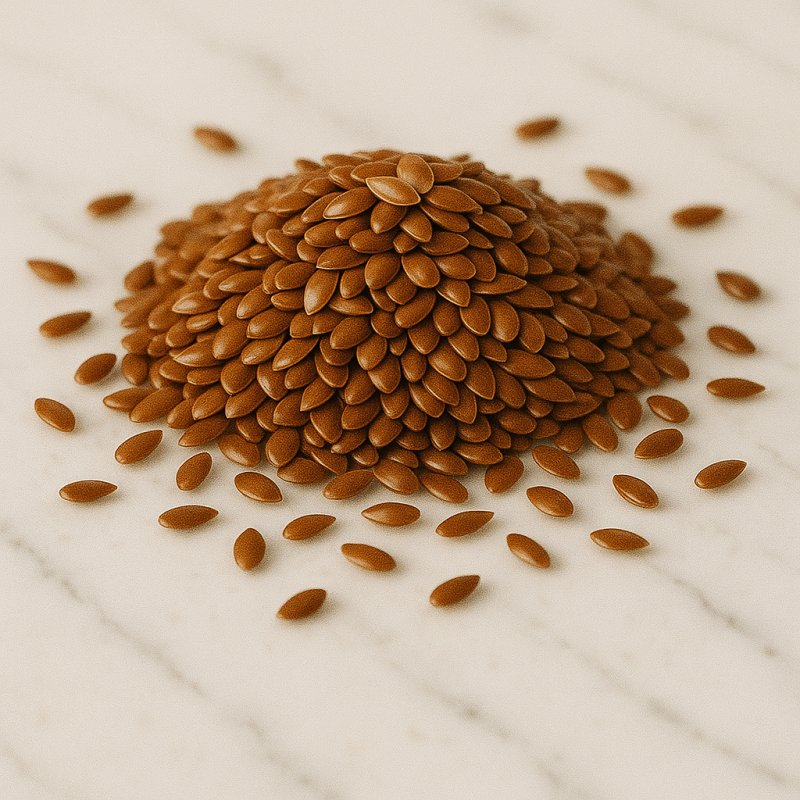
Brown flaxseeds in a bowl
I still remember well the first morning I consciously added flaxseeds to my breakfast: a plain yogurt, a drizzle of honey and a little of those tiny, shiny seeds that clinked almost like little treasures when stirred. Since then flaxseed has not left me. For me it is a small kitchen miracle that in its modesty can do so much — from a crunchy topping to a creamy binder in vegan baking recipes.

What fascinates me about flaxseed is its versatility. Whole or ground seeds fit into muesli, smoothies, soups and bread; when soaked they develop a mucilaginous, gel-like consistency that works excellently as an egg substitute in baking. A colleague of mine swears that a tablespoon of ground flaxseed in his brain-food smoothie is his secret for more relaxed afternoons. I tried it — and yes, the taste is mild, slightly nutty, and the texture blends unobtrusively into many dishes.

Besides the culinary use, I appreciate the nutritional benefits. Flaxseeds are rich in fiber and omega-3 fatty acids, and they contain valuable plant compounds that deserve a place in a balanced diet. I often point out that ground flaxseed is better utilized than whole seeds because the body can access the valuable constituents that way. That's a simple tip I picked up in many kitchen experiments.

Storage and handling are also practical: whole seeds last longer, ground ones should be stocked fresh, ideally airtight and cool. I've found that a jar in the fridge significantly improves shelf life — and by the way looks nice on the shelf. For those who like to experiment, I've collected a few small usage suggestions:

  • As a topping: sprinkled over salads or yogurt for crunch and a nutrient boost.
  • As a binder: as a flax egg in cakes or patties.
  • In bread: ground into doughs for nutty depth and moisture.
  • In smoothies: for creaminess and fiber without a dominant flavor.
Flaxseeds are for me more than just an ingredient — they are a small, uncomplicated upgrade for everyday life that makes a difference in many recipes. I always enjoy showing friends a new use and seeing their surprise at the first spoonful.

Availability & types

Availability and types of flaxseed

Flaxseeds are small, shiny seeds that come from the flax plant. They are very popular because they are healthy and can be used in many ways. You can find flaxseed in many supermarkets, natural food stores and online. Sometimes they are located next to nuts and grains or among baking ingredients.

Origin and growing regions

Flax, the plant that provides flaxseed, grows in many parts of the world. Important producing countries include:

  • Europe – especially in countries like France, Belgium and the Netherlands. The climate there is often somewhat cooler, and flax grows well.
  • Canada – Canada is one of the largest producers of flaxseed, mainly for export. The fields there are large and well-suited for seed production.
  • Russia and India – flax is also grown extensively in these countries, often in regions with suitable weather conditions.
You can imagine it like this: flax prefers areas that are not too hot, similar to a plant that prefers to bloom in spring rather than in the height of summer.

Available varieties and forms

Flaxseeds come in different varieties and forms. The main differences concern color, processing and intended use:

  • Blue (brown) and golden flaxseed
    There are two common colors of flaxseed: brown (sometimes called “blue”) and golden. Both taste similar and have comparable nutrients. It's a bit like apples: a red and a green apple look different but are both tasty.
  • Whole seeds
    These seeds are intact and are often used in muesli, yogurt or baking. They remain fresh for a long time because the oil is protected inside. However, the body cannot absorb the nutrients as well if the seeds are swallowed whole.
  • Ground (milled) flaxseed
    Ground seeds are like milled grains. Grinding makes the beneficial constituents more accessible to the body. Many people grind the seeds fresh or buy pre-ground flaxseed.
  • Flaxseed oil
    Oil is also pressed from flaxseed and is used as a dietary supplement or to dress salads. The oil has its own flavor and should be stored cool to prevent it from becoming rancid.
  • Golden or brown varieties as specialty products
    Some packages contain specially selected varieties for particular flavor or higher nutrient concentration. It's similar to different coffee beans: the base is the same, but there are slight differences.
Storage and purchasing tips

Proper storage is very important: flaxseed and especially flaxseed oil should be stored cool and dark, for example in a closed jar in the refrigerator. That way they stay fresh longer. When buying flaxseed, pay attention to the expiration date and terms like “cold pressed” for the oil — that means the oil was obtained gently.

In summary: flaxseed is widespread, grows in many countries and comes in various forms — from whole seeds to oil. Depending on how you intend to use them, you can choose the appropriate variant and store it well so it retains its beneficial properties.
Details & nutrition

Property Value
Unit g
Calories per 100 534
Protein per 100 18.0
Carbohydrates per 100 29.0
Sugar per 100 1.6
Fat per 100 42.0
Saturated fat per 100 3.7
Monounsaturated fat 7.5
Polyunsaturated fat 28.7
Fiber per 100 27.0
Vitamin C (mg) per 100 0
Vitamin D (IU) per 100 0
Calcium (mg) per 100 255
Iron (mg) per 100 5.7
Nutri-Score A
CO₂ footprint 0.9
Origin Worldwide, mainly Canada, Russia, China and Europe
Gluten-free Yes
Lactose-free Yes
Nut-free Yes
Vegan Yes
Note Flaxseeds are rich in fiber and alpha-linolenic acid (an omega-3 fatty acid). With high consumption, ensure adequate fluid intake.

Technical & scientific information

Flaxseed (Linum usitatissimum) are the oil-containing seeds of the flax plant and rank among the oldest cultivated crops of humanity. Botanically they belong to the Linum species family and are cultivated for their seeds used in food, feed and oil production. The seeds are characteristically oval to slightly flattened, about 3–5 mm long, and vary in color from golden yellow to dark brown.

Chemical composition and constituents. Flaxseeds consist mainly of fat, protein, fiber and water-binding carbohydrates. Typical macronutrient shares in dried seed are approximately 40–45% fat, 20–25% protein and 25–30% fiber. Important components include:

  • Fatty acids: Flaxseeds are particularly rich in alpha-linolenic acid (ALA), an essential n-3 (omega-3) polyunsaturated fatty acid. The ALA content varies but often lies around 50–60% of total fatty acids. They also contain linoleic acid (omega-6) and monounsaturated fatty acids such as oleic acid.
  • Proteins: The seeds contain high-quality plant proteins with a balanced amino acid profile, although lysine may be relatively limited.
  • Fiber: Both soluble and insoluble fibers are present in high amounts. A notable constituent is the mucilaginous polysaccharide in the seed coat, which develops gel-like properties upon hydration.
  • Secondary plant compounds: These include notably lignans (e.g. secoisolariciresinol diglucoside, SDG), phenolic compounds and flavonoids. Lignans can be partially converted into bioactive metabolites in the gut and are considered potent phytoestrogens and antioxidants.
  • Vitamins and minerals: Flaxseeds provide micronutrients such as magnesium, phosphorus, iron and B vitamins in relevant amounts.
Nutritional profile (typical values per 100 g) is around 500–600 kcal energy, 40–45 g fat, 20–25 g protein, 25–30 g carbohydrates including 20–30 g fiber. Exact composition varies with variety and growing conditions.

Processing methods and uses. Flaxseeds are used raw, ground, milled or as oil. The seed coat is relatively hard; full utilization of the contained nutrients usually requires prior grinding or crushing because whole seeds can pass through the gut without releasing all constituents. Methods and products include:

  • Whole seeds: long shelf life, provide texture but lower bioavailability of internal components.
  • Milled/ground seeds: increase availability of ALA, proteins and lignans; should be stored cool because released lipids are more prone to oxidation.
  • Flaxseed oil: a cold-pressed oil with high ALA content; sensitive to light, heat and oxygen and therefore has limited shelf life.
  • Extracts: isolated lignans or fiber fractions are used for supplements and functional foods.
Health aspects and research. Scientific studies show several potentially positive effects of flaxseed or its components. ALA can contribute to meeting omega-3 fatty acid requirements; lignans have antioxidant properties and may exert estrogen-modulating effects. Fibers and mucilaginous substances promote gut health, regulate digestion and can support cholesterol-lowering effects. Studies suggest possible benefits for cardiovascular diseases, blood lipid profiles and gastrointestinal complaints, though effects are often dose-dependent and vary between studies.

Safety and notes. Flaxseed is considered safe at typical consumption amounts. At larger doses, interactions with medications (e.g. blood pressure or anticoagulant-affecting drugs) and potential influence on absorption of certain medicines should be considered. Raw or unripe plant parts can contain small amounts of cyanogenic glycosides; commercial seeds are generally safe. Pregnant individuals should consult healthcare professionals if high amounts or specific supplements are planned.

Overall, flaxseed constitutes a nutrient-dense, versatile ingredient whose health-relevant effects are based on the interplay of polyunsaturated fatty acids, soluble fibers and bioactive lignans. The choice of processing form influences bioavailability and shelf life, which is why ground seeds or freshly pressed oil are preferred in many applications, provided appropriate storage conditions are observed.

Wiki entry for: flaxseed
Active now: 20 visitors of which 2 logged-in members in the last 5 minutes