Menu & categories

Elderflowers

Aromatic flowers of black elder for syrups, tea and desserts

Wiki about elderflower Nutri-Score A Vegan Yes Gluten-free Yes Lactose-free Yes Nut-free Yes
NUTRITION / 100 g
50 kcal 0.7 g Protein 8.0 g Kohlenhydrate 0.6 g Fett

Introduction

Fresh elderflowers on an elder shrub
I have a secret weakness for elderflowers. When in late summer the small white umbels light up on hedges and old trees, the scent alone pulls me outside like an invisible thread. Once I followed a spontaneous bike ride just because there was a whole shrub full of flowers by the roadside; the ride ended with a bucket full of flower umbels and an improvised jug of elderflower syrup in the kitchen.

Elderflowers are delicate yet incredibly versatile. They smell floral and slightly honey-like, and their aroma lifts desserts, drinks and even savory dishes to a new level. I still remember a Sunday meal where I refined a simple potato soup with a touch of elderflower vinegar. The guests were surprised and asked for the recipe — no one had tried such a combination before.

For using the flowers I always follow a few simple rules:

  • Harvest carefully: Only pick fresh, clean umbels without discoloration.
  • Decide by smell: A slightly sweet scent is good; leave flowers that smell musty.
  • Raw and processed: Flowers are suitable for syrups, jelly, teas and baking, but also for flavoring vinegars or spirits.
I prefer to make elderflower syrup. The recipe is so simple that I tried it after a festival visit at a campsite: bring sugar and water to a boil, add lemon slices, place the flowers to infuse and let them steep patiently. Patience pays off, because the syrup captures the fleeting aroma perfectly and turns sparkling mineral water into a summer memory.

Besides culinary pleasures, elderflowers also have a long tradition in folk medicine and home remedies. I use them occasionally as a mild tea for a sore throat, always with the good feeling of using something natural from my surroundings. When collecting them I enjoy the interplay of nature observation and cooking: it's a small mindfulness exercise that only makes the taste more intense in the end.

Next time you pass an elder shrub, stop briefly, sniff and maybe take one or two umbels home. Sometimes the simplest ingredients are the ones that give us the most joy.

Availability & types

Availability and types of elderflowers

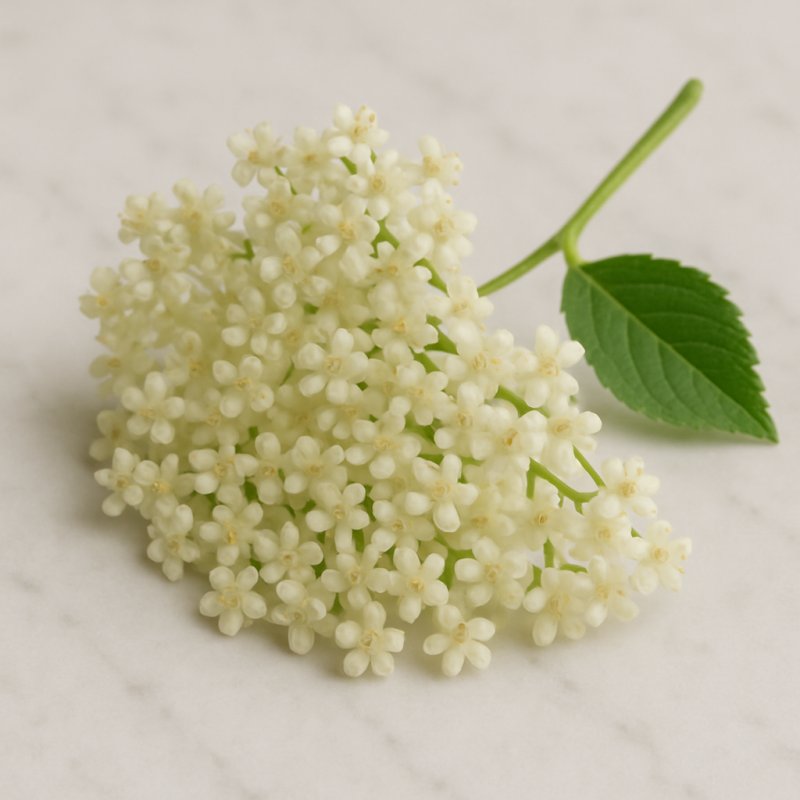
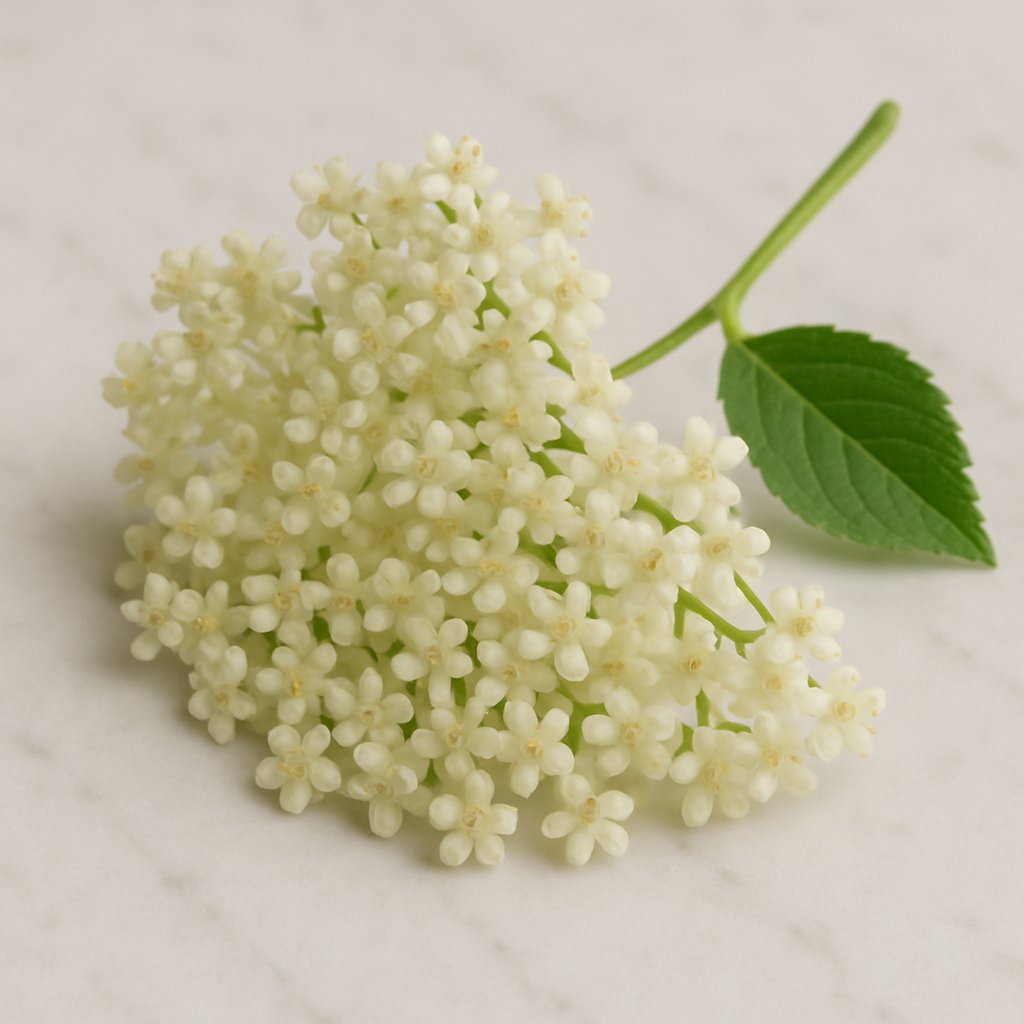
Elderflowers are the delicate white flower umbels of the elder shrub. You find them in the wild, in gardens and sometimes even in supermarkets – especially in spring and early summer when the plants bloom. They can be gathered fresh, bought dried or found as an ingredient in syrups, teas and other products. Their flowers look like little stars grouped into large umbrellas, almost like mini umbrellas full of flowers.

Origin
Elder grows mainly in Europe, but also in parts of Asia and North America. In Europe the black elder (Sambucus nigra) is the most widespread. It favors warm places by roadsides, at woodland edges and in hedges. Elder is hardy and can grow on various soil types, which is why it is often seen in villages, fields or gardens. In the past people planted elder near houses because they believed it brought luck and protected the home.

Growing regions
Elder grows wild and is also cultivated intentionally. Important growing regions include:

  • Europe: Especially in Germany, Austria, Switzerland, England and Scandinavia.
  • Asia: In some regions there are related species that are used similarly.
  • North America: There you can find both native and introduced elder species.
In gardens elder is often planted as a hedge or ornamental shrub. For harvesting elderflowers people look for quiet, clean places without heavy road exhaust.

Available varieties and variants
There are different types of elder that differ slightly in appearance and use. The main ones are:

  • Black elder (Sambucus nigra): Most commonly used for syrups, tea and recipes. It has white flowers and later black berries.
  • Red elder (Sambucus racemosa): Has rather red berries and is used less often for drinks because the berries are often bitter.
  • Japanese elder and other cultivars: In gardens there are varieties with special leaves or more compact growth forms that look nice and are easy to maintain.
Forms in which you find elderflowers
Elderflowers are available in different forms depending on how they have been processed:

  • Fresh: Picked directly from the shrub. Fresh flowers have a strong, pleasant scent and are often used for syrups or fresh recipes. They should be clean and dry.
  • Dried: The flowers are gently dried and then keep longer. Dried flowers are often used for tea or as an ingredient in baking recipes. They resemble dried herbs and can be used like tea bags.
  • Processed: In syrups, lemonades, candies or flavorings: here the flowers have already been processed into a product that can be used directly.
Tips for choosing
If you want to collect or buy elderflowers, make sure the flowers smell fresh and have no brown spots. When collecting in the wild look for clean places away from roads and fields treated with pesticides. Dried flowers should be dry and aromatic, without mold. Products like syrup are practical because they preserve the elder taste for a long time.

In summary, elderflowers are easy to find, especially in Europe, and there are several species and processing forms. Whether fresh from a bush in the garden, dried in a tea shop or as syrup in the supermarket – there are many ways to enjoy the sweet scent and flavor of elderflower.
Details & nutrition

Property Value
Unit g
Calories per 100 50
Protein per 100 0.7
Carbohydrates per 100 8.0
Sugar per 100 4.0
Fat per 100 0.6
Saturated fat per 100 0.1
Monounsaturated fat 0.1
Polyunsaturated fat 0.3
Fiber per 100 4.0
Vitamin C (mg) per 100 35
Vitamin D (IU) per 100 0
Calcium (mg) per 100 40
Iron (mg) per 100 1.6
Nutri-Score A
CO₂ footprint 0.3 kg CO2e/kg
Origin Europe, especially Central Europe
Gluten-free Yes
Lactose-free Yes
Nut-free Yes
Vegan Yes
Note Nutritional values refer to fresh elderflowers without added sugar; commonly used for syrups, tea and flavored dishes.

Technical & scientific information

Elderflowers (Sambucus nigra) are the fragrant inflorescences of the black elder, a shrub widely distributed in Europe from the family Adoxaceae. Botanically the flower clusters consist of numerous small, five-petaled flowers with white to cream-colored corollas and a characteristic mildly sweet aroma. The harvest time in temperate zones is typically between May and June, when the flowers are fully open and dry from the morning dew.

Chemical composition and constituents
Fresh elderflowers contain a complex mixture of volatile aroma compounds, water-soluble polyphenols, flavonoids, coumarins, mucilages and organic acids. Important constituents include:

  • Essential oils: Responsible for the floral aroma; contain monoterpenes and aromatic esters such as linalool and geranyl acetate.
  • Flavonoids: Quercetin, kaempferol and isorhamnetin derivatives that exhibit antioxidant properties.
  • Phenolic acids: Such as caffeic acid and chlorogenic acid, which can show inflammation‑modulating effects.
  • Mucilages and polysaccharides: Support the mild demulcent effect on mucous membranes in traditional applications.
  • Saponins: Present in smaller amounts; they can have a slight surfactant effect.
Nutritional values
Elderflowers are generally used as an ingredient in small amounts, so they do not provide significant macronutrients. Fresh flowers are low in calories but contain traces of carbohydrates, fiber, vitamins (especially vitamin C in small amounts) and minerals such as potassium. Nutrient values vary widely depending on processing (e.g. syrup, drying, extracts).

Processing methods
Elderflowers are processed in various ways. Common procedures include:

  • Drying: Gentle air drying at low temperatures preserves aroma and secondary plant compounds; drying reduces water activity and extends shelf life.
  • Maceration and extraction: Cold extracts in water or alcohol (tinctures) extract soluble polyphenols and aroma. Temperature, solvent and extraction time influence the active compound profile and shelf life.
  • Syrup production: Flowers are macerated with sugar and citric acid; a short heating produces a stable syrup with preservative sugar concentrations.
  • Distillation: Recovery of essential oils is possible, but yields are low; more relevant in the perfume and flavor industry.
Effects and health aspects
Elderflowers are traditionally used to relieve cold symptoms, promote sweating and soothe the airways. Pharmacologically the following properties can be described:

  • Antioxidant effect through flavonoids and phenolics, which can reduce oxidative cell damage.
  • Mild inflammation‑modulating effects in vitro and in some animal studies, which are attributed to polyphenols and mucilages.
  • Expectorant effect, partly explained by mucilages and saponins; however clinical evidence is limited.
Safety and precautions
Raw plant material from the genus Sambucus can contain toxic cyanogenic glycosides in parts (in berries, bark and unripe fruits); the flowers themselves are generally considered safe when fresh and properly processed. Recommended are:

  • Use only healthy, undamaged flowers without pest infestation or rot.
  • Avoid using flowers that may be contaminated with short‑lived pesticides.
  • If there is a known allergy to plants of the umbellifer family (Apiaceae), caution is advised because cross‑reactions may occur.
Research and applications
Modern interest focuses on the standardization of elderflower extracts, the isolation of bioactive markers and the evaluation of clinical effects in respiratory infections. In food technology, elderflowers serve mainly as carriers of taste and aroma in beverages, syrups and desserts.

Overall, elderflowers are an aromatic and chemically diverse plant ingredient with traditional uses in folk medicine and versatile applications in cultivation technology and food processing. Their effectiveness for specific medical indications is promising but requires further standardized clinical studies, and proper harvesting and processing increase the safety and quality of use.

Wiki entry for: elderflower
Active now: 6 visitors of which 2 logged-in members in the last 5 minutes