Menu & categories

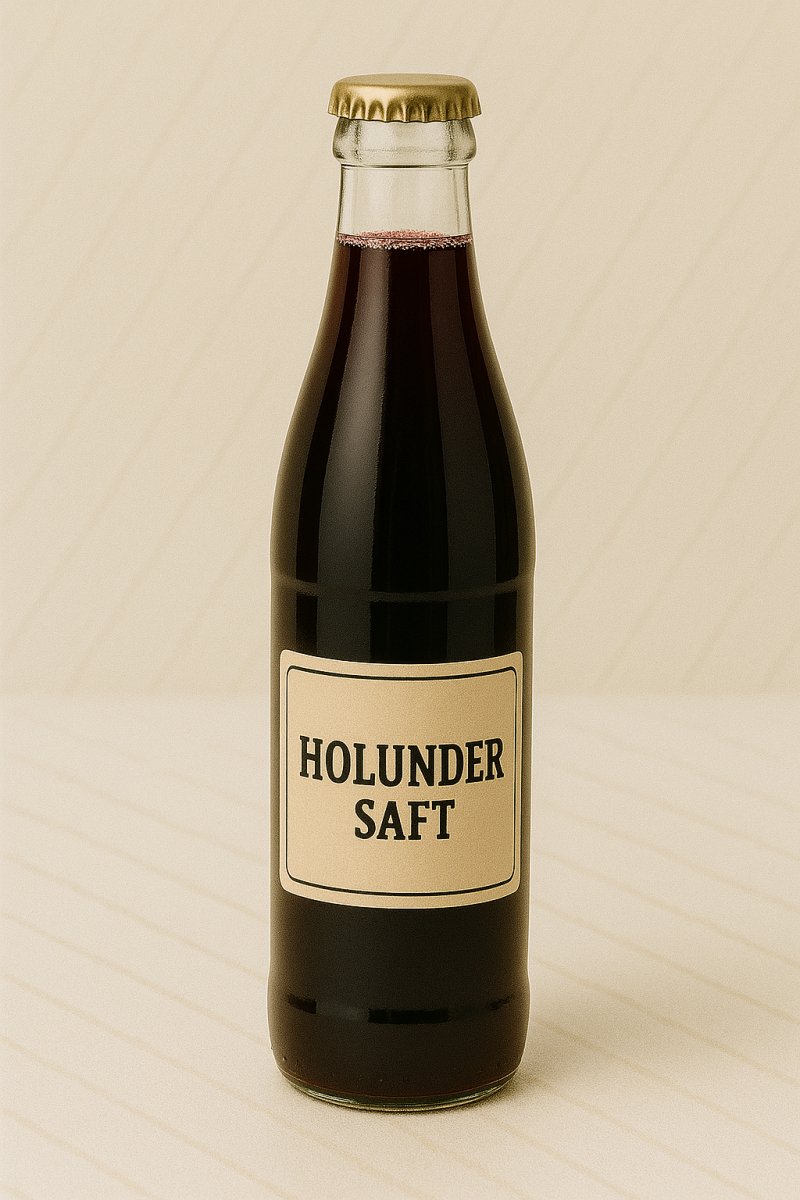
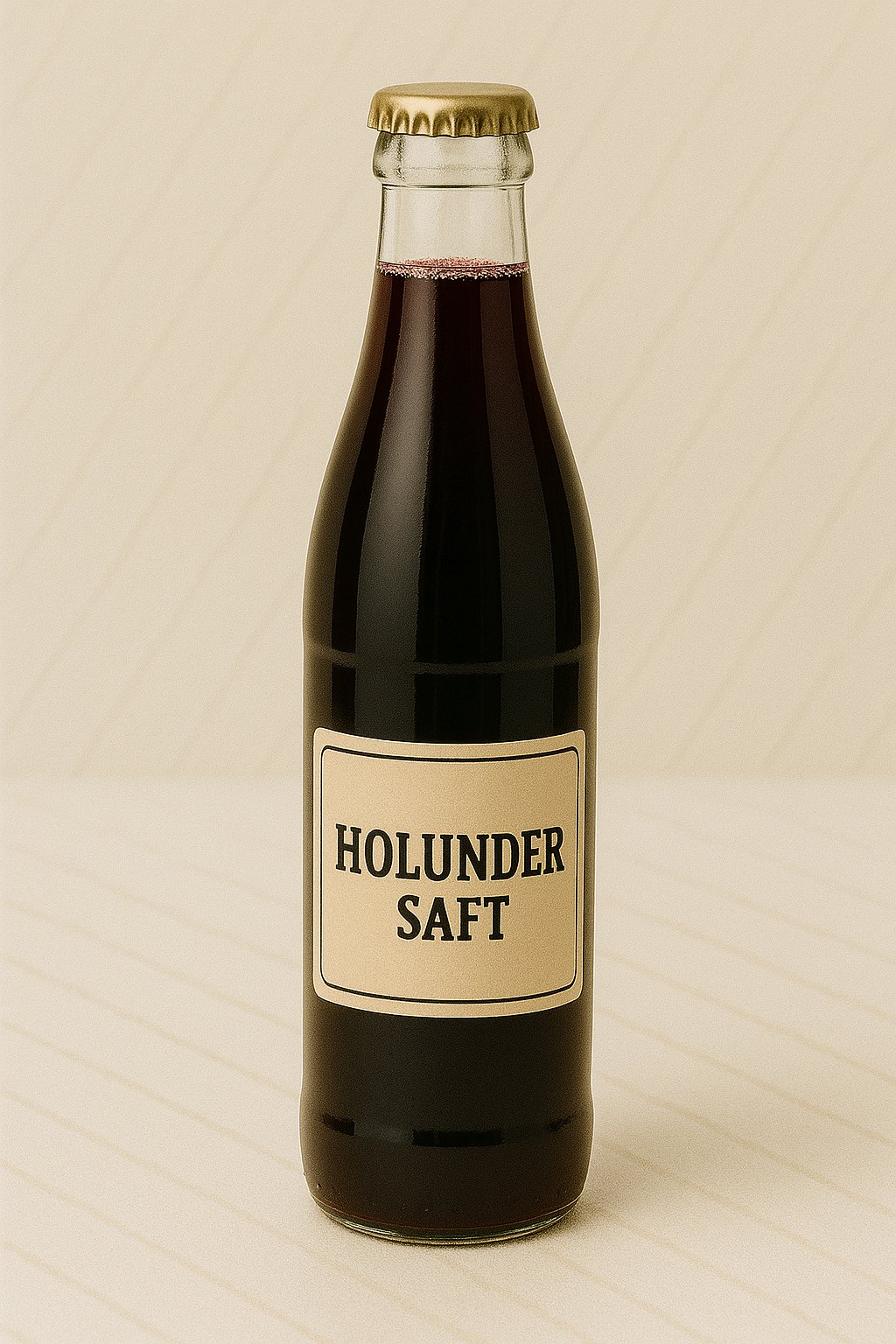
Elderberry juice

Fruity-tart juice made from elderberries – ideal for spritzes, syrups and desserts.

Wiki about elderberry juice Nutri-Score C Vegan Yes Gluten-free Yes Lactose-free Yes Nut-free Yes
NUTRITION / 100 ml
46 kcal 0.5 g Protein 11.0 g Kohlenhydrate 0.2 g Fett

Introduction

Glass with elderberry juice and elderberries
Elderberry juice for me is something like a culinary mood-lifter: dark, aromatic and surprisingly versatile. I still remember the first market stall where I tried it – a tiny wooden stand, a bucket full of bottles and the smell of summer with a hint of bitterness. A colleague of mine swears by it; he mixes a few sips into his afternoon tea when a marathon of appointments is looming. Sometimes it is precisely that small sip that saves the day.

What I particularly love about elderberry juice is the balance between sweetness and depth. It evokes dark berries but also has floral notes that recall elderflowers. In my kitchen I like to use it as a base for sparkling long drinks, in chutneys or as a reduced topping for sautéed fruits. What is especially nice is that it blends easily with other flavors: citrus, ginger or rosemary harmonize surprisingly well.

Important: raw elderberry material can be toxic if unprocessed. I always make sure to use only boiled or pasteurized elderberry juice. A friend once had a bad experience with self-picked berries; since then we cook everything thoroughly. This is not scaremongering but a simple safety rule I like to pass on.

I have summarized some of my favorite uses here:

  • As a refreshing drink with sparkling water and a slice of lemon.
  • In cocktails as an aromatic, fruity component.
  • As an ingredient in desserts: sorbets, sauces or syrups.
  • To refine sauces for game or dark poultry.
Elderberry juice is more than a trend: it brings flavor, color and stories into everyday life. I like how a glass can suddenly start a conversation or elevate a simple dish. The next time you stand in front of a bottle of elderberry juice at the market stall, take it and try something new — maybe it will also become that small, aromatic moment of happiness for you.

Availability & types

Availability and types

Origin:
Elderberry juice is obtained from the fruits of the elder bush. In Europe the most common species is the Black Elder (Sambucus nigra). You can compare it to a fruit tree: just as apples or pears grow on trees, elderberries grow on shrubs. There are also related elder species in North America and Asia that bear similar berries. This origin explains why elderberry juice is popular in many countries — it grows where the climate is not too hot or too cold.

Growing regions:
Elder grows particularly well in Europe, for example in Germany, Great Britain, the Netherlands and countries around the Mediterranean. Elder is also found in North America (especially in the northeastern USA and Canada) and parts of Asia. Elder bushes often stand at field edges, in gardens or along forest paths. Many people plant it because it is not very demanding and thrives even on poorer soils. Berry harvest time is usually late summer to early autumn, roughly in August and September.

Available types and varieties of elderberry juice:

  • Direct juice (100% juice): This juice is made only from elderberries, without additives. It can be clear or slightly cloudy depending on how it was produced. It can be drunk similarly to apple juice, though it is sometimes a bit more tart.
  • Concentrates: These are juices from which water has been removed so they last longer and are easier to transport. Before drinking, the concentrate is mixed with water — like a syrup for lemonade.
  • Syrup and nectar: These variants are often sweetened and therefore sweeter than pure juice. Syrup is frequently mixed with water or mineral water; nectar usually contains less fruit content than direct juice but more sugar.
  • Mixed beverages: Elder is often combined with other fruits, for example apple, blackcurrant or aronia. These blends are mild and often more pleasant in taste for children.
  • Organic varieties: Elder juices are also available from organic farming. This means that fewer synthetic substances were used during growing and processing. Many people choose organic because they consider it more natural.
  • Frozen berries and preserved products: Fresh elderberries are rare in supermarkets but are often available frozen or as preserved products (juice in bottles, canned).
Where to get elderberry juice:
You can find elderberry juice in supermarkets, health food stores, at weekly markets and often at farm shops. It can also be ordered online. Local presses or producers sometimes offer homemade juice. Fresh berries are seen less often in trade because they spoil quickly — for fresh berries you sometimes need to pick them yourself or buy from a farmer.

Important note:
Raw elderberries and other parts of the plant can be slightly toxic and must be cooked before eating or making juice. Purchased elderberry juice is normally safe because it has been processed. If you want to process elderberry at home, ask an adult and follow a recipe that explains how to prepare the berries correctly.

In summary, elderberry juice comes in many forms: as pure juice, concentrate, syrup or in blends. It originates from Europe, North America and parts of Asia, grows on shrubs and is ripe in late summer. You can easily find it in stores or from local suppliers — and it tastes particularly good when mixed with water or combined with other juices.
Details & nutrition

Property Value
Unit ml
Average weight per piece 200
Calories per 100 46
Protein per 100 0.5
Carbohydrates per 100 11.0
Sugar per 100 10.0
Fat per 100 0.2
Saturated fat per 100 0.0
Monounsaturated fat 0.0
Polyunsaturated fat 0.1
Fiber per 100 0.3
Vitamin C (mg) per 100 20
Vitamin D (IU) per 100 0
Calcium (mg) per 100 20
Iron (mg) per 100 0.5
Nutri-Score C
CO₂ footprint 0.06 kg CO2e/100 ml
Origin Europe
Gluten-free Yes
Lactose-free Yes
Nut-free Yes
Vegan Yes
Note Nutritional values may vary depending on production method (direct juice vs. from concentrate; sweetened/unsweetened).

Technical & scientific information

Elderberry juice is obtained from the berry-like fruit clusters of Black Elder (Sambucus nigra) and is a complex plant-derived ingredient with a characteristic dark color, acidic taste and a rich spectrum of secondary plant compounds. As a food product, elderberry juice is available fresh as well as in concentrated and pasteurized forms; its physicochemical properties and content of bioactive compounds depend on variety, ripeness, harvest time and processing parameters.

Chemical composition and constituents: The notable components are

  • Anthocyanins: mainly cyanidin derivatives (e.g. cyanidin-3-glucoside, cyanidin-3-sambubioside), which are responsible for the deep violet to black color and possess antioxidant properties.
  • Flavonoids and phenolic acids: flavonols such as rutin and quercetin as well as various phenolic acids contribute to the total polyphenol content and influence taste, color and stability.
  • Organic acids: citrate and malate are dominant, giving elderberry juice a low pH (typically around pH 3–3.5).
  • Macronutrients: soluble saccharides (fructose, glucose and sucrose) determine the energy value; fiber is present only in traces in clarified juices.
  • Vitamins and minerals: vitamin C, small amounts of B-vitamins and minerals such as potassium are present, with contents varying widely.
  • Cyanogenic glycosides: in raw berries, seeds and other plant parts traces of sambunigrin can occur; these can be potentially toxic if processing is insufficient.
Nutritional values and physical parameters: Depending on concentration, elderberry juices typically provide an energy value between 40 and 80 kcal per 100 ml. Sugar content often ranges from 8–15 g/100 ml (depending on added sugar or concentration). The °Brix value varies accordingly and for commercial juices is usually between 10 and 15 °Brix.

Processing techniques: Common steps are harvesting ripe berries, sorting, washing, heating/blanching to inactivate enzymes, mechanical pressing and often enzymatic treatment (pectinases) to increase yield and improve clarifiability. After filtration or centrifugation, pasteurization or aseptic filling follows for preservation. Concentration by vacuum evaporation is used to reduce volume for storage and transport; reconstitution is possible. Fermentation (wine production) changes chemical composition through alcoholic fermentation and microbial transformations.

Stability and sensory properties: Anthocyanins are sensitive to light, pH and heat; their color and antioxidant activity can be affected by heat treatment, light exposure or ascorbic acid. Co-pigmentation with other phenols enhances color stability. Clarification and filtration affect taste and mouthfeel, as suspended solids and pectins are removed.

Health aspects and safety information: Elderberry juice is frequently studied for its high polyphenol content in relation to antioxidant and immunomodulatory effects; however, robust clinical evidence for prophylactic or therapeutic effects is limited. Plant parts consumed raw or insufficiently processed can contain cyanogenic glycosides; commercial juice products are generally safe due to heating or other processes. Allergic reactions and interactions are possible, so people with intolerances or on immunosuppressive therapy should consult a physician. Refrigeration, pasteurized filling or concentrate storage in closed containers prolong shelf life.

Overall, elderberry juice is a nutrient- and polyphenol-rich food with specific technological challenges: extraction, stabilization and storage aim to preserve sensory quality and bioactive complexes while minimizing health risks through appropriate processing.

Wiki entry for: elderberry juice
Active now: 26 visitors of which 2 logged-in members in the last 5 minutes