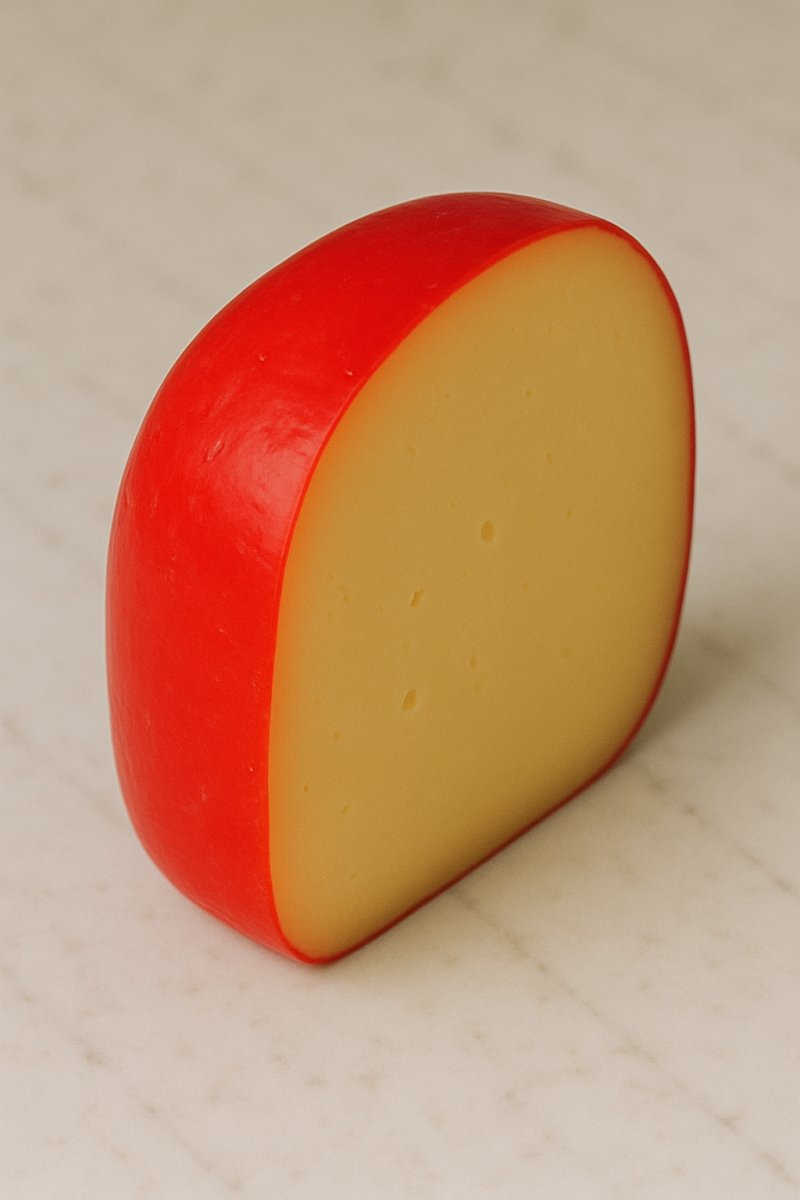
Availability and types of Edam cheese 45% fat in dry matter
Edam is a semi-firm cheese originally from the town of Edam in the Netherlands. The designation “45% fat in dry matter” means “45 percent fat in the dry matter.” It sounds complicated, but it is simple: if all the water were removed from the cheese, the solid components would contain 45% fat. In practice Edam with 45% fat in dry matter feels mild, pleasantly creamy and not too heavy. It is therefore a popular everyday cheese – good on bread, for gratinating and for both cold and hot dishes.
Origin and development
Edam comes from the Netherlands, where it has been produced for centuries. It was often sold in the past as small round balls with a distinctive red rind. This rind is usually wax, which protects the cheese from drying out during transport. Today Edam is not only produced in the Netherlands. Many European countries – for example Germany, Poland or the Czech Republic – produce Edam or Edam-like cheeses. The basic idea remains the same: a mild, durable cheese that fits many kitchens.
Edam comes from the Netherlands, where it has been produced for centuries. It was often sold in the past as small round balls with a distinctive red rind. This rind is usually wax, which protects the cheese from drying out during transport. Today Edam is not only produced in the Netherlands. Many European countries – for example Germany, Poland or the Czech Republic – produce Edam or Edam-like cheeses. The basic idea remains the same: a mild, durable cheese that fits many kitchens.
Availability in trade
Edam 45% fat in dry matter is easy to find in most supermarkets. You can get it:
Edam 45% fat in dry matter is easy to find in most supermarkets. You can get it:
- as a whole piece in a cheese block (versatile, stays juicier),
- as slices for bread and sandwiches,
- as grated for pizza, casseroles or gratins,
- as snack cubes for in-between or for colorful cheese platters.
At cheese counters you can have Edam freshly cut for you. There you often also find different maturity levels. In the refrigerated section you will find branded products and private labels. In delicatessens international variants also appear, for example Edam from traditional production with a natural rind.
Main types and varieties
Although Edam is generally made according to a similar recipe, there are different variants. Here are the main ones
Although Edam is generally made according to a similar recipe, there are different variants. Here are the main ones
