Menu & categories

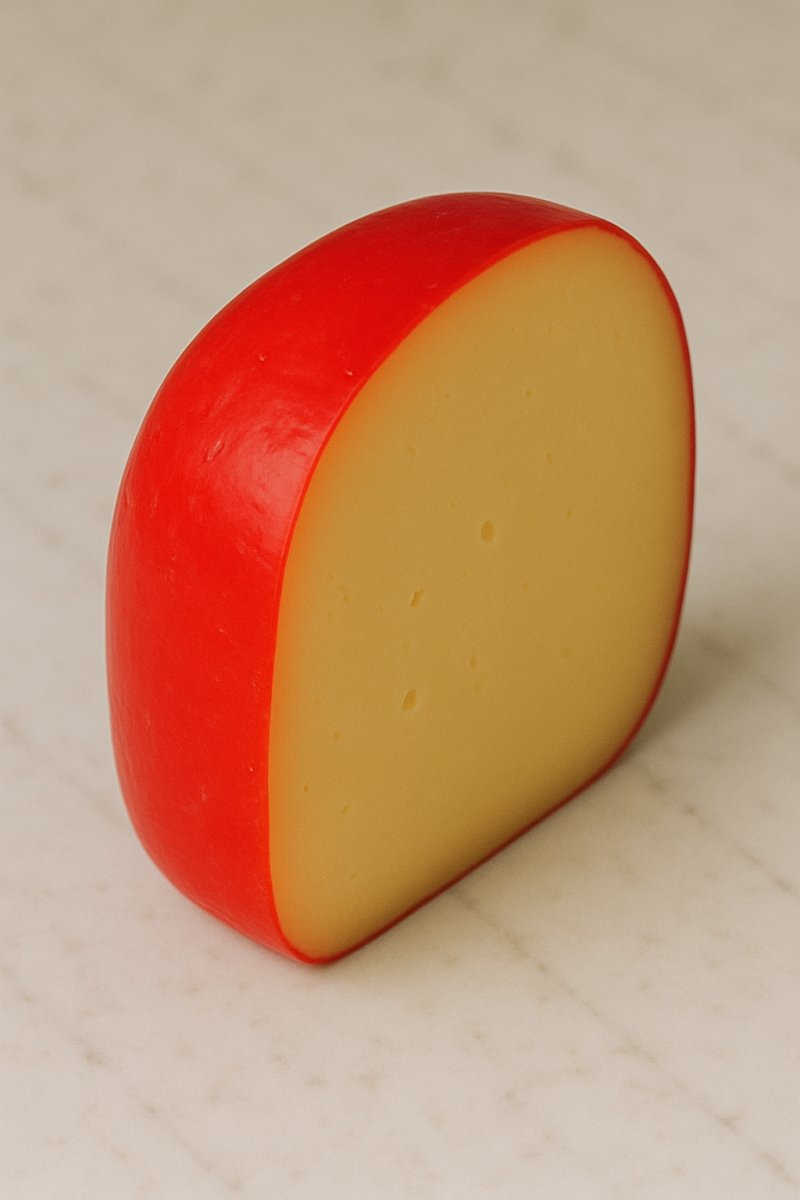
Edam cheese 30% fat in dry matter

Mild semi-hard cheese with reduced fat content

Wiki about Edam cheese Nutri-Score D Vegan No Gluten-free Yes Lactose-free No Nut-free Yes
NUTRITION / 100 g
275 kcal 25 g Protein 0.5 g Kohlenhydrate 18 g Fett

Introduction

Slices of Edam cheese
Edam cheese 30% fat in dry matter is one of the classic semi-hard cheeses that have graced European tables for centuries. As a 35-year-old editor who grew up in a culinary-curious family, I first encountered Edam as a humble companion in a packed lunch. Only later, on a trip to the Netherlands, did I understand how versatile and characterful this cheese can be. The term 30% fat in dry matter means “30 percent fat in the dry matter” and describes the standardized fat content calculated after subtracting the water portion. The result is a cheese that is pleasantly mild, finely nutty and at the same time balanced — ideal for everyday use, but with enough personality to shine in the kitchen.

Historically, Edam comes from the Dutch town of Edam, where the tradition of cheese trading goes back to the 14th century. The spherical wheels, often with a red or yellow rind, are iconic and were once taken on long sea voyages because they matured stably and stored well. Today you can find Edam 30% fat in dry matter in almost every European supermarket, at the deli counter as well as in convenient slices. A colleague of mine swears by topping his lasagna with a mix of Edam and a more strongly aged hard cheese — “Edam binds, the hard cheese gives the final kick,” he says. I had to smile, but he is right: Edam melts reliably, stretches subtly and provides a creamy texture.

What particularly appeals to me about Edam 30% fat in dry matter is the balance between enjoyment and everyday suitability. The moderate fat content brings a light, clean aromatics — nutty, buttery, slightly milky — without the heaviness of some high-fat cheeses. At the same time it shows enough character not to be lost in hot or cold dishes. In my kitchen Edam is a “bridge-builder”: it connects ingredients instead of covering them up. Whether in a breakfast sandwich with rye bread, on a savory tarte flambée or in a simple vegetable pan — Edam provides structure and flavor without being dominant.

Sensorially it appears

Availability & types

Availability and types of Edam cheese 30% fat in dry matter

Edam is a traditional Dutch semi-hard cheese. The name comes from the town of Edam, where the cheese has been made and traded for centuries. With “30% fat in dry matter” the term “in dry matter” means that if all water were removed from the cheese, 30% of the remaining mass would be fat. Practically, this Edam is therefore a rather mild, lower-fat cheese compared with variants with 40% or 45% fat in dry matter. It tastes tender, lightly nutty and not too strong — ideal for children, sandwiches and for gratinating.

Origin and production
Edam was originally produced on the Dutch coast. The round wheels with red or yellow rind were perfect for trade because they transported and stored well. Today Edam is produced not only in the Netherlands but also in many other countries using similar methods, for example in Germany, Poland or Austria. Typical is the semi-firm to sliceable texture, few small holes and a uniform paste. For the 30% variant lower-fat milk or partially skimmed milk is used, making the cheese lighter while retaining its characteristic Edam flavor.

Availability in retail
Edam 30% fat in dry matter is available year-round in many supermarkets and discounters. Because it is popular and keeps well, it is produced regularly and continuously restocked. You can find it in different forms:

  • Sliced packs: Already cut into thin slices, convenient for bread and toast. Usually in the refrigerated shelf with other semi-hard cheeses.
  • Pieces/blocks: A piece of Edam can be sliced or cubed yourself. This is often cheaper and more versatile.
  • Grated cheese: Pre-grated for casseroles, gratins or pizza. Edam melts mildly and evenly.
  • Service counter: In many stores you can get Edam

Details & nutrition

Property Value
Unit g
Average weight per piece 30
Calories per 100 275
Protein per 100 25
Carbohydrates per 100 0.5
Sugar per 100 0.5
Fat per 100 18
Saturated fat per 100 12
Monounsaturated fat 4
Polyunsaturated fat 0.6
Fiber per 100 0
Vitamin C (mg) per 100 0
Vitamin D (IU) per 100 8
Calcium (mg) per 100 700
Iron (mg) per 100 0.2
Nutri-Score D
CO₂ footprint 6.0 kg CO2e/kg
Origin EU
Gluten-free Yes
Lactose-free No
Nut-free Yes
Vegan No
Note At least 30% fat in dry matter; typically pasteurized; low in lactose depending on maturation.

Technical & scientific information

Edam cheese 30% fat in dry matter denotes a specific fat level of the classic Dutch semi-hard cheese Edam, where the fat content is referred to the dry matter (i. d. m. = in dry matter). This indication is technologically and nutritionally relevant because the actual water content influences the absolute amount of fat per 100 g. Edam with 30% fat in dry matter belongs to the lower-fat variants and is characterized by a firm, uniformly elastic paste structure, mild-nutty aromatics and a light straw-yellow color. It is typically matured in rounds, wheels or blocks and is versatile in the kitchen.

Raw material and production: The base is pasteurized cow's milk with a standardized protein-fat ratio. Rennet enzymes (animal or microbial) are used for coagulation, supplemented by defined starter cultures of lactic acid bacteria (mainly Lactococcus lactis and Leuconostoc species). Coagulation leads to the formation of curd; this is cut, turned and warm-washed to control lactose and lactate profiles and ensure gentle acidification. Pressing under controlled pressure shapes the paste and expels whey. This is followed by the brine bath, which regulates water activity, rind formation and microbial stability. Ripening takes place in climate-controlled chambers at moderate temperature and humidity. Maturation duration and conditions determine proteolysis and lipolysis, texture development and the formation of the typical mild to slightly piquant Edam aromas.

Physico-chemical parameters: Edam 30% fat in dry matter shows a reduced fat phase compared with full-fat variants, resulting in a denser and slightly firmer matrix. Typical characteristics include a pH value in the range of about 5.2–5.4 after ripening, a water content in the lower-fat phase that increases sliceability, and a salt (sodium chloride) content that for semi-hard cheeses is usually between 1.5 and 2.2%. The water activity is adjusted to inhibit undesirable microbes, while

Wiki entry for: Edam cheese
Active now: 20 visitors of which 2 logged-in members in the last 5 minutes