HTTP error (fallback): Unknown
backecke.com
Recipes from South Tyrol and beyond
Discover over 2000 recipes
Find your new favourite recipe – from quick & easy to fine dining.
Durum wheat flour
The ideal flour for pasta and bread.
Introduction
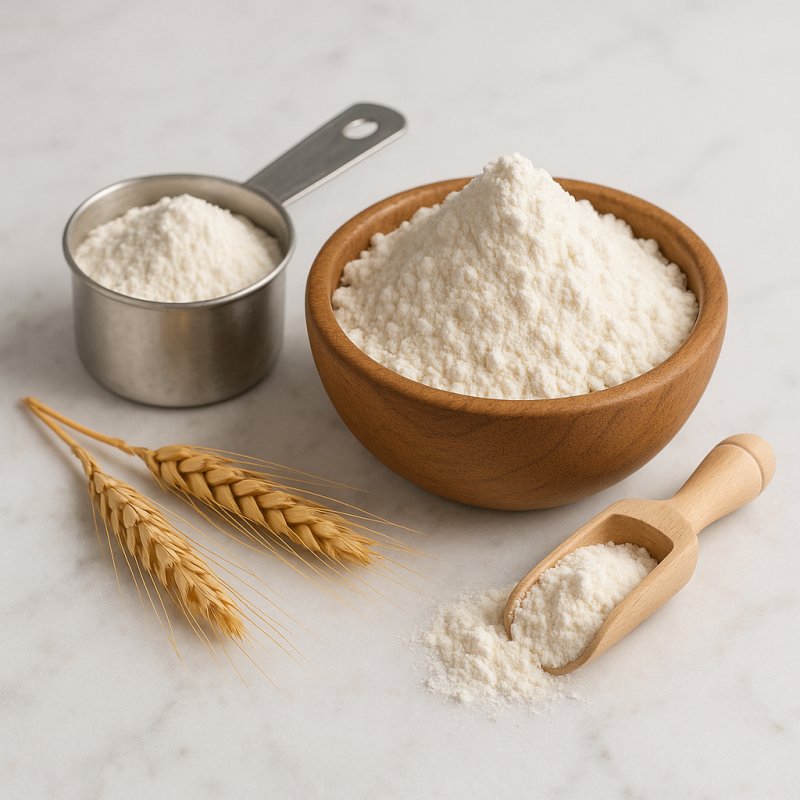
I still remember clearly the day I first worked with durum wheat flour. It was a rainy Sunday, and I had decided to try the perfect pasta recipe. The scent of fresh dough and the anticipation of homemade tagliatelle filled the kitchen. When I put the durum wheat flour into the bowl, I immediately noticed its fine texture. It was almost like a little miracle floating in the air.
Durum wheat flour is a very special flour obtained from durum wheat. This wheat variety has a high gluten content, which makes it ideal for making pasta and pizza. When I think back to my recent culinary adventures, I recall a colleague who once advised me not to rely on just any flour when baking pizza. "Use durum wheat flour," he said with a wink. "It gives your pizza that special bite." And indeed, the crust became crispy, and the toppings held perfectly.
I have found that durum wheat flour is not only suitable for pasta or pizza but also for a variety of other dishes. Here are some examples of how it can be used:
- Pasta: Whether fresh or dried, using durum wheat flour provides a wonderful texture.
- Pizza: The high gluten content gives the crust the necessary elasticity.
- Bread: It is frequently used, especially in Italian bread recipes.
- Pancakes: Try durum wheat flour for a heartier variation!
Another highlight of my last cooking get-together was a recipe for gnocchi that I tried with durum wheat flour. The difference was noticeable. These little heavenly dumplings were so light and fluffy that I almost forgot to serve them with a delicious sauce. Instead, I enjoyed them plain – a truly heavenly moment!
So, when I use durum wheat flour in my recipes, I always feel a bit like an Italian nonna proudly passing on her secrets of Italian cuisine. It is not just a simple ingredient but a key to many of my favorite dishes. So next time you are in the kitchen thinking about ingredients, don't forget to use durum wheat flour. It could take your dish to the next level and bring a little culinary trip to Italy into your home.
Availability & types
Details & nutrition
| Property | Value |
|---|---|
| Unit | g |
| Average weight per piece | Keine Daten! |
| Calories per 100 | 340 |
| Protein per 100 | 12 |
| Carbohydrates per 100 | 72 |
| Sugar per 100 | 0.5 |
| Fat per 100 | 1.5 |
| Saturated fat per 100 | 0.3 |
| Monounsaturated fat | 0.2 |
| Polyunsaturated fat | 0.2 |
| Fiber per 100 | 3 |
| Vitamin C (mg) per 100 | 0 |
| Vitamin D (IU) per 100 | 0 |
| Calcium (mg) per 100 | 20 |
| Iron (mg) per 100 | 1.2 |
| Nutri-Score | B |
| CO₂ footprint | 0.5 |
| Origin | Italy |
| Gluten-free | No |
| Lactose-free | Yes |
| Nut-free | Yes |
| Vegan | Yes |
| Note | Ideal for making pasta and pizza. |
Technical & scientific information
Durum wheat flour is a type of flour obtained from the kernel of durum wheat (Triticum durum). This wheat differs from other wheat types by its high protein and gluten content and is mainly used for the production of pasta, bread and certain baked goods. The characteristic composition of durum wheat makes it a valuable ingredient in the food industry.
Chemical composition
Durum wheat flour has a specific chemical composition that sets it apart from other types of flour. It typically contains:
- Protein: Durum wheat flour has a protein content of about 12–15 %. The main proteins are glutenin and gliadin, which together form gluten. Gluten gives the dough elasticity and provides the typical texture of pasta and bread.
- Carbohydrates: The carbohydrate content is typically about 70–75 %. These consist mainly of starch, which provides energy.
- Fats: Durum wheat flour contains only a small amount of fats, typically less than 2 %. These fats are predominantly unsaturated and contribute to the structure of baked goods.
- Fiber: The fiber content is about 10–12 %. Fiber promotes digestion and can contribute to satiety.
- Minerals: Durum wheat flour is rich in minerals such as iron, magnesium and zinc, which are important for various bodily functions.
Nutritional values
The nutritional values of durum wheat flour vary depending on processing, but generally 100 g of durum wheat flour contains:
- Calories: 340–360 kcal
- Protein: 12–15 g
- Carbohydrates: 70–75 g
- Fat: 1–2 g
- Fiber: 10–12 g
- Sugar: 0–1 g
These nutrients make durum wheat flour an energy-rich ingredient that plays a role especially in carbohydrate-rich diets.
Processing methods
The production of durum wheat flour takes place through several steps:
- Cleaning: The wheat kernels are cleaned of impurities to ensure that only high-quality kernels are processed.
- Milling: The cleaned kernels are milled in mills. The kernel is first crushed and then ground into flour.
- Sifting: The flour is sifted to separate different particle sizes and ensure a consistent texture.
Wiki entry for: durum wheat flour
Active now: 129
visitors
of which 2
logged-in members
in the last 5 minutes