Menu & categories

Dried porcini mushrooms

Robust flavor, long shelf life – ideal for seasoning

Wiki about dried porcini mushroom Nutri-Score A Vegan Yes Gluten-free Yes Lactose-free Yes Nut-free Yes
NUTRITION / 100 g
280 kcal 25 g Protein 30 g Kohlenhydrate 3 g Fett

Introduction

Dried porcini mushrooms
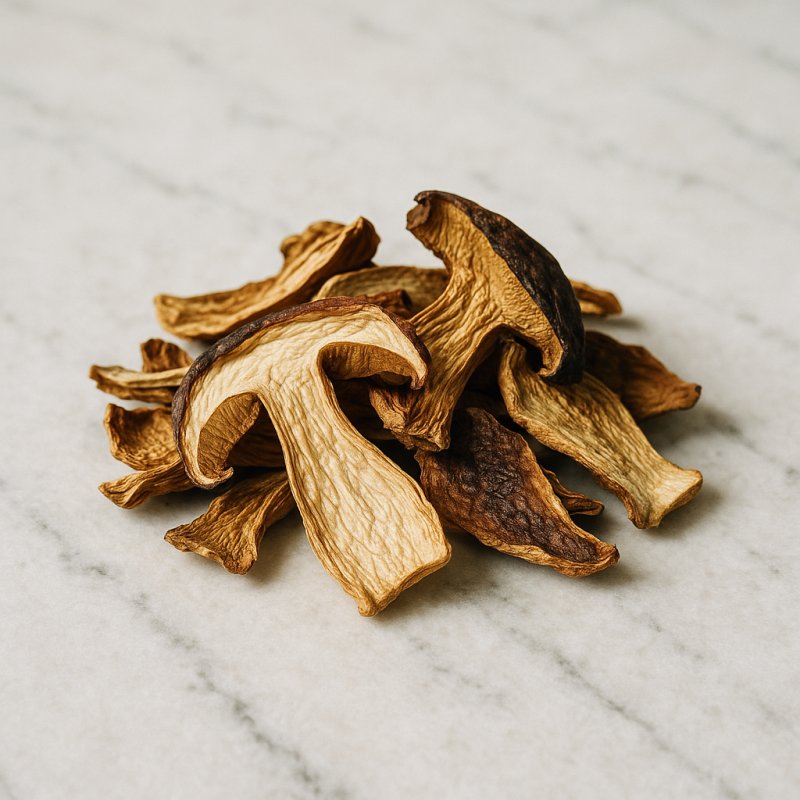
Dried porcini are, for me — 35 years old, an editor with a suitcase full of notebooks and travel memories — one of the most reliable ingredients of European cuisine. I discovered them in Italian trattorias, Austrian mountain huts and French country inns — always with that unmistakable scent of forest, moss and damp earth. Dried porcini are culinary time capsules: they preserve the aroma and character of mushroom season and make it available at any time. Whether risotto, sauce, soup or a spread — a few grams of these brown slices turn simple recipes into real comfort food. A colleague of mine, who rarely cooks, now swears by them because with a spoonful of mushroom stock from the soaking water he makes every dish taste «professional».

The biggest advantage of dried porcini is their intensity. By removing water the aromas concentrate: nutty, earthy, slightly buttery, with fine roasted notes. When soaked they give a dark-golden, fragrant elixir that I never throw away. I pour it through a fine sieve or a coffee filter to catch any grains of sand and use it as a stock for risotto, polenta or to deglaze pan fond. A friend from Slovenia says she grew up with that scent — for her an autumn Sunday smells exactly like that. For me it smells of cozy kitchens, of patience and of the first spoonful that immediately soothes hunger.

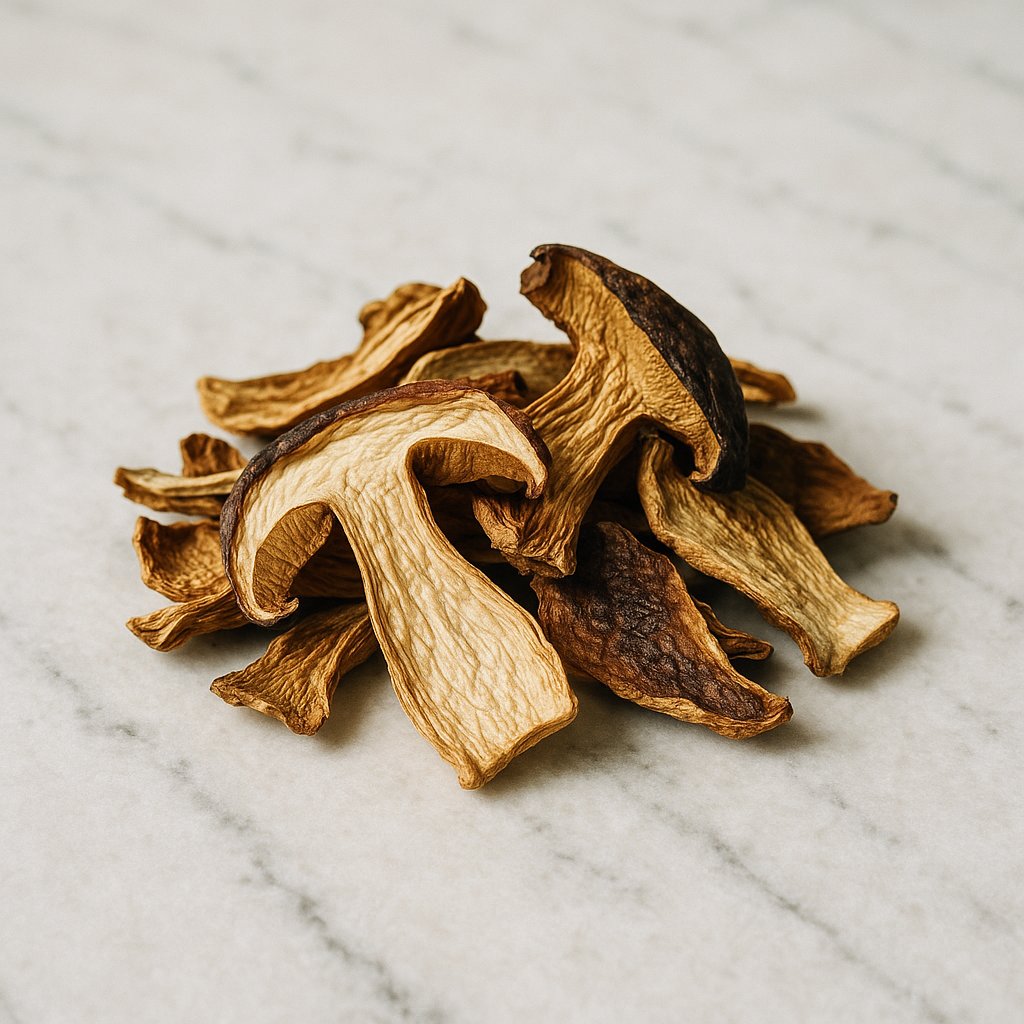
Quality in dried porcini can be recognized by several details. The slices should be light to medium brown, with visible caps and stems, not too crumbly and pleasantly forest-scented — never musty or sharp. I pay attention to transparent origin information and preferably handpicked goods. In markets in northern Italy I once bought a mix in which other mushrooms were hidden; since then I check the package carefully. Another colleague in the editorial team, our self-proclaimed risotto pro, has the rule: «If the bag smells of forest and not of cellar, it's all good.» It sounds banal, but it is reliable.

Preparation is simple:

Availability & types

Availability and types of dried porcini

Dried porcini are a popular ingredient because they taste intensely of forest, nuts and umami and keep for a very long time. They come from the porcino mushroom, also called «Herrenpilz» or «Boletus edulis». While fresh porcini are seasonal in late summer and autumn, the dried form is available year-round. That way you always have the typical porcini flavour on hand, whether for risotto, sauces, soups or fillings.

Origin and collecting areas

Porcini grow wild in forests around the world, mainly in Europe, Asia and North America. They live in partnership with trees, for example spruces, pines, beeches or oaks. This is called «mycorrhiza». That means porcini cannot simply be cultivated on fields like potatoes; they need the forest and the trees. Therefore many porcini come from countries with large forests:

  • Europe: Italy, Poland, Romania, Bulgaria, Germany, the Baltics
  • Asia: China, Russia (Siberia), Georgia
  • North America: USA (Pacific Northwest), Canada
Origin often influences size, colour and aroma. Mediterranean porcini (e.g. from Italy) are often described as nutty-aromatic, while Eastern European or Siberian specimens can be hearty and spicy.

Why dried?

Fresh porcini spoil quickly and can lose quality during transport. Drying removes water but retains the flavour. This makes them lighter, they keep for months, and their aroma becomes even more concentrated. When soaked in warm water they become soft again and release a strong «mushroom broth» that can be used for cooking.

Types and grades
Dried porcini are usually sorted by appearance and size. This sorting helps you decide what they are best used for
Details & nutrition

Property Value
Unit g
Average weight per piece 2
Calories per 100 280
Protein per 100 25
Carbohydrates per 100 30
Sugar per 100 8
Fat per 100 3
Saturated fat per 100 0.5
Monounsaturated fat 0.5
Polyunsaturated fat 1.5
Fiber per 100 20
Vitamin C (mg) per 100 2
Vitamin D (IU) per 100 80
Calcium (mg) per 100 50
Iron (mg) per 100 3
Nutri-Score A
CO₂ footprint 1.8 kg CO2e/kg
Origin Europe
Gluten-free Yes
Lactose-free Yes
Nut-free Yes
Vegan Yes
Note Soak in warm water for 15–30 minutes before use; use the soaked water filtered as well.

Technical & scientific information

Dried porcini (Boletus edulis and related species) are a highly valued ingredient in European and Asian cuisines; drying concentrates the aromas and significantly extends shelf life. By removing water a product with an intense, nutty to umami-rich flavour profile is produced, which is used in sauces, risottos, stocks, forcemeats and spice blends. The drying process leads to chemical and physical changes that shape the sensory, nutritional and technological properties.

Botany and taxonomy: Porcini belong to the family Boletaceae. The culinarily relevant collective term primarily includes Boletus edulis, but also close relatives such as Boletus pinophilus or Boletus aereus. Typical features are the fleshy cap, the tubular hymenophore instead of gills and the white to yellow-brown stem flesh. The fruiting bodies grow in symbiosis (ectomycorrhiza) with coniferous and deciduous trees and respond sensitively to site, soil chemistry and rainfall.

Drying and process parameters: Drying is done traditionally by air, in circulating-air dryers or by freeze-drying (lyophilization). Optimal process control aims for a residual moisture typically of 8–12% to ensure microbial stability and slow down oxidative processes. Temperatures of 40–60 °C are common; higher temperatures speed up dehydration but promote Maillard reactions and can degrade volatile aroma compounds. Freeze-drying preserves structure and aroma profile particularly well but is more costly.

Sensorics and aroma chemistry: Dried porcini offer a bold, earthy and umami-intense profile. Responsible compounds include free amino acids (glutamic acid, aspartic acid), 5’-ribonucleotides (GMP, IMP) as well as volatile compounds like alcohols, lactones and terpenoids. During drying concentration and reaction products occur that reinforce roasted notes. Rehydration releases bound aromatic compounds; the soaking liquid is gastronomically valuable

Wiki entry for: dried porcini mushroom
Active now: 20 visitors of which 2 logged-in members in the last 5 minutes