Availability and types of dried porcini
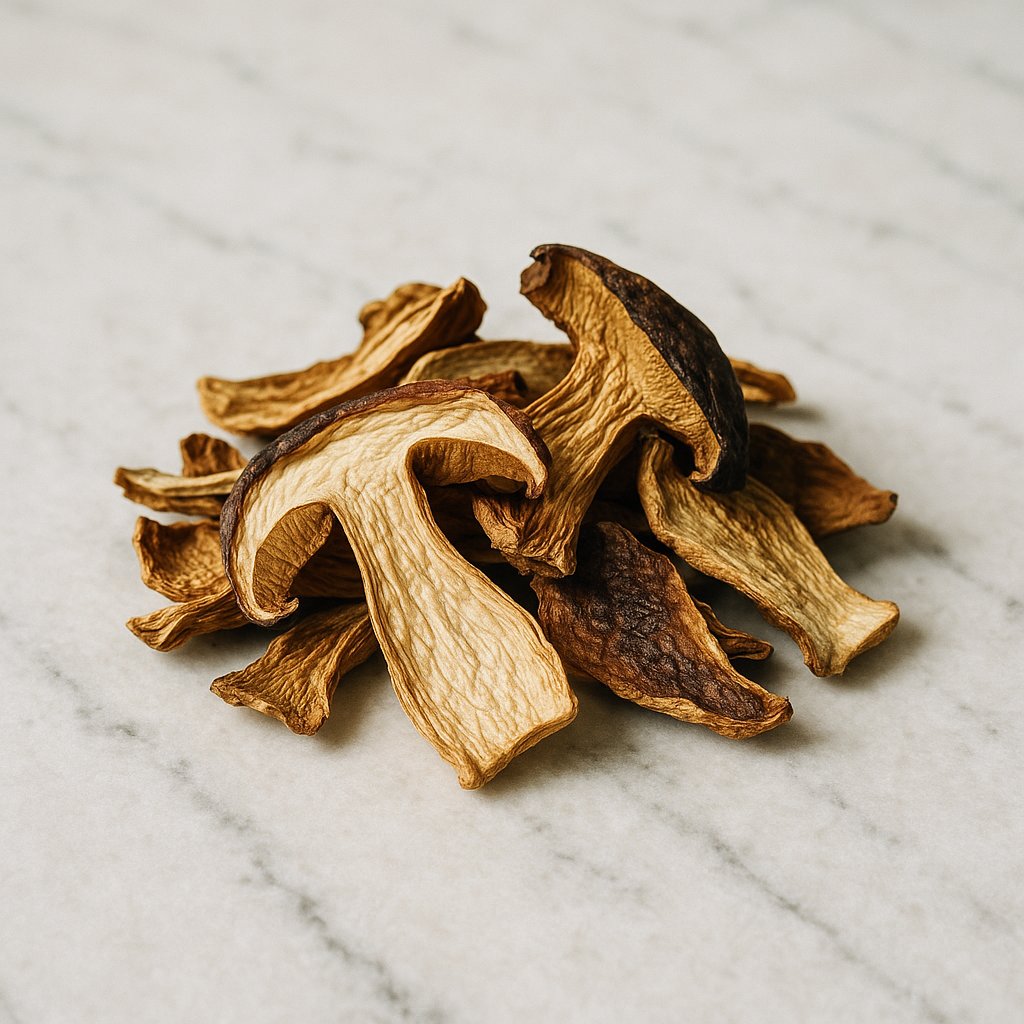
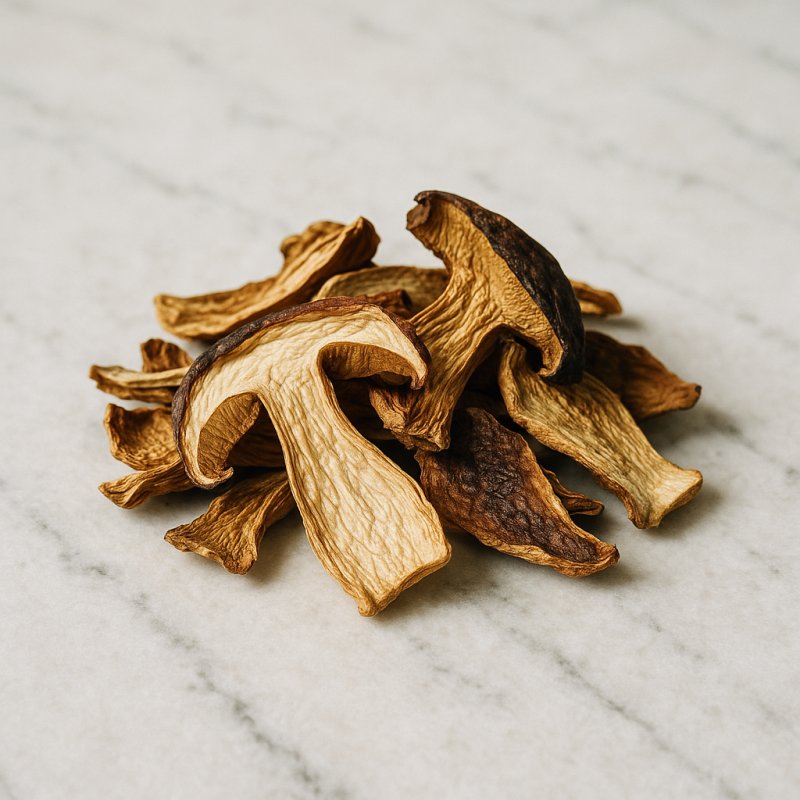
Dried porcini are a popular ingredient because they taste intensely of forest, nuts and umami and keep for a very long time. They come from the porcino mushroom, also called «Herrenpilz» or «Boletus edulis». While fresh porcini are seasonal in late summer and autumn, the dried form is available year-round. That way you always have the typical porcini flavour on hand, whether for risotto, sauces, soups or fillings.
Origin and collecting areas
Porcini grow wild in forests around the world, mainly in Europe, Asia and North America. They live in partnership with trees, for example spruces, pines, beeches or oaks. This is called «mycorrhiza». That means porcini cannot simply be cultivated on fields like potatoes; they need the forest and the trees. Therefore many porcini come from countries with large forests:
- Europe: Italy, Poland, Romania, Bulgaria, Germany, the Baltics
- Asia: China, Russia (Siberia), Georgia
- North America: USA (Pacific Northwest), Canada
Origin often influences size, colour and aroma. Mediterranean porcini (e.g. from Italy) are often described as nutty-aromatic, while Eastern European or Siberian specimens can be hearty and spicy.
Why dried?
Fresh porcini spoil quickly and can lose quality during transport. Drying removes water but retains the flavour. This makes them lighter, they keep for months, and their aroma becomes even more concentrated. When soaked in warm water they become soft again and release a strong «mushroom broth» that can be used for cooking.
Types and grades
Dried porcini are usually sorted by appearance and size. This sorting helps you decide what they are best used for
Dried porcini are usually sorted by appearance and size. This sorting helps you decide what they are best used for