Menu & categories

Dried dates

Naturally sweet dried fruit with fiber and minerals.

Wiki about dried date Nutri-Score C Vegan Yes Gluten-free Yes Lactose-free Yes Nut-free Yes
NUTRITION / 100 g
277 kcal 1.8 g Protein 75.0 g Kohlenhydrate 0.2 g Fett

Introduction

Dried dates
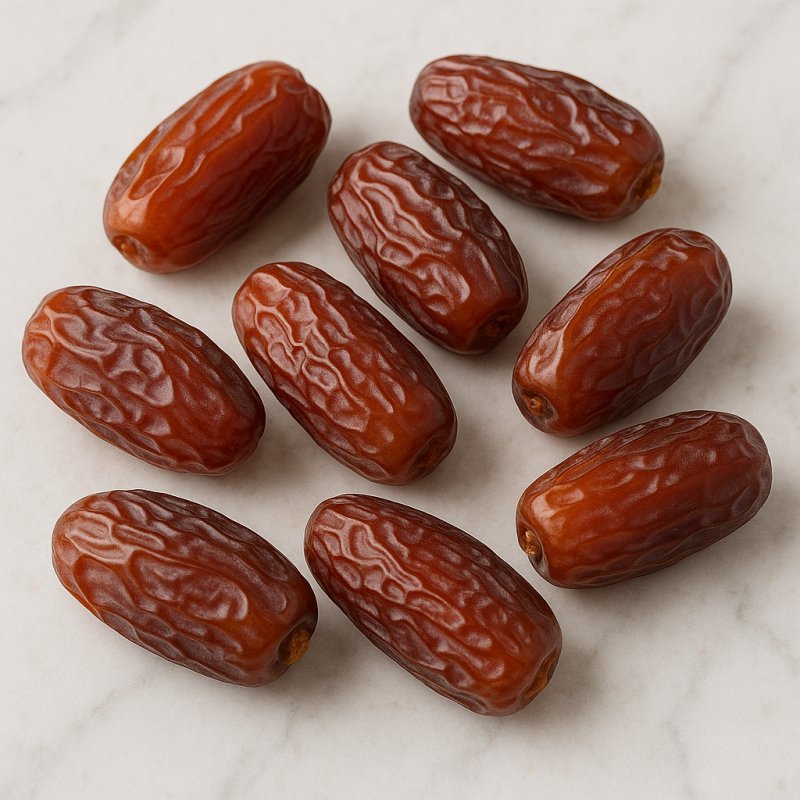
I still remember clearly the first bite of a truly juicy dried date: the texture, somewhere between velvety and caramel-like, the surprising balance of sweet and slightly nutty. Since then dried dates have been one of those ingredients I always keep in the kitchen, whether as a quick energy boost or as a secret star in desserts and savory dishes.

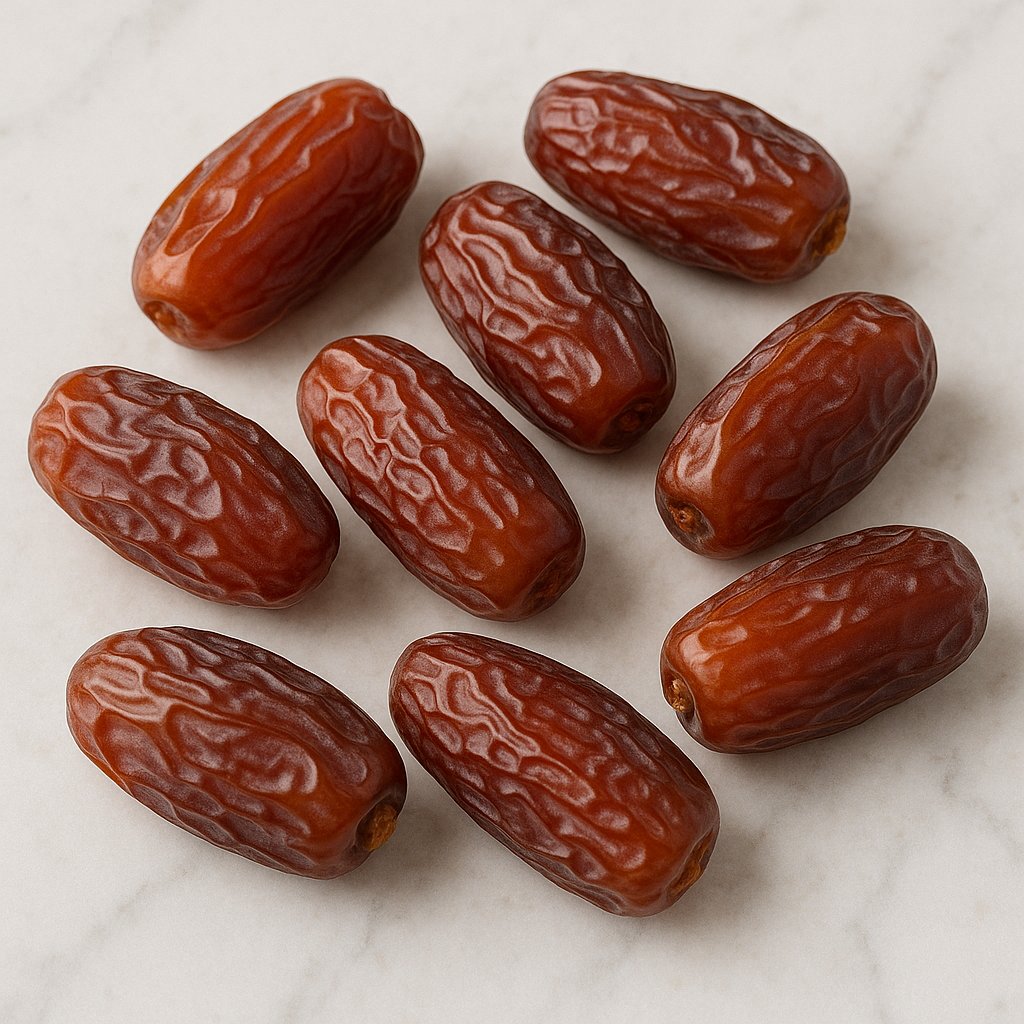
Dried dates are basically concentrated fruit whose flavor becomes more intense through drying. Medjool are considered particularly meaty and soft, while Deglet Noor are somewhat firmer and less sweet. I learned at a weekly market stall in Morocco that the variety often determines whether you enjoy dates plain or prefer to process them.

Practical reasons make them popular: dates are easy to store, transportable and provide quick energy thanks to their natural sugar content. At the same time they score points for fiber, minerals like potassium and small amounts of vitamins. For me they are the perfect ingredient when I'm looking for a healthier sweetener that works well in smoothies, granola bars or as a binder in raw cakes.

I've tried and shared many tricks. A colleague once brought dates stuffed with goat cheese and walnut to a small dinner — a hit, because the sweetness of the date contrasted so wonderfully with the creaminess of the cheese. When I bake dates, I pit them and sometimes leave a little piece of lemon zest inside to brighten the flavors.

  • Usage tips: For sweetening puddings or smoothies, as an energy bar, in curries or stuffed as an appetizer.
  • Storage: Keep dry and cool; refrigerate to keep them fresh longer.
  • Preparation: Soak briefly if they are too firm, or pour over with hot water if you want to purée them.
I love how versatile dried dates are: they can be rustic and down-to-earth, but also refined and surprisingly elegant. Sometimes a single perfectly ripe date is enough to steer a dish in a completely new direction.

Availability & types

Availability and types

Dates are dried fruits that you can buy year-round. They originally come from warm countries where many palms grow. Because dates become more shelf-stable when dried, you find them in supermarkets, health food stores, markets and online. Sometimes they look sticky and soft, sometimes drier and firmer — that depends on the variety and how they were dried.


Origin and growing regions

Dates grow on palms, which thrive mainly in hot, dry regions. Important countries include:

  • Middle East: Countries such as Saudi Arabia, Iran, Iraq and the United Arab Emirates are large producers.
  • North Africa: Egypt, Tunisia, Algeria and Morocco grow many dates.
  • South and Central Asia: Pakistan and India also supply many fruits.
  • Americas: Dates are also grown in California (USA) and parts of Mexico.
Imagine date palms as tall sun-lovers that prefer lots of heat and little rain — that's why they often grow in oases or dry valleys.


Popular varieties

There are many different date varieties. Here are some you often find in stores:

  • Medjool: Very large, soft and sweet, almost like a small piece of caramel.
  • Deglet Noor: A bit firmer, with a mild flavor — often used in baking.
  • Barhi: Very sweet and juicy, often available fresh too.
  • Halawy: Small to medium, soft and buttery in flavor.
  • Zahidi: Firmer texture and a somewhat nuttier flavor, good for cooking.
Some varieties are sweeter, others less so — much like different apple varieties taste different.


Forms and processed variants

Dates come in many forms to suit different purposes:

  • Whole, pitted: Convenient for immediate eating.
  • With pit: Often cheaper, but you need to remove the pit.
  • Stuffed: For example with almonds, cream cheese or nuts — like little surprises.
  • Diced or chopped: For muesli or cakes.
  • Date paste or purée: Used as a sweetener or spread.
  • Date syrup: Liquid and sweet, similar to a honey substitute.
  • Organic variants: Grown without chemical agents.
Some dates are soft and almost caramel-like, others are dry and reminiscent of a hard biscuit — that determines how you prefer to eat them.


Where and how available

You can find dried dates in the supermarket, health food store, weekly market and online. They are often sold in jars or bags, sometimes vacuum-packed. Fresh dates are seasonal, but dried ones are usually available year-round. Store them in a cool, dry place or, once opened, in the refrigerator so they remain soft and tasty longer.
In summary: dates come from sunny countries, there are many varieties and processed forms, and you can buy them almost everywhere. Whether as a sweet snack, for cooking or stuffed with nuts — there is a suitable date for every taste.
Details & nutrition

Property Value
Unit g
Average weight per piece 8
Calories per 100 277
Protein per 100 1.8
Carbohydrates per 100 75.0
Sugar per 100 63.0
Fat per 100 0.2
Saturated fat per 100 0.1
Monounsaturated fat 0.0
Polyunsaturated fat 0.0
Fiber per 100 6.7
Vitamin C (mg) per 100 0
Vitamin D (IU) per 100 0
Calcium (mg) per 100 64
Iron (mg) per 100 0.9
Nutri-Score C
CO₂ footprint 1.1 kg CO2e/kg
Origin North Africa and the Middle East
Gluten-free Yes
Lactose-free Yes
Nut-free Yes
Vegan Yes
Note Very high natural sugar content; ideal for sweetening. Values may vary slightly depending on variety (e.g., Deglet Nour, Medjool).

Technical & scientific information


Dates (dried) are the dried fruits of the date palm (Phoenix dactylifera) and are used worldwide as an energy-dense dried fruit. Technically, dried dates are a concentrated source of carbohydrates and fiber with lower water content than fresh fruit. Their physical and chemical properties depend on variety, ripeness and the drying method applied.

Composition and nutritional values: Dried dates typically consist of about 65–75% available carbohydrates, mainly simple sugars such as glucose and fructose, with variations in the proportion of sucrose depending on variety. Water content is usually between 15 and 25%. Other components include:

  • Fiber (insoluble and soluble): about 6–8%.
  • Protein: approximately 2–4%.
  • Fat: very low, typically <1%.
  • Ash and minerals: 2–5%, with relatively high potassium content, moderate magnesium, phosphorus, calcium and traces of iron and zinc.
  • Vitamins: small amounts of B‑group vitamins (e.g. B6) and vitamin K; fat‑soluble vitamins are barely present.
Energy content is typically around 250–300 kcal per 100 g. The fiber contributes to a more moderate blood glucose rise compared with pure glucose sources, while the overall effect on glycemic index depends on variety and processing.

Phytochemistry and secondary plant compounds: Dates contain a range of phenolic compounds, including phenolic acids, flavonoids, tannins and carotenoids. These compounds contribute to antioxidant capacity and affect color and flavor. During drying and storage Maillard reactions and caramelization can occur, leading to discoloration and formation of compounds such as 5‑hydroxymethylfurfural (HMF), an indicator of thermal stress and aging.

Processing methods: Common procedures include harvesting at physiological maturity, sorting, possible cleaning and subsequent drying. Drying can be natural (sun) or technical (hot-air dryers, hot air, vacuum drying). Some products are treated with brining, partially juiced, pitted or treated with sulfur dioxide to improve color and shelf life. Pasteurization, Modified‑Atmosphere‑Packaging (MAP) and cold storage are used for microbial safety and shelf stabilization.

Safety and quality aspects: Improper drying and storage can allow mold growth and mycotoxin formation; therefore moisture control and hygienic processing are important. Sulfite treatment can trigger allergic reactions in sensitive individuals. Furthermore, the high sugar content increases the risk of dental caries.

Health aspects: Dried dates are a dense source of rapidly available energy and provide important minerals such as potassium, which is relevant for heart and muscle function. Fiber supports bowel function and can modulate postprandial glucose response. Polyphenols show in vitro antioxidant and anti‑inflammatory effects; clinical statements are however nuanced and depend on amount and overall diet. For diabetes or weight management portion control is advisable because of the high energy density. In some cases dates have been recommended during pregnancy to ease labor, but the evidence is limited.

In summary, dried dates are a nutrient-rich, energy-dense food high in rapidly available sugars, valuable minerals, fiber and bioactive plant compounds. Their quality and nutritional effects are largely determined by variety, ripeness, drying method and storage conditions, so production and storage measures are crucial for safety and sensory properties.

Wiki entry for: dried date
Active now: 24 visitors of which 2 logged-in members in the last 5 minutes