Menu & categories

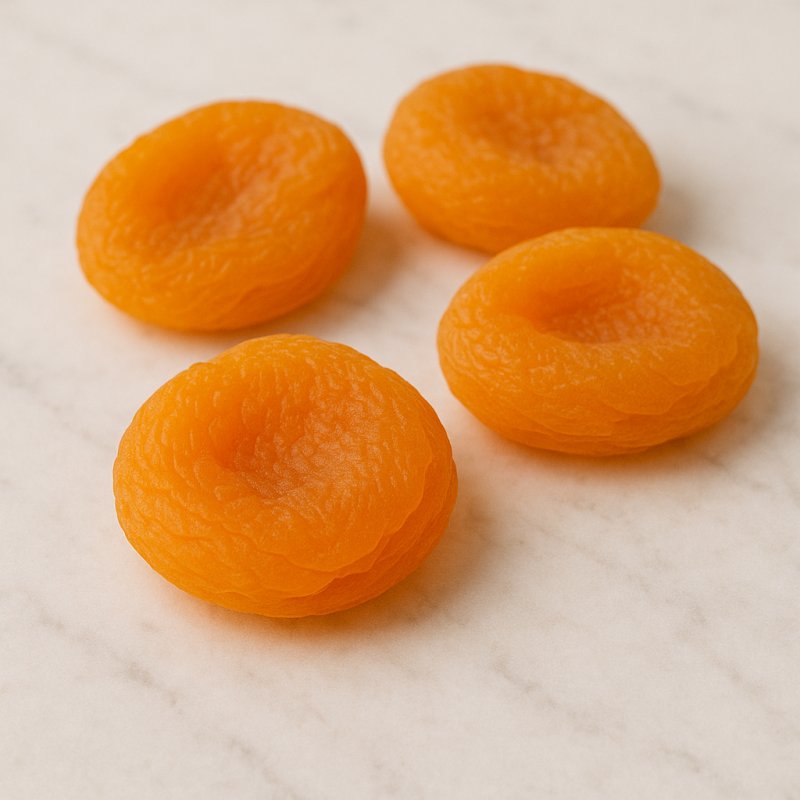
Dried apricot

Sweet-fruity dried fruit with fiber and minerals.

Wiki about dried apricot Nutri-Score C Vegan Yes Gluten-free Yes Lactose-free Yes Nut-free Yes
NUTRITION / 100 g
241 kcal 3.4 g Protein 63.0 g Kohlenhydrate 0.5 g Fett

Introduction

Dried apricot
I have a quiet weakness for dried apricots, which often starts as soon as I open the pack and that warm, concentrated scent of sun and summer hits me. I still remember a rainy afternoon when a colleague brought a tin of homemade muesli bars and I immediately asked what the secret was to that rounded flavor. The answer was simple: apricots, dried and chopped, giving every bite a caramel-like fruitiness.

Dried apricots are little powerhouses. They provide fiber for digestion, plenty of vitamin A for eye health and are a good source of potassium and iron. When I use them in my kitchen I like to think about their versatility: they suit both sweet baked goods and savory dishes and add a slightly tart sweetness to salads.

A few practical tips I've collected over the years are as follows:

  • For softer textures I briefly soak them in warm water or tea.
  • If I want a more intense flavor I briefly toast them in a pan.
  • When shopping I watch out for natural apricots without excessive sulfur treatment, as those often look less artificially bright.
In the kitchen I love their uses. They go into my couscous, a spicy lamb stew and occasionally into an improvised dessert made from yogurt, nuts and finely chopped apricots. Once I even tried them in a quick salsa with red onions and cilantro, and that was a little revelation.

Store dried apricots cool and airtight so they stay supple. They are perfect travel provisions, an energy-boosting snack or the little extra that gives a dish the finishing touch. When I open a pack I think of sunny orchards and those small moments when simple ingredients bring a bit of magic to everyday life.

Availability & types

Availability and types of dried apricots

Dried apricots are found everywhere and are therefore a convenient ingredient. Unlike fresh apricots, which ripen only in summer, dried apricots are available year-round. This is because the fresh fruits are dried, i.e. their water is removed. That makes them long-lasting and they can be purchased in supermarkets, health food stores, markets or online. Imagine: like when you collect many seeds and put them in a jar to eat later — that's how drying works for apricots.

Where do dried apricots come from?

  • Turkey (Malatya): this is one of the best-known places. Malatya is famous for particularly sweet and aromatic apricots. Many dried apricots in Europe come from there.
  • Uzbekistan and other Central Asian countries: these regions have grown apricots for a long time. The fruits often have a strong flavor.
  • Iran: Iran also supplies a lot and has traditional varieties.
  • USA (California): in California apricots often grow particularly large.
  • Mediterranean (Spain, Italy): apricots are also grown and dried there, mostly for the local market.
What varieties and variants exist? Dried apricots come in several forms. Here are the main ones and what they mean — simply explained:

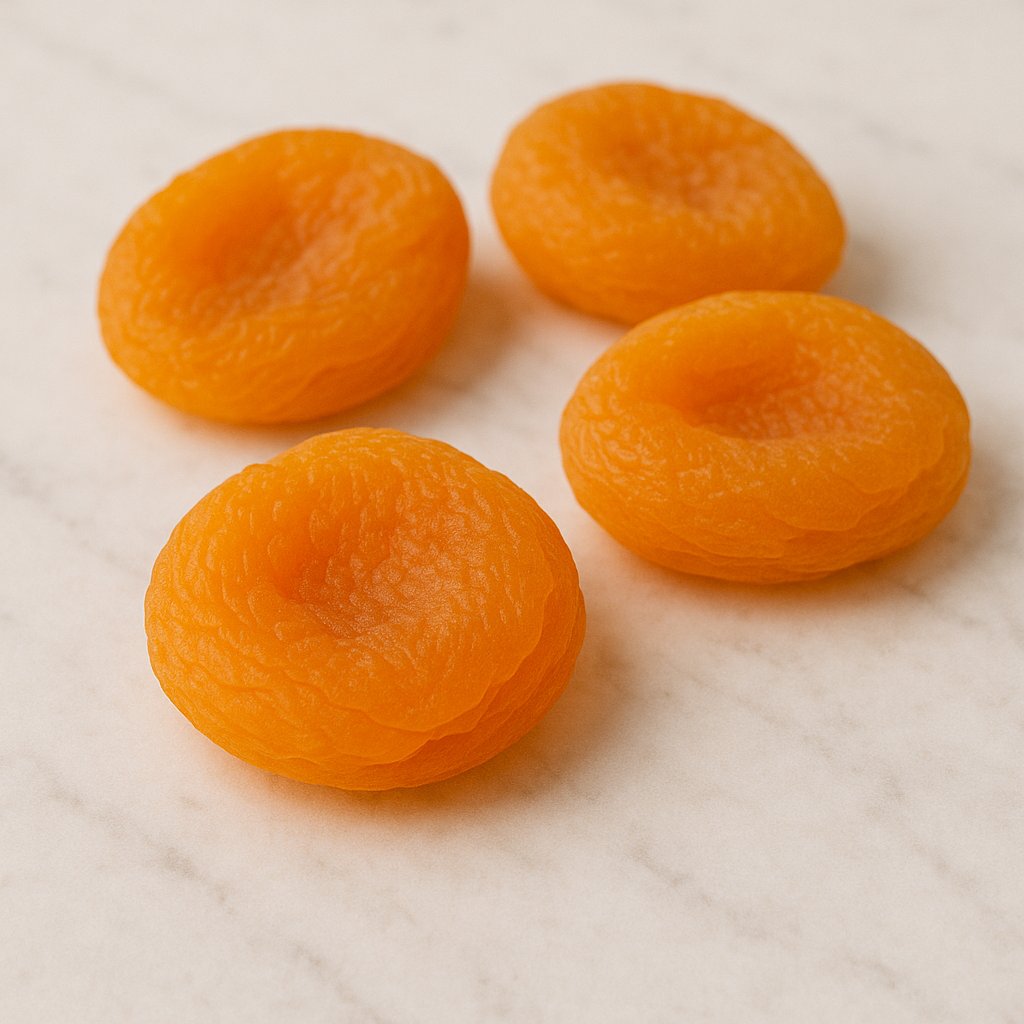
  • Dried and sulfured (light orange): many apricots look a nice orange. This is due to an additive called sulfur dioxide (also referred to as “sulfuring”). This helps keep color and freshness longer. You can explain it like this: sulfuring is like an invisible protective cloak that prevents the apricot from turning brown.
  • Unsulfured (darker): these apricots are browner or dark red. They sometimes taste more intense or slightly more tart. They are natural, but have no “protective cloak” and can soften more quickly.
  • Pitted or with pit: pitted apricots are convenient for baking or snacking because you won't encounter a pit. Some people prefer apricots with the pit because they retain their flavor longer.
  • Whole, halved or cut: whole or halved apricots are common. Cut or diced apricots are good for mueslis, cakes or sauces.
  • Organic quality: grown and dried without artificial additives. For people who want fewer additives.
  • Mixed dried fruit: apricots are often found in mixes with dates, raisins or figs — handy as snack packs.
When you buy apricots, pay attention to the expiration date and packaging. In an airtight jar or plastic bag they stay fresh longer. In the refrigerator they can even last several months. And if you compare a dark unsulfured apricot with a light sulfured one you'll quickly notice the difference: light ones are nicer to look at, dark ones often more aromatic. Both are healthy and tasty — depending on what you like and how you plan to use them.
Details & nutrition

Property Value
Unit g
Average weight per piece 8
Calories per 100 241
Protein per 100 3.4
Carbohydrates per 100 63.0
Sugar per 100 53.0
Fat per 100 0.5
Saturated fat per 100 0.1
Monounsaturated fat 0.1
Polyunsaturated fat 0.2
Fiber per 100 7.3
Vitamin C (mg) per 100 1.0
Vitamin D (IU) per 100 0
Calcium (mg) per 100 55
Iron (mg) per 100 2.7
Nutri-Score C
CO₂ footprint ca. 1.6 kg CO2e/kg
Origin Turkey (common), depending on the batch also other producing countries
Gluten-free Yes
Lactose-free Yes
Nut-free Yes
Vegan Yes
Note Nutritional values can vary depending on variety and degree of drying; unsulfured goods are usually darker.

Technical & scientific information

Dried apricot (Prunus armeniaca, dried) is a preserved fruit product produced by removing water from fresh apricots. With the reduction of water, nutrient density per unit weight increases; dried apricots are therefore more energy-dense and contain concentrated amounts of carbohydrates, fiber, minerals and secondary plant compounds compared to the fresh fruit.

Chemical composition and nutritional values: dried apricots consist mainly of carbohydrates, predominantly soluble sugars such as glucose, fructose and to a lesser extent sucrose. The fiber content (cellulose, hemicelluloses and pectins) is increased and contributes to texture and satiety. Typical approximate nutritional values per 100 g fall in the following range: energy 200–300 kcal, carbohydrates 50–65 g (with a high proportion of sugars), fiber 6–8 g, protein 3–4 g and fat <1 g. Mineral-wise potassium (sometimes several hundred mg per 100 g) and to a lesser extent iron and magnesium are relevant. Lipophilic carotenoids, particularly beta‑carotene, are present and provide precursors of vitamin A; vitamin C is largely degraded during drying.

Processing methods: common drying methods include sun drying, hot air drying, vacuum drying and freeze drying. Pre-treatments such as blanching or steaming are used to reduce enzymatic activity. A widespread step is sulfuring (treatment with sulfur dioxide, SO2), which reduces enzymatic browning by inhibiting polyphenol oxidase and preserves color and part of the vitamins. In untreated products oxidative and enzymatic browning reactions as well as Maillard reactions can occur, altering color, aroma and certain nutrients.

Technical parameters: moisture content and water activity (aw) are crucial for shelf life and microbiological stability. Dried apricots typically have a residual moisture of about 15–30% and a water activity in the range of approx. 0.6–0.75. Values below 0.6 significantly reduce the risk of bacterial growth, while mold and yeast growth remain possible at higher aw values. Packaging under protective atmosphere, light protection and dry storage conditions extend shelf life and minimize oxidative spoilage.

Health aspects: dried apricots provide concentrated energy and nutrients; their high potassium content can be beneficial for electrolyte supply but should be considered in impaired kidney function. The high sugar content increases energy density and excessive consumption can lead to increased calorie intake and dental caries risk. Fiber and sorbitol content may promote a laxative effect and moderate postprandial blood glucose rise compared to pure sugar sources. Sulfite intolerance is relevant for sensitive individuals because many dried apricots are treated with SO2.

Safety and quality aspects: microbiological risks are low if drying, maturity and storage are controlled. Preventive measures include hygienic processing, appropriate drying parameters, and heat treatments to reduce spore formers. Sensory and nutritional quality depends on variety, harvest ripeness, drying method and storage conditions.

Overall, dried apricots are a nutrient-rich, shelf-stable fruit form whose chemical and physical properties can be deliberately influenced by choice of raw material and processing. Consumers should pay attention to origin, indications about sulfur compounds and storage conditions and consider the high energy and sugar content when portioning.

Wiki entry for: dried apricot
Active now: 20 visitors of which 2 logged-in members in the last 5 minutes