Menu & categories

Dominosteine

Multi-layered Christmas pralines made from gingerbread, jelly and marzipan with a chocolate coating

Wiki about dominostein Nutri-Score E Vegan No Gluten-free No Lactose-free No Nut-free No
NUTRITION / 100 g
410 kcal 5.0 g Protein 65.0 g Kohlenhydrate 13.0 g Fett

Introduction

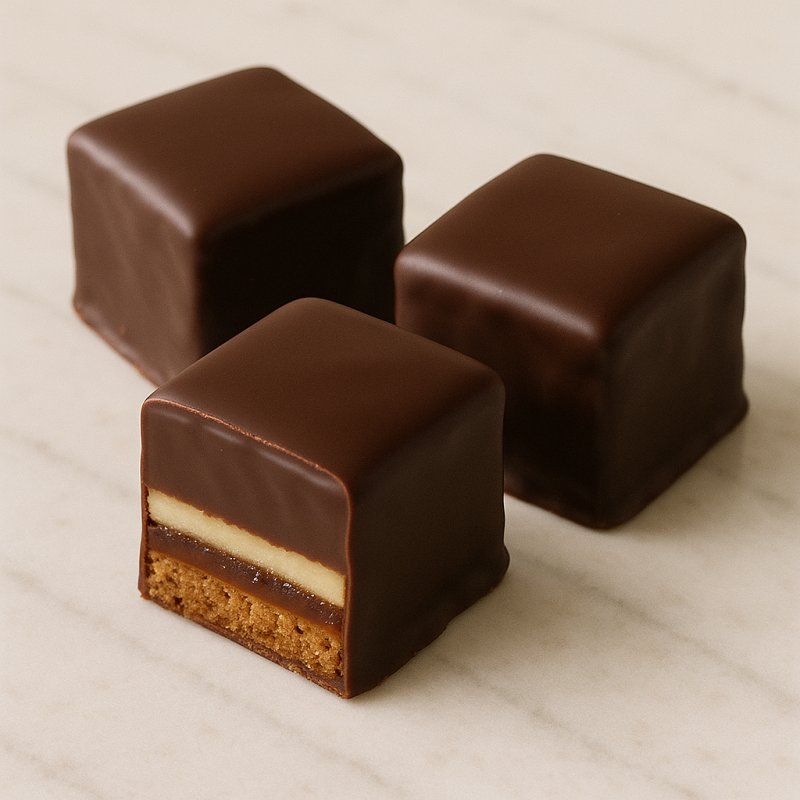
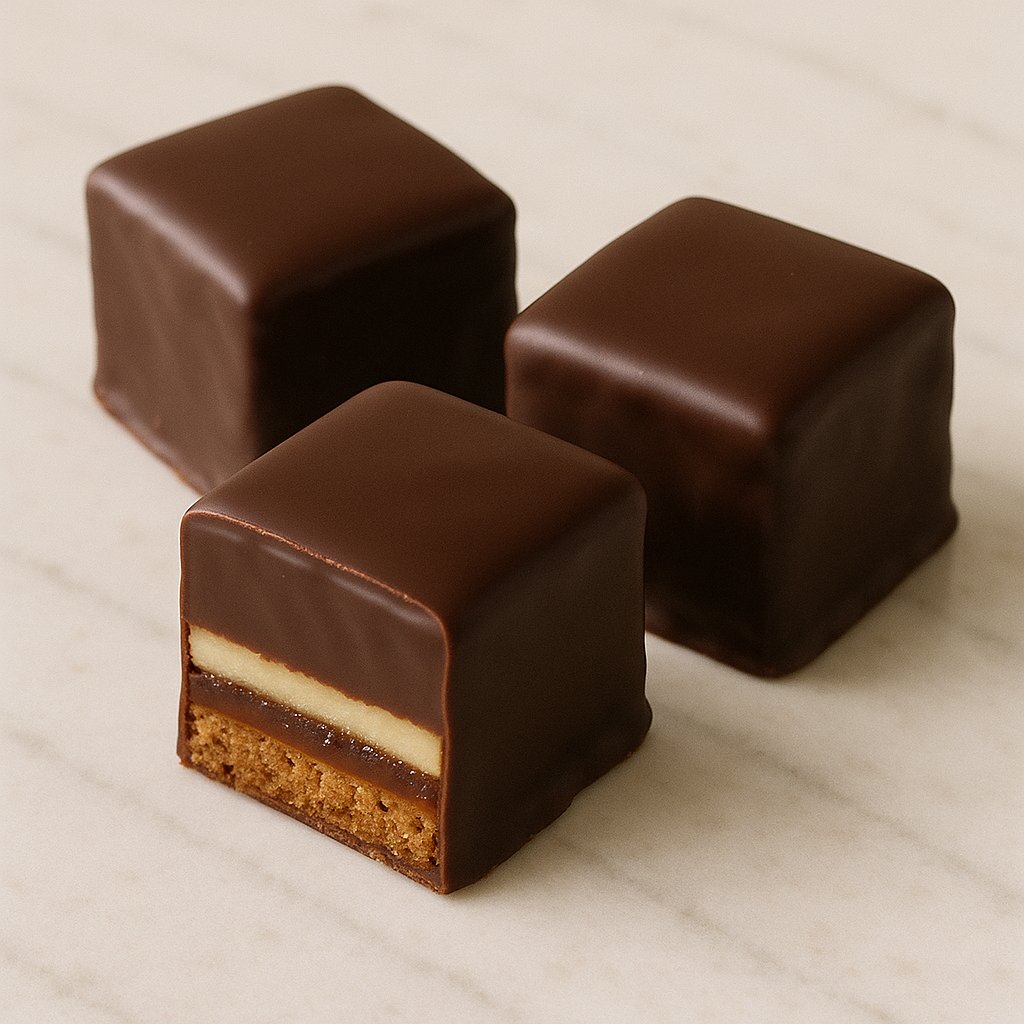
Several Dominosteine covered in chocolate on a plate
Dominosteine are, to me, a little celebration in the fridge — a combination of marzipan, jelly, delicate chocolate and often a hint of spice that immediately evokes childhood and anticipation. I still clearly remember the first bite I tried at a friend's: the surprising interplay of fruity sweetness and nutty depth that suddenly brought back very different memories of winter days and Advent calendars. Since then Dominosteine have a permanent place in my household — not only at Christmas, but whenever I need something cozy and familiar.

What makes these little cubes so appealing is their layering. They typically consist of

  • a firm gingerbread layer or another spiced base,
  • a fruit jelly on top, often made from blood or regular oranges,
  • a thin layer of marzipan or marzipan substitute,
  • and a chocolate glaze that holds everything together.
This balance between textures fascinates me again and again: the slightly chewy jelly, the buttery marzipan and the crisp chocolate shell.
A colleague of mine once brought a tin of homemade Dominosteine to the office. They were not perfectly rectangular, but each piece told a story — a bit too much sugar in the jelly mix here, chocolate that was too dark there — and that made them endearing. Such small variations remind me that pastry is often about personality, not perfection. I learned from that experience that baking your own Dominosteine leaves room for experiments: different kinds of jellies, a splash of liqueur in the marzipan or a pinch of sea salt on the chocolate.
For the kitchen this also means that Dominosteine are versatile. They work as gifts, as a crowning touch on a dessert plate or as an accompaniment to a strong coffee after lunch. When I have guests, I sometimes lay out a colorful selection: classic varieties, one with cinnamon and cardamom and one with a more bitter orange filling. This creates conversation starters and small taste expeditions that everyone enjoys sharing.
In the end Dominosteine are little mementos for me that combine warmth and curiosity. They invite sharing, bring texture and flavor to everyday life and prove that complexity can fit into a tiny cube.

Availability & types

Availability and types

Dominosteine are a popular sweet, especially common in Germany during the Christmas season. They are normally available in supermarkets, bakeries and confectioneries. You can buy them as individual pieces, in small packs or in large value packs. Because they are so popular, many shops carry them for most of the year, but they are most visible at Christmas time, similar to Lebkuchen or speculoos.

Origin
Dominosteine originally come from Germany. Their name is reminiscent of the shape of domino tiles, the game pieces, but the sweet itself only became known in the 19th or early 20th century. They were invented as a special praline and today belong to the tradition of Christmas baking and confectionery. Classic Dominosteine have several layers: usually a gingerbread-like base, a fruit jelly layer (mostly apricot), and a layer of marzipan or sugared paste, all covered with chocolate.

Growing regions (ingredients in the background)
Although Dominosteine are sold as a finished product, they are made from ingredients that come from different regions. A few examples:

  • Cocoa: The chocolate that coats Dominosteine comes from cocoa. Cocoa grows in warm countries near the equator, for example in West Africa, South America or Southeast Asia. Cacao plants need plenty of sun and rain.
  • Grains and spices: The gingerbread-like layer contains flour and sometimes spices like cinnamon and cloves. Flour usually comes from wheat, which is grown in Europe, North America and other temperate regions.
  • Marzipan (almonds): Some Dominosteine contain marzipan. Almonds mainly come from warm regions like the Mediterranean (e.g. Spain) or California. Almonds are the soft seeds of the almond tree.
  • Fruit jelly (e.g. apricots): The fruity layer is often made from apricot jam or similar. Apricots grow in regions with warm climates, such as southern Europe or Central Asia.
These ingredients are processed and assembled in factories, so that the finished Dominosteine are produced. The origin of the ingredients explains why Dominosteine are a product of many different parts of the world — each ingredient brings something unique.

Available varieties and variants
There are many different types of Dominosteine. Manufacturers and bakeries have creative freedom, so you will find both classic and new variants. Here is an overview:

  • Classic Dominosteine: The traditional version with a gingerbread base, apricot filling, marzipan or jelly and a chocolate coating on top.
  • With other fillings: Instead of apricot there are variants with raspberry, cherry, plum or even with nougat. It's like different jams on a pancake — each type tastes different.
  • Vegan or reduced sugar: For people who don't eat animal products or want less sugar, there are vegan or low-sugar Dominosteine. In vegan variants, plant-based gelling agents are used instead of gelatin, for example.
  • With special chocolate: Some Dominosteine are coated with dark chocolate, milk chocolate or even white chocolate. The chocolate strongly changes the taste — dark chocolate is somewhat more bitter, milk chocolate sweeter.
  • Small handmade versions: Bakeries often offer homemade Dominosteine, fresh and sometimes made with special spices or shapes.
Whether classic or modern – Dominosteine come in many variants, so almost everyone can find a type they like. They are easy to obtain, especially during Advent, and their ingredients connect products from different parts of the world into a familiar Christmas treat.
Details & nutrition

Property Value
Unit g
Average weight per piece 12
Calories per 100 410
Protein per 100 5.0
Carbohydrates per 100 65.0
Sugar per 100 48.0
Fat per 100 13.0
Saturated fat per 100 7.0
Monounsaturated fat 4.0
Polyunsaturated fat 2.0
Fiber per 100 3.0
Vitamin C (mg) per 100 0
Vitamin D (IU) per 100 0
Calcium (mg) per 100 60
Iron (mg) per 100 2.0
Nutri-Score E
CO₂ footprint 3.0
Origin Typical German Christmas pastry, industrially produced
Gluten-free No
Lactose-free No
Nut-free No
Vegan No
Note Nutritional values are average values for commercially available Dominosteine; composition may vary by manufacturer.

Technical & scientific information

Dominosteine are a traditional German Christmas confection made of multiple layers, typically consisting of a spiced gingerbread base, a fruit jelly layer, a marzipan layer and a chocolate coating. As a processed confectionery item, Dominosteine are not a single 'ingredient' in the strict sense, but a composite product whose chemical and nutritional properties derive from the components used.

Composition and ingredients
The main components are:

  • Gingerbread dough: Flour (wheat flour), sugar, honey or malt extracts, raising agents, spices (e.g. cinnamon, cloves, nutmeg), fats and water. Proteins come mainly from the flour (gluten) and, in smaller amounts, from eggs if used.
  • Fruit jelly: Often made from fruit juices or fruit purée (e.g. orange, apricot), sugar and gelling agents such as pectin or gelatin. Pectin is a plant polysaccharide that gels in an acidic environment with sugar; gelatin is a product of animal collagen hydrolysis.
  • Marzipan: Made from ground sweet almonds and sugar, partly with binders like dextrose or thickeners; almonds supply plant fats (mainly mono- and polyunsaturated fatty acids), proteins, fiber and secondary plant compounds.
  • Chocolate coating: Dark or milk chocolate made from cocoa mass, cocoa butter, sugar, milk components (in milk chocolate) and an optional emulsifier (lecithin). Cocoa components contain caffeine, theobromine and polyphenolic antioxidants.
Nutritional values and energy density
Dominosteine are energy-dense: per 100 g they can contain depending on the recipe about 400–520 kcal (≈1700–2200 kJ). The energy content comes mainly from carbohydrates (sugar, flour), fats (cocoa butter, almond oil, added fats) and to a lesser extent from proteins. Typical macronutrient distribution is roughly 40–60% carbohydrates, 20–35% fat and 5–10% protein. Fiber content is moderate to low, depending on the share of wholegrain flour or almonds.

Processing methods
Manufacturing is done in layers: first a gingerbread sheet is baked, then cut into portions that can be handled. A fruit layer is applied to this base and usually a thin marzipan sheet is placed on top. After brief cooling the prepared pieces are dipped or coated in tempered chocolate. Important technical aspects are:

  • Chocolate tempering: Correct tempering (crystallization of cocoa butter) ensures gloss, snap and stability. Improperly tempered chocolate can become dull and show fat bloom.
  • Moisture management: The combination of moisture-containing layers (jelly, marzipan) with a drier gingerbread base requires controlled storage, as water migration can change texture and increase mold risk.
  • Hygiene and shelf life: Due to high sugar content and a relatively dry environment, shelf life can be several weeks to months; nevertheless microbiological control is important, especially if gelatin or fresh juices are used.
Health aspects
From a nutritional perspective Dominosteine are a treat high in sugar and fat. Regular, high consumption can contribute to increased risk of overweight, tooth decay and metabolic diseases. Common allergens include:

  • Gluten (wheat flour),
  • Tree nuts (almonds in the marzipan),
  • Milk components (in milk chocolate or milk fat),
  • Gelatin (if used) and
  • Eggs (if used in the gingerbread dough).
For people with special diets there are variants: reduced-sugar recipes with sweeteners, gluten-free gingerbread bases made from alternative flours or vegan versions using pectin instead of gelatin and plant-based chocolate. Sensory-wise the product is characterized by contrasting textures (crisp chocolate, soft marzipan, chewy jelly, slightly crumbly gingerbread) and a complex aroma profile of spices, cocoa and fruit acids.

Conclusion
Dominosteine are a multilayered confection whose properties are determined by the composition and processing of the individual components. Chemically they are mixtures of carbohydrates, lipids, proteins and secondary plant compounds, complemented by gelling and baking reactions. Nutritionally they are calorie-rich and should be consumed occasionally; technologically they require precise temperature and moisture control to ensure quality and shelf life. Variants for allergic consumers and special diets are possible and increasingly offered.

Wiki entry for: dominostein
Active now: 20 visitors of which 2 logged-in members in the last 5 minutes