Availability and types
Dominosteine are a popular sweet, especially common in Germany during the Christmas season. They are normally available in supermarkets, bakeries and confectioneries. You can buy them as individual pieces, in small packs or in large value packs. Because they are so popular, many shops carry them for most of the year, but they are most visible at Christmas time, similar to Lebkuchen or speculoos.
Origin
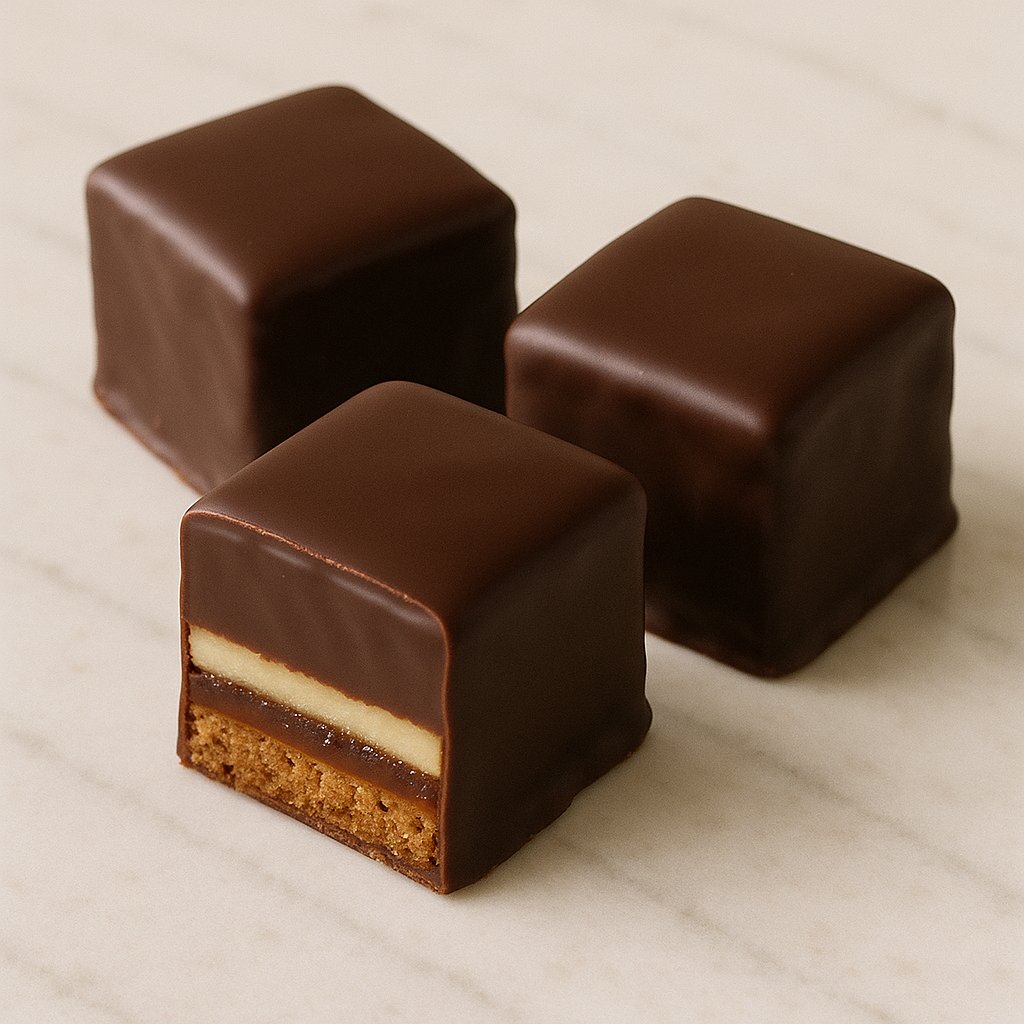
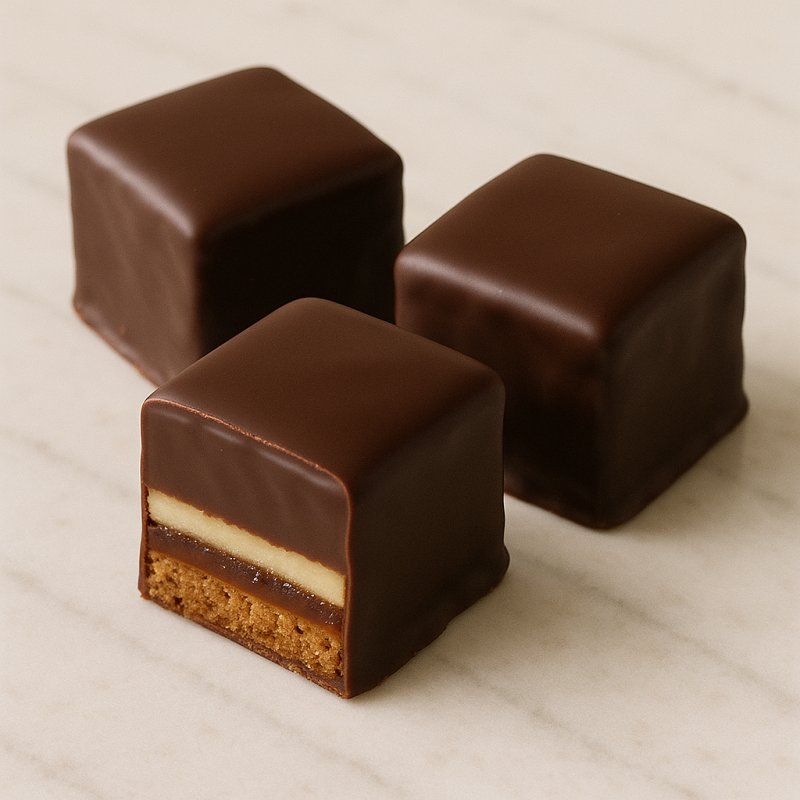
Dominosteine originally come from Germany. Their name is reminiscent of the shape of domino tiles, the game pieces, but the sweet itself only became known in the 19th or early 20th century. They were invented as a special praline and today belong to the tradition of Christmas baking and confectionery. Classic Dominosteine have several layers: usually a gingerbread-like base, a fruit jelly layer (mostly apricot), and a layer of marzipan or sugared paste, all covered with chocolate.
Dominosteine originally come from Germany. Their name is reminiscent of the shape of domino tiles, the game pieces, but the sweet itself only became known in the 19th or early 20th century. They were invented as a special praline and today belong to the tradition of Christmas baking and confectionery. Classic Dominosteine have several layers: usually a gingerbread-like base, a fruit jelly layer (mostly apricot), and a layer of marzipan or sugared paste, all covered with chocolate.
Growing regions (ingredients in the background)
Although Dominosteine are sold as a finished product, they are made from ingredients that come from different regions. A few examples:
Although Dominosteine are sold as a finished product, they are made from ingredients that come from different regions. A few examples:
- Cocoa: The chocolate that coats Dominosteine comes from cocoa. Cocoa grows in warm countries near the equator, for example in West Africa, South America or Southeast Asia. Cacao plants need plenty of sun and rain.
- Grains and spices: The gingerbread-like layer contains flour and sometimes spices like cinnamon and cloves. Flour usually comes from wheat, which is grown in Europe, North America and other temperate regions.
- Marzipan (almonds): Some Dominosteine contain marzipan. Almonds mainly come from warm regions like the Mediterranean (e.g. Spain) or California. Almonds are the soft seeds of the almond tree.
- Fruit jelly (e.g. apricots): The fruity layer is often made from apricot jam or similar. Apricots grow in regions with warm climates, such as southern Europe or Central Asia.
These ingredients are processed and assembled in factories, so that the finished Dominosteine are produced. The origin of the ingredients explains why Dominosteine are a product of many different parts of the world — each ingredient brings something unique.
Available varieties and variants
There are many different types of Dominosteine. Manufacturers and bakeries have creative freedom, so you will find both classic and new variants. Here is an overview:
There are many different types of Dominosteine. Manufacturers and bakeries have creative freedom, so you will find both classic and new variants. Here is an overview:
- Classic Dominosteine: The traditional version with a gingerbread base, apricot filling, marzipan or jelly and a chocolate coating on top.
- With other fillings: Instead of apricot there are variants with raspberry, cherry, plum or even with nougat. It's like different jams on a pancake — each type tastes different.
- Vegan or reduced sugar: For people who don't eat animal products or want less sugar, there are vegan or low-sugar Dominosteine. In vegan variants, plant-based gelling agents are used instead of gelatin, for example.
- With special chocolate: Some Dominosteine are coated with dark chocolate, milk chocolate or even white chocolate. The chocolate strongly changes the taste — dark chocolate is somewhat more bitter, milk chocolate sweeter.
- Small handmade versions: Bakeries often offer homemade Dominosteine, fresh and sometimes made with special spices or shapes.
Whether classic or modern – Dominosteine come in many variants, so almost everyone can find a type they like. They are easy to obtain, especially during Advent, and their ingredients connect products from different parts of the world into a familiar Christmas treat.