Menu & categories

Currants

Dried, seedless grapes with an intensely sweet-tart aroma

Wiki about currant Nutri-Score C Vegan Yes Gluten-free Yes Lactose-free Yes Nut-free Yes
NUTRITION / 100 g
300 kcal 3.0 g Protein 79.0 g Kohlenhydrate 0.5 g Fett

Introduction

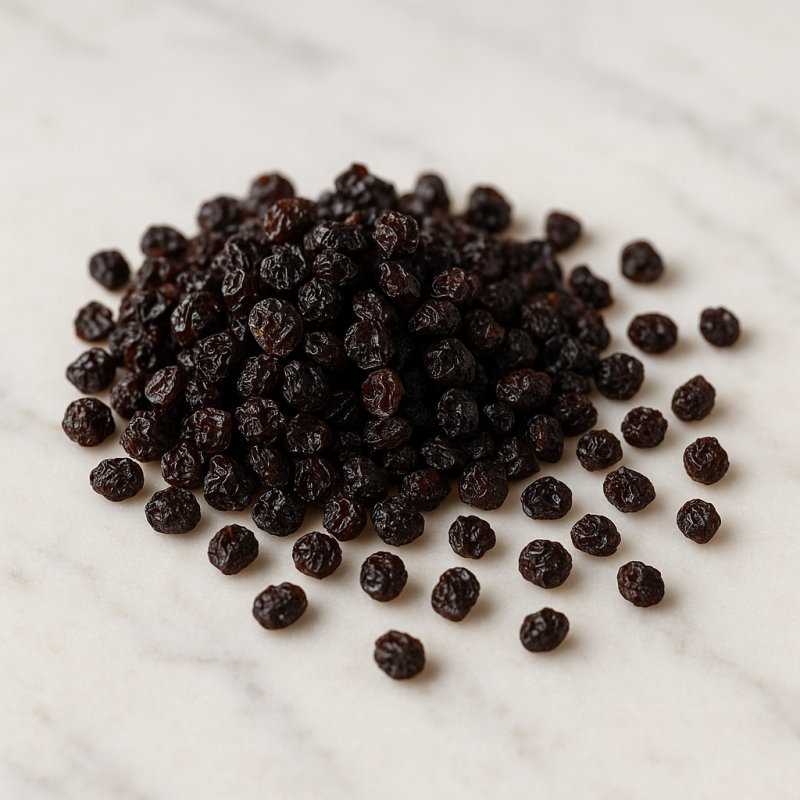
A small bowl filled with dried currants
I still remember the first time I tried currants as a child: my grandmother held up a handful and they were smaller than any raisin, but full of a wilful, concentrated flavor. Currants are, to me, little flavor artists—dark, intense and surprisingly versatile. They originally come from a wild grape in Asia Minor, were brought via Greece to Europe, and have become faithful companions in flour and baking rooms.

What I particularly appreciate about currants is their combination of sweetness and a slightly tart note that gives dishes depth without dominating. I like to use them in baked goods; they suit puff pastry and oats as well as a spicy chutney. A colleague once brought a handful of currants to a picnic and swore he would market them as a "natural snack with character." We laughed, but his idea was not so far-fetched: their small size makes them ideal for nibbling, for enhancing salads, or as a surprising touch in sauces.

Anyone who buys currants will notice that they are often drier and darker than other raisins. That comes from the specific grape variety and traditional drying. I sometimes soak them briefly in warm water or tea when I want to use them in risotto or a delicate dessert. This short revival brings back the flavors and makes them more supple.

Practical tips I've learned on the go:

  • Baking: Currants give baked goods a balanced distribution of flavor.
  • Savoury dishes: They complement spicy stews and curries with a sweet-spicy counterpoint.
  • Snacks: Lightly toasted with nuts they make a surprisingly great energy booster.
To me currants embody the small, fine art of cooking: they do not demand grand gestures, but transform simple recipes with a few grains of personality. Next time you bake or experiment with savoury flavors it's worth giving them a chance—I promise they'll surprise you.

Availability & types

Availability and types of currants

Currants are small dried grapes with a sweet and slightly tart taste. They are easy to find in many supermarkets and markets, usually among dried fruits or baking ingredients. Because they are small, they often come in packages of 100 to 500 grams. In stores they are placed next to raisins, sultanas and other dried fruits. If you live in a large city, you can also find them in health food stores or natural food shops. Online shops often offer an even wider selection and different package sizes.

Origin
Currants originally come from the area around the city of Corinth in Greece — hence the name. Today, however, the small grapes are grown in many places where the climate is warm and dry enough for the grapes to ripen well and dry naturally. The best-known countries of origin are:

  • Greece – traditional and popular; genuine currants often come from Greek wine regions.
  • Turkey – a large growing area that supplies many varieties.
  • Italy – similar small raisins are produced especially in southern Italy.
  • USA and Australia – related small grapes are grown and dried there as well.
You can think of currants as the smaller siblings of the larger raisins. In different countries they grow on similar vines, but climate and soil make them taste slightly different, just as apples from different regions can vary in sweetness or tartness.

Growing regions
Currants need warm temperatures and little rain at harvest time so the grapes can dry on the vine or be sun-dried after harvest. That's why growing areas are often on sunny coasts or in warm valleys. Small farms and larger plantations tend the vines: grapes are harvested, sorted and often dried in the sun or in drying rooms. Some farmers still dry them on traditional sheets in the sun, which you can imagine like clotheslines full of grape clusters.

Available varieties and variants
There isn't just one kind of currant — there are a few variants that differ in size, color and taste:

  • Dark currants – the most common type, very dark and intense in flavor. This is what many people mean when they say "currants."
  • Golden currants – lighter and somewhat milder in taste; sometimes grapes are treated with sulfur to preserve their pale color.
  • Organic currants – grown without chemical pesticides. They are like fruit from a home garden, only on a larger scale.
  • Sweetened or preserved variants – sometimes currants are mixed with sugar or preserved in liqueur to make them extra sweet or aromatic, similar to placing fruit in syrup to enhance it.
For baking or as a snack you can choose dark or light currants depending on the recipe. Dark ones are stronger in flavor and pair well with spiced pastries; light ones look nicer in cakes and desserts. When buying currants, check whether they are soft or dry, as that affects how they behave in baking — soft currants release more moisture, dry ones remain firmer.

In summary: currants are widespread and available in many varieties. Their origin lies in Greece, but today they come from various warm countries. You can choose between dark and light, conventional and organic variants as well as specially sweetened or preserved versions — depending on how you want to use them.

Details & nutrition

Property Value
Unit g
Calories per 100 300
Protein per 100 3.0
Carbohydrates per 100 79.0
Sugar per 100 64.0
Fat per 100 0.5
Saturated fat per 100 0.1
Monounsaturated fat 0.1
Polyunsaturated fat 0.2
Fiber per 100 4.0
Vitamin C (mg) per 100 3.0
Vitamin D (IU) per 100 0
Calcium (mg) per 100 60
Iron (mg) per 100 2.0
Nutri-Score C
CO₂ footprint 1.5
Origin Mediterranean region, especially Greece
Gluten-free Yes
Lactose-free Yes
Nut-free Yes
Vegan Yes
Note Nutritional values refer to unsweetened, dried currants without additives.

Technical & scientific information

Currants are small dried dark grapes (Vitis vinifera), typically obtained from certain usually seedless grape varieties. Botanically they belong to the vine family and differ from raisins and sultanas primarily by origin, varietal properties and often darker coloration. Traditionally currants originate from regions of the eastern Mediterranean and the Near East; today they are also cultivated and dried in other viticultural areas.

External characteristics and processing
Currants are characteristically small, shriveled and dark violet to black. Production involves several steps:

  • Harvest: ripe grapes are harvested, often early to achieve desired sugar-to-acid ratios.
  • Destemming and sorting: stems are removed and fruits are sorted to exclude damaged ones.
  • Drying: drying takes place in the sun or in drying chambers; some processes also use vacuum drying or gas treatments to control microbiology.
  • Preservation: to extend shelf life sulfur dioxide (SO2) is sometimes used as an antioxidant and color preservative, while traditional currants often avoid SO2 and thus remain darker.
  • Final processing: cleaning, possible oil treatment to prevent sticking, and packaging.
Chemical composition and nutritional values
Currants are energy-dense and consist mainly of water, carbohydrates and organic acids. Average nutritional values per 100 g (dried) are approximately:

  • Calories: 250–320 kcal
  • Carbohydrates: 60–75 g, mainly sugars (glucose, fructose)
  • Fiber: 3–7 g
  • Protein: 2–4 g
  • Fat: < 1 g
  • Water content: typically 12–20 %
Key secondary plant compounds are polyphenols, including anthocyanins, flavonoids and phenolic acids, which contribute to the dark color and have antioxidant properties. Currants also contain minerals such as potassium, calcium, magnesium and iron, as well as B vitamins, notably vitamin B6, in small amounts.

Physiology and biochemistry
The high sugar content results from redistribution of carbohydrates during grape ripening. Drying concentrates sugars and secondary plant compounds. Anthocyanins and other phenolic compounds are localized in the cell wall and flesh; their stability is influenced by pH, temperature and exposure to oxygen. Sulfur compounds are used to inhibit polyphenol oxidation, thereby reducing browning and inhibiting microbial growth.

Health aspects
Currants supply rapidly available energy through simple sugars and contribute to potassium intake, which is relevant for electrolyte balance. The polyphenols present show antioxidant activity in vitro and may modulate inflammatory markers; however, clinical effects in vivo are dose- and context-dependent. Due to their high sugar content, currants are recommended only in limited amounts for people with diabetes or those on calorie-restricted diets. Allergic reactions to grapes are rare but possible. Use of sulfur dioxide can trigger asthma attacks or irritations in sulfite-sensitive individuals; therefore, labelling information is important.

Food technology and culinary aspects
Currants are used in baked goods, muesli, jams, sauces and as garnish. Their small size and concentrated aroma make them suitable for products where an even distribution of small fruit pieces is desired. Technologically relevant factors include hygroscopicity, sweetening power and interactions with proteins and starches in doughs, which affect dough structure and browning behavior. Rehydration before processing alters texture and the release of aroma compounds.

Storage and quality assurance
To preserve quality, cool, dry storage conditions with airtight protection against moisture uptake are important. Microbiological control focuses on molds and yeasts, while sensory inspection checks for off-flavors, bitter notes or signs of oxidation. Analytical controls include moisture determination, residual SO2, microbiological tests and analysis for heavy metals or residues.

Overall, currants are a preserved, flavor-intense dried fruit with a characteristic composition of sugars, fiber and polyphenolic compounds. They have diverse culinary uses and offer nutritional benefits, but should be considered with dietary caution due to high sugar content and potential use of sulfites.

Wiki entry for: currant
Active now: 17 visitors of which 2 logged-in members in the last 5 minutes