Menu & categories

Cucumber seasoning

Aromatic spice blend for pickling cucumbers

Wiki about cucumber seasoning Nutri-Score A Vegan Yes Gluten-free Yes Lactose-free Yes Nut-free Yes
NUTRITION / 100 g
280 kcal 12 g Protein 35 g Kohlenhydrate 7 g Fett

Introduction

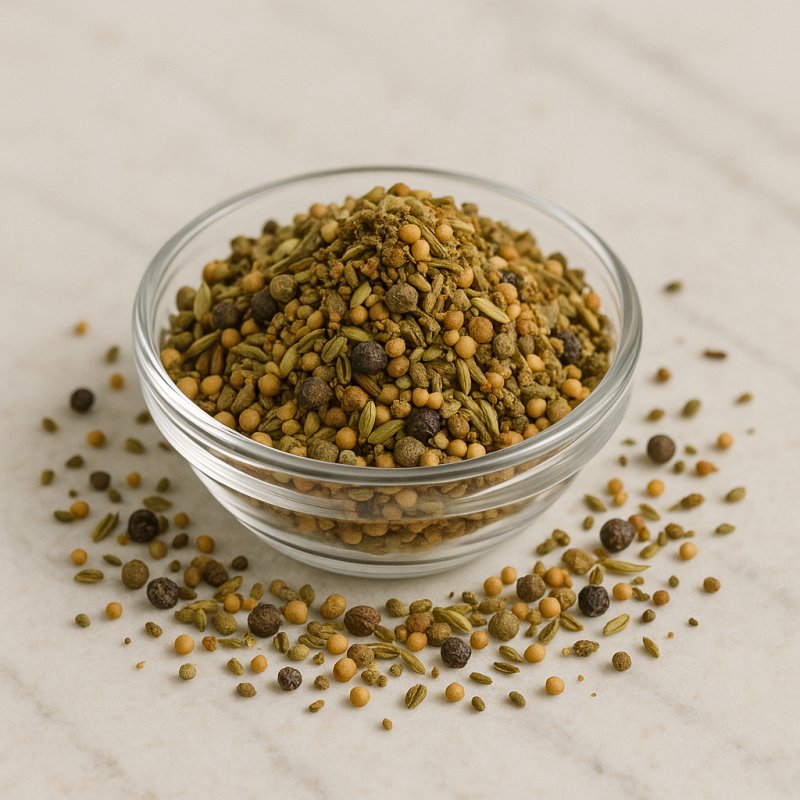
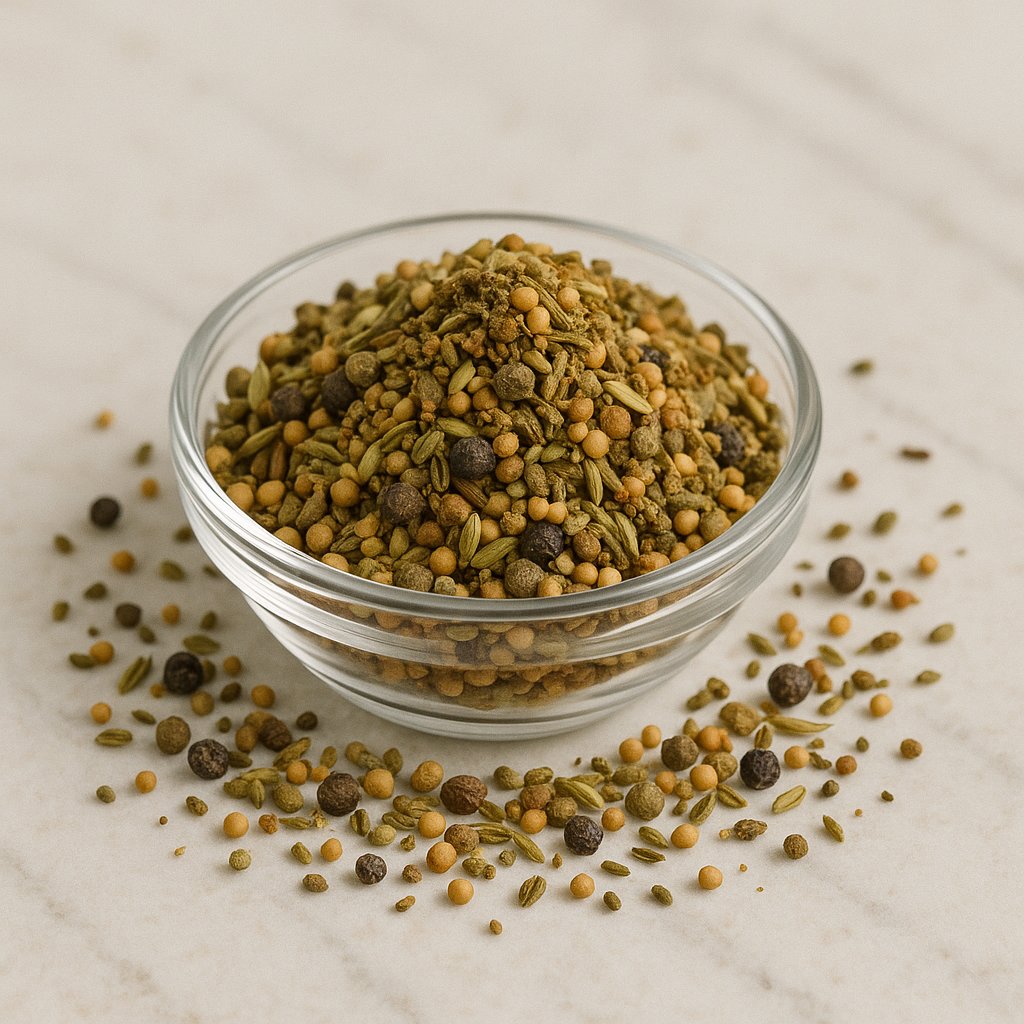
Bowl with dried cucumber seasoning and spice seeds
Cucumber spice is, for me, one of those unobtrusive kitchen companions that stands quietly on the shelf and then suddenly transforms a dish. I still remember a hot August afternoon when I tried pickled cucumbers with a friend and she, after the first bite, said surprised: „That tastes like a holiday.“ The holiday was not the sea, but the little jar with a scent of dill, mustard seeds and a pinch of sugar. Since then I have used cucumber spice not only as an ingredient but as a mood maker in my kitchen.

What makes cucumber spice so special? At its core it is a blend that balances freshness, acidity and seasoning. Typical components are dill, mustard seeds, peppercorns, celery seeds and sometimes garlic or bay leaf. Depending on tradition and region the composition varies, and that is precisely the nice thing: I have colleagues who swear by a pinch of turmeric, while others prefer to experiment with fresh tarragon.

I often use cucumber spice for:

  • pickled cucumbers and quick cornichons
  • summer salad dressings with yogurt
  • marinades for vegetable skewers
  • homemade sandwich spreads
A small experiment I always recommend: bring broth, vinegar, sugar, water and a few spoonfuls of cucumber spice to a boil, let cool and pour over thinly sliced cucumbers. After a few hours you have a spectrum of flavors that is crisp, sweet‑sour and pleasantly spicy at the same time. A colleague once distributed a whole bowl in the office, and within an hour everyone asked for the recipe.

For the mindful cook or the curious chef, cucumber spice is an invitation to vary. I sprinkle it sparingly over cold soups, mix it into herbed quark or use it as a secret tip for potato salad with a kick. It is an ingredient that tells stories — of picnics, family kitchens and spontaneous table conversations — and surprises again and again.

Availability & types

Availability and types

Cucumber spice is a popular seasoning often used for pickling cucumbers or for refining salads and cold dishes. Origin and composition can differ: some blends come from traditional Eastern European cuisines, others from regions with a long canning tradition such as the Mediterranean or the Middle East. The basic idea is similar everywhere: flavors that make cucumbers crunchy and tasty while also helping to preserve them.

Growing regions
The spice itself usually consists of dried herbs and seeds that come from different countries. Common components like dill, mustard seeds, peppercorns, coriander or celery seeds are grown worldwide. Dill grows well in Europe and North America; mustard and coriander seeds often come from countries with warm climates such as India, Canada or Russia. Pepper traditionally comes from tropical regions like India and Indonesia. You can picture it like this: just as various ingredients come together in a bowl, these plants also come from different parts of the world and are then mixed so that the cucumber spice acquires its typical taste.

Available types and variants
Cucumber spice comes in many forms and blends. Here are the main types, simply explained:

  • Classic cucumber spice: This is the simple blend that often contains dill, mustard seeds, pepper and some sugar. It is used when making salted or pickled cucumbers. Think of it as the base recipe for a good sandwich spread — simple but effective.
  • Dill‑forward blend: Some people like a strong dill flavor. This variant has extra dill or even dried dill tips. It is suitable when you want a fresh, herbaceous result, similar to a dish topped with extra parsley.
  • Spicy or piquant blend: These varieties contain more pepper or chili flakes and are for people who like it more piquant. It's comparable to deciding whether to put ketchup or hot sauce on your fries.
  • Organic or natural variants: These blends use ingredients from organic farming without artificial additives. They are intended for people who care about natural foods — similar to choosing organic apples.
  • Ready pickling sachets and mixes: Supermarkets also offer pre‑measured packets or sachets with a ready mix. This is practical and saves time, especially if you are pickling for the first time.
  • Regional specialties: Depending on the country there are special variants with additional herbs or spices, for example with bay leaf, cloves or juniper berries. These give the finished product its own character, just as different ice cream flavors have their own taste.
What to watch for when buying?
When buying cucumber spice, pay attention to freshness — spices lose flavor over time. Check the packaging date or choose small packages that you consume quickly. In blends with whole seeds aromas are retained longer than in already ground products. If you value sustainability, there are organic options with origin information.

In summary: cucumber spice comes in many forms and from various regions of the world. There are simple everyday blends, spicier variants for the adventurous, as well as organic and regional specialties. Whether you take a ready pack from the supermarket or mix your own — there is always a suitable type for your taste and occasion.
Details & nutrition

Property Value
Unit g
Calories per 100 280
Protein per 100 12
Carbohydrates per 100 35
Sugar per 100 3
Fat per 100 7
Saturated fat per 100 1
Monounsaturated fat 3
Polyunsaturated fat 3
Fiber per 100 30
Vitamin C (mg) per 100 5
Vitamin D (IU) per 100 0
Calcium (mg) per 100 250
Iron (mg) per 100 10
Nutri-Score A
CO₂ footprint ca. 2.3 kg CO2e/kg
Origin Spice blend of dried herbs and seeds, origin varies by manufacturer (worldwide origins), packaging usually in Europe
Gluten-free Yes
Lactose-free Yes
Nut-free Yes
Vegan Yes
Note Nutritional values are average values for commercially available cucumber seasoning; depending on the manufacturer and the exact recipe, deviations may occur.

Technical & scientific information

Cucumber spice usually denotes a spice mix specifically for preparing pickled cucumbers or cucumber salads. Such mixes consist of several dry spices and herbs that together create the typical piquant‑acidic flavor of pickled cucumbers. Commercial variants and homemade recipes vary, but can be divided into characteristic ingredients, processing and functional properties.

Composition and typical ingredients

  • Seeds and kernels: mustard seeds (yellow or brown), dill and/or fennel seeds, coriander seeds. These provide essential oils and contribute significantly to the aroma.
  • Leaves and herbs: dill seeds or dill tips, bay leaf, tarragon or celery leaves in dried form.
  • Spices and pungent substances: peppercorns (black or white), cloves, allspice (pimento) and sometimes ginger powder or chili for additional heat.
  • Salt and preserving components: common salt is frequently a component of the pickling liquid; in ready mixes citric acid or vitamin C (ascorbic acid) may be added as an antioxidant.
Chemical constituents

The active components in cucumber spice arise largely from essential oils, organic acids and secondary plant metabolites. Important chemical compounds are:

  • Essential oils: eugenol (cloves), anethole (fennel, dill), limonene and terpenes from coriander and mustard. These oils are responsible for the characteristic aroma and taste.
  • Sulphides and glucosinolates: glucosinolates present in mustard can, upon disruption, be enzymatically converted into mustard oils and produce mildly pungent flavors.
  • Organic acids: citric acid or acetic acid (from the brine) dominate the sour taste and have a preservative effect.
Nutritional values and microbiological aspects

A dry cucumber spice provides very low amounts of macronutrients per 100 g, since it mainly consists of flavoring substances. It typically contains small amounts of carbohydrates (mainly fiber), proteins and fats, but consumption quantities are small so the caloric contribution is practically negligible. Minerals such as potassium, calcium and iron may be present in trace amounts. Microbiologically, a dry, well‑dried spice is stable under proper storage; increased moisture, however, can promote mold growth and quality loss.

Processing methods

  • Drying: raw spices are preserved after harvest and cleaning by air drying, hot‑air drying or freeze‑drying. Temperature and duration affect aroma and residual essential oil concentration.
  • Crushing and mixing processes: whole seeds are left intact or coarsely crushed depending on the recipe; fine powders result from grinding. Homogeneous blends are mechanically mixed in batches.
  • Roasting: some recipes call for a short roasting of seeds, which can produce Maillard reactions and intensified roasted aromas.
  • Packaging: packaging airtight and protected from light, ideally in dry, inertized containers, minimizes aroma loss and oxidation.
Health aspects

The components of cucumber spice bring several nutritional and pharmacological properties. Essential oils can have digestive‑promoting effects and reduce flatulence (e.g. anethole from fennel). Mustard oils have antimicrobial activity, and the antioxidants present can moderately inhibit oxidative processes. However, spices can trigger allergies or irritation in sensitive individuals, and very large amounts of mustard or pepper components can cause gastrointestinal complaints. In industrial products, elevated salt levels and possible additives should be noted.

Applications and storage

Cucumber spice is used primarily for pickling cucumbers in vinegar or brine, but is also suitable for salads, marinades and as a seasoning component for vegetable dishes. To preserve aroma, blends should be stored cool, dry and protected from light. Whole seeds keep longer than ground variants because ground spices lose volatile oils more quickly.

In summary, cucumber spice is a complex mixture of aromatic plant substances whose action is based on essential oils, organic acids and secondary plant metabolites. Sensory properties, microbiological stability and health effects depend strongly on composition, processing and storage conditions, which is why quality assurance and appropriate use are important for safe and flavorful application.

Wiki entry for: cucumber seasoning
Active now: 20 visitors of which 2 logged-in members in the last 5 minutes