Availability and types of cream cheese
Cream cheese is a milk ingredient that can be bought almost everywhere. It is not grown from plants but made from milk, mostly from cows. The milk is transformed with the help of bacteria and sometimes a little rennet (a substance that coagulates the milk) or acids like lemon juice or vinegar into solid and liquid parts. The solid result is cream cheese. Because it does not age like hard cheeses, it tastes mild and fresh.
Where does cream cheese come from?
Cream cheese has no single region of origin — it is produced in almost every part of the world. In Europe, North America, South America and many parts of Asia small farms and large companies produce cream cheese. You can buy it in supermarkets, at the baker, in organic shops and at markets. Even many restaurants and cafés offer dishes with cream cheese.
Cream cheese has no single region of origin — it is produced in almost every part of the world. In Europe, North America, South America and many parts of Asia small farms and large companies produce cream cheese. You can buy it in supermarkets, at the baker, in organic shops and at markets. Even many restaurants and cafés offer dishes with cream cheese.
Milk production areas (where the milk comes from)
Because cream cheese is made from milk, it matters where the cows, goats or sheep live. The milk usually comes from regions with a lot of pastureland or from farms with barn housing. In Germany most dairy products come from federal states with many farms such as North Rhine-Westphalia, Lower Saxony and Bavaria. In other countries it is likewise regions with extensive agriculture. There is also organic milk, where the animals have more space and their feed often comes from nearby sources.
Because cream cheese is made from milk, it matters where the cows, goats or sheep live. The milk usually comes from regions with a lot of pastureland or from farms with barn housing. In Germany most dairy products come from federal states with many farms such as North Rhine-Westphalia, Lower Saxony and Bavaria. In other countries it is likewise regions with extensive agriculture. There is also organic milk, where the animals have more space and their feed often comes from nearby sources.
What varieties and variants exist?
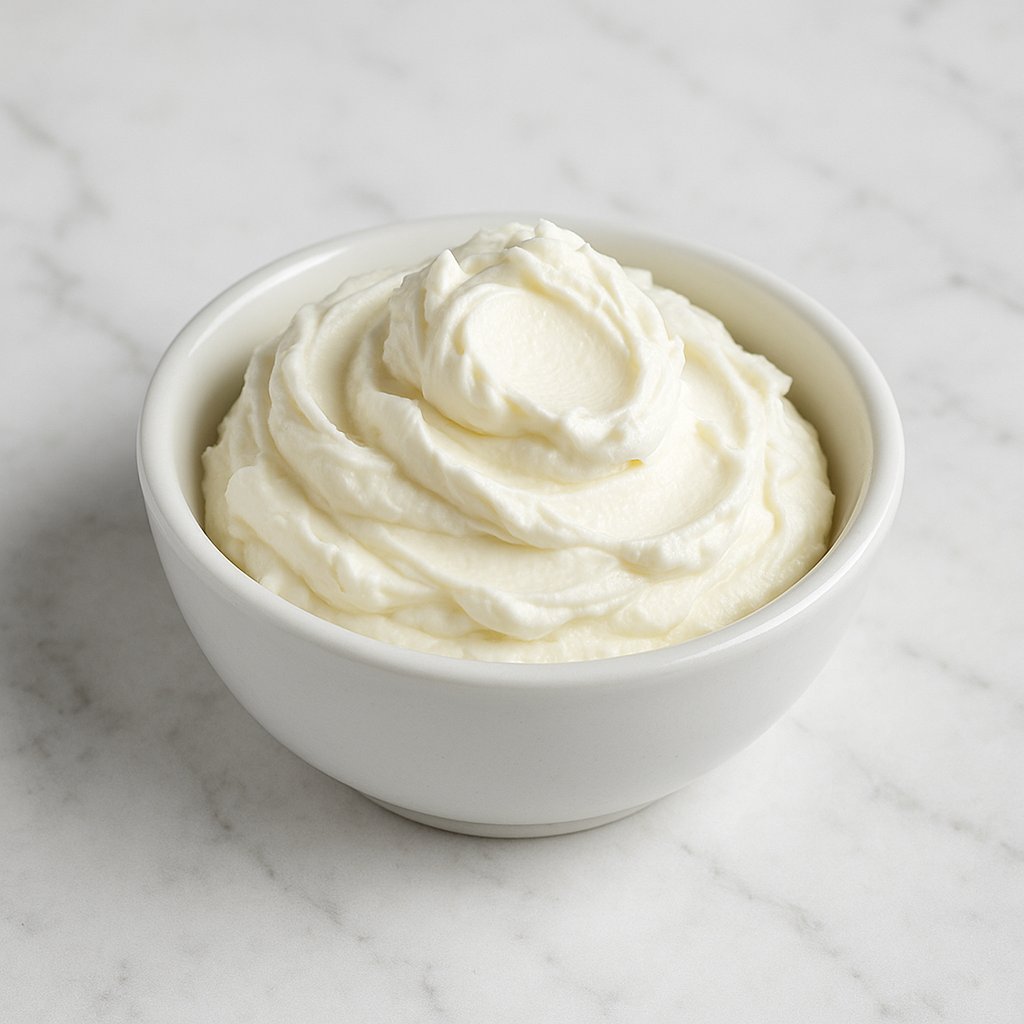
- Plain cream cheese: This is the simplest form. It is soft, creamy and has a mild, slightly tangy taste. You can spread it on bread or use it for cooking.
- Herb cream cheese: Fresh or dried herbs such as chives, parsley or dill are mixed in. This adds flavor and makes it a great spread.
- Spiced or flavored cream cheese: Varieties with pepper, paprika, garlic or chili are popular. Some variants taste savory, others are a bit spicier.
- Fruit cream cheese: Especially popular with children are cream cheeses with fruit additions like strawberry or peach. These are sweeter and suitable as a snack or dessert.
- Light or reduced-fat versions: For people who want to eat less fat, there are cream cheeses with low fat content. They are often a little less creamy but still spreadable.
- Goat or sheep milk cream cheese: If you don't like cow's milk cheese or don't tolerate it well, you can find varieties made from goat or sheep milk. These taste a bit more piquant or creamier.
- Creamy cream cheese (e.g. double cream): These variants contain more cream, are extra creamy and rich — good for baking or desserts.
- Vegetarian variants: Some cream cheeses are made without animal rennet, which means they are suitable for vegetarians. This is usually clearly indicated on the packaging.
Practical tips for choosing
If you want to buy cream cheese, check the best-before date in the fridge and see whether the package has been opened. Fresh varieties taste best when chilled. For bread and spreads, plain or herb cream cheese is suitable, for sweets the fruity variants and for cooking often the creamy or double-cream versions.
If you want to buy cream cheese, check the best-before date in the fridge and see whether the package has been opened. Fresh varieties taste best when chilled. For bread and spreads, plain or herb cream cheese is suitable, for sweets the fruity variants and for cooking often the creamy or double-cream versions.
Overall, cream cheese is a versatile, readily available ingredient with many flavors — from very mild to tangy or fruity — and it is made in many places from milk of cows, goats or sheep. So almost everyone can find the right cream cheese for their taste.