Menu & categories

Cornflakes

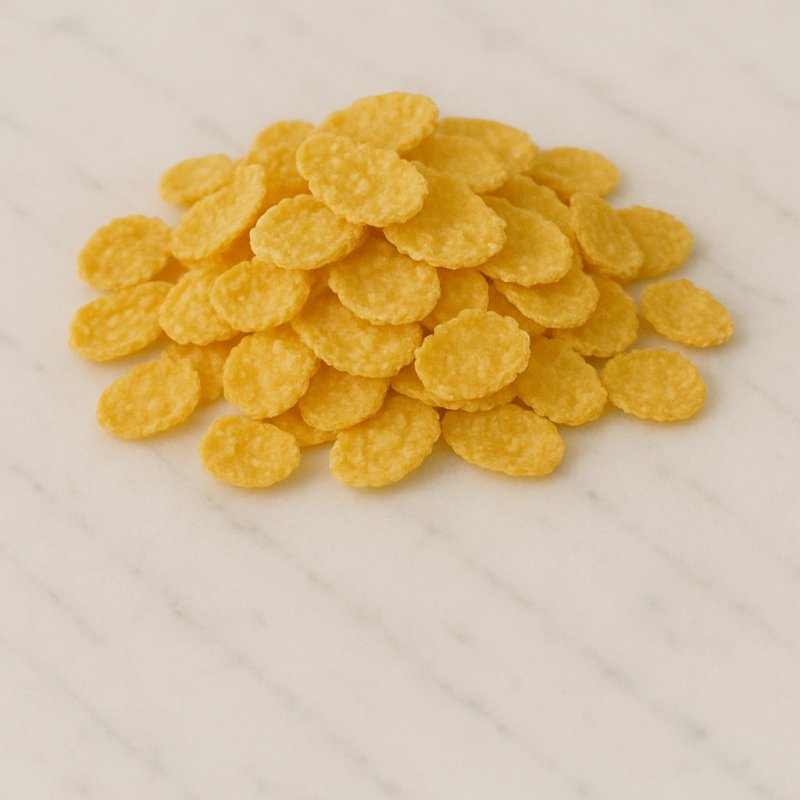
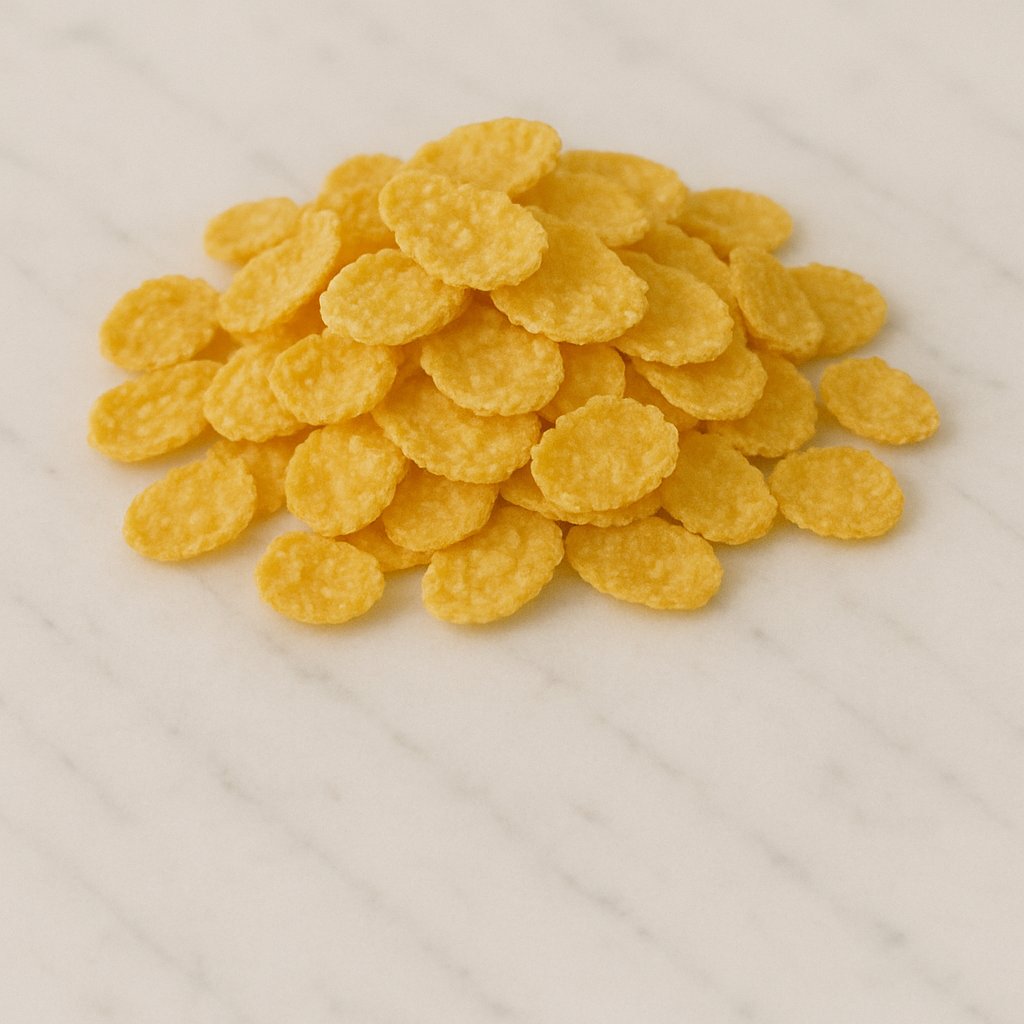
Crispy breakfast flakes made from corn

Wiki about cornflake Nutri-Score C Vegan Yes Gluten-free No Lactose-free Yes Nut-free Yes
NUTRITION / 100 g
370 kcal 7.0 g Protein 84.0 g Kohlenhydrate 0.9 g Fett

Introduction

Bowl with cornflakes
I have a strange relationship with cornflakes: they are both comfort-givers and kitchen chameleons. As a child they were the crunchy morning ritual that, with milk, became a familiar texture. Later I discovered their versatility while improvising during lunch breaks when the pantry offered limited options. A colleague of mine still swears by using them as a coating for baked fish, and after trying it once it became my quick dinner trick on stressful days.

Cornflakes are essentially made from corn semolina, sugar, malt extract and a bit of salt. They are steamed, rolled and then toasted until the characteristic crispy, slightly caramelized structure develops. It is precisely this texture that makes them so popular: they stay crunchy in milk for a long time, crumble nicely as a crunchy element over yogurt and salads, and they absorb spices or herbs very well when finely crushed.

I still remember a Sunday afternoon when I spontaneously made chocolate-covered cornflake bites for a small group of guests. The combination of crunchy grain and melting chocolate generated more excitement than I expected. Anecdotes like this show that cornflakes are more than just breakfast flakes: they are an ingredient that fosters creativity in the kitchen.

Practical uses I particularly like:

  • Coating: Crumbled as a crispy shell for fish or chicken.
  • Baking: As an addition to cookies or granola bars for extra bite.
  • Topping: Sprinkled over casseroles, it creates a crisp surface.
  • Sweets: Shaped with chocolate and nuts into small confections.
Nutritionally, cornflakes are a source of energy with a moderate fiber content; many varieties are additionally fortified with vitamins. When shopping, it is worth checking the ingredient list if you want less sugar. For me the appeal of cornflakes remains that they are a simple, accessible ingredient that brings surprisingly much flavor and texture to dishes. In a world full of trends they have something down-to-earth and familiar — and I appreciate that very much.

Availability & types

Availability and types of cornflakes

Cornflakes are crispy breakfast flakes made from corn and are easy to find almost everywhere. Origin: Cornflakes were originally invented in the late 19th century in the United States. The basic ingredient is corn, a crop grown in many countries. From this corn a flour or mash is produced, which is then cooked, shaped and roasted or baked into thin flakes. You can imagine them like small corn chips, intentionally kept with a mild taste and rather dry so they can be eaten with milk or yogurt.

Growing regions

  • Corn grows particularly well in warm regions with sufficient rainfall or irrigation. Large cultivation areas exist in North and South America, especially in the United States and Brazil.
  • Corn is also grown in Europe, for example in countries like France, Germany and Hungary. There the climate is somewhat cooler, but modern varieties and agriculture still provide high yields.
  • In Africa and Asia corn is cultivated mainly where there are flat fields and sufficient water. Smaller farms often grow corn for family consumption, larger farms produce for industry and trade.
Available types and variants

Cornflakes are not just one type — manufacturers offer many variants to cover different tastes and needs. You can think of it like shoes: there is a basic model, but many colors, shapes and special versions.

  • Classic cornflakes: These are the simple, crispy flakes without much sugar or additives. They have a mild corn taste and are often eaten with milk.
  • Sugar-coated cornflakes: Some cornflakes are coated with sugar or contain sweet pieces. They taste sweeter and are very popular with children, but should be eaten in moderation.
  • Whole-grain cornflakes: This variant is made from the whole corn kernel. "Whole-grain" means that more of the natural components of the kernel are retained, so these flakes often have more fiber and feel more filling.
  • Gluten-free cornflakes: For people who cannot tolerate gluten (a protein in some cereals), there are cornflakes made specifically from corn without other grains. Corn itself does not contain gluten, provided no gluten-containing additives are mixed in.
  • Mixes and toppings: There are cornflakes combined with nuts, dried fruits, chocolate pieces or honey. Such mixes are often sold as muesli or crunchy cereals.
  • Organic and Fairtrade options: Those who care about the environment and fair working conditions can find cornflakes with organic labels or Fairtrade certification. These products come from farming and production that follow certain rules regarding environmental protection and fair wages.
Availability in everyday life

In supermarkets, discounters, organic stores and even some small shops, cornflakes are usually available continuously. Many brands offer different package sizes — from small trial packs to large family packs. You can also conveniently order cornflakes online and often try foreign varieties.
In summary: Cornflakes are a widely available ingredient with a simple origin from corn grown worldwide. There are many variants — from classic to sugar-free to organic and whole-grain versions — so there is something for almost every taste and need. Whether you like them crunchy plain, sweet or with fruit, cornflakes are easy to obtain and simple to use.
Details & nutrition

Property Value
Unit g
Calories per 100 370
Protein per 100 7.0
Carbohydrates per 100 84.0
Sugar per 100 8.0
Fat per 100 0.9
Saturated fat per 100 0.2
Monounsaturated fat 0.2
Polyunsaturated fat 0.4
Fiber per 100 3.0
Vitamin C (mg) per 100 0
Vitamin D (IU) per 100 0
Calcium (mg) per 100 10
Iron (mg) per 100 8
Nutri-Score C
CO₂ footprint 1.2
Origin Depending on the manufacturer, mainly European or North American corn
Gluten-free No
Lactose-free Yes
Nut-free Yes
Vegan Yes
Note Values refer to unsweetened, classic cornflakes without additional enrichment with vitamins and minerals; sugar and nutrient contents may vary by brand.

Technical & scientific information

Cornflakes are a widely consumed breakfast product made from corn-based cereal. Originally developed in the late 19th century as a easily digestible, shelf-stable and quick-to-prepare food option, cornflakes consist mainly of cornmeal or corn grits, water and in many cases small amounts of sweeteners, salt and maltodextrin. The raw materials are modified in their chemical and physical structure before further processing to achieve the characteristic crispy texture and mild flavor.

Manufacturing process
The production of cornflakes typically follows several standardized steps:

  • Cleaning and milling: Whole corn kernels are cleaned and milled into grits or flour. Particle size influences moisture uptake and the texture of the final product.
  • Dough preparation: Corn flour is mixed with water and, where applicable, sugar, salt, vitamins and minerals to form a dough or corn mass. Industrial recipes often also include stabilizers or antioxidants.
  • Cooking/steaming: The corn mass is pre-cooked under pressure and heat, causing partial gelatinization of starch and denaturation of proteins. This step is relevant for subsequent shape stability.
  • Rolling and sheet forming: The pre-cooked mass is rolled into thin flakes. Physical expansion and the rupture of starch granules during this process determine the porous structure.
  • Baking and drying: The rolled flakes are dried and baked at controlled temperature, reducing residual moisture and fixing the crispy structure. Secondary roasting levels affect color and Maillard reactions.
  • Optional coatings: Some products receive a sugar, salt or vitamin coating after drying, which modifies flavor and nutrient content.
Chemical composition and nutritional values
The main component of cornflakes is starch (a polysaccharide), which can make up about 70–80% of the dry mass. Cornflakes also contain:

  • Proteins: Mainly corn proteins such as zein; protein content typically ranges between 6 and 9%.
  • Fats: Small amounts of lipids (usually 1–3%), mainly from the original germ oil; fat content varies in fortified or coated products.
  • Dietary fiber: Depending on milling degree and formulation, moderate, usually 2–5%.
  • Minerals and vitamins: Naturally occurring amounts of magnesium, phosphorus and B vitamins; many industrial cornflakes are fortified, e.g. with iron, folic acid and additional B vitamins.
  • Sugars: Varies greatly by product; sweetened variants contain significantly more readily available simple and complex sugars.
Physical and biochemical aspects
The texture of cornflakes is based on partial gelatinization and retrogradation of starch and the porous structure formed during rolling and baking. Maillard reactions between reducing sugars and amino acids contribute color and aroma compounds at higher degrees of roasting. The bioavailability of added micronutrients depends on the product; for example, binding by phytic acid in whole-grain variants can inhibit iron and zinc absorption.

Health aspects
Cornflakes are a relatively low-fat, carbohydrate-rich food with a rapid glycemic response, particularly in highly processed and sweetened varieties. Benefits arise from vitamin and mineral fortification and ease of preparation. Possible drawbacks include high sugar content in flavored products, low fiber content in highly refined versions and potentially high glycemic load, which should be considered in diabetes or insulin resistance. Cornflakes are not suitable for people with corn allergy.

Storage and quality
Cornflakes should be stored in a dry, light-protected place because lipids can oxidize and cause rancid odors. Moisture uptake reduces crispness and promotes microbial growth. Sensory quality strongly depends on freshness, roasting degree and any additives.

Overall, cornflakes are a technical food product whose properties can be deliberately controlled by raw material selection, processing parameters and formulation. They provide a convenient source of rapidly available carbohydrates and can fill nutritional gaps if appropriately fortified, but require mindful selection and consumption with respect to sugar and fiber content.

Wiki entry for: cornflake
Active now: 18 visitors of which 2 logged-in members in the last 5 minutes