Menu & categories

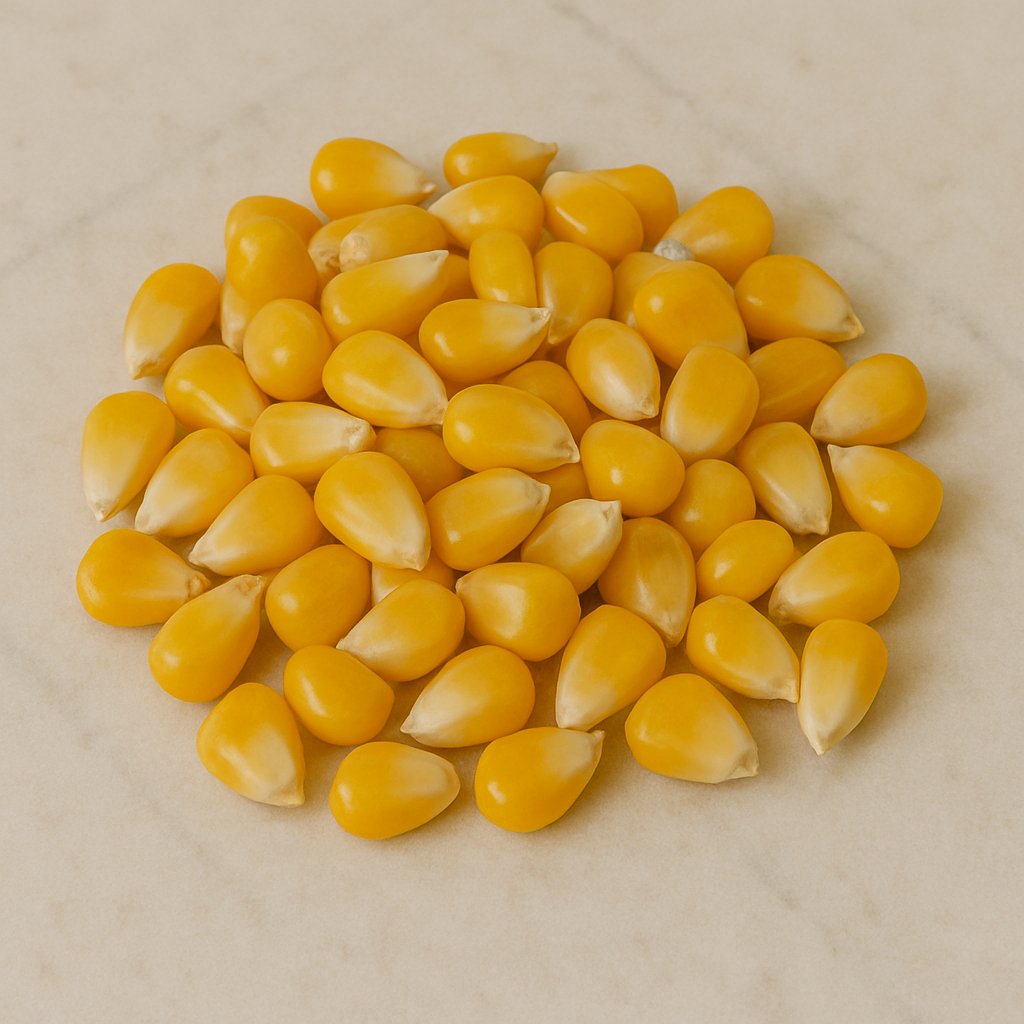
Corn kernels

Sweet, yellow and versatile in the kitchen

Wiki about corn kernel Nutri-Score B Vegan Yes Gluten-free Yes Lactose-free Yes Nut-free Yes
NUTRITION / 100 g
86 kcal 3.4 g Protein 19 g Kohlenhydrate 1.2 g Fett

Introduction

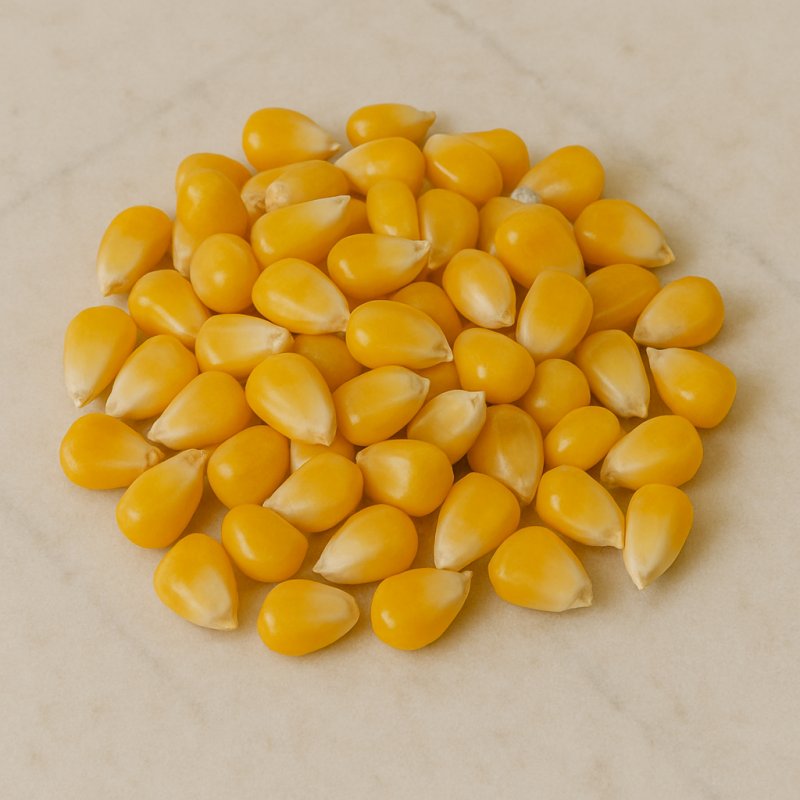
Yellow corn kernels
Corn kernels have accompanied me since childhood, but only as a 35-year-old editor shuttling between editorial deadlines and the weekly market did I realize how versatile these golden kernels really are. In Europe they are no longer encountered only as popcorn at the cinema or as a side in colorful salads. Corn kernels are an ingredient with history, pleasure and astonishing adaptability – from rustic stews to modern bowls, from savory skillet dishes to aromatic breads. A colleague swears by refining his pasta sauces with a handful of sautéed corn kernels because they give the whole dish a sweet, nutty depth. These little beads from the cob are more than just colorful: they are texture, aroma, culture and memory in one.

When I write about corn kernels, I first think of their origin. Corn itself originally comes from Central and South America, where it has been cultivated for millennia. That it is now part of European culinary identity is due to its astonishing versatility. Whether fresh from the cob, frozen for storage, dried in jars or finely ground as polenta or cornmeal: the range is impressive. A chef friend from Barcelona once told me that for a tapas variation he roasts corn kernels with smoked paprika and olive oil, then sprinkles them with parsley – simple, but incredibly aromatic.

In taste, corn kernels are pleasantly sweet, with a gentle, slightly buttery note. Sweetness varies by variety – sweet corn is, for example, more intense, while other types of corn are more starchy and neutral. These subtle differences make them so exciting for the kitchen. In a creamy soup they provide a soft bite, in fillings they deliver a juicy structure, and as a topping on a savory bowl they add golden accents. I love briefly tossing corn kernels with shallots and a little thyme in the pan; the result is a warm, fragrant side that goes with fish, chicken, tofu or mushrooms.

In terms of nutritional value, corn kernels

Availability & types

Availability and types of corn kernels

Corn kernels, often simply called “corn”, are small yellow (or other colored) seeds that come from the corn plant. This plant grows on large fields and loves warmth and sun. Corn is one of the world’s most important cereals and is grown in many countries, for example the USA, Brazil, China, Argentina, South Africa, France, Hungary, Ukraine and also in Germany. Because corn is so popular and grown in many places, corn kernels are available in supermarkets almost year-round. Depending on the form – fresh, frozen, canned or dried – you will find corn kernels in different departments.

How does corn get to us?
The corn plant produces cobs that are equipped with many rows of kernels. When corn is harvested young, it is juicy and sweet – this is called “sweet corn.” These sweet kernels are enjoyed as a vegetable. If the corn matures longer and dries, the kernels become harder. This produces varieties better suited for milling (for flour, polenta or corn grits) or for popping (popcorn). Producers harvest, sort and process the kernels so they arrive in stores as fresh cobs, loose kernels, canned goods or frozen products.

Season and availability
Fresh corn cobs are usually in season here in late summer. Then they taste especially sweet. Outside the season you can still get corn easily as canned or frozen. Frozen and canned corn kernels are practical because they have a long shelf life and can be prepared quickly. Dried kernels (for example for popcorn) keep very well in well‑sealed bags.

Important types and varieties of corn kernels

  • Sweet corn: This corn is harvested early so that the kernels remain tender and sweet. It is ideal as a vegetable side, in salads or in soups. You can get sweet corn fresh on the cob, as frozen kernels or canned.
  • Popcorn maize: This variety has

Details & nutrition

Property Value
Unit g
Average weight per piece 3
Calories per 100 86
Protein per 100 3.4
Carbohydrates per 100 19
Sugar per 100 6.3
Fat per 100 1.2
Saturated fat per 100 0.2
Monounsaturated fat 0.3
Polyunsaturated fat 0.5
Fiber per 100 2.7
Vitamin C (mg) per 100 6
Vitamin D (IU) per 100 0
Calcium (mg) per 100 2
Iron (mg) per 100 0.5
Nutri-Score B
CO₂ footprint 0.5 kg CO2e/kg
Origin Worldwide, commonly USA, China, Europe
Gluten-free Yes
Lactose-free Yes
Nut-free Yes
Vegan Yes
Note Nutritional values for cooked corn kernels; values may vary depending on variety and preparation.

Technical & scientific information

Corn kernels are the botanical seeds of the cultivated species Zea mays L., belonging to the grass family (Poaceae). As endosperm‑based caryopses they combine structural, chemical and functional properties that make them versatile in both nutrition and industrial applications. The structure of a corn kernel includes pericarp (seed coat), endosperm, embryo (germ) and the aleurone layer. The pericarp is composed mainly of cellulose, hemicellulose and lignin and protects the inner matrix from physical and microbial influences. The endosperm is rich in starch and protein; it is divided into floury and vitreous zones characterized by different density and protein‑starch interactions. The embryo contains lipids, vitamins and enzymes that are essential for germination.

The chemical composition of corn kernels varies depending on variety, location, harvest year and post‑harvest maturation. Typical ranges (on a dry matter basis) are: Starch 60–75 %, Protein 7–12 %, Fat 3–5 %, Crude fiber 1–3 %, Ash 1–2 %. The protein profile is dominated by prolamins (zeins), which are low in lysine and tryptophan; quality protein maize varieties (QPM) have been bred to improve the essential amino acid balance. The lipid fraction is rich in unsaturated fatty acids, particularly linoleic acid (C18:2) and oleic acid (C18:1), with minor amounts of palmitic acid. Important micronutrients include B vitamins (B1, B3, B6, folate), vitamin E (tocopherols, especially in the germ), and minerals such as magnesium, phosphorus, potassium, zinc and iron. Carotenoids (lutein, zeaxanthin) are pronounced in yellow kernels and contribute to antioxidant capacity.

Wiki entry for: corn kernel
Active now: 14 visitors of which 2 logged-in members in the last 5 minutes