Menu & categories

Cookies

Crispy baked goods with high carbohydrate and sugar content

Wiki about cookie Nutri-Score D Vegan No Gluten-free No Lactose-free No Nut-free No
NUTRITION / 100 g
480 kcal 7 g Protein 70 g Kohlenhydrate 20 g Fett

Introduction

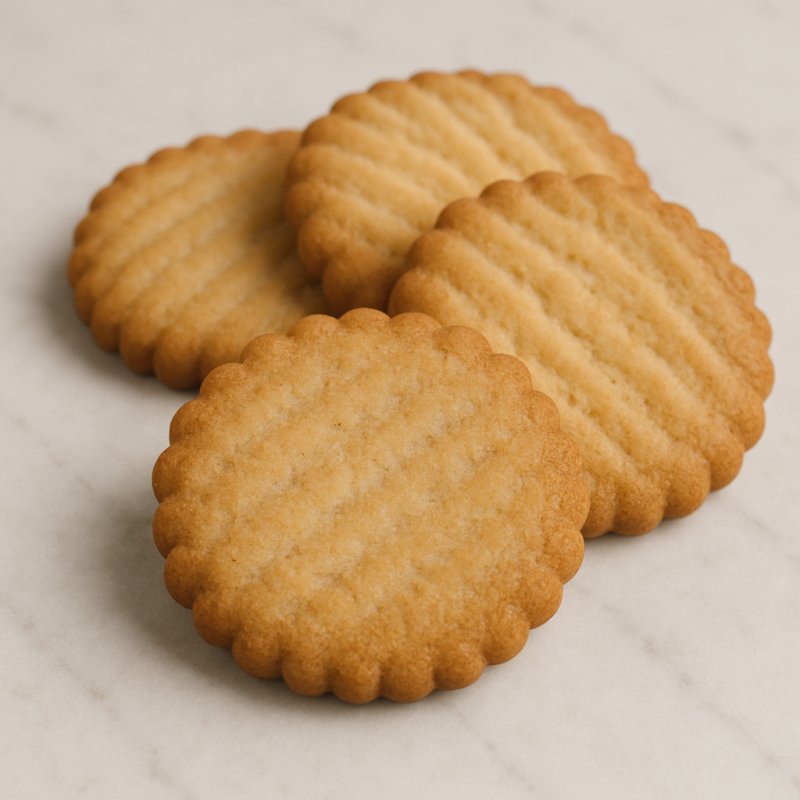
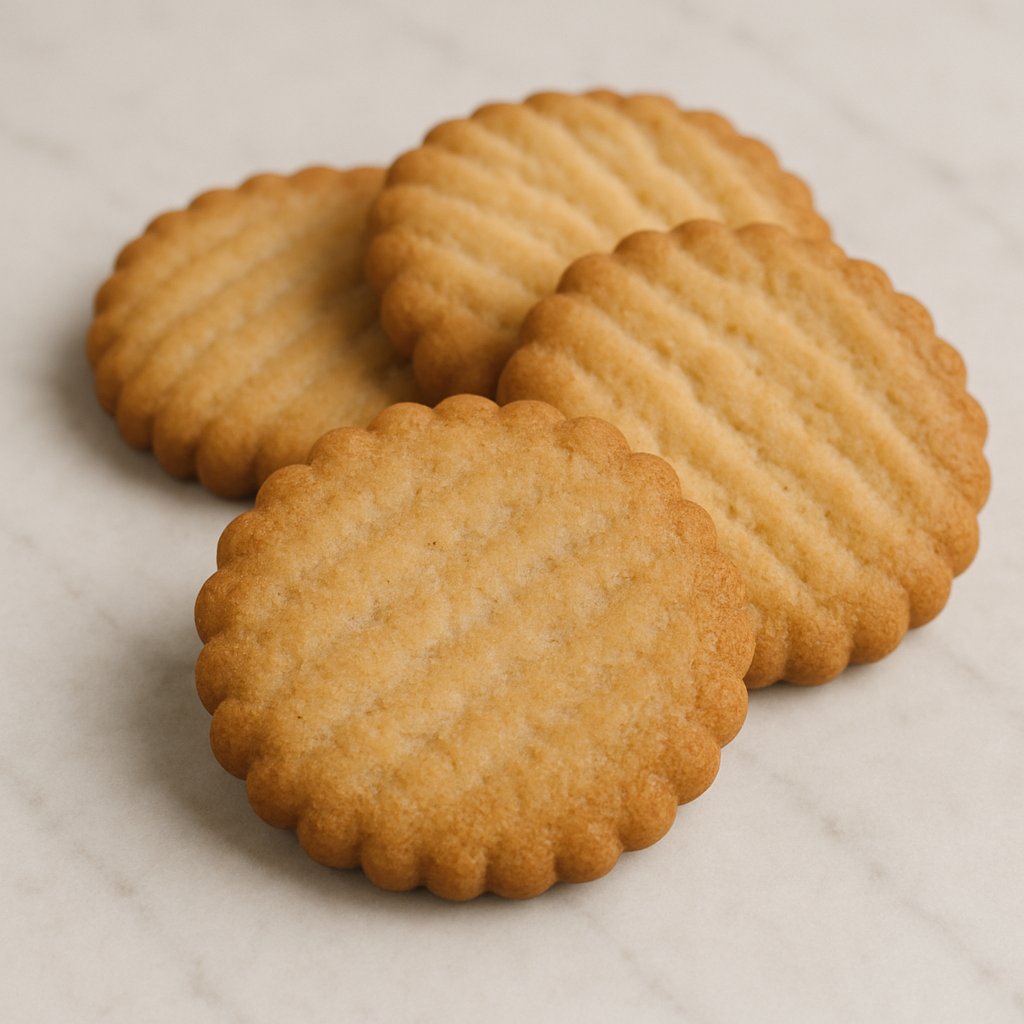
Various cookies on a plate
I have a special relationship with cookies that has developed over years and across kitchens. Cookies are for me more than just a baked good; they are small time machines that evoke memories of school breaks, rainy Sundays and warm family kitchens. I still clearly remember the smell of butter and brown sugar coming from the kitchen of my childhood while the rain drummed outside. A colleague once suggested calling cookies 'portable cakes', and since then I have looked at them with a fond wink.

What fascinates me about cookies is their variety: from crispy butter cookies to tender shortbreads, from nutty oat cookies to chocolatey cookies. A good recipe needs only a few ingredients, but the art is in the details — temperature, dough resting time and the right baking time determine the result. I have learned that a quick peek into the oven often makes the difference between 'perfect' and 'almost perfect'.

Some things I like to pass on to others about cookies:

  • Quality of ingredients: Good butter and fresh vanilla extract are noticeable in the flavor.
  • Adjusting texture: More flour produces firmer cookies, more fat makes them more tender.
  • Joy of experimentation: Spices, nuts or orange zest transform familiar recipes.
In my kitchen I have developed routines: I often chill the dough longer than necessary because I find rolling and shaping much more relaxed that way. Once I completely forgot the baking time and ended up with the most delicious 'caramelized' cookies, which surprisingly found fans quickly. Such small kitchen mishaps became personal discoveries and they always remind me that baking also means a bit of experimenting and letting go.

Cookies are ideal for sharing stories. They work as a small gift, as comfort on grey days or as a sweet ending to an evening with friends. I love baking different varieties and watching people find a piece of their own memory at the first bite. So simple and yet so layered — cookies strike for me the perfect balance between nostalgia and culinary pleasure.

Availability & types

Availability and types of cookies

Cookies can be found in almost every shop and are among the most popular snacks worldwide. The origin of cookies is varied: simple cookie types originally came from Europe and the Middle East, but nowadays people all over the world bake cookies, often using their own local ingredients and flavors. You could say cookies are like clothing: equally useful everywhere, but made a little differently in each country.

When we talk about growing regions we really mean the origin of the ingredients from which cookies are made. Typical ingredients are flour (from grains such as wheat), sugar (from sugar beets or sugar cane), butter (from milk) and sometimes chocolate (from cocoa beans). These raw materials are grown in different places:

  • Wheat is cultivated worldwide – major production areas include Europe, North America, Russia, China and India. The flour produced is the basis for many cookies.
  • Sugar often comes from sugar beets (common in cooler regions like Europe) or from sugar cane (in warmer regions like Brazil, India or Southeast Asia).
  • Milk and butter come from countries with large livestock sectors, for example Europe, North America and Australia.
  • Cocoa for chocolate grows mainly in tropical regions, especially in West Africa (for example Ivory Coast and Ghana).
Because these ingredients come from many countries, cookies are available almost everywhere. In supermarkets you'll find large brands, in bakeries fresh varieties, and in small shops or markets often homemade cookies.

Available varieties and variants

Cookies come in many shapes, sizes and flavors. Here are the main types, simply explained:

  • Butter cookies: Simple, lightly sweet and often crispy. They are like the basic framework for many other cookies.
  • Chocolate cookies: Contain chocolate chips or are fully coated in chocolate. Just right for chocolate lovers.
  • Oat cookies: Made with rolled oats – they are usually coarser and more filling. Some also contain raisins or nuts.
  • Sand cookies (shortbread): Very buttery and crumbly, almost like a delicate cookie that melts in the mouth.
  • Shortcrust and cut-out cookies: Often cut into special shapes, for example stars or hearts – popular at holidays.
  • Whole grain and healthier variants: Made from darker flours or with less sugar; they are a bit more nutritious.
  • Vegan and lactose-free cookies: Without milk or eggs, so people with allergies or special diets can eat them.
  • Filled or sandwich cookies: Two cookies with a cream or jam in between.
Some cookies are particularly popular regionally and taste different because local ingredients are used – like spices, nuts or different sweeteners. A simple image: cookies are like motherships – the basic idea remains the same, but each country builds its own 'ship' with special colors and extras.

Because ingredients come from many countries and bakers constantly come up with new ideas, practically new cookie variants appear every week. This makes cookies exciting: you can always try new varieties or experiment at home by, for example, replacing chocolate with nuts or adding oats.

In summary: cookies are easy to get worldwide because their ingredients come from many regions. The variety is large — from simple butter cookies to exotic, filled or healthy variants — so there is something for every taste.
Details & nutrition

Property Value
Unit g
Average weight per piece 12
Calories per 100 480
Protein per 100 7
Carbohydrates per 100 70
Sugar per 100 25
Fat per 100 20
Saturated fat per 100 10
Monounsaturated fat 6
Polyunsaturated fat 2
Fiber per 100 2.5
Vitamin C (mg) per 100 0
Vitamin D (IU) per 100 0
Calcium (mg) per 100 40
Iron (mg) per 100 2
Nutri-Score D
CO₂ footprint 1.8
Origin Varies by manufacturer, typically industrially produced in Europe
Gluten-free No
Lactose-free No
Nut-free No
Vegan No
Note Nutritional values refer to average commercially available mixed cookies (shortcrust/butter cookies). Recipe may vary significantly by brand and variety, especially regarding allergens and fat or sugar content.

Technical & scientific information

Cookies are technically defined baked goods made from a dough that typically consists of flour, fat, sugar, liquid and leavening or aerating agents. In food science cookies are often categorized as fat- and sugar-rich, dry baked products that, through specific recipes and processing steps, achieve limited water activity and long shelf life. The variety ranges from thin, crispy versions to soft, moist types; classic categories include shortcrust cookies, margarine- or butter-based cookies, oat cookies and cookies with chocolate chips or nuts.

Chemical composition and ingredients
The main component is starch (mainly from wheat flour), complemented by proteins (especially gluten), fats (butter, vegetable oils or margarine), mono- and disaccharides (sucrose, glucose, fructose), and a proportion of water. Other typical components are emulsifiers (e.g. lecithin), leavening agents (sodium bicarbonate, baking powder), salt, flavorings and, in fortified products, micronutrients such as vitamins or minerals. In whole grain or oat cookies there are additionally dietary fibers (non-digestible polysaccharides) and secondary plant compounds.

Nutritional profile
Cookies primarily provide energy through carbohydrates and fats; protein levels are moderate. Per 100 g typical values are in the range of 450–550 kcal, 20–30 g fat, 50–65 g carbohydrates (of which a significant portion is sugars) and 5–8 g protein, depending on recipe and additives. Fiber contents vary widely; whole grain cookies can contain significantly higher amounts. The micronutrient balance is often low unless the product is specifically fortified.

Physical and chemical processes during baking
Key processes during cookie baking are starch gelatinization, denaturation and network formation of proteins (particularly gluten), melting and possible crystallization of fats, as well as Maillard reactions and caramelization that generate color and aroma. Water activity decreases due to water loss during baking, which has a microbiologically preservative effect. At excessively high baking temperatures or extended baking times the amounts of Maillard products and thermal degradation products increase, influencing flavor and potentially health-relevant compounds (e.g. acrylamide).

Processing methods
Cookie production includes steps such as dough preparation (mixing), portioning (e.g. cutting, extrusion, depositing), optionally laminating or forming, baking and cooling. Industrial processes usually employ continuous ovens with controlled temperature and air humidity to achieve consistent texture and moisture profiles. Emulsifiers and stabilizers are used to stabilize fat-water phases, regulate dough viscosity and improve processability.

Health aspects
From a nutritional standpoint cookies are classified as energy-dense snacks. Regular, high consumption of sugar- and fat-rich cookies can contribute to overweight and related metabolic risks. The quality of fats (saturated vs. unsaturated fatty acids) influences cardiovascular risk factors. Furthermore, industrial cookies may contain ingredients such as trans fatty acids (historically), high amounts of added sugar or salt; modern regulations and recipe adjustments, however, often reduce such undesirable components. Allergens like gluten, milk, eggs, nuts and soy are relevant in many varieties and must be labelled. By-products formed at high baking temperatures, such as acrylamide, are a subject of toxicological assessment, so manufacturers are advised to optimize temperatures and recipes.

Technological and sensory optimization
Manufacturers control texture (crispy vs. soft) through water content, fat type and phase, sugar crystallization and protein content. The crispy structure arises from low moisture and a glass-like baked starch matrix; softer products show higher residual moisture or the use of sugar alcohols or syrups that bind moisture. Sensory properties like aroma result from Maillard compounds, caramelization and added flavorings; the particle size of inclusions (e.g. chocolate chips, nuts) affects mouthfeel.

Overall cookies are a technically well-studied food whose properties can be purposefully adjusted by composition, processing and storage conditions. For a balanced diet moderate consumption is recommended and, if desired, choosing variants with reduced sugar, salt or saturated fat content and increased whole grain and fiber content can improve the nutritional benefit.

Wiki entry for: cookie
Active now: 17 visitors of which 2 logged-in members in the last 5 minutes