Menu & categories

Coconut cream

Creamy coconut base with intense flavor – ideal for curries, desserts and sauces.

Wiki about coconut cream Nutri-Score E Vegan Yes Gluten-free Yes Lactose-free Yes Nut-free Yes
NUTRITION / 100 ml
350 kcal 3.0 g Protein 6.0 g Kohlenhydrate 36.0 g Fett

Introduction

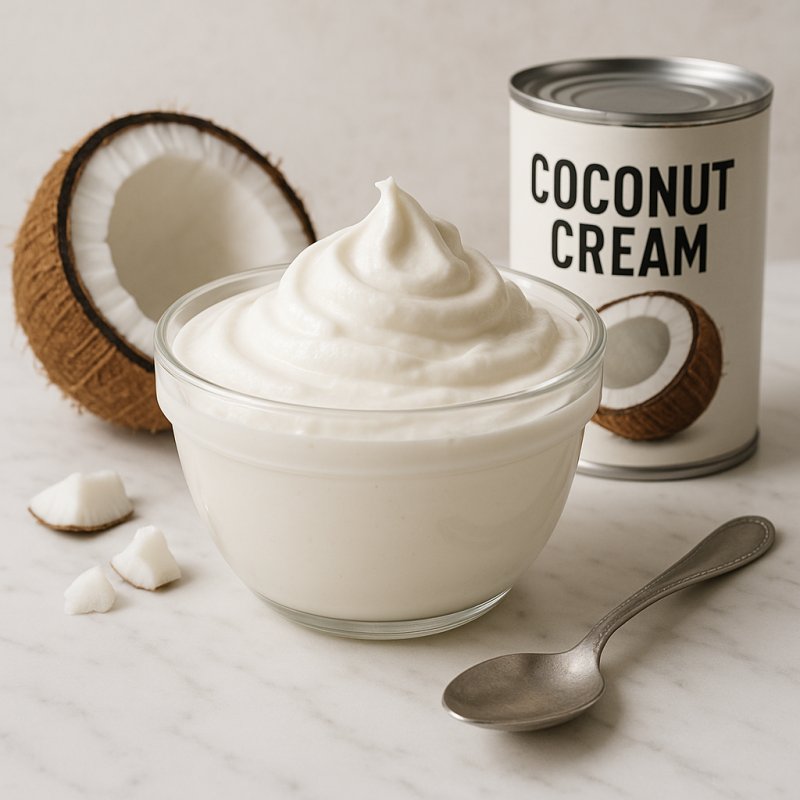
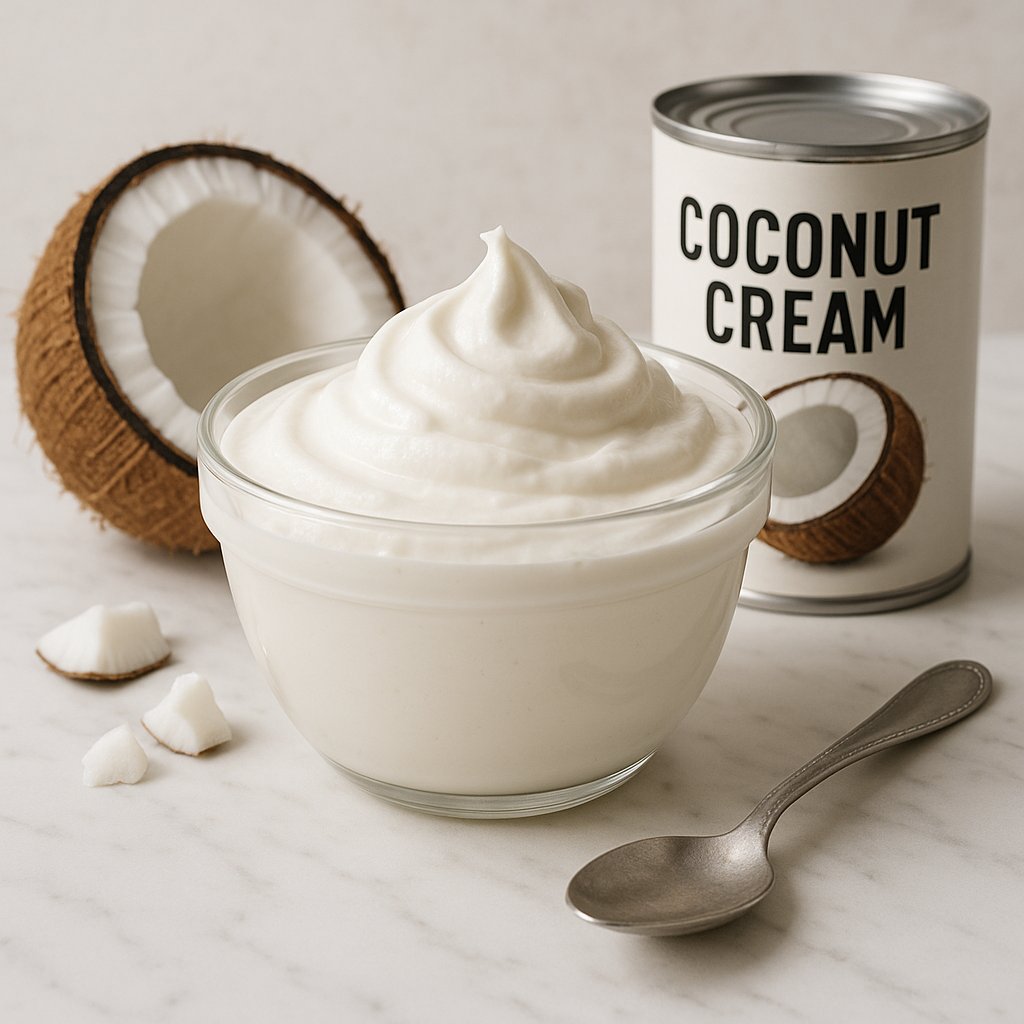
Coconut cream in a bowl, creamy and white
I still clearly remember the first time I really noticed the versatility of coconut cream. While leafing through an old recipe I wanted to achieve a silky consistency, and instead of heavy cream a can of coconut cream ended up in my shopping cart. The result was surprising: dense, aromatic and so silky that even a skeptical friend couldn't let go of his dessert fork.

Coconut cream is the fattier, thicker variant of coconut milk, extracted from the expressed flesh of mature coconuts. It has a silky texture and a pronounced nutty-sweet aroma. Unlike coconut milk it contains more fat and less water, which makes it ideal when you want creaminess without cow's milk. I like to use it for curries, soups, desserts and even as a 'cream substitute' in sauces.

Practical tips I've gathered while traveling and in my kitchen:

  • Shake the can or stand it upright before opening: the cream often separates and settles at the top.
  • Chilled it whips very well and replaces vegan whipped cream.
  • When cooking, first heat the cream gently and then reduce the heat so the aroma can develop without curdling.
  • Use in small amounts, because the flavor is pronounced and can quickly dominate a dish.
I still remember a dinner when a colleague asked whether the delicate coconut aroma was part of the plan or just a happy accident. Moments like that make cooking exciting. Coconut cream is not only intended for exotic dishes; it also gives familiar recipes a surprising depth.

In conclusion: coconut cream is a versatile, aromatic product with great potential in modern cuisine. Whether as a base for a warming curry, to refine a vinaigrette, or as a vegan dessert cream – it's worth having in the pantry. Try it and let yourself be seduced by the creamy texture and unmistakable taste.

Availability & types


Availability and types of coconut cream

Coconut cream comes from the coconut, which grows on large palms in warm countries. These palms are usually found on coasts or in regions with plenty of sun and rain. The main countries where coconut palms are cultivated are the Philippines, Indonesia, India, Sri Lanka, Thailand and parts of South America such as Brazil. You can think of it like a large garden that only grows well in warm regions – coconut palm gardens do not thrive in the cold.

Coconut cream is found in many supermarkets. You can get it in regular supermarkets, in Asian shops, in organic stores and also online. Some varieties come in cans on the shelf, others in cartons in the chilled section or as a powder. If a can is unopened, it can keep for a long time. After opening, however, it must be refrigerated so it does not spoil.

There are different types and variants of coconut cream. Here are the main ones, explained simply:

  • Coconut cream (full-fat): This is the thickest and creamiest variant. It has a high fat content and feels rich and velvety. It is often used for curries or desserts when extra creaminess is desired. It can be compared to dairy cream, but it tastes of coconut.
  • Coconut milk: This is thinner than coconut cream. It results when coconut flesh is mixed with more water. It is like a milk, not as thick as the cream, and is suitable for soups, smoothies or drinks.
  • Light variants: These contain less fat, so they are thinner and a bit 'lighter'. They taste similar but are not as rich.
  • Cream of Coconut (sweetened): This is not a regular cream but already sweetened. It is very thick and very sweet and is often used for cocktails or desserts. It can be compared to condensed milk because it is sweet and viscous.
  • Coconut cream concentrate or powder: Sometimes coconut cream is available as a powder that can be reconstituted with water. This is practical if you want to save space or store the cream for a long time.
  • Fresh vs. preserved variants: Fresh coconut cream is made from fresh coconut flesh and is more intense in flavor but does not keep long. Preserved products in cans or cartons are longer lasting and convenient to keep in the pantry.
When shopping it is good to check the label. Some products contain sugar, thickeners or preservatives. If you want a natural taste, choose a can with few ingredients: coconut and possibly water. For special recipes you sometimes need the sweetened variant, for savory dishes rather the unsweetened one.

In summary: coconut cream originates from tropical regions, is available in many forms – from thick and creamy to thin and powdered – and can be found in supermarkets, Asian shops and online. Depending on what you want to cook, choose the appropriate variant: thick cream for a rich curry, thin milk for a soup and the sweet 'Cream of Coconut' for desserts and drinks.
Details & nutrition

Property Value
Unit ml
Calories per 100 350
Protein per 100 3.0
Carbohydrates per 100 6.0
Sugar per 100 3.0
Fat per 100 36.0
Saturated fat per 100 32.0
Monounsaturated fat 2.5
Polyunsaturated fat 0.9
Fiber per 100 2.0
Vitamin C (mg) per 100 2.0
Vitamin D (IU) per 100 0
Calcium (mg) per 100 15
Iron (mg) per 100 2.0
Nutri-Score E
CO₂ footprint 0.35 kg CO2e/100g
Origin Southeast Asia (e.g. Thailand, Sri Lanka, Philippines)
Gluten-free Yes
Lactose-free Yes
Nut-free Yes
Vegan Yes
Note Nutritional values may vary by manufacturer; high in saturated fatty acids; when heated fat may separate but can be re-emulsified by stirring.

Technical & scientific information


Coconut cream is a concentrated product from the flesh of the coconut (Cocos nucifera), characterized by a high fat content, a creamy texture and a distinctive aroma. Technically it is usually a thicker, higher-fat fraction than coconut milk, obtained by mechanical extraction of shredded, fresh or dried coconut flesh and adjustable addition of water. The physical structure is an oil-in-water emulsion system in which lipid droplets are stabilized by proteins, polysaccharides and small amounts of natural emulsifiers.

Chemical composition and constituents. The fat of coconut cream consists predominantly of saturated fatty acids, particularly medium-chain fatty acids (Medium Chain Fatty Acids, MCFAs). Important components are lauric acid, myristic acid, caprylic acid and capric acid. These fatty acids are mainly present as triglycerides. Other constituents include carbohydrates (mainly in the form of polysaccharides and soluble fiber), small amounts of proteins and minerals such as potassium, manganese, iron and magnesium. Vitamins are present only in low concentrations overall, including traces of B vitamins.

Nutritional characteristics (typical ranges per 100 g). Coconut cream is energy-dense and has a high fat content. Typical values are in the range of about 300–350 kcal per 100 g, with a fat content of around 20–25 g, carbohydrates of about 3–6 g, proteins of 1–3 g and fiber of 1–2 g. Exact numbers vary depending on manufacturing process and water content.

Processing methods. For production, ripe coconut flesh is grated and mixed with water. Pressing or centrifugation yields the liquid phase; with multiple extraction or reduced water content, a thicker fraction called coconut cream is produced. Industrial processes include heat treatment (pasteurization or UHT), homogenization to refine droplet size and the addition of stabilizers or emulsifiers (e.g. guar gum, xanthan, carrageenan) to improve texture and shelf life. Dry products are produced by freeze-drying or spray-drying from concentrates and can later be rehydrated.

Functional properties. Due to its fat content and emulsion properties, coconut cream provides a rich mouthfeel and stabilizing effect in sauces, desserts and curries. Droplet size and the proportion of polysaccharides determine viscosity, foaming behavior and whip-ability when producing vegan cream alternatives.

Health aspects. The high concentration of saturated fatty acids makes coconut cream energy-dense and relevant to overall fat intake. Medium-chain fatty acids are absorbed more rapidly and can be preferentially metabolized for short-term energy; however, studies on their effects on lipid profiles and cardiovascular risk show inconsistent results. Furthermore, lauric acid has demonstrated antimicrobial properties in vitro. People with elevated blood lipid levels should moderate their consumption. Allergies to coconut are possible but less common than tree-nut allergies.

Storage and safety. Fresh or unopened canned products are long-lasting, while fresh products at room temperature and after opening can spoil microbiologically or become rancid quickly. Industrially processed products usually carry declared ingredient lists and nutritional information that indicate additives and claims. Quality attributes include smell, color, degree of separation and emulsion stability.

In sum, coconut cream is a technologically versatile food with a characteristic fatty acid composition and functional properties, offering culinary versatility on the one hand while needing to be used with consideration on the nutritional side because of its high energy and saturated fat content.
Wiki entry for: coconut cream
Active now: 18 visitors of which 2 logged-in members in the last 5 minutes