Menu & categories

Cocoa powder

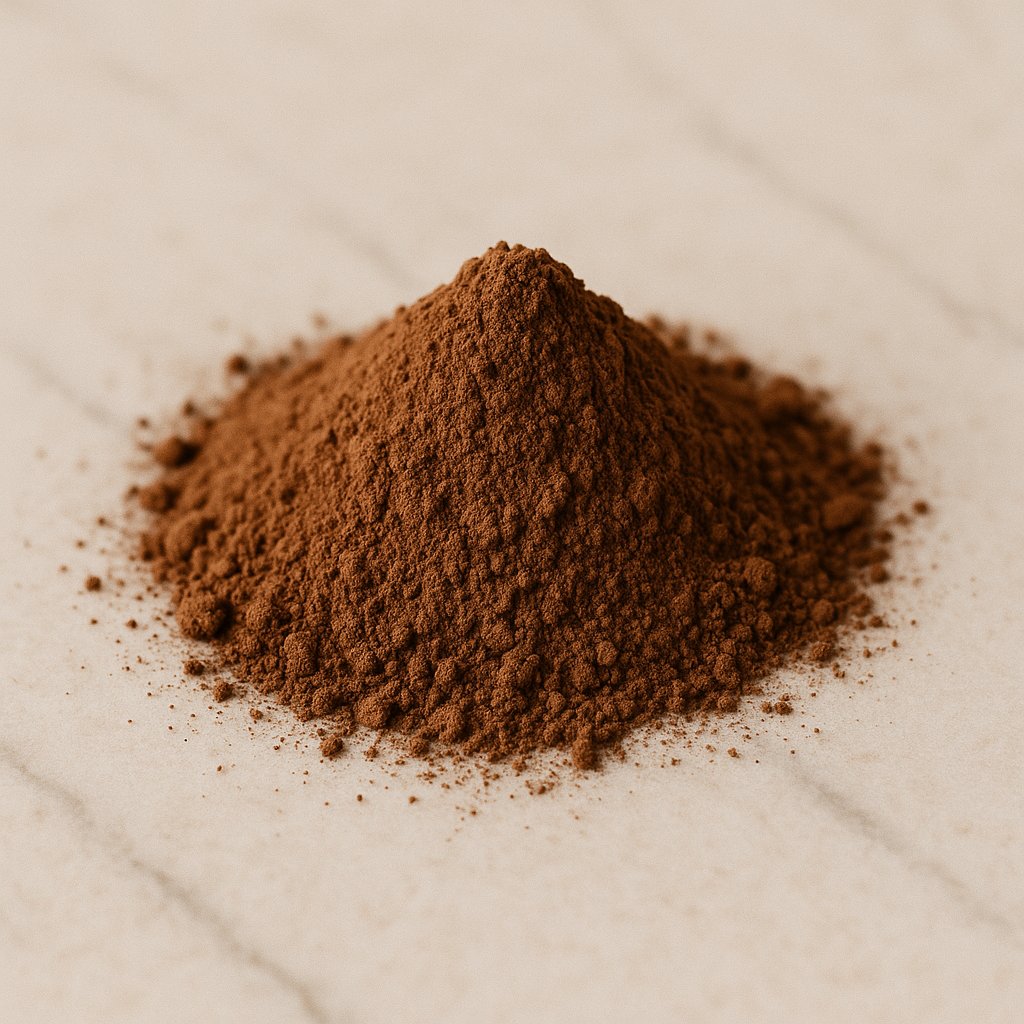
Defatted cocoa powder as an aromatic ingredient for beverages and baked goods

Wiki about cocoa powder Nutri-Score A Vegan Yes Gluten-free Yes Lactose-free Yes Nut-free Yes
NUTRITION / 100 g
228 kcal 19.0 g Protein 11.0 g Kohlenhydrate 13.7 g Fett

Introduction

Brown cocoa powder in a bowl with a spoon
I have a small weakness: cocoa powder can fix almost anything for me. When I step into a warm kitchen on a rainy afternoon, the scent of freshly sifted cocoa powder is enough to calm me immediately. A colleague jokingly calls it my "quick happiness" because I often make hot chocolate on the spur of the moment when the team has finished a project. I find it fascinating how this dark brown powder from distant cacao beans becomes so many little everyday pleasures.

Cocoa powder is versatile and surprisingly resilient. I use it not only for classic desserts but also in savory dishes, marinades and even in some cocktails. Once, at a dinner, I experimented by mixing cocoa powder into a chili sauce — the depth it gave the dish delighted our guests. It brings bitterness, roasted notes and an almost sensual depth that complements other spices instead of overpowering them.

What I love about cocoa powder:

  • Versatility: Suitable for baking, drinks, rubs and sauces.
  • Intensity: A small spoonful is often enough to shape the flavor.
  • Variety of formats: From natural (not alkalized) to "Dutch processed" — each changes texture and taste.
I still remember my first baking attempts with an old recipe book that said: "Use only real cocoa powder." At the time I wasn't aware of the difference between natural cocoa and alkalized cocoa. After several failed brownies I learned that natural cocoa tastes sharper and fruitier, while Dutch-processed cocoa is more velvety and milder. That knowledge immediately improved my baking experiments.

A small tip from my kitchen: always sift cocoa powder before mixing, especially when baking. It prevents lumps and ensures even color and texture. When I have guests, I like to stir together a mix of cocoa powder, a pinch of cinnamon and some sea salt — it gives cakes and hot drinks an elegant note.

For me cocoa powder remains a cornerstone of the home kitchen: practical, flavorful and full of possibilities. It ties memories to experimental joy, and every time I dip the spoon into the dark powder I know something delicious will come of it.

Availability & types

Availability and types of cocoa powder

Cocoa powder comes from the seeds of the cacao plant, which grows in warm, humid regions. You can find it in supermarkets around the world today because cacao beans are grown in countries like Ivory Coast, Ghana, Indonesia or Brazil. Imagine: the beans travel from the plantation to the shop, where someone grinds and processes them so you can make hot chocolate or bake cakes.

Origin and growing regions
The main growing areas lie near the equator, in a belt around the middle of the Earth. There it is warm and often humid — ideal conditions for cacao trees. The largest producers are in West Africa (e.g. Ivory Coast and Ghana), but a lot of cacao is also grown in South America (such as Ecuador and Brazil) and in Southeast Asia (e.g. Indonesia). On the plantations people take care that the trees grow well, the pods are harvested and the seeds, the beans, are dried and fermented. Fermenting means leaving the beans for several days so the flavor develops — somewhat like letting fruit ripen.

Available types and variants
Cocoa powder is available in different kinds that vary in flavor, color and processing. Here are the main types, explained simply:

  • Natural cocoa powder: This is the plain, unwashed cocoa powder. It often tastes strong and slightly fruity-acidic. You can use it like regular cocoa for baking or for hot chocolate.
  • Defatted cocoa powder: In this type part of the fat (cocoa butter) is removed so the powder is drier and easier to mix. It is good for baking because it does not make the batter too fatty.
  • Alkalized (Dutch-processed) cocoa powder: Here the beans have been treated with a mild alkali. This makes the powder darker and milder in taste — sometimes called "more chocolaty." It also dissolves more easily in milk or water. A comparison: natural cocoa is like a strong black tea; alkalized is like a milder fruit tea.
  • Raw cocoa powder: Some products are processed gently to preserve more natural compounds. This is called "raw." In taste it is often more intense and sometimes slightly more bitter.
  • Organic and Fairtrade variants: These labels indicate that chemical pesticides were avoided in cultivation (organic) or that farmers are fairly paid and better supported (Fairtrade). Such products are often a bit more expensive, but many people buy them to support the environment or the farmers.
How to find the right cocoa powder
On supermarket shelves the packages are often next to each other. Look at the label: does it say "natural" or "alkalized"? Are there indications like "strong in flavor" or "mildly chocolaty"? If you like experimenting, buy small packages of different kinds and try which you prefer. For cakes defatted powder is practical, for hot chocolate people often prefer the milder alkalized powder.

In summary: cocoa powder is easy to obtain and comes from tropical countries. There are different types — from natural to alkalized to organic or Fairtrade products — that differ in flavor and use. This way you can choose the right powder for the recipe or your taste and create delicious drinks or sweet treats.
Details & nutrition

Property Value
Unit g
Calories per 100 228
Protein per 100 19.0
Carbohydrates per 100 11.0
Sugar per 100 0.7
Fat per 100 13.7
Saturated fat per 100 8.1
Monounsaturated fat 4.6
Polyunsaturated fat 0.6
Fiber per 100 33.0
Vitamin C (mg) per 100 0
Vitamin D (IU) per 100 0
Calcium (mg) per 100 128
Iron (mg) per 100 13.9
Nutri-Score A
CO₂ footprint 4.0
Origin Tropical growing countries, mainly West Africa and Latin America
Gluten-free Yes
Lactose-free Yes
Nut-free Yes
Vegan Yes
Note Values refer to highly defatted, unsweetened cocoa powder (approx. 10–12% fat). Traces of gluten, milk or nuts may be possible depending on processing and manufacturer.

Technical & scientific information

Cocoa powder is a powdered product produced by processing cacao beans (Theobroma cacao) and is used as a central ingredient in baked goods, beverages and confectionery. After fermentation, drying and roasting of the beans the shells are removed, the kernels (cocoa nibs) are crushed and pressed into cocoa mass. From this mass, part of the cocoa butter content is removed by mechanical pressing, and the remaining solid product is milled into fine cocoa powder. Differences in processing degree and fat content lead to different types such as natural (not alkalized) and alkalized or Dutch-process cocoa.

Chemical composition and constituents: Cocoa powder consists mainly of carbohydrates, fiber, proteins and varying amounts of residual fat (cocoa butter). Typical nutrient components per 100 g are roughly 10–25 g fat, 20–30 g protein, 30–50 g carbohydrates and 20–35 g fiber, with values varying according to degree of defatting. Bioactive compounds include a variety of polyphenols (especially flavanols such as epicatechin and catechin), theobromine, caffeine in small amounts, as well as organic acids and aroma-forming compounds such as Maillard products after roasting. Mineral-wise cocoa powder provides mainly magnesium, iron, phosphorus and potassium.

Processing methods: Production includes several stages: fermentation and drying of the beans to develop aroma and flavor; roasting for further aroma formation and microbial stabilization; cracking and winnowing; grinding the nibs into cocoa mass; hydraulic or expeller-based pressing for partial defatting; finally fine milling and optionally air classification to standardize particle size. In alkalization (Dutching) the cocoa solids are treated with basic salts like potassium carbonate to change acidity, color and solubility. This chemical treatment partially reduces polyphenol contents but alters taste and processability.

Sensorial properties and applications: Natural cocoa is characterized by pronounced fruit acids and an often lighter brown tone, while alkalized cocoa powder is milder, darker and often less bitter. Low-fat powders improve fat solubility and melting in chocolate applications, whereas highly defatted variants are preferred in baked goods and beverages to achieve a finer texture and lower fat content.

Nutritional and health aspects: The flavanols contained have been associated in research with positive effects on vascular function, endothelial health and blood pressure, although the effect is dose- and product-dependent. Theobromine acts as a mild stimulant and vasodilator but is less potent than caffeine. Due to residual fat and potential added sugars in cocoa-containing products, cocoa powder should be considered selectively: pure, unsweetened powder offers bioactive components without added sugar, whereas processed cocoa products often have high calorie and sugar contents. Allergies to cocoa components are rare but possible. Furthermore, traces of heavy metals such as cadmium and lead can occur in cocoa powder depending on growing area and soil contamination; regulatory limits and good agricultural practice aim to minimize risks.

Technological challenges and storage: Because of its hygroscopic properties and fat content, cocoa powder tends to clump and lose aroma if stored improperly. For storage airtight, light-protected containers in a cool, dry place are recommended. In industrial processes control of particle size, moisture and solubility is crucial for consistency in formulations and machine behavior.

Overall cocoa powder is a versatile food raw material with a complex chemical composition and significant nutritional properties. The choice between natural and alkalized powder, the degree of defatting and the hygiene of cultivation influence taste, health effects and quality parameters, so both producers and consumers benefit from transparent information on origin and processing.

Wiki entry for: cocoa powder
Active now: 20 visitors of which 2 logged-in members in the last 5 minutes