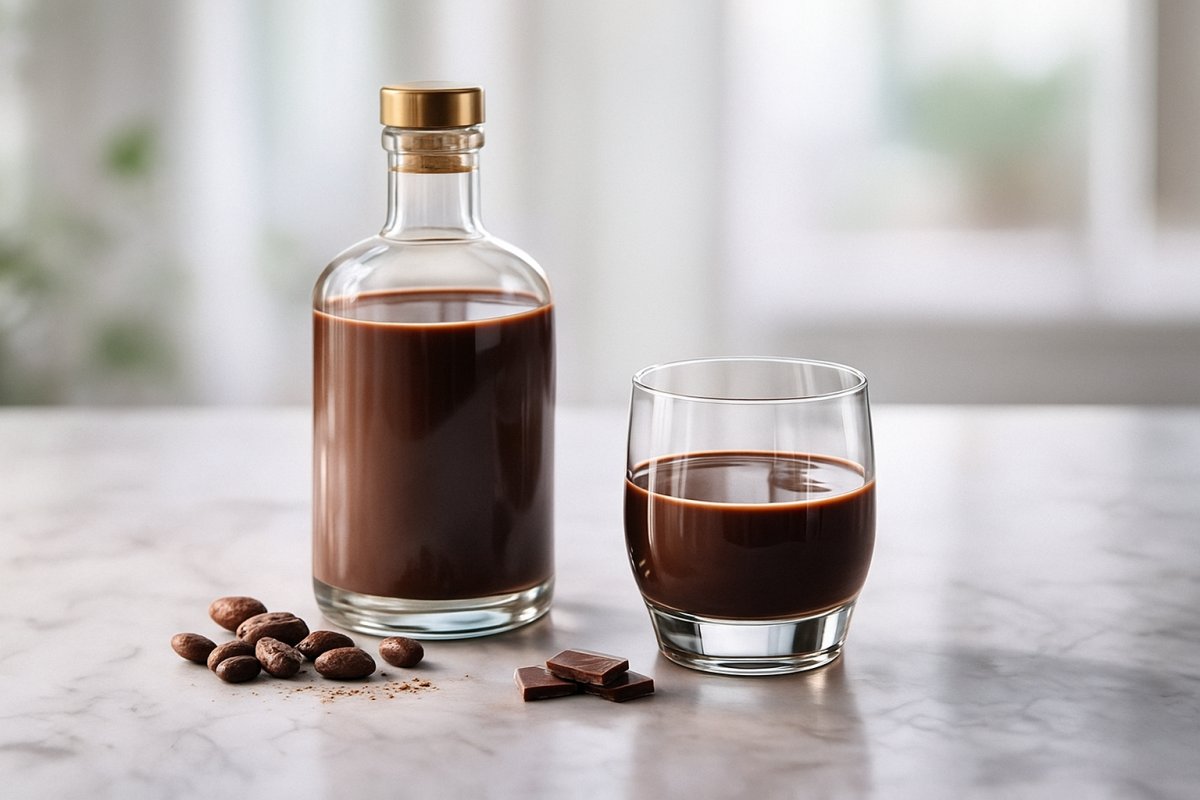
Cocoa liqueur is an aromatic drink with a chocolate flavor. Sometimes confusion arises because in chocolate production the term cocoa mass or in German 'Kakaomasse' appears – that is a thick chocolate paste without alcohol. The cocoa liqueur described here is, however, an alcoholic product, similar to other liqueurs, and is used for drinking, in cocktails or to refine desserts.
Origin
The flavor base is the cocoa bean. Cocoa beans grow on cocoa trees in warm, humid regions near the equator. Well-known production areas are:
- West Africa (for example Ivory Coast and Ghana) – supplies a large share of the world's cocoa.
- South America (Ecuador, Brazil, Peru) – here beans are often particularly aromatic.
- Central America and the Caribbean – many traditional varieties originate there.
- Southeast Asia (Indonesia, Malaysia) – also important producers.
Producers of cocoa liqueur source beans from these regions. Sometimes the bottle indicates which country the beans come from – this is called single-origin. It simply means: 'from a single area', similar to a juice made from a single apple variety.
Available types and variants
Cocoa liqueur comes in different types so that everyone can find something to their taste. Here are the main varieties, simply explained:
Cocoa liqueur comes in different types so that everyone can find something to their taste. Here are the main varieties, simply explained:
- Pure chocolate liqueur: tastes intensely of dark chocolate. It is like very dark chocolate sauce with alcohol.
- Creamy chocolate liqueur: made with cream or milk, tastes milder and creamier, similar to chocolate pudding with a splash of alcohol.
- White chocolate variant: lighter taste, sweeter, reminiscent of white chocolate.
- Nut and spice variants: a blend of chocolate and flavors like hazelnut, vanilla, orange or chili – like chocolate with additional flavor notes.
- High-proof/Intense: more cocoa flavor, higher alcohol content – for people who like a stronger taste.
- Alcohol-free alternatives: intended for children and people who do not consume alcohol; they resemble syrups or chocolate sauces and can be used the same way in desserts.
- Commercial vs. artisanal variants: large brands produce standardized liqueurs, while small producers often use special beans or recipes. It's comparable to mass-produced yogurt versus homemade yogurt with special fruits.
Availability
Cocoa liqueur can be found in well-stocked supermarkets, liquor stores, gourmet shops and online. Some airports and duty-free shops also offer special bottles. Important for children: cocoa liqueur contains alcohol and must not be consumed by minors. Those who want the chocolate taste without alcohol can find alcohol-free syrups and creams in supermarkets.
Cocoa liqueur can be found in well-stocked supermarkets, liquor stores, gourmet shops and online. Some airports and duty-free shops also offer special bottles. Important for children: cocoa liqueur contains alcohol and must not be consumed by minors. Those who want the chocolate taste without alcohol can find alcohol-free syrups and creams in supermarkets.
Storage and use
After opening it is best stored cool and dark, so the flavor lasts longer. Cocoa liqueur is often drunk neat, mixed with coffee, poured over ice cream or used for baking – in short, a versatile 'chocolate helper' in the kitchen.
After opening it is best stored cool and dark, so the flavor lasts longer. Cocoa liqueur is often drunk neat, mixed with coffee, poured over ice cream or used for baking – in short, a versatile 'chocolate helper' in the kitchen.