Availability and types of cloves are easy to understand if you first know where they come from and in what forms they reach us. Cloves are actually the dried buds of an evergreen tree originally native to the Indonesian Spice Islands. Today these trees grow in several places around the equator, and therefore cloves are available year‑round in many supermarkets, spice shops and online.
Origin and growing regions
Cloves originally come from the so‑called Spice Islands (the Moluccas) in Indonesia. Because the climate there is warm and humid, clove trees thrive. Today the main producing countries are:
- Indonesia – the largest growing area; many cloves sold on the world market come from here.
- Madagascar – known for very aromatic cloves.
- Tanzania (Zanzibar) – also has a long tradition of clove cultivation.
- Sri Lanka, India, Philippines, Brazil – other countries where cloves are grown.
Cloves are mostly harvested by hand. The small buds are picked before they open and then dried in the sun or in drying facilities. Drying makes the clove durable, so it can be stored for months or even years if kept dry and protected from light.
Available varieties and formats
You can find cloves in various forms and qualities. Here are the main types, simply explained:
You can find cloves in various forms and qualities. Here are the main types, simply explained:
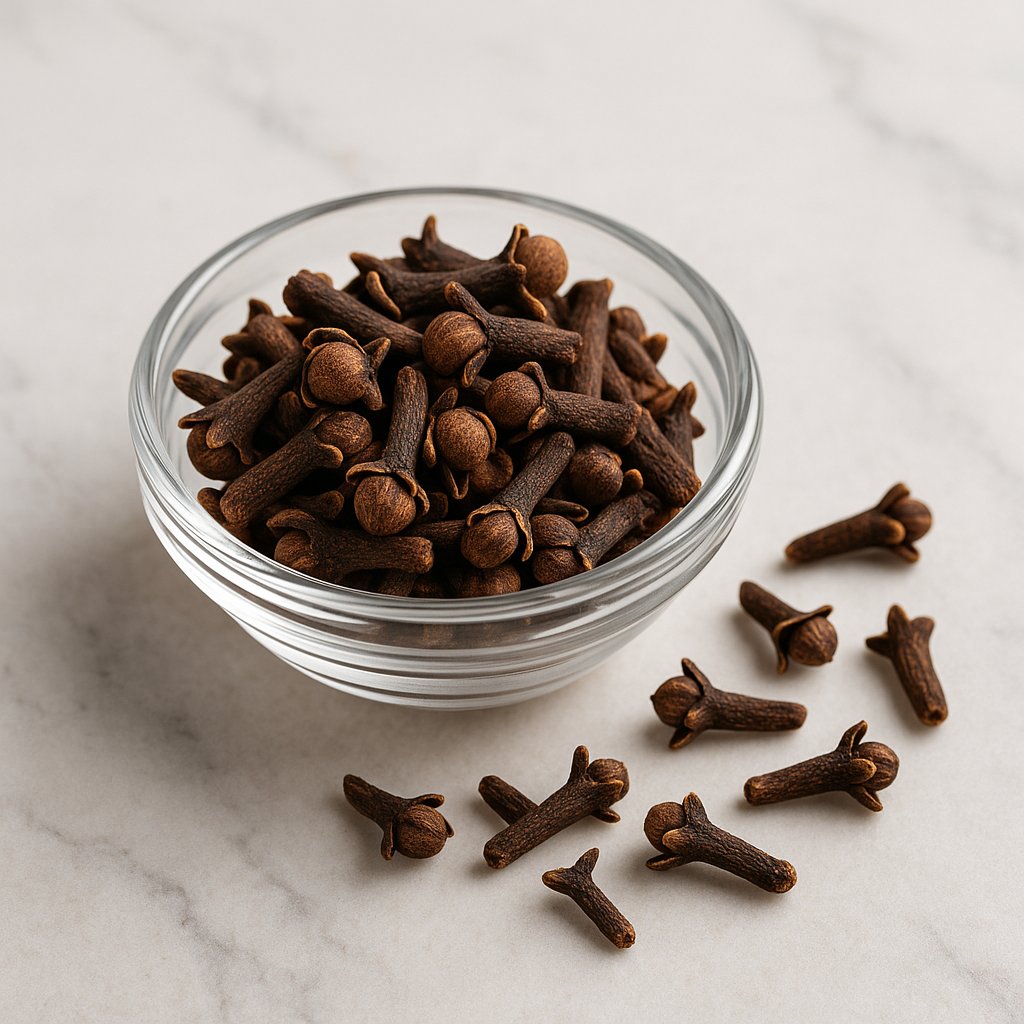
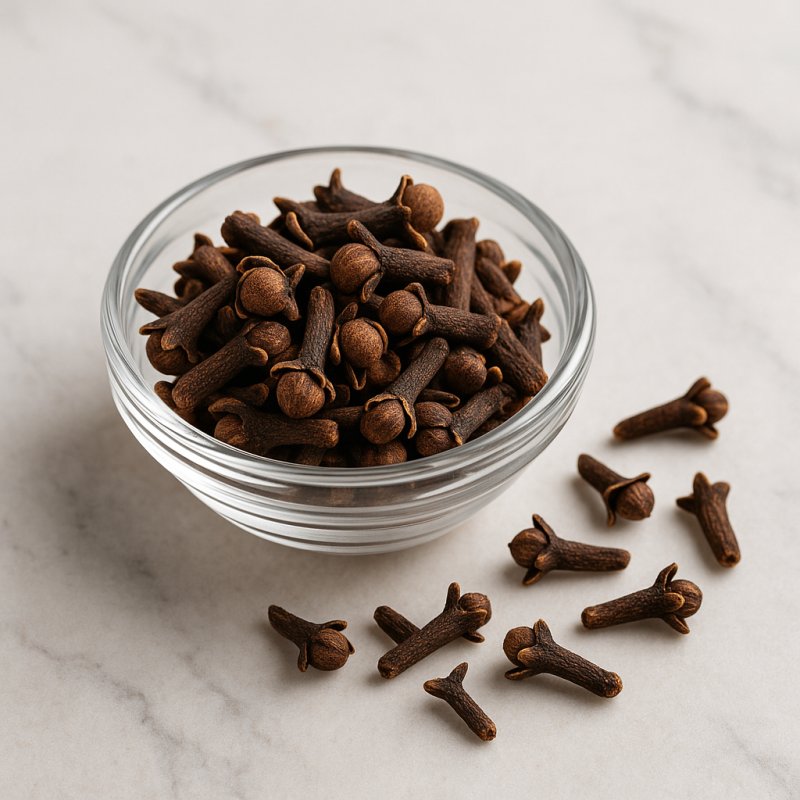
- Whole cloves (usually the dried flower buds) – look like small nails with a head. They are very aromatic and stay fresh for a long time. You can cook with them whole or remove them before eating.
- Ground cloves – are practical for quick seasoning, but lose their aroma faster than whole cloves. You can think of it like nuts: whole nuts last longer, ground ones go rancid sooner.
- Clove oil – a potent oil obtained from cloves. It is used sparingly, for example in dentistry or for strong spice blends.
- Clove leaves and stems – the leaves also contain aromatic compounds, but are less often used as a spice and more for oil or tea.
- Organic and fair‑trade cloves – these come from certified cultivation with attention to the environment and fair pay for farmers.
Fine differences in taste often depend on the country of origin and the harvest: some cloves are more intense and slightly sweeter, others rather sharp and spicy. When buying cloves, you can check the origin, or start with a small pack to try.
Everyday availability
Cloves are available year‑round because they are shelf‑stable. Whole cloves can be found in any supermarket; ground cloves often in small tins. In markets in producing countries you can even find fresher variants. For particularly strong applications there is also clove oil available in pharmacies or specialized shops. Thus cloves are easily accessible and usable in many forms, whether you want to bake, cook or try something remedial.
Cloves are available year‑round because they are shelf‑stable. Whole cloves can be found in any supermarket; ground cloves often in small tins. In markets in producing countries you can even find fresher variants. For particularly strong applications there is also clove oil available in pharmacies or specialized shops. Thus cloves are easily accessible and usable in many forms, whether you want to bake, cook or try something remedial.