Menu & categories

Cloves

Intensely aromatic spice with a warm, spicy note.

Wiki about clove Nutri-Score C Vegan Yes Gluten-free Yes Lactose-free Yes Nut-free Yes
NUTRITION / 100 g
274 kcal 6.0 g Protein 65.5 g Kohlenhydrate 13.0 g Fett

Introduction

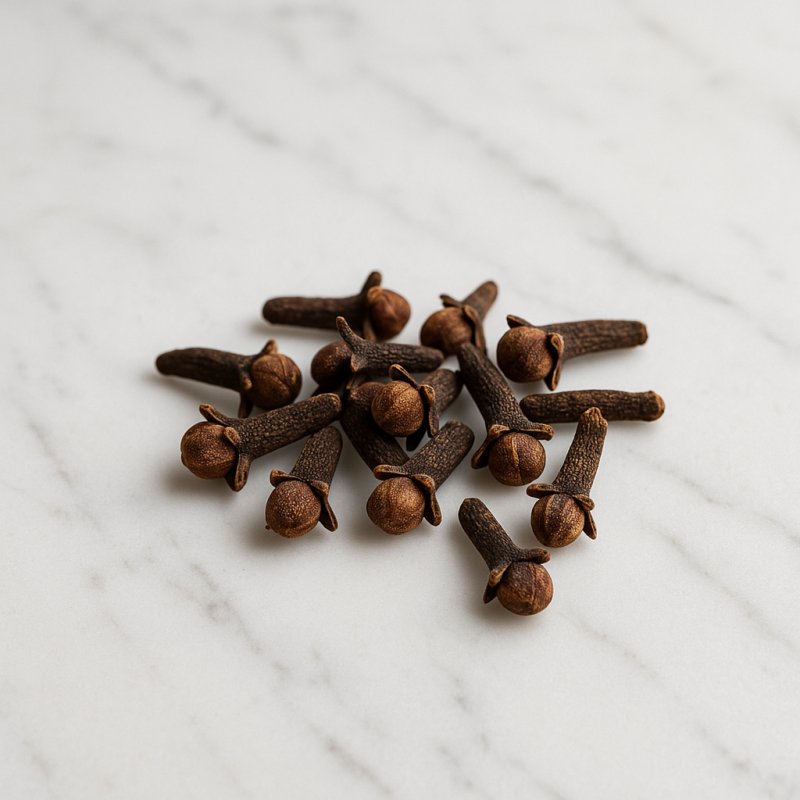
Close-up of dried cloves (spice)
Cloves have always felt a bit dramatic to me: small, dark-brown nails that take their own stage in every kitchen. I still remember a winter market where the spice stall looked as if someone had fanned open the earth and released all its aromas. The cloves caught my eye and my nose immediately — warm, slightly sweet, with a mildly sharp edge. Since then they have been regulars on my spice shelf.

Originally cloves come from the Spice Islands of the Moluccas, but their journey through history and cuisine can be felt everywhere. In terms of taste I like to describe them as warm and intense, with a touch of sweetness and a surprising, almost medicinal finish that recalls clove oil, i.e. eugenol. A colleague of mine swears by putting a single piece into a roast to create a subtle depth — and he's right.

In the kitchen cloves are remarkably versatile. I rarely use them in large quantities, because they quickly dominate; I prefer to add targeted accents. In my favorite winter mulled wine recipe two cloves with a cinnamon stick and orange peel go into a liter of red wine — the result is less kitsch, more like an embrace. Cloves also work just as well with savory dishes: in curries, braises or in marinades for lamb and beef.

  • Whole cloves: ideal for sauces and broths; remove before serving.
  • Ground cloves: perfect for baked goods like gingerbread, but use sparingly.
  • Storage: keep dark and airtight so the essential oils don't evaporate.
In conclusion: cloves are for me a small wonder of the spice world — strong, versatile and with a passion that can lift any dish to a new level. You just need to give them space and let them take the stage they deserve.

Availability & types

Availability and types of cloves

Cloves are the dried flower buds of an evergreen tree that originally grew on the small islands of the Indonesian Spice Islands (the Moluccas). Today, however, cloves are grown in several places around the world. If you see cloves in the supermarket, they are usually already dried — meaning the small, nail-like buds have been harvested and air-dried so they keep for a long time.

Where cloves grow
Cloves like warm, humid places with a lot of rain. That is why they grow in tropical countries. The main growing regions are:

  • Indonesia – especially the Moluccas and islands like Sulawesi are classic places of origin.
  • Madagascar – a major source of cloves in the Indian Ocean.
  • Tanzania and Zanzibar – known for good cloves in East Africa.
  • India and Sri Lanka – cloves are also grown here, usually in southern regions.
You can think of it like apples: depending on the country they grew in, cloves can smell or taste slightly different — but they are all cloves.


Common varieties and forms

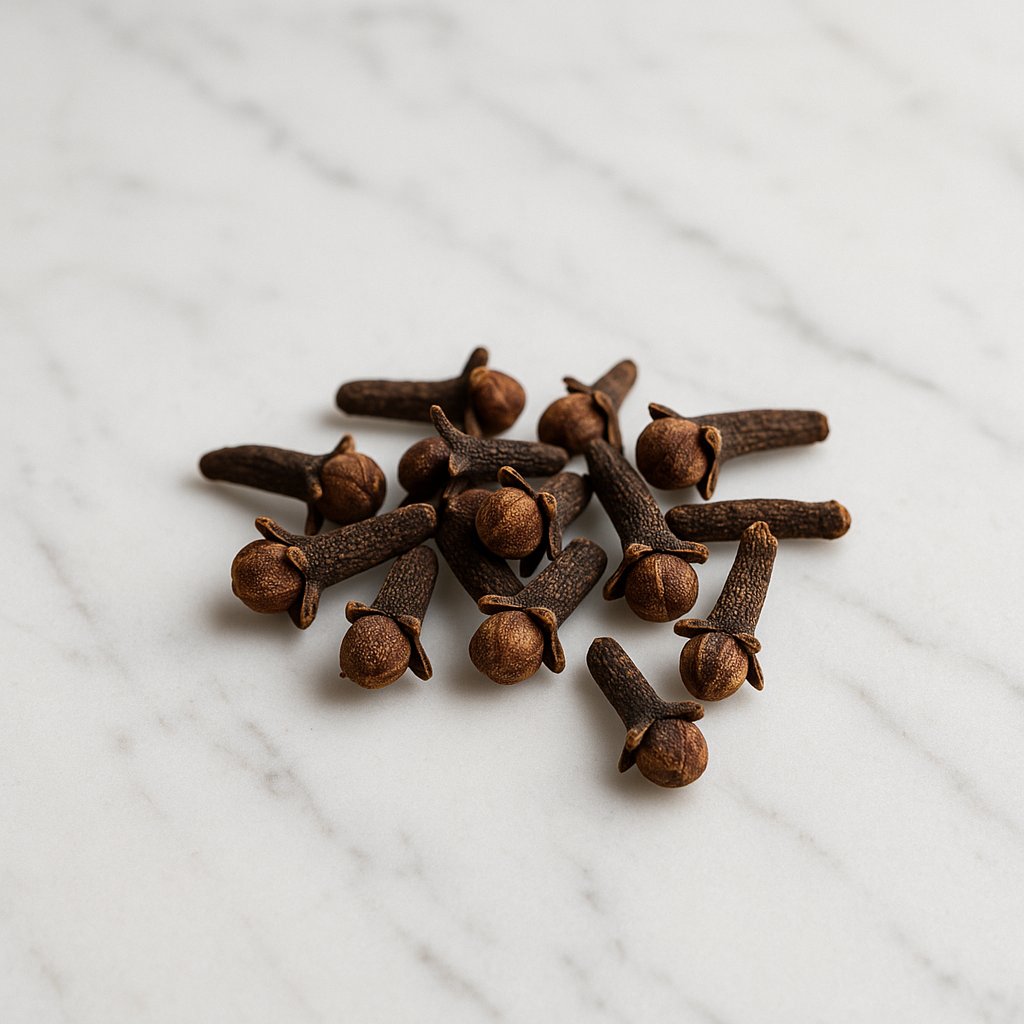
  • Whole cloves (spice cloves) – these are the dried flower buds you recognize as small nails. They keep for a long time and are very fragrant. Whole cloves are like potatoes: they stay fresh for a long time and are versatile.
  • Ground cloves – this is the powder made by grinding whole cloves. It distributes more easily in dough or sauces but loses its aroma faster. You can compare it to pre-ground coffee: freshly ground tastes and smells stronger.
  • Clove oil (essential oil) – this is a very strong oil obtained from cloves. It smells very intense, almost like the heart of the clove. Essential oil is like a perfume of the plant: only a few drops are enough. It is often sold in small bottles and not used in large quantities for direct consumption.
  • Clove water or extracts – liquid extracts offered in drop form. They are weaker than pure oil and are sometimes used for baked goods or beverages.
  • Fresh cloves – very rare to find outside the growing countries. Fresh buds are juicy and even more aromatic, but they spoil quickly.
Where and how to get cloves
Cloves are easy to find in most supermarkets, well-stocked health food stores, spice shops and online. Whole cloves are usually available in small jars or bags; ground cloves often in tins or shakers. If you want as much flavor as possible, buy whole cloves and grind them shortly before use or add them whole to the dish and remove them later — it's like a tea bag in the pot.

Storage and tip
Store cloves dry, dark and airtight. Whole cloves retain their aroma often for one to two years, ground ones only for a few months. If the cloves barely smell anymore, they have lost flavor — then better replace them. That way you'll always have good cloves for tea, cake or Christmas baking.
Details & nutrition

Property Value
Unit g
Average weight per piece 0.2
Calories per 100 274
Protein per 100 6.0
Carbohydrates per 100 65.5
Sugar per 100 2.4
Fat per 100 13.0
Saturated fat per 100 3.9
Monounsaturated fat 4.4
Polyunsaturated fat 3.6
Fiber per 100 33.9
Vitamin C (mg) per 100 80.8
Vitamin D (IU) per 100 0
Calcium (mg) per 100 632
Iron (mg) per 100 11.8
Nutri-Score C
CO₂ footprint ca. 4.5 kg CO2e/kg
Origin Indonesia (commonly), also Madagascar or Tanzania
Gluten-free Yes
Lactose-free Yes
Nut-free Yes
Vegan Yes
Note Very intense spice (including eugenol); usually used in small quantities. Remove whole cloves before serving.

Technical & scientific information

Names and origin: Cloves come from the evergreen tree Syzygium aromaticum (formerly Eugenia caryophyllata) and are the dried, unopened flower buds of this plant. The traditional origin is the Moluccas (Indonesia); today cloves are also cultivated in other tropical regions such as Madagascar, Sri Lanka and Tanzania.

Chemical composition and constituents: The characteristic aroma and therapeutic activity of cloves is mainly due to the high content of essential oil, whose main component is the phenylpropanoid eugenol. Typical figures are:

  • Essential oil content in dried buds: about 15–20 % (variable).
  • Eugenol in the oil fraction: around 70–90 %.
  • Other components: eugenyl acetate, β‑caryophyllene, humulene, vanillin‑like compounds and small amounts of monoterpenes and sesquiterpenes.
  • Non-volatile constituents: tannins, flavonoids (e.g. myricetin), phenolic acids as well as small amounts of essential lipids and resins.
Nutritional values (approximate values, per 100 g dried cloves): Cloves are calorie-dense and concentrated in micronutrients. Typical values are about 280–320 kcal, carbohydrates 50–65 g (of which fiber 30–40 g), fat 10–15 g and protein 6–7 g. Among minerals manganese is particularly high; calcium, magnesium and potassium are present in moderate amounts. Vitamins are present but are not the main nutritional feature.

Processing and extraction of the essential oil: Harvest takes place when the flower buds are still pink to dark red, before opening. The buds are then dried (sun drying or artificial), which produces the characteristic brown color and shelf stability. For production oil steam distillation is usually used; yield and chemical profile depend on origin, harvest time and drying conditions. Other processing forms include grinding to spice powder, solvent extracts and the production of oils/tinctures for food and pharmaceutical applications.

Analytics and quality characteristics: Quality testing is often carried out using gas chromatography–mass spectrometry (GC‑MS) to determine the oil composition and by HPLC for phenolic constituents. Sensory tests and determination of moisture content, specific gravity, refractive index and microbial status complete quality control. High-quality cloves still have a short stem, closed buds and an intense, warm aroma.

Health aspects and safety: Eugenol has demonstrated antimicrobial, antioxidant, anti-inflammatory and local analgesic effects. In dentistry clove oil is traditionally used for its local anesthetic and antiseptic properties in toothache. Clinical evidence is limited for some indications; much data come from in‑vitro and animal studies. At high doses eugenol can be toxic (cases of liver toxicity reported) and can irritate skin or mucous membranes; sensitization reactions are possible. Interactions with anticoagulants and effects on CYP enzymes are documented, so high therapeutic doses and combinations with medications should be handled with caution. Pregnant and breastfeeding people should avoid high therapeutic use.

Applications: Culinarily, cloves are used whole or ground in baked goods, stews, marinades, spice blends and beverages. Outside the kitchen cloves are used in the perfume and cosmetics industry as well as in traditional medicines and oral care products.

Storage: Whole cloves retain aromas much longer than ground powder. Kept cool, dry and airtight the aroma can be preserved for months to years; ground products should be used within a few months to avoid loss of volatile components.

Wiki entry for: clove
Active now: 18 visitors of which 2 logged-in members in the last 5 minutes