Menu & categories

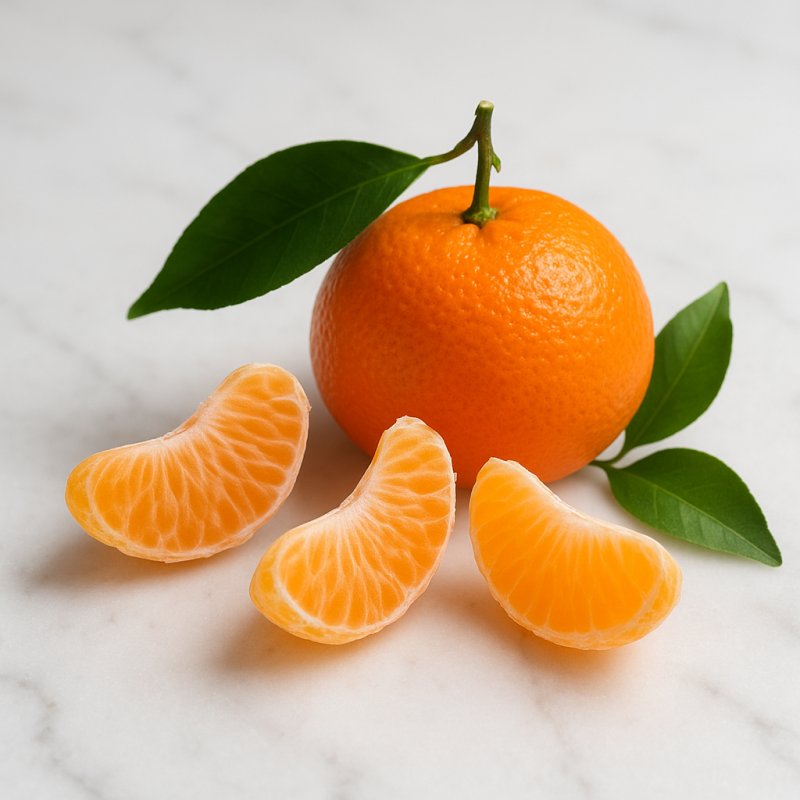
Clementine

Sweet citrus fruit high in vitamin C – ideal as a snack.

Wiki about clementine Nutri-Score A Vegan Yes Gluten-free Yes Lactose-free Yes Nut-free Yes
NUTRITION / 100 g
47 kcal 0.9 g Protein 12.0 g Kohlenhydrate 0.2 g Fett

Introduction

Clementine
I have a particular weakness for clementines, those small sunny spheres that in winter suddenly take over all the baskets. Their peel can be removed with your fingers, their scent fills the room and the first bite is always surprising: sweet, juicy and with a fine acidity that never feels intrusive. I still remember how the scent of clementines on a gray Monday morning cheered up an entire office corridor and for a moment distracted us all from the cold season.

The fruit belongs to the citrus family and is usually a cross between a mandarin and a bitter orange or grapefruit. That makes it so popular: . In my kitchen it is a multitasker. I squeeze it over winter salads, make glazes for duck from it and use the segments in desserts. A colleague of mine swears by cream pasta with clementine sauce — a combination you have to try to be convinced.

When I think about storage, I advise a simple principle: cool and airy. Clementines keep for a few days in the fruit bowl, significantly longer in the refrigerator.
When shopping I look for firm fruits with shiny skin; soft or shriveled means less juice.

  • Taste: sweet with a delicate acidity.
  • Nutrients: vitamin C, fiber and antioxidants.
  • Use: raw, cold-pressed, cooked and baked.
I love the ritual of peeling a clementine; it is a small break in everyday life, a moment of pure sensuality. Sometimes I put a few slices in tea or add grated peel to cookie dough to give the baked goods a fresh note. Those feeling experimental briefly caramelize them in a pan and serve them on vanilla ice cream. Clementines are uncomplicated and surprisingly versatile, and that is exactly what makes them one of my favorite companions through the cold months.

Availability & types

Availability and types

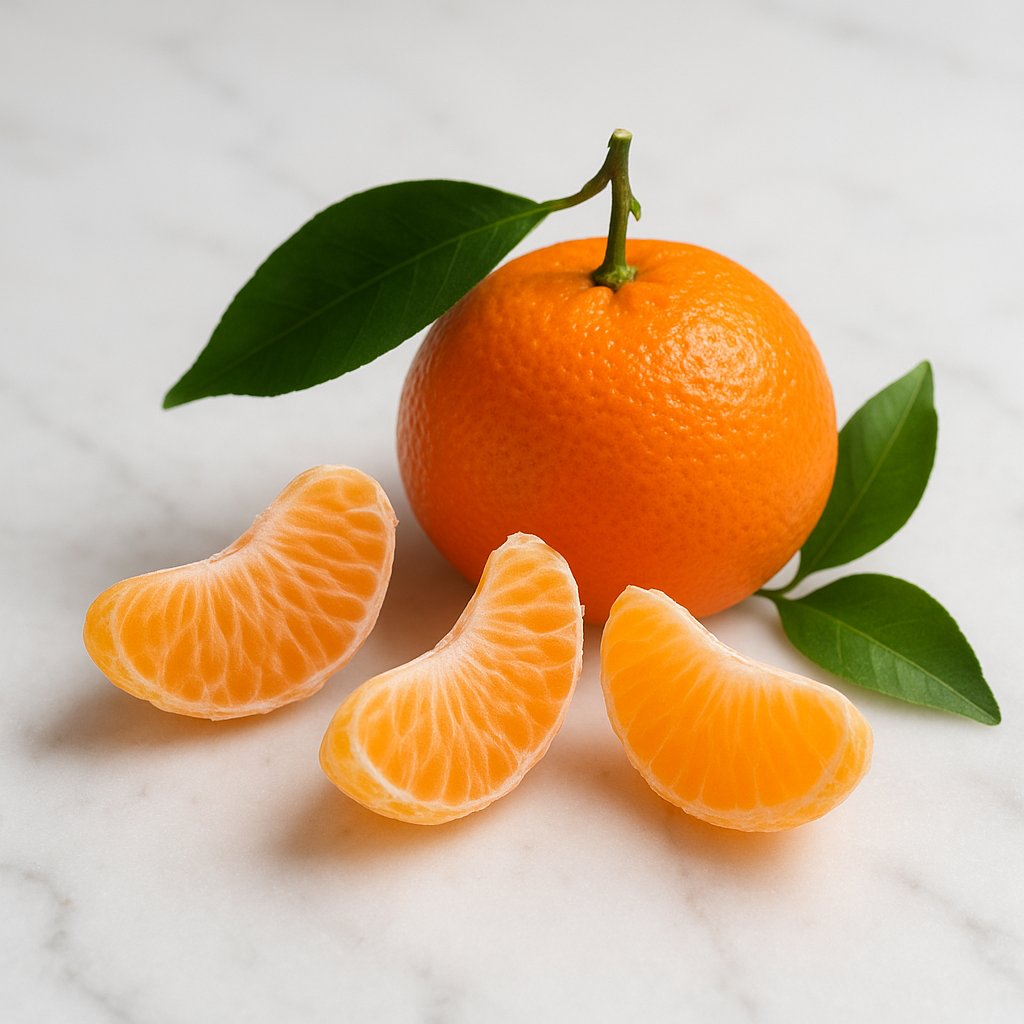
The clementine is a small, round citrus fruit with shiny, easy-to-peel skin. It originally comes from North Africa – more precisely from Algeria – and was popularized in the early 20th century by a monk named Brother Clément. That is why the fruit also bears his name. You can imagine the story like this: someone "married" two plants (a mandarin and another citrus) and the clementine was the friendly result – sweet, handy and often seedless.

Growing regions

  • Europe: Many clementines grow in Spain (e.g. in the Valencia region), Italy, Portugal and French Corsica. Spain is one of the largest suppliers for Europe.
  • North Africa: Morocco and Tunisia also cultivate a lot, because the climate there is warm and sunny – just right for citrus fruits.
  • America: There are plantations in California and Florida, and in South America, for example in Chile, clementines are harvested for export.
  • Australia and South Africa: Clementines also grow there, mainly for local demand and export.
In short: if you see clementines in the supermarket in Europe, they often come from Spain or North Africa. Also, depending on which hemisphere is currently experiencing winter (Northern or Southern Hemisphere), harvest months differ.

Seasonal availability

The main season for clementines in the northern hemisphere is from autumn to winter, usually from October or November until January or February. In the southern hemisphere they ripen roughly from June to August. That means: when it is winter in Europe, clementines are usually fresh and inexpensive.

Well-known varieties and variants

  • Clemenules (also Nules): A very widespread variety from Spain. It is sweet, easy to peel and often has few or no seeds.
  • Fina: Also popular; juicy and aromatic, often somewhat smaller.
  • Marisol: A later variety that can stay on the tree longer and is therefore available later in the season.
  • Clementine de Corse: This variety grows in Corsica and is often described as particularly aromatic.
  • Seedless vs. seeded: Many clementines are seedless. However, when bees pollinate and bring pollen from other citrus trees, seeds can form — so it is not always entirely without seeds.
Forms of availability

You can get clementines fresh in the supermarket or at the market. They are also available peeled and packaged, as juice, dried or candied. Fresh are best: they peel easily like a mandarin and are great as a snack, in salads or as a dessert.

In short: clementines are easy to find in the cooler months, there are several varieties with slightly different flavors and ripening times, and they are grown in many warm countries around the Mediterranean, in North Africa, the Americas, Australia and South Africa.
Details & nutrition

Property Value
Unit g
Average weight per piece 75
Calories per 100 47
Protein per 100 0.9
Carbohydrates per 100 12.0
Sugar per 100 9.2
Fat per 100 0.2
Saturated fat per 100 0.03
Monounsaturated fat 0.02
Polyunsaturated fat 0.05
Fiber per 100 1.7
Vitamin C (mg) per 100 48
Vitamin D (IU) per 100 0
Calcium (mg) per 100 30
Iron (mg) per 100 0.1
Nutri-Score A
CO₂ footprint 0.3 kg CO2e/kg
Origin Mediterranean region (e.g. Spain, Morocco, Italy)
Gluten-free Yes
Lactose-free Yes
Nut-free Yes
Vegan Yes
Note Peel is generally not eaten (may be used only if untreated organic produce); typically seasonal in autumn to winter.

Technical & scientific information

Clementine (Citrus × clementina) is a small-fruited citrus from the group of mandarin hybrids, cultivated for its thin, easily detachable peel, sweet aroma and low number of seeds. Historically the variety is associated with a French missionary in Algeria in the early 20th century. Botanically it is a hybrid with mandarin-like characteristics; cultivars differ in ripening time, fruit size and absence of seeds.

Phytochemical composition: Clementines contain a typical spectrum of primary and secondary metabolites. The main components include:

  • Water: approx. 85–88% of the fruit weight.
  • Carbohydrates: predominantly monosaccharides and disaccharides (glucose, fructose, sucrose) with total sugar values around 8–12 g/100 g.
  • Fiber: mainly soluble fibers such as pectin; total fiber content around 1–2 g/100 g.
  • Organic acids: mainly citric acid and to a lesser extent malic acid, which determine pH and the sensory acidity profile.
  • Flavonoids and polyphenols: hesperidin, narirutin and other flavanones, which have antioxidant and inflammation-modulating activities.
  • Carotenoids: β-cryptoxanthin, β-carotene and lutein, which are responsible for the orange colour and have provitamin activity.
  • Essential oils: the dominant molecule is limonene (in the peel), complemented by myrcene, linalool and γ-terpinene, which shape the aroma.
  • Vitamins and minerals: especially vitamin C (typically 30–60 mg/100 g, depending on ripeness and variety), as well as smaller amounts of folate, potassium and calcium.
Nutritional values (typical range per 100 g): energy about 40–50 kcal, carbohydrates 8–12 g (of which sugars 6–10 g), protein 0.6–1 g, fat <0.5 g, fiber 1–2 g; values vary with variety and ripeness stage.

Processing and technological aspects: Clementines are consumed fresh, but also processed into juice, jam, candied peel or dried fruit. Aromatic compounds are mainly obtained by cold-pressing the peel for essential oils; distillation and solvent extraction are also used for food flavors. Peeling and zesting produce pectin-rich waste, usable as gelling agents. Industrial processing requires attention to microbial contamination, enzymatic browning and foam formation during juice pressing.

Postharvest physiology and storage: Clementines are not strongly climacteric and are sensitive to chilling injury at too low temperatures. Optimal storage is at 3–8 °C with controlled humidity to minimize water loss and the growth of molds (e.g. Penicillium spp.). Common commercial measures include cooling, waxing, and occasional ethylene treatment for colour development.

Health aspects: Due to their high content of vitamin C and bioactive flavonoids, clementines contribute to the antioxidant capacity of the diet and support collagen synthesis and immune functions. The fiber they contain promotes gut health and can moderate the postprandial blood sugar response. Unlike grapefruit, inhibition of the cytochrome P450 enzyme system (CYP3A4) by ordinary clementines is low; nevertheless, interactions are not completely excluded for peel extracts or highly concentrated preparations. Sensitivity to pollen-associated cross-allergy (oral allergy syndrome) can occur in allergic individuals.

Overall, clementines are a nutrient-rich, aromatically attractive ingredient whose physicochemical properties support both fresh use and versatile processing in food technology and aromatherapy. Choice of variety, harvest timing and storage conditions significantly influence nutrient content, aroma intensity and shelf life.

Wiki entry for: clementine
Active now: 18 visitors of which 2 logged-in members in the last 5 minutes