Availability and types
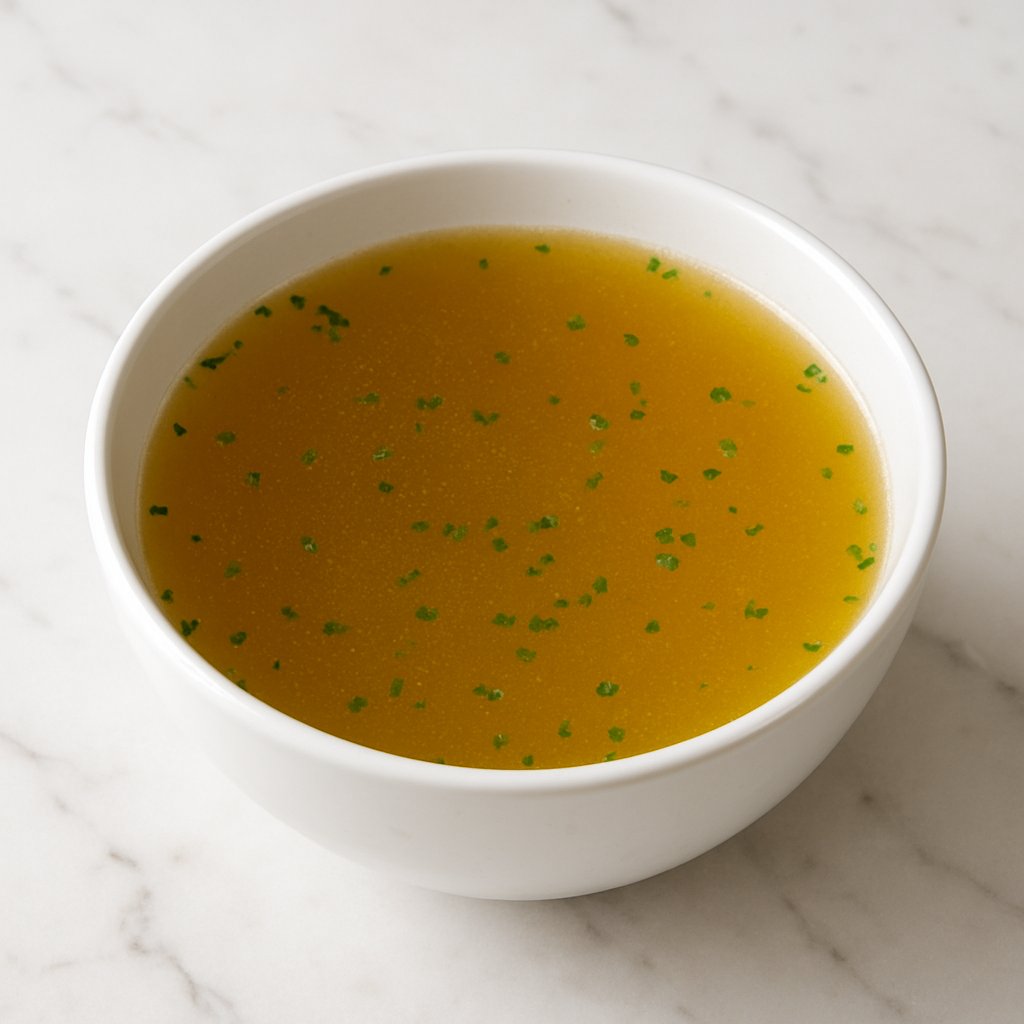
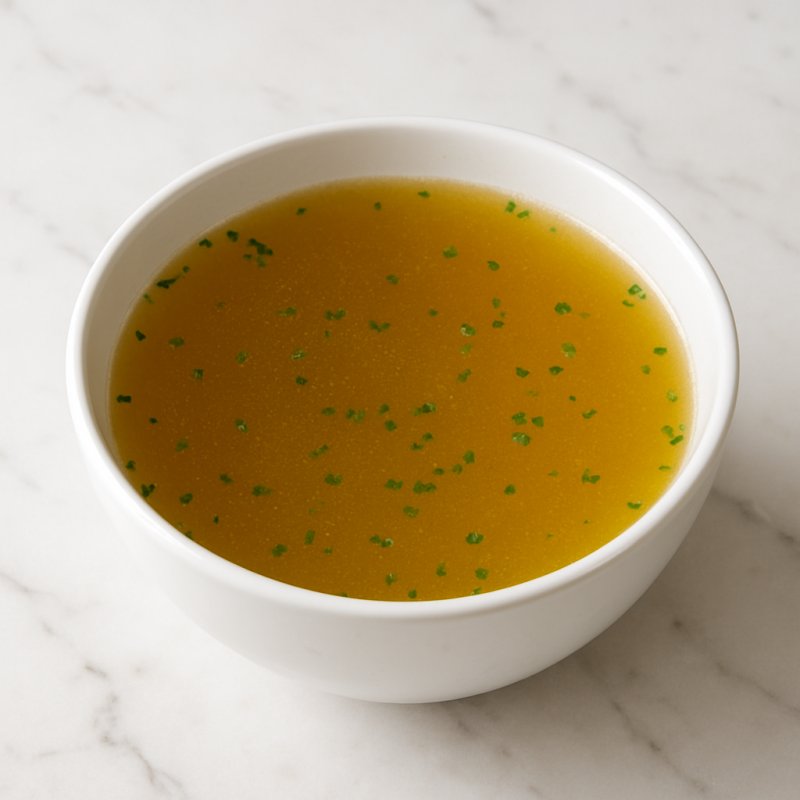
The clear broth is a very popular ingredient in many kitchens because it gives soups, sauces or rice dishes flavor and depth without being cloudy or thick. You can find clear broth in many stores: supermarkets, organic shops and even at weekly markets. Sometimes it is on the shelf in bottles or Tetra Paks, sometimes as cubes or powder in small packets. In some regions, especially where soups are an important part of the food culture, clear broth is also offered fresh by butchers or in restaurants.
Origin
Clear broth is usually produced when meat, bones, vegetables or fish are slowly cooked in water. In the process flavors are extracted and small particles do not bind strongly, so the liquid remains transparent. This type of broth has a long history: people long ago boiled leftovers such as bones or vegetables so nothing would be wasted and tasty food would still result. Depending on the country, different variants developed – for example light meat broths in Central Europe or clear fish broths in coastal regions.
Clear broth is usually produced when meat, bones, vegetables or fish are slowly cooked in water. In the process flavors are extracted and small particles do not bind strongly, so the liquid remains transparent. This type of broth has a long history: people long ago boiled leftovers such as bones or vegetables so nothing would be wasted and tasty food would still result. Depending on the country, different variants developed – for example light meat broths in Central Europe or clear fish broths in coastal regions.
Growing areas and raw materials
For clear broth the 'growing area' of the broth itself is less important than the ingredients used to make it. The main components are:
For clear broth the 'growing area' of the broth itself is less important than the ingredients used to make it. The main components are:
- Meat and bones: These often come from cattle, poultry or pigs. Livestock farming and meat production take place worldwide. In Europe beef and chicken bones are very common.
- Vegetables: Carrots, onions, celery and leek are frequent. These vegetables grow in many climates and are grown regionally, so broths differ in flavor depending on the origin of the vegetables.
- Fish: On coasts fish or fish bones are often used for clear broths. Where the seas are abundant this variant is particularly popular.
- Herbs and spices: Parsley, bay leaves, peppercorns or cloves are often added and used differently regionally.
Available types and variants
Clear broth is available in several forms so that everyone can use it easily. The main types are:
Clear broth is available in several forms so that everyone can use it easily. The main types are:
- Fresh broth: Made at home or in restaurants directly from cooked ingredients. It is often very flavorful but keeps only a short time in the refrigerator.
- Liquid broth (in bottles or Tetra Pak): Ready-made and convenient for quick cooking. Just open and use.
- Bouillon cubes and powders: Small cubes or powders that are dissolved in hot water. They have a long shelf life and are very practical, but sometimes contain more salt or additives.
- Concentrate: Stronger in flavor; dilute with water as needed. Good when you want to save space.
- Prepared clear soups: Some manufacturers offer bottled clear soups that only need to be heated.
- Organic and special-diet variants: For people who pay attention to organic ingredients or need less salt, there are broths with organic labels or reduced-salt options.
When choosing a clear broth, it helps to consider: Do I want the freshest taste (then cook it myself), a quick solution (bottle or cube) or something with special ingredients (organic, no additives)? That way you find the variant that best fits your meal.