Menu & categories

Cinnamon

Aromatic spice from the bark of the cinnamon tree

Wiki about cinnamon Nutri-Score A Vegan Yes Gluten-free Yes Lactose-free Yes Nut-free Yes
NUTRITION / 100 g
247 kcal 4.0 g Protein 80.6 g Kohlenhydrate 1.2 g Fett

Introduction

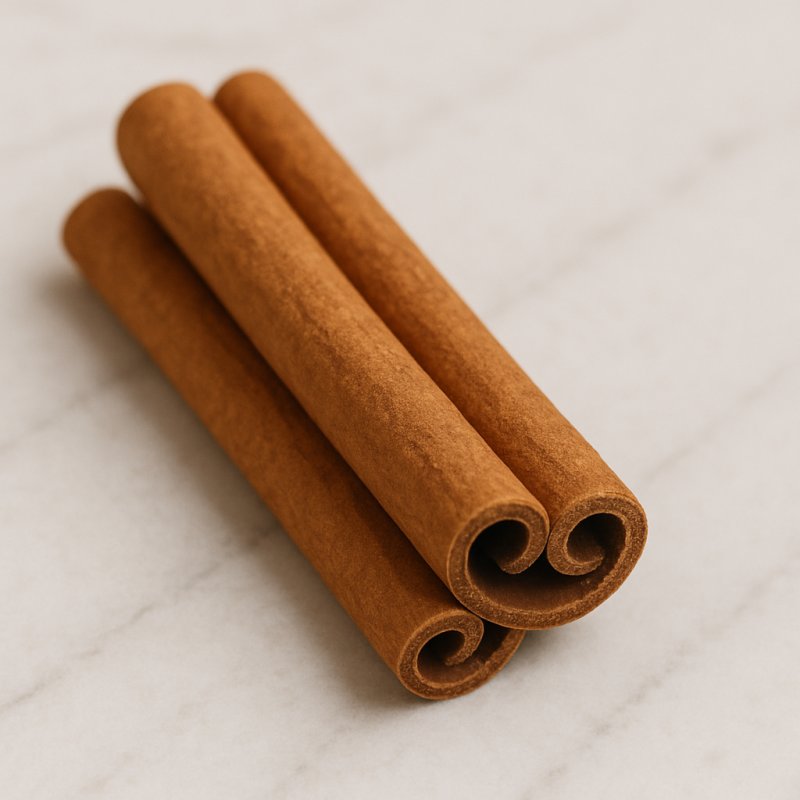
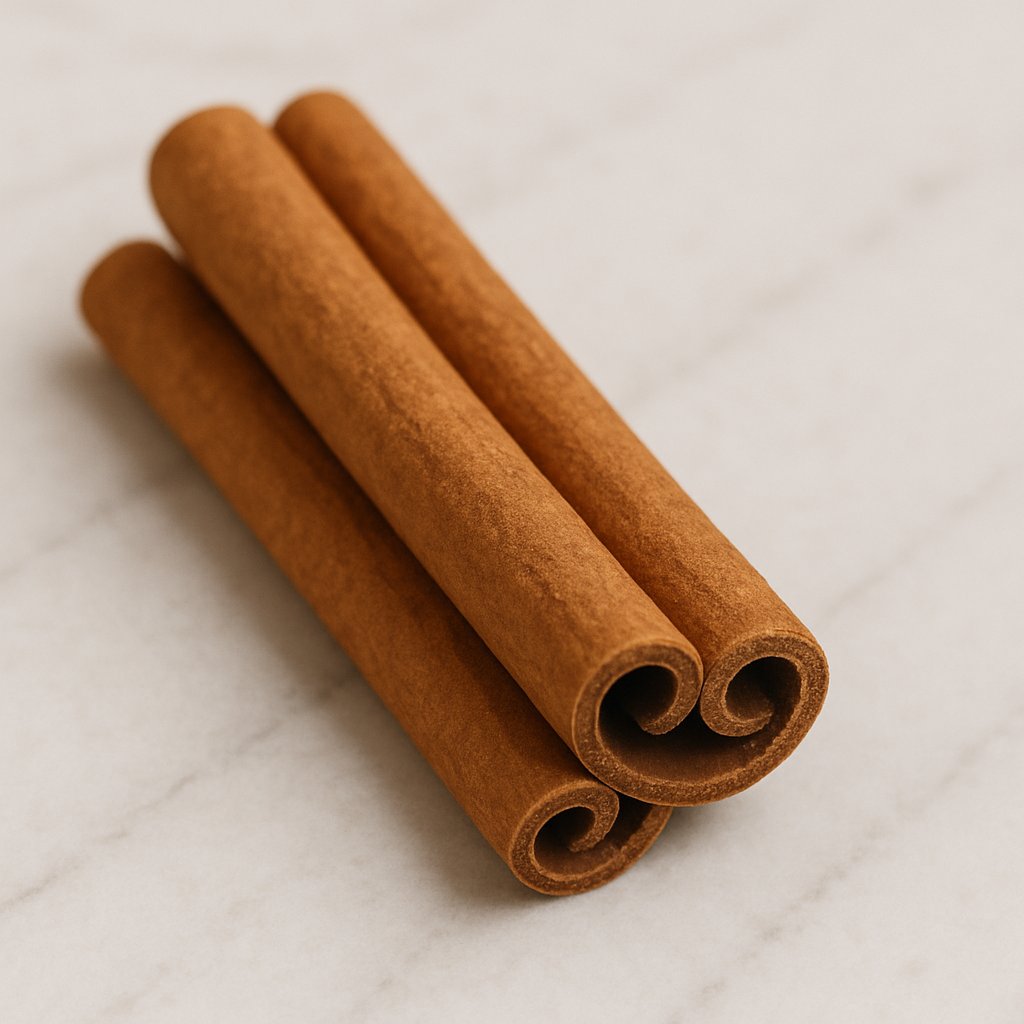
Dried cinnamon sticks and ground cinnamon
Cinnamon is, for me, one of those ingredients that immediately set stories in motion. As soon as I snap a stick or sniff a freshly ground pile, my thoughts travel: to cafés with fogged windows, to Sundays when my kitchen smelled of warmth, and to a market vendor who once told me as a child that cinnamon was "a piece of home in a bark." This kind of spice acts gently but decisively; it sweetens recipes or gives savory dishes a surprising depth.

I still remember a winter evening when a colleague of mine secretly sprinkled cinnamon into his espresso – he insisted it was an old family secret. The first sip made me laugh: that small pinch changed the drink completely. Such anecdotes show how cinnamon swings between tradition and experiment. In my kitchen I use it both sprinkled and as a stick, depending on whether I prepare soup, compote or pastry.

What I especially appreciate about cinnamon is its versatility. It harmonizes with:

  • Sweet dishes, such as apple pie, porridge or gingerbread.
  • Savory dishes, where it lends curries, braises or marinades a warm nuance.
  • Drinks, from hot chocolate to chai and mulled wine.
When shopping I pay attention to origin and quality. Ceylon cinnamon tastes finer and is considered higher quality; Cassia is stronger and often cheaper. Once I accidentally bought the wrong type for a delicate dessert; the result was so intense that I ended up halving the amount and was still satisfied. Experiences like that have taught me to use cinnamon sparingly and deliberately.

Cinnamon is more than just a spice: it connects cultures, awakens memories and invites experimentation. When I enter a kitchen that smells of cinnamon, I automatically smile. Maybe because it radiates such comfort, or because it keeps making me try new things – with a pinch of courage and a knife-tip of patience.

Availability & types

Availability and types

Cinnamon is a spice plant that can be bought in many parts of the world. Still, there is not "one" cinnamon – there are different species and forms, and they come from particular regions where the climate is warm and humid. If you imagine cinnamon like apples: there are different varieties with slightly different tastes and appearances. Here I explain where cinnamon comes from, which countries it grows in and which variants you can find in the shop.

Origin and growing regions
Cinnamon grows on evergreen trees that thrive in tropical areas. The best-known countries where cinnamon is cultivated are:

  • Sri Lanka – This cinnamon is often referred to as the "true" or "Ceylon" cinnamon. It grows on island plantations and has a fine, slightly sweet taste.
  • Indonesia – Much cinnamon for the world market is produced here. The flavor is bolder than Ceylon.
  • China – China supplies a lot of cinnamon, which is often cheaper and somewhat sharper in taste.
  • Vietnam – Vietnamese cinnamon has a very intense aroma and is also widely traded.
Imagine cinnamon trees like trees on a tropical farm: they are tended, the bark is carefully peeled and then air-dried. From the thin layers of bark the familiar cinnamon sticks then curl together.

Main types of cinnamon
The three main types of cinnamon you find in supermarkets are:

  • Ceylon cinnamon (true cinnamon) – Light brown, thinner bark and several fine layers in the roll. It tastes mild and sweet, almost delicate. Many people prefer it for desserts because it is less sharp.
  • Cassia – Darker and thicker than Ceylon, with a stronger, spicier note. Cassia is the variety often sold as "cinnamon" in everyday use, especially in stick form or as ground powder.
  • Other variants – There are also Vietnamese and Chinese cinnamons, which belong to the Cassia types but each taste somewhat different: Vietnamese cinnamon can be very aromatic and sweet, Chinese is often strong and sharp.
Available forms
You can get cinnamon in different forms depending on how you want to use it:

  • Cinnamon sticks – Whole rolled bark, good for brewing in warm drinks or for prolonged cooking.
  • Ground cinnamon – Convenient for seasoning dough, muesli or hot drinks. Powder distributes more easily than sticks.
  • Bark pieces or fragments – Larger broken pieces of bark that can be used in spice bags.
  • Oils and extracts – Highly concentrated, used sparingly in the kitchen or in cosmetics.
How to choose?
When you buy cinnamon, briefly consider what you will use it for. For delicate desserts or if you are sensitive to strong flavors, Ceylon is a good choice. If you like a strong, spicy aroma, Cassia fits well. Ground cinnamon is practical; sticks are particularly attractive and good for drinks or long cooking times.

In summary: cinnamon mainly comes from tropical countries such as Sri Lanka, Indonesia, China and Vietnam. There are different types — especially Ceylon and Cassia — and several forms, such as sticks or powder. This way you can find the right cinnamon for every taste and use.
Details & nutrition

Property Value
Unit g
Calories per 100 247
Protein per 100 4.0
Carbohydrates per 100 80.6
Sugar per 100 2.2
Fat per 100 1.2
Saturated fat per 100 0.3
Monounsaturated fat 0.2
Polyunsaturated fat 0.5
Fiber per 100 53.1
Vitamin C (mg) per 100 3.8
Vitamin D (IU) per 100 0
Calcium (mg) per 100 1002
Iron (mg) per 100 8.3
Nutri-Score A
CO₂ footprint 2.0
Origin Tropical and subtropical regions, commonly from Sri Lanka, Indonesia, or Vietnam
Gluten-free Yes
Lactose-free Yes
Nut-free Yes
Vegan Yes
Note Nutritional values refer to ground cinnamon; as a spice, cinnamon is typically used only in very small quantities.

Technical & scientific information

Cinnamon (botanically predominantly from species of the genus Cinnamomum, particularly Cinnamomum verum and Cinnamomum cassia) is a dried bark product that has been used for millennia as a spice and medicinal plant. The characteristic taste and smell are based on a complex mixture of volatile aroma compounds, of which cinnamaldehyde (cinnamaldehyde) makes the largest contribution. In food science, cinnamon is considered an aromatic spice with low density of macronutrients but with a relevant composition of secondary plant compounds.

Botanical origin and production
Cinnamon is obtained from the inner bark of perennial evergreen trees of the family Lauraceae. For harvest, young shoots are peeled; after removing the outer bark layer, the inner bark curls into the typical sticks (quills) due to drying. Industrially, a distinction is made between "true cinnamon" (Cinnamomum verum, also Ceylon cinnamon) and the commercially widespread Cassia types (C. cassia, C. burmannii, C. loureiroi). Processing steps include drying, sorting, grinding and, if applicable, extraction of essential oils.

Chemical composition
The chemical composition is variable and depends on species, location and processing conditions. Important components are:

  • Essential oils: 0.5–4 % in Ceylon cinnamon, often higher in Cassia. The main constituent is cinnamaldehyde (up to 60–75 % of the oil fraction in Cassia), alongside eugenol, linalool, limonene and eugenyl acetate.
  • Polyphenols: Flavonoids and proanthocyanidins contribute to antioxidant properties.
  • Polysaccharides: Cellulose, hemicellulose and gum-like components influence texture and extraction behavior.
  • Coumarin: Especially detectable in Cassia cinnamon at sometimes significantly higher concentrations; coumarins have hepatotoxic potential at high doses.
Nutritional values
Per 100 g, cinnamon provides relatively many fibers and small amounts of protein and fat, but it is usually used in very small quantities, so its contribution to macronutrients in the diet is marginal. Typical nutritional values per 100 g (rounded): energy 250–300 kcal, carbohydrates 60–80 g (of which fiber 50–70 g), protein 3–4 g, fat 1–4 g. Micronutrients such as calcium and iron are present in small amounts.

Health aspects
Cinnamon is used in traditional medicine to support digestion, for cold symptoms and for blood sugar regulation. Studies show that cinnamon extracts in vitro and in small clinical trials have insulin-like effects and can slightly improve glucose tolerance; the evidence, however, is heterogeneous and not conclusive for therapeutic recommendations. The main safety concerns relate to coumarin. Long-term intake of high coumarin amounts can lead to liver damage; therefore national reference values for maximum tolerable intake exist for coumarin-containing products. Ceylon cinnamon contains considerably less coumarin than Cassia and is therefore regarded as lower risk.

Analytics and quality control
Quality assessment uses physical characteristics (bark structure, color), chromatographic methods (GC–MS for essential oil analysis, HPLC for coumarin determination) and microbiological tests. Standardized extracts allow quantifiable active-ingredient specifications, which are relevant for pharmaceutical and functional food applications.

Application and stability
In food technology, cinnamon is used as a flavoring in baked goods, confectionery, beverages and spice blends. The volatile aroma compounds are sensitive to temperature and light; when heated, proportions of volatile components change, leading to flavor alterations. Different extraction methods with solvents or CO2 yield different oil profiles that influence sensory quality.

In summary, cinnamon is an aromatic plant product with a complex chemical composition and versatile applications in cuisine and medicine. The choice of cinnamon type affects aroma, the coumarin-related safety profile and industrial applicability. For health-related uses, the species of cinnamon, the dose and the formulation are decisive, and long-term high coumarin intake should be avoided.

Wiki entry for: cinnamon
Active now: 14 visitors of which 2 logged-in members in the last 5 minutes