Menu & categories

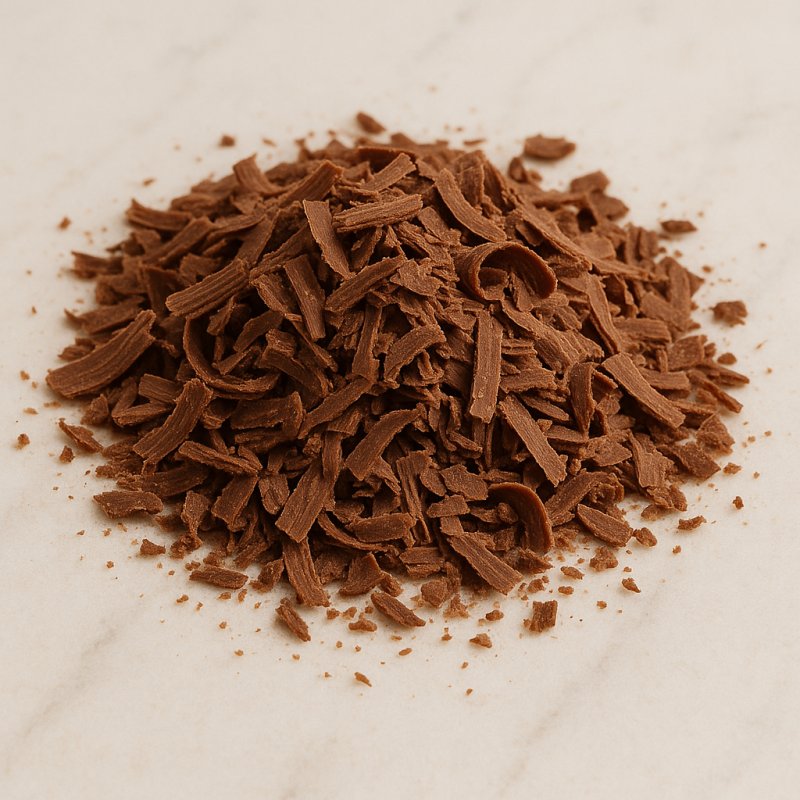
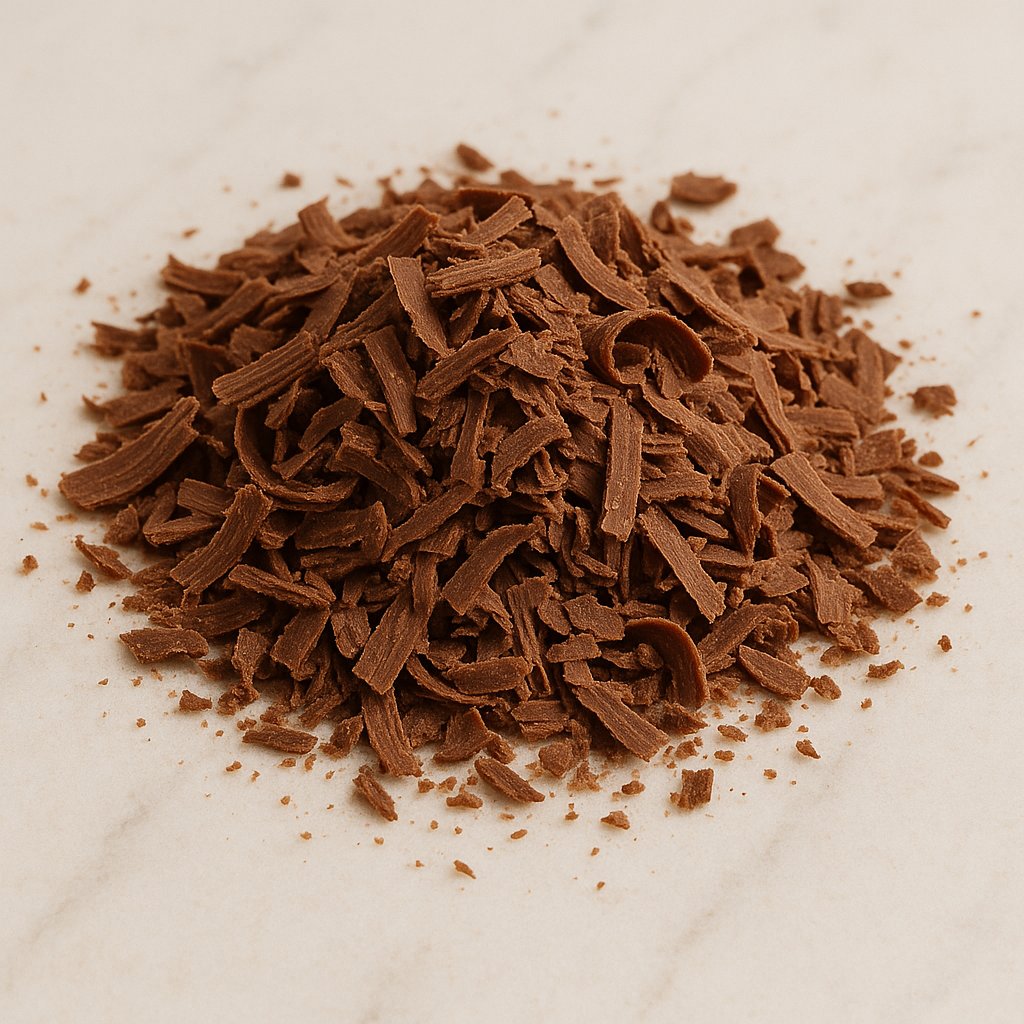
Chocolate shavings

Finely grated chocolate for decorating and enhancing desserts

Wiki about chocolate shaving Nutri-Score D Vegan No Gluten-free Yes Lactose-free No Nut-free Yes
NUTRITION / 100 g
500 kcal 6 g Protein 55 g Kohlenhydrate 28 g Fett

Introduction

Chocolate shavings
I still clearly remember the first afternoon when I sat on the sofa armed with a bowl of hot pudding and a bag of chocolate shavings, feeling like a secret pastry chef in my own living room. For me, chocolate shavings are more than just decoration; they are a small ritual, a tiny luxury that turns desserts, coffee and even simple cakes into something special. When I sprinkle a pinch over a cream, the whole pastry seems to light up for a moment, as if it were wearing a smile.

What I particularly love about chocolate shavings is their versatility. They are excellent for garnishing cakes, ice cream and mousse, but I also like to use them in yeast dough for cinnamon rolls or in a quick banana bread, so you can find small chocolate isles in every bite. A colleague of mine was once convinced that chocolate shavings are the secret behind every successful Sunday coffee; he even sprinkles them on his croissant, and I cannot deny that it is delicious.

Making and choosing chocolate shavings is easier than you think. You can buy ready-made shavings available in different sizes, or use whole bars and grate, shave or scrape thin flakes with a vegetable peeler. Dark chocolate brings intensity, milk chocolate provides mild sweetness, and white chocolate offers a creamy contrast. When I grate them myself I often notice that texture and melt-in-the-mouth make a big difference — freshly grated pieces melt more nicely on the tongue.

I also have practical tips: store chocolate shavings cool and dry so they don't become sticky. Sprinkle them only shortly before serving on delicate desserts, otherwise they lose definition. When I expect guests, I like to put out several bowls with different types of shavings so everyone can refine their dessert individually. Sometimes I run small tastings — a silly but effective idea to get conversations started.

In the end, chocolate shavings are an act of affection for me. They can be applied quickly, don't cost much and still create that moment when a dish suddenly gets attention. Whether as a crunchy contrast, a flavor accent or a playful gesture on a dollop of cream: a few chocolate shavings can unexpectedly set the mood, and I delight every time I reach for them.

Availability & types

Availability and types of chocolate shavings

Chocolate shavings are small, thin pieces of chocolate often used to sprinkle over cakes, pastries, desserts or hot drinks. They are easy to find: in many supermarkets they are located with baking ingredients or in the confectionery aisle. You can also buy them at bakeries, patisseries or online. Some stores offer several varieties, so you can choose exactly the right chocolate for your recipe.

Origin
The main ingredient for chocolate is the cocoa bean. Cocoa beans grow on cocoa trees, which thrive in warm, tropical regions of the world. The best-known growing areas are countries like the Ivory Coast and Ghana in Africa, but also countries in South America (for example Ecuador and Brazil) and parts of Asia (for example Indonesia). You can think of cocoa trees like fruit trees: farmers harvest the beans, dry and process them until chocolate is produced. The chocolate is then melted and further processed in factories — from that also the fine shavings are made.

Growing regions
Cocoa needs a warm climate, plenty of rain and shade trees. That's why it grows mainly near the equator. The main regions are:

  • West Africa: A large share of the world's cocoa harvest comes from here. Countries like the Ivory Coast and Ghana supply a great deal of cocoa.
  • South America: Many traditional cocoa varieties grow there, for example in Ecuador or parts of Peru and Brazil.
  • Asia: In countries like Indonesia a lot of cocoa is also grown, often used for mass-market products.
Available types and variants
Chocolate shavings are available in different types of chocolate. The most important are:

  • Dark / Bittersweet chocolate: These shavings taste a bit stronger and less sweet. The higher the cocoa content, the more intense the chocolate flavor. They can be used like sprinkles on cream cakes or in chocolate mousse.
  • Milk chocolate: These shavings are creamy and sweeter because they contain more milk and sugar. They go well with vanilla-based desserts, for decorating cakes or in muffins.
  • White chocolate: Technically, white chocolate contains no cocoa mass but cocoa butter, sugar and milk. The shavings are light and sweet and look particularly nice on dark cakes.
  • Colored or flavored shavings: Sometimes there are shavings with flavors (e.g. orange, mint) or in bright colors, which are especially popular for children's birthday parties.
  • Organic and Fairtrade variants: These chocolate shavings come from certified cultivation or fair trade. This means farmers often get better pay and more environmentally friendly production methods are used. For consumers such products are a more conscious choice.
Tips for choosing
If you want to buy chocolate shavings, check the label: it will state whether it is dark, milk or white chocolate and often also the cocoa percentage. For a strong aroma choose shavings with a high cocoa content, for sweet decorations prefer milk or white chocolate. Organic or Fairtrade labels indicate that better conditions were considered in production.

Overall, chocolate shavings are very versatile and available in many variants. Whether you use them in the kitchen to beautify desserts or simply for snacking — there is almost always the right variety for every taste.
Details & nutrition

Property Value
Unit g
Calories per 100 500
Protein per 100 6
Carbohydrates per 100 55
Sugar per 100 52
Fat per 100 28
Saturated fat per 100 17
Monounsaturated fat 8
Polyunsaturated fat 1
Fiber per 100 7
Vitamin C (mg) per 100 0
Vitamin D (IU) per 100 0
Calcium (mg) per 100 60
Iron (mg) per 100 3
Nutri-Score D
CO₂ footprint 5.0
Origin Varies by manufacturer, typically EU
Gluten-free Yes
Lactose-free No
Nut-free Yes
Vegan No
Note Nutritional values for commercially available chocolate shavings based on milk chocolate; exact values may vary depending on manufacturer and cocoa content.

Technical & scientific information

Chocolate shavings are fine, thin chips or flakes of chocolate used as decoration and ingredient in pastry and desserts. They are produced by scraping, planing or crushing chocolate bars or blocks and can be made from different types of chocolate, such as dark, milk or white chocolate. The visual effect and mouthfeel of chocolate shavings vary depending on grain size, shape and the quality of chocolate used.

Production and processing
Production of chocolate shavings is usually mechanical or manual. Industrially, tempered, melted chocolate slabs are hardened on suitable supports and then worked with planers or special grating machines. Manually, shavings are obtained by shaving with a knife or blade from solidified chocolate bars. Temperature control plays a central role: chocolate that is too warm becomes greasy and sticky, while chocolate that is too cold breaks into coarse pieces. Therefore grating is ideally performed at temperatures that ensure a firm but not brittle consistency, typically just below the crystallization zone of cocoa butter.

Chemical composition and ingredients
The basis of chocolate shavings is the composition of the chocolate used. Typical components are cocoa mass, cocoa butter, milk components (in milk chocolate), sugar and, where applicable, emulsifiers such as soy lecithin and flavors like vanillin. Exact proportions vary with the type: dark chocolate contains a higher proportion of cocoa mass and a lower sugar content, milk chocolate has a significant proportion of milk powder or milk fat. Cocoa butter consists mainly of saturated and monounsaturated fatty acids (e.g. palmitic, stearic, oleic acids), while cocoa mass also provides secondary plant compounds such as flavanols and theobromine.

Nutritional values
The nutritional values of chocolate shavings basically correspond to those of the underlying chocolate, but differ depending on type and production conditions. In 100 g of typical milk chocolate there are approximately 500–550 kcal (2100–2300 kJ), 30–35 g fat, 50–60 g carbohydrates (of which a high proportion sugars) and 6–8 g protein. Dark chocolate usually contains less sugar and somewhat more fat as well as fiber and minerals such as magnesium and iron. Shavings are generally used in small amounts for their decorative function; therefore the individual portion is usually nutritionally small.

Sensory and physical properties
The texture of chocolate shavings depends on the crystal structure and firmness of the cocoa butter as well as on the fineness of the shavings. Well-tempered chocolate shows a characteristic gloss and a clean snap. Grating produces narrow edges that leave a delicate melting sensation in the mouth. Fine shavings melt faster than coarse flakes because the relative surface area is larger and heat is transferred faster. Storage conditions such as temperature and humidity also influence the behavior of the shavings in terms of crispness and melting point.

Shelf life and storage
Chocolate shavings should be stored cool (ideally 12–18 °C) and dry, protected from foreign odors and direct sunlight. Temperature fluctuations can trigger fat bloom (visible, grey discoloration due to recrystallized fat), which affects appearance but does not necessarily reduce safety. Moist conditions promote sugar bloom or microbial growth in products enriched with milk components, so packaging and hygienic conditions are important.

Health aspects
From a nutritional point of view, chocolate shavings provide in small amounts energy, fats and sugars. Dark chocolate can show antioxidant properties due to its flavanol content, although health effects are dose-dependent and must be evaluated together with the accompanying calorie and fat intake. People with cocoa intolerance, lactose intolerance or allergies to soy or milk proteins should check the ingredient list. Theobromine and small amounts of caffeine in cocoa can cause nervousness or sleep disturbances in sensitive individuals, but are rarely relevant in the usual decoration amounts.

Applications
Chocolate shavings are used in many ways: as visual decoration on cakes, pastries, petit fours, ice cream and hot drinks and as a texture element in creams and mousses. The choice of chocolate type for shavings depends on the desired taste, color effects (e.g. contrast between white and dark chocolate) and melting properties.

Overall, chocolate shavings are a technically simple, sensorially effective ingredient whose properties depend strongly on the starting chocolate and processing temperature. With proper storage they offer a stable, versatile decoration and flavor option in pastry and gastronomy.

Wiki entry for: chocolate shaving
Active now: 21 visitors of which 2 logged-in members in the last 5 minutes