Menu & categories

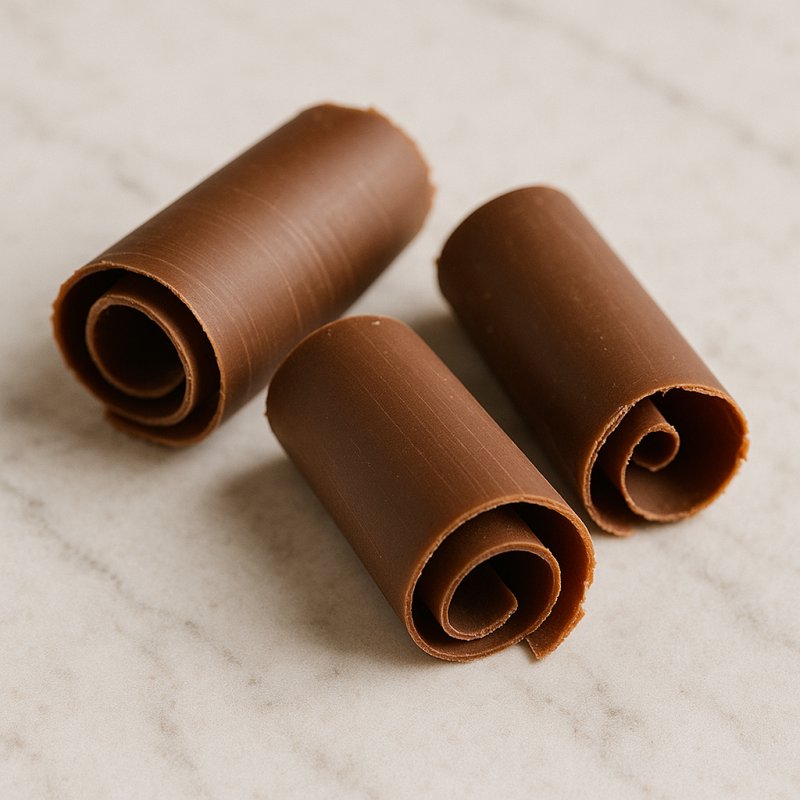
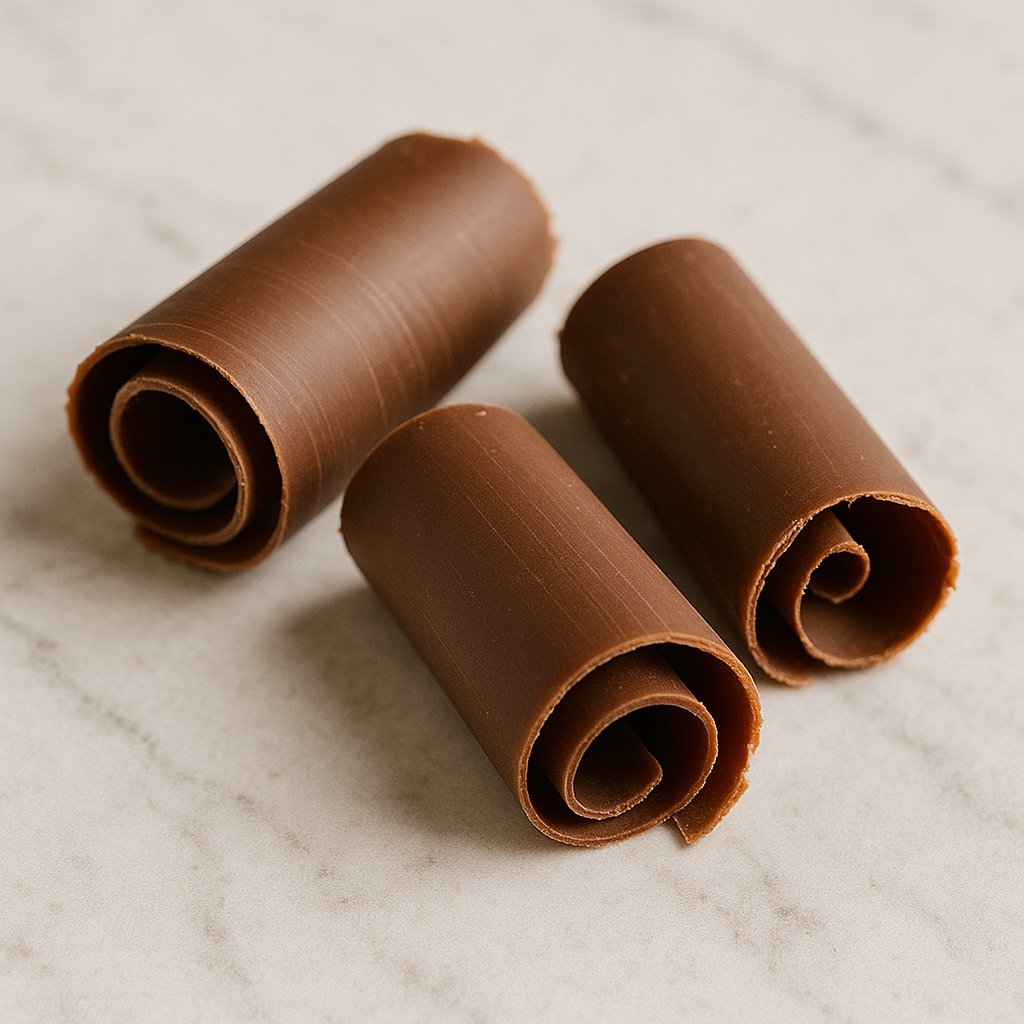
Chocolate rolls

Crispy cereal rolls coated with chocolate

Wiki about chocolate roll Nutri-Score D Vegan No Gluten-free No Lactose-free No Nut-free No
NUTRITION / 100 g
480 kcal 7 g Protein 64 g Kohlenhydrate 21 g Fett

Introduction

A pack of chocolate rolls
When I think of chocolate curls, the image that immediately comes to mind is a freshly decorated dessert crowned by those small, shiny chocolate curls like miniature works of art. To me they are much more than just a decoration: they are the little, crunchy promise that it’s about to get serious with indulgence. I still remember a birthday when a friend generously sprinkled the cake with chocolate curls – everyone reached for the curls first and only then for their plates. That says it all.

Chocolate curls are essentially made from finely rolled chocolate, often from milk, dark, or white chocolate. Sometimes they are slightly wavy, sometimes perfectly cylindrical, but they always have that characteristic combination of delicate melt and a touch of crunch. They are made by applying a thin layer of chocolate, allowing it to set slightly and then lifting it into small curls with special tools. Sounds simple, but in practice it’s a little science – I tried it once at home and in the end my kitchen looked like a crime scene for cocoa butter.

In my kitchen chocolate curls have a fixed place, especially when something needs to look pretty in a hurry. They are ideal for elevating desserts in no time:

  • as decoration on cakes, cupcakes and pastries
  • to refine ice cream sundaes and parfaits
  • as a crunchy topping on mousse, pudding or crème brûlée
  • for desserts in a glass, for example layered desserts with fruit and cream
A colleague once admitted to me that he nibbles chocolate curls straight from the packet when no one is looking. I could hardly blame him, because I regularly catch myself trying a handful "just for decorating." I find the combination with acidity particularly exciting: a lemon cheesecake with dark chocolate curls looks like it came from a patisserie, and the bitter chocolate provides a nice contrast to the fresh lemon. I also love pouring an espresso over plain vanilla ice cream and sprinkling a few chocolate curls on top – suddenly it becomes a dessert that tastes like an Italian café.

When you buy chocolate curls, it's worth looking at the ingredients: a high cocoa content and real cocoa butter are a good sign of quality. Store them cool and dry, but not in the refrigerator, so they don't develop a greyish bloom. I keep mine in a tightly sealed jar within easy reach next to my baking ingredients. That way they're always on hand when guests arrive unexpectedly or a simple dessert could use a bit of shine. For me chocolate curls are exactly that: small, uncomplicated chocolate moments of happiness that transform any sweet recipe into something special with little effort.

Availability & types

When we talk about the availability and types of chocolate curls, it’s useful first to look at where they actually come from. Chocolate curls are typically made from chocolate and sometimes from a biscuit or wafer roll that is coated with or filled with chocolate. The most important basis is therefore the cocoa bean. Cocoa grows mainly in warm, tropical countries around the equator, for example in West Africa (Ivory Coast, Ghana), in South America (Brazil, Ecuador) and in parts of Asia (Indonesia). There the cocoa beans are harvested, dried, roasted and later processed into chocolate in factories. From this chocolate, chocolate curls are produced in many countries around the world and end up on supermarket shelves.

So chocolate curls don’t grow on trees themselves, they are manufactured in confectionery factories. Most large brands produce them in Europe, North America or Asia, depending on where the company is based. Some bakeries or patisseries also make their own chocolate curls, for example as decoration for cakes. There they are often shaped, rolled and cooled fresh from melted chocolate. This means the curls from your favorite bakery may look or taste slightly different from those in a supermarket packet.

In many countries chocolate curls are available year-round. You’ll usually find them:

  • in the baking aisle (with sprinkles, couverture and nuts)
  • with cake decorations (sugar pearls, figures, glazes)
  • sometimes with mueslis or desserts (for yogurt or ice cream toppings)
At Christmas or Easter there are often special shapes or gift packs where chocolate curls are offered as decoration for cookies and festive cakes. In very small shops or in villages without large supermarkets you might not find a dedicated packet of “chocolate curls.” There you can sometimes fall back on chocolate sprinkles or similar items that can be used in much the same way.

There are many types and variants of chocolate curls that differ in shape, taste and composition. Some of the most common are:

  • Milk chocolate curls: these are sweet, creamy and especially popular with children. They contain milk components that make the flavor milder.
  • Dark or bittersweet chocolate curls: they taste a bit more bitter and less sweet. Many adults prefer this variety because it has a more intense cocoa flavor.
  • White chocolate curls: made from cocoa butter, sugar and milk, they contain no dark cocoa powder. This makes them pale and very sweet, almost like vanilla chocolate.
  • Bicolor curls: two-colored curls, for example half dark, half white. They are particularly decorative, for instance on muffins or ice cream sundaes.
Besides flavor, chocolate curls also differ in shape and size:

  • Small, fine curls: rather thin and short, perfect for sprinkling on cakes, tarts or desserts. They are a bit like grated chocolate, but nicely rolled.
  • Longer decorative curls: these are larger and often used individually as an ornament on small cakes or sundaes. They can also be inserted slightly askew into a cupcake.
  • Filled wafer rolls with chocolate: here the chocolate is inside and a crunchy wafer is on the outside. Such rolls are eaten more as a pastry or snack, not only as decoration.
In some shops you’ll also find special variants, for example curls with hazelnut flavor, with caramel or with flavor additions like orange or mint. These are often available in delicatessens or specialty baking shops. There is also Fair-Trade chocolate, where more attention is paid to ensuring cocoa farmers receive better pay. Chocolate curls can also be made from such chocolate, which matters to people who want to shop under fair conditions.

Overall chocolate curls are nowadays easy to obtain in many countries and available in very different shapes and flavors. The range spans from simple milk chocolate curls from the supermarket to decorative two-tone variants and special types made from fair-trade cocoa. That way you can choose the curls that best suit your cake, ice cream or dessert – or simply snack them straight from the pack.
Details & nutrition

Property Value
Unit g
Average weight per piece 2.5
Calories per 100 480
Protein per 100 7
Carbohydrates per 100 64
Sugar per 100 32
Fat per 100 21
Saturated fat per 100 12
Monounsaturated fat 6
Polyunsaturated fat 2
Fiber per 100 3
Vitamin C (mg) per 100 0
Vitamin D (IU) per 100 0
Calcium (mg) per 100 80
Iron (mg) per 100 2
Nutri-Score D
CO₂ footprint 3.2
Origin EU
Gluten-free No
Lactose-free No
Nut-free No
Vegan No
Note Typical ingredient as a crispy topping or filling for desserts, ice cream and baked goods; composition may vary depending on the manufacturer.

Technical & scientific information

Chocolate curls are small, tube-shaped decorative elements made of chocolate or cocoa-containing fat-based coatings, primarily used in confectionery, pastry and the food industry. They serve as visually appealing and aromatic garnishes for desserts, baked goods, ice cream and beverages. Despite their seemingly simple form, they are technologically sophisticated products that intentionally use the properties of cocoa, sugar and fats.

Depending on the manufacturer, chocolate curls are made from real chocolate as defined by cocoa regulations or from so-called compound coatings, i.e. cocoa-containing fat-based coatings. Classic curls are generally based on couverture. Typical ingredients include:

  • cocoa mass (ground cocoa beans with cocoa butter)
  • cocoa butter or other vegetable fats
  • sugar or other sweeteners
  • milk powder or cream powder in milk chocolate
  • emulsifiers such as lecithins (often soy or sunflower lecithin)
  • flavorings, primarily natural vanilla flavor
The chemical composition of chocolate curls depends on the type of chocolate. Dark variants have a higher proportion of cocoa solids (often 50–70%), while milk chocolate curls contain more milk components and sugar. The fat portion mainly comes from cocoa butter, a plant fat solid at room temperature with a high content of saturated and monounsaturated fatty acids, primarily stearin, palmitin and oleic acid. In fat-based coating products cocoa butter can be partly or wholly replaced by other fats such as coconut oil or palm oil, which changes melting and processing properties.

From a nutritional point of view, chocolate curls mainly provide energy in the form of fats and carbohydrates. Typical nutritional values for chocolate are in the range of about 500–550 kilocalories per 100 grams. Sugar content can vary by formulation from around 30 up to over 50 grams per 100 grams. Dark chocolate curls contain comparatively more cocoa constituents and therefore more secondary plant compounds such as flavanols, as well as slightly more fiber from the cocoa bean. Milk chocolate curls additionally provide small amounts of protein and minerals from milk, such as calcium and phosphorus.

The production of chocolate curls is based on the physical properties of chocolate, particularly the controlled crystallization of cocoa butter. First the chocolate mass is tempered, i.e. heated and cooled according to a defined temperature profile to create a stable crystal form (β-crystals) of cocoa butter. This form provides gloss, snap and an even melting behavior in the mouth. The tempered mass is then spread thinly onto a cooled metal or plastic plate and smoothed into an even layer.

When the layer reaches a certain degree of solidification, it is cut into strips with special knives or scrapers and, through targeted rolling or scraping, formed into tubular shapes. Temperature and consistency of the chocolate must be precisely controlled: if it is too soft it deforms; if too hard it breaks. After forming the curls are fully hardened, optionally polished or lightly glazed and then packaged. In industrial lines these steps are highly automated to ensure uniform size, wall thickness and fracture strength.

High-quality curls are characterized by a fine melt, a clean break and a homogeneous color. A whitish bloom, the so-called fat bloom or sugar bloom, can appear with improper storage. Fat bloom results from migration and recrystallization of fats on the surface, sugar bloom from moisture and subsequent sugar crystallization. Both phenomena mainly affect appearance rather than product safety, but are regarded as sensory quality defects.

From a health perspective chocolate curls are considered a treat. Due to their high energy and sugar content they should be consumed in moderation. The bioactive compounds in cocoa, such as flavanols and theobromine, have been linked in scientific studies to possible positive effects on vascular function and mood; however, these effects are of limited relevance at the small amounts used for decoration. People with lactose intolerance, milk protein allergy or soy allergy should check ingredient lists; in dark, dairy-free variants lactose can be very low, but traces are still possible. Additionally, depending on cocoa content, chocolate curls contain small amounts of caffeine and theobromine, which should be considered for sensitive individuals or children.

In practical use, pastry chefs and home bakers benefit from the stability and easy dosing of chocolate curls. They melt more slowly than chocolate sprinkles, maintain their shape on cool desserts and ice cream, and allow a decorative texture on cakes, cupcakes or mousse. Under controlled storage conditions – dry, protected from light and at temperatures around 15–20 °C – chocolate curls remain sensorially stable for several months, making them a versatile, technologically interesting ingredient for sweet preparations.
Wiki entry for: chocolate roll
Active now: 6 visitors of which 2 logged-in members in the last 5 minutes