Menu & categories

Chocolate chip cookies

Crispy cookies with chocolate pieces

Wiki about chocolate cookie Nutri-Score E Vegan No Gluten-free No Lactose-free No Nut-free No
NUTRITION / 100 g
480 kcal 6.0 g Protein 67.0 g Kohlenhydrate 21.0 g Fett

Introduction

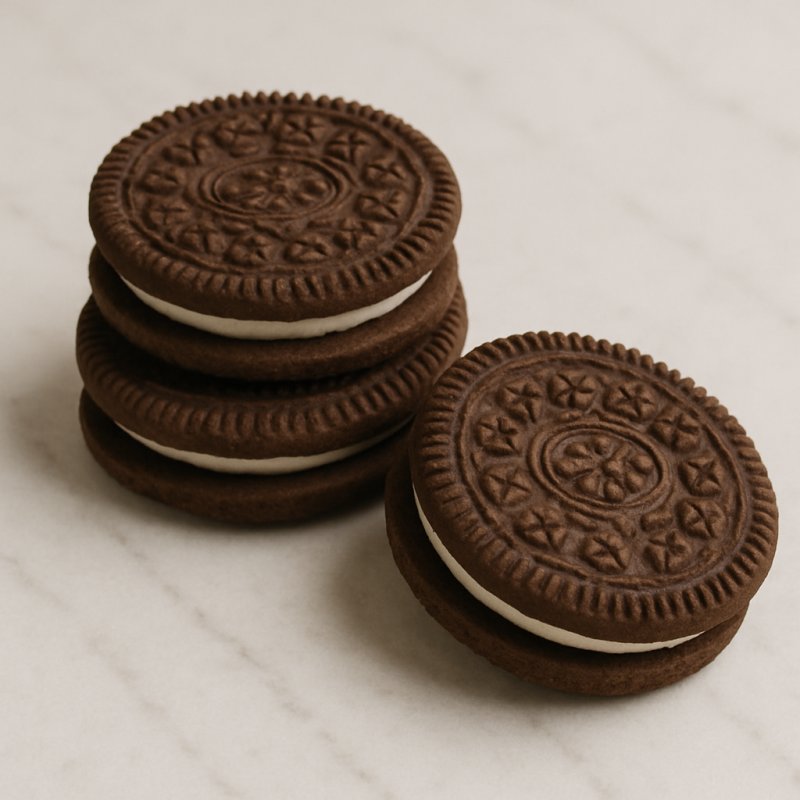
Several chocolate cookies with chocolate pieces on a plate
I still clearly remember the scent that filled my grandmother's apartment when she took chocolate cookies out of the oven: warm, cocoa-scented and at the same time inviting like a hug. These small, crunchy, sometimes tender bites have something reconciliatory for me. They are not merely a sweet treat, but a piece of culture that holds the same place in kitchens and coffee breaks across Europe as good bread and aged cheese.

Chocolate cookies are remarkably versatile. You can serve them as a simple afternoon snack, vary them with a range of ingredients or layer them into an elegant dessert component. I have learned in my kitchen that a few simple adjustments can change a cookie's entire personality:

  • Dark chocolate instead of milk chocolate: for more depth and less sweetness.
  • Added nuts: walnuts, hazelnuts or almonds add texture and aroma.
  • Salt flakes on top: the contrast brings out the chocolate.
One colleague once brought a jar of broken chocolate cookies to work because he thought they could be used as a muesli ingredient. The result was a spontaneous, delicious breakfast experiment in which the cookie pieces were soaked in yogurt, combined with fresh berries and drizzled with a touch of honey. This improvised combination showed me how flexible chocolate cookies can be — from a crumble substitute to a crunchy cake topping.

In recipes I always pay attention to two things: the right balance between cocoa and sugar and the baking time. A cookie left in the oven too long loses its delicate crumb structure, while too short a baking time makes it too soft. I love testing new variants, for example with espresso for more intensity or with orange zest for fresh notes.

In the end chocolate cookies are for me more than just pastries. They are keepsakes, spontaneous experiments and little moments of happiness to share. Every time I offer someone a freshly baked cookie, I see how quickly a simple pastry becomes a conversation, a smile and sometimes a new memory.

Availability & types

Availability and types of chocolate cookies

Chocolate cookies are found everywhere – in supermarkets, bakeries, cafés and sometimes even in small corner shops. When you think of chocolate cookies, picture a wide selection, similar to ice cream flavors: there are simple, classic varieties and many colorful, creative new creations. Because they are so popular, chocolate cookies are sold year-round and are often available in special sizes or gift packages at Christmas time or other holidays.

Origin
Chocolate cookies do not have a single origin, as they are baked all around the world. The idea of combining cookies with chocolate comes from countries where chocolate has long been popular, for example in Europe and North America. It is important to know that the base of many chocolate cookies is flour, sugar, butter or oil and of course chocolate or cocoa powder. Chocolate originally comes from the cocoa bean, which grows in warm countries – for example in West Africa, South America and parts of Asia.

Growing regions of the main ingredient (cocoa)
Cocoa grows on trees in hot, humid regions near the equator. The largest growing areas are:

  • West Africa – countries like Côte d'Ivoire and Ghana supply a lot of cocoa for chocolate and therefore also for chocolate cookies.
  • South America – cocoa has been grown there for a long time; countries like Ecuador or Brazil are known for distinctive flavor profiles.
  • Southeast Asia – cocoa is also grown here, for example in Indonesia.
You can think of it like apples: some regions are better suited to certain apple varieties – the same applies to cocoa. Climate, soils and how farmers work change the flavor of the beans.

Available varieties and variants
Chocolate cookies come in many shapes and flavors. Here are the most common types, explained as if for someone young:

  • Chocolate chip cookies – these are classic cookies with small chocolate pieces. They are often crispy on the outside and soft on the inside.
  • Milk chocolate or dark chocolate cookies – depending on whether the chocolate is sweeter (milk) or slightly more bitter (dark). It's similar to juice: some like sweet apple juice, others prefer it slightly tart.
  • Filled chocolate cookies – these have a cream, jam or extra chocolate in the middle. It's like a chocolate cookie with a surprise in the center.
  • Cocoa cookie – the entire dough is darkened with cocoa powder and tastes more strongly of chocolate, even if there are no pieces inside.
  • Oat or nut chocolate cookies – these contain oats or nuts and are thus a bit more hearty in flavor and texture.
  • Vegan or low-sugar variants – for people who don't eat animal products or want less sugar, there are cookies made with plant-based butter and sugar alternatives. They are intended to taste similar, but are made differently.
Additionally there are often seasonal and creative variants: with caramel, sea salt, colorful sprinkles or even with fruit. Some brands sell mini cookies, others very large cookies – that is, as big as a plate. This way almost everyone finds their favorite type.

In short: chocolate cookies are easy to get because they are baked in many countries. The chocolate usually comes from warm growing areas such as West Africa or South America. And among the types the range goes from simple chocolate chip cookies to filled, nutty or low-sugar variants – so a wide selection for every taste.
Details & nutrition

Property Value
Unit g
Average weight per piece 12
Calories per 100 480
Protein per 100 6.0
Carbohydrates per 100 67.0
Sugar per 100 32.0
Fat per 100 21.0
Saturated fat per 100 11.0
Monounsaturated fat 7.0
Polyunsaturated fat 3.0
Fiber per 100 3.0
Vitamin C (mg) per 100 0
Vitamin D (IU) per 100 0
Calcium (mg) per 100 40
Iron (mg) per 100 2.5
Nutri-Score E
CO₂ footprint 2.4
Origin Varies by manufacturer, often EU
Gluten-free No
Lactose-free No
Nut-free No
Vegan No
Note The values given are average values for commercially available chocolate chip cookies; exact values may vary depending on recipe and manufacturer.

Technical & scientific information

Chocolate cookies are processed baked goods typically made from a dough of flour, fat, sugar and cocoa products and occasionally contain chocolate pieces or coatings. As an ingredient, chocolate cookies are used in food production both whole (e.g. in desserts or ice cream) and in crushed form as a binder or texturizer. Their physical and chemical properties depend largely on formulation and manufacturing processes.

Composition and ingredients
Basic components are wheat flour (starch, proteins such as gluten), fats (butter or vegetable oils; triglycerides), sugar (sucrose, glucose syrup) and cocoa powder or chocolates (cocoa mass, cocoa butter). Other ingredients include leavening agents (sodium or ammonium bicarbonate), emulsifiers (lecithin), milk powder, eggs (proteins, lecithin) as well as flavorings and stabilizers. Micronutrients such as sodium, small amounts of iron and B vitamins are present depending on ingredients, while dietary fiber is usually low except in wholegrain variants.

Chemical and physical properties
The texture of chocolate cookies is based on interactions between the protein network (gluten), starch granules and a dispersed fat-phase system. During baking, starch gels and proteins denature; sugars and fats affect glass transition temperatures and moisture distribution, which in turn govern crust formation and crumbliness. Maillard reactions (reaction between amino groups of proteins and reducing sugars) and caramelization produce browning and aroma compounds. Cocoa products supply polyphenols (e.g. flavanols), which can exhibit antioxidant activity, however in cookies they are reduced by processing (alkalization, heat).

Nutritional profile
Typical chocolate cookies deliver high energy densities due to fat and sugar; an average cookie (approx. 10–15 g) often contains 50–80 kcal. Macronutrient distribution varies, but typical amounts per 100 g are: energy 400–550 kcal, fat 15–30 g (of which saturated fatty acids depending on fat source up to 10–15 g), carbohydrates 60–70 g (of which sugars 25–40 g) and protein 5–8 g. The high sugar and fat content makes portioned use sensible for calorie- and sugar-conscious diets.

Processing methods
Industrial production includes mixing, portioning/forming, baking and cooling, often followed by finishing such as applying glazes or sandwich fillings. For specific textures processes like lamination (for flakiness), cold/warm abrasion (for crumbles) or chocolate tempering are used. Crushed chocolate cookies are processed in mills to different particle sizes; the particle size distribution affects compaction, water uptake and rheological properties in downstream products (e.g. cookie base for cakes).

Technological functions as an ingredient

  • Structure former: crushed cookies act as a filler and contribute to the texture of creams and bases.
  • Flavor contributor: cocoa components and caramelized sugar provide characteristic flavors.
  • Binding and volume: combination of fat and finely milled starch provides volume and mouthfeel.
  • Visual effect: chocolate pieces or sprinkles improve color and contrast in baked goods.
Health aspects
Chocolate cookies, because of their high content of sugar, saturated fats and energy, are not a primary source of essential nutrients. Excessive consumption can contribute to increased calorie intake, weight gain and an increased risk of dental caries and metabolic diseases. For consumers with food allergies there are potential risks: gluten (wheat), milk proteins, eggs and soy (lecithin) as well as traces of nuts. Furthermore, acrylamide formation in very darkly browned cookies and the reduction of health-promoting polyphenols in heat-treated cocoa may be relevant.

In summary, chocolate cookies are a versatile ingredient with complex physico-chemical properties that perform both sensory and technological functions in foods. Their use requires consideration of nutritional value, processing effects and allergen labeling to ensure product quality and consumer safety.

Wiki entry for: chocolate cookie
Active now: 21 visitors of which 2 logged-in members in the last 5 minutes