Menu & categories

Chives

Fresh, pungent and rich in vitamins

Wiki about chive Nutri-Score A Vegan Yes Gluten-free Yes Lactose-free Yes Nut-free Yes
NUTRITION / 100 g
30 kcal 3.3 g Protein 4.4 g Kohlenhydrate 0.7 g Fett

Introduction

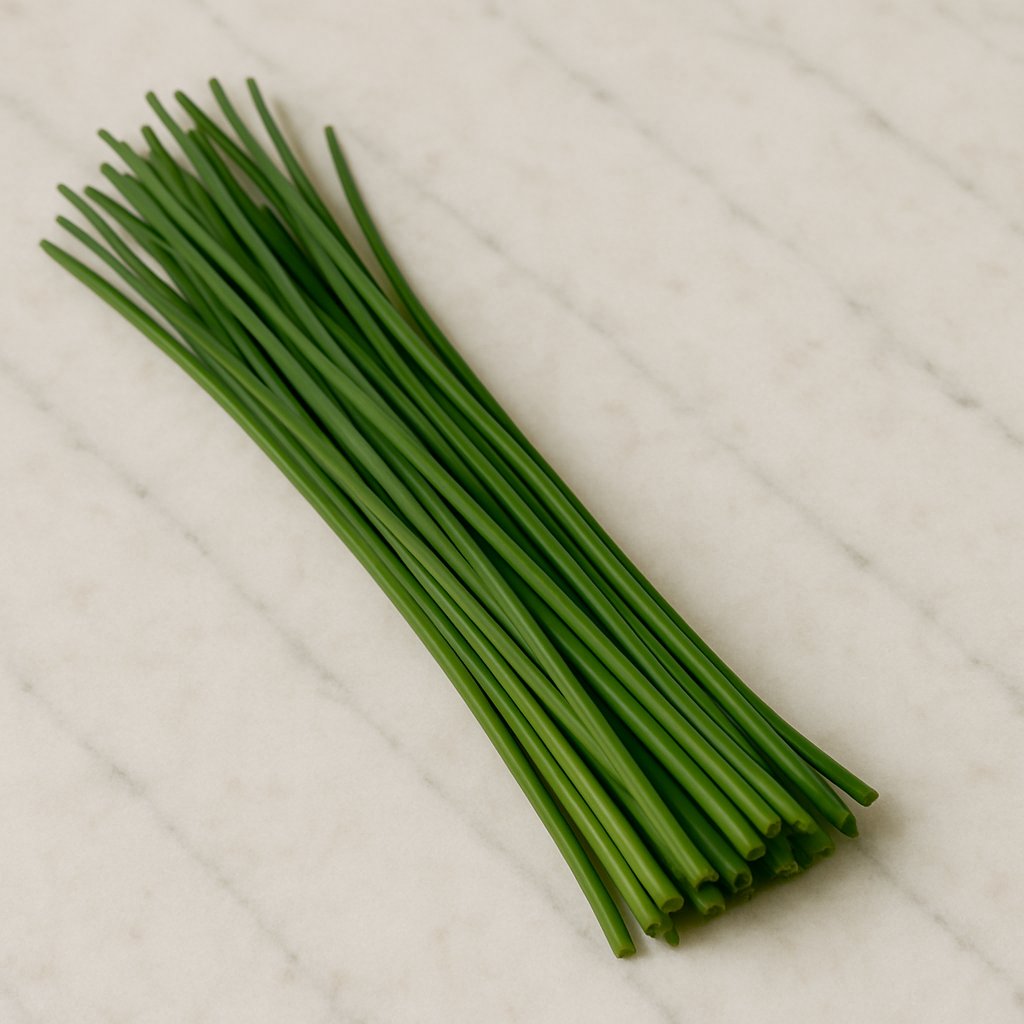
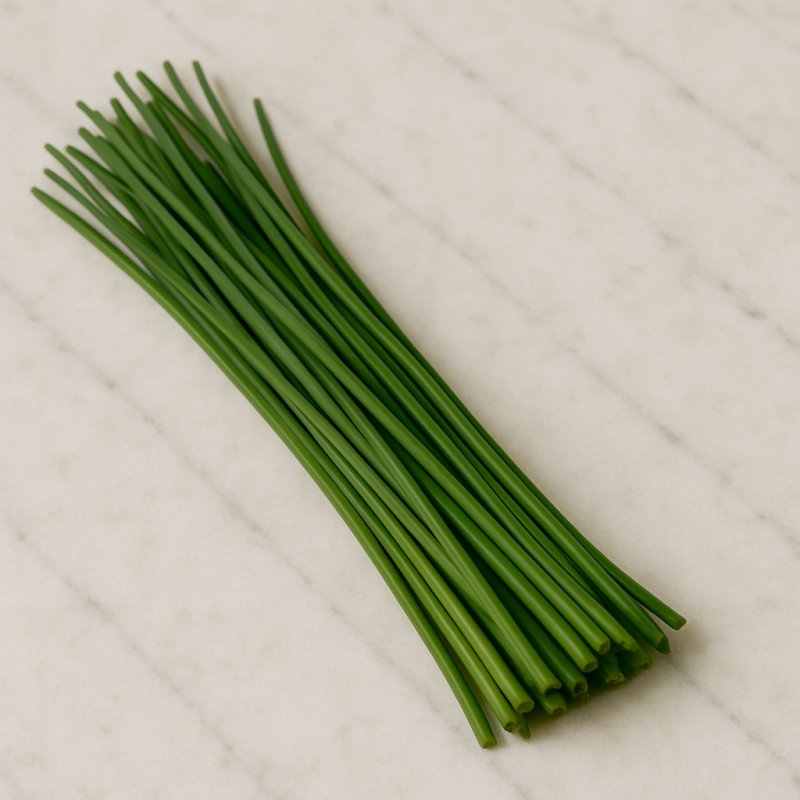
Fresh bundled chives
Chives are for me more than just a little bunch of green herbs on the edge of the plate. As a 35-year-old editor from Europe I have stood in countless kitchens – from a North German farmhouse to a small apartment in Lisbon – and experienced how versatile and indispensable this delicate Allium is. Chives give everyday dishes a fresh, peppery note, serve visually as a promise of freshness and prove that cooking does not have to be complicated. It is the herb you quickly snip with scissors, sprinkle over steaming potatoes, stir into creamy dips or enjoy as a fine topping on crispy omelettes. My grandmother already used chives with a naturalness that still shapes me today: it simply belongs – like salt, pepper and a good olive oil.

Botanically, chives (Allium schoenoprasum) belong to the onion family and are closely related to onions, garlic and wild garlic. The taste, however, is milder and fresher, almost airy. Its tubular, deep-green stalks are full of essential oils that release a fine, onion-like aroma without becoming too dominant. I find it particularly interesting that chives are convincing not only culinarily but also visually: the delicate purple flowers are edible and add fragrant accents to salads or summer tarts. A colleague of mine swears by making chive-blossom butter – it melts on warm bread like a little poem.

What I especially appreciate about chives is their everyday suitability. They grow reliably in pots on the windowsill, on small balconies and, of course, abundantly in the garden. I remember a trip to South Tyrol where an innkeeper explained that she plants three pots of chives offset so that one is always at its best. That is a tip I adopted. This way I have fresh chives year-round and can season dishes spontaneously. It is important to cut chives regularly so they regrow compactly. And always use scissors – this protects the delicate stalks and preserves their structure.

Availability & types

Chives are a popular herb used in many kitchens around the world. Their fine, long green stalks are not only an attractive visual element but also a tasty seasoning that gives many dishes a fresh, onion-like flavor. In this section we will look more closely at the availability and the different types of chives.

Origin

Chives belong to the family Alliaceae, which also includes onions, garlic and leeks. Originally chives come from Europe and Asia. They grow wild in many regions and have been used by people for thousands of years. The ancient Romans and Greeks valued chives for their flavor and health benefits. Today chives are cultivated in many countries and are available in supermarkets and markets.

Availability

Chives are available year-round, but the best time to find fresh chives is in spring and summer. In these months they grow best and have the most intense flavor. Fresh chives can be found in most grocery stores and markets. In the winter months you can also buy dried chives, which can also be used but do not offer the same intense flavor as fresh chives.

Varieties of chives

There are different varieties of chives that differ in flavor, color and use. Here are some of the best known:

  • Common chives (Allium schoenoprasum): This is the most common variety we use in our kitchens. It has a mild, onion-like flavor and is ideal for salads, soups and as a garnish for various dishes.
  • Garlic chives (Allium tuberosum): This variety has a stronger flavor reminiscent of garlic. It is often used in Asian dishes and pairs well with wok dishes and sauces.
  • Black-seed chives: This variety has darker stalks and a somewhat more intense flavor than common chives. It is excellent for preparing dips and spreads.
  • Giant chives: This variant has larger stalks and a robust flavor. It is often used in Asian cuisine and can also be grilled or fried.
Forms and uses

Chives can be used in various ways. Here are some popular forms:

  • Fresh chives: Most commonly used to season dishes or as decoration.
  • Dried chives: A convenient option with a longer shelf life, but less flavor than fresh chives.
  • Chive-infused oil: Chive

Details & nutrition

Property Value
Unit g
Average weight per piece 5
Calories per 100 30
Protein per 100 3.3
Carbohydrates per 100 4.4
Sugar per 100 1.9
Fat per 100 0.7
Saturated fat per 100 0.1
Monounsaturated fat 0.1
Polyunsaturated fat 0.4
Fiber per 100 2.5
Vitamin C (mg) per 100 58
Vitamin D (IU) per 100 0
Calcium (mg) per 100 92
Iron (mg) per 100 1.6
Nutri-Score A
CO₂ footprint 0.2 kg CO2e/kg
Origin Field-grown or greenhouse, Europe
Gluten-free Yes
Lactose-free Yes
Nut-free Yes
Vegan Yes
Note Use fresh or finely chop and freeze; sensitive to prolonged heat.

Technical & scientific information

Chives (Allium schoenoprasum) are a perennial, herbaceous plant of the family Amaryllidaceae (subfamily Allioideae) and are botanically classified among the allium group. The species is widespread in the northern hemisphere and occurs both in the temperate zones of Europe and in parts of Asia and North America. Characteristic are tubular, hollow leaves that grow in dense clumps, as well as edible, tender stems with a mild onion-like aroma. Chives are valued in the kitchen, horticulture and traditional herbal medicine and, due to their constituents, represent a versatile ingredient with nutritional benefits.

Morphology and botany: The plant forms numerous thread- to tube-shaped leaves from a bulbous base with a smooth, waxy surface. The flowers are usually violet to purple and stand in spherical umbels; the flowering period varies regionally and in Central Europe often occurs between May and July. The root system is fine and fibrous, making chives well adapted to humus-rich, loose substrates. As a C3 plant, chives perform conventional photosynthesis, with leaf geometry optimizing the surface-to-volume ratio and keeping transpiration moderate.

Constituents and nutritional profile: Chives contain a complex mixture of secondary plant compounds and micronutrients. Typical are organic sulfur compounds, notably thiosulfinates and sulfides, which are generated by enzymatic conversions of S-alk(en)yl-L-cysteine sulfoxides when cells are damaged and produce the characteristic aroma. Furthermore, flavonoids (e.g. quercetin derivatives), phenolic acids, chlorophyll, carotenoids and small amounts of essential oils are detectable. In terms of micronutrients, chives provide vitamin K, vitamin C, folate and beta-carotene (as provitamin A) and minerals such as potassium, calcium and magnesium. The energy content is very low; per 100 g the calories are in the lower double-digit range, combined with a high content of bioactive plant compounds.

Sensory and aroma profile: The sensory profile is mild-oniony
Wiki entry for: chive
Active now: 18 visitors of which 2 logged-in members in the last 5 minutes