Menu & categories

Chili pepper

Spicy pepper with an intense aroma and rich in vitamin C

Wiki about chili pepper Nutri-Score A Vegan Yes Gluten-free Yes Lactose-free Yes Nut-free Yes
NUTRITION / 100 g
40 kcal 2 g Protein 9 g Kohlenhydrate 0.4 g Fett

Introduction

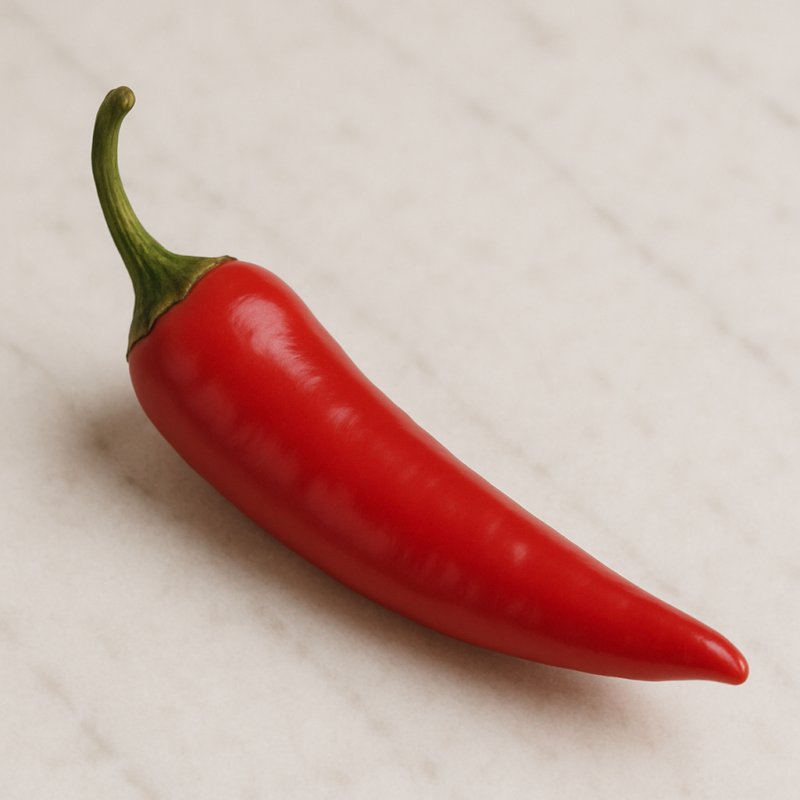
Red chili peppers on a cutting board
Chili fascinated me already as a child, although back then I usually had to quickly reach for a glass of water. I still remember a warm summer evening at a market, where the scent of roasted chilies and fried corn hung in the air. A vendor offered me a tiny, bright red pepper, and the first bite felt like a little, cheeky spark of fire — that's how my lifelong love of heat began.

What I particularly appreciate about chili is its versatility. A single pepper can dominate a dish or give it only a subtle note. I like to experiment with fresh, dried and smoked varieties, because each form tells a different story. Sometimes I grind dried chilies myself and imagine how the aromas are released while I stir a stew.

I've learned that heat is more than hot. It has nuances: fruity, smoky, lemony or earthy. A friend once brought a jar of chipotle into the kitchen, and I was surprised how the smoky depth can transform simple tomato dishes. On the other hand, a mild bell pepper variety gives steamed dishes warmth without tears.

When using chili I always pay attention to balance. Too much heat can cover other ingredients, too little feels wasted. I like to keep a few remedies ready:

  • Milk or yogurt – soothe the heat with fat and proteins.
  • Acidity – a squeeze of lemon or vinegar lifts flavors and softens the perception of heat.
  • Sweetness – a touch of honey or sugar can balance sharp spiciness.
I also love the cultural stories that chili brings. Whether in a spicy salsa, in a Korean stew or in a Mediterranean pepper paste — chilies connect regions and memories. I once sat in a small kitchen where a grandmother explained to me how to pickle chilies; her hands moved routinely, and I realized that pickling chilies preserves as much tradition as flavor.

In the end chili is for me an instrument of the kitchen: bold, cheeky and always ready to give a dish character. I invite you to try it with curiosity and some respect — and to be surprised by the warm tingle that is often the most beautiful thing in the end.

Availability & types

Availability and types of chili

Chili is a spicy accompaniment found in many kitchens around the world. It originally comes from Central and South America – people cultivated it there thousands of years ago. As explorers and traders traveled to Europe, Asia and Africa, they carried seeds and plants with them. That is how chili grew and spread to very different countries with different climates.

Where is chili grown today?
Chili grows best in warm, sunny places. Therefore the main growing regions are:

  • South America – the home of many original varieties.
  • Mexico – famous for many traditional chiles used in salsas.
  • India – one of the largest producing countries today, where many dried and ground chiles are made.
  • China – produces large quantities, mainly for processing into spices.
  • Southeast Asia (e.g. Thailand, Vietnam) – known for very hot, small varieties used in curries and sauces.
  • Africa and southern Europe – many varieties also grow in warmer regions.
What types of chili are there?
Chilies come in many shapes, colors and heat levels. They can be simply categorized into a few groups to make them easier to understand:

  • Fresh chilies – the green, red or yellow fruits you find in the supermarket produce section. They are juicy and are often used in salads, salsas or stir-fries.
  • Dried chilies – fresh chilies are dried to make them last longer. Dried chilies often have a more intense aroma and are used in soups, stews or as powder.
  • Chili flakes and powder – made from dried chilies, they are easy to dose. They are convenient when you only want to add a little heat.
  • Pickles and pickled chilies – chilies in vinegar or oil keep for a long time and give dishes a sour-spicy taste.
  • Chili sauces – from mild to very hot sauces; some are sweet, others smoky or sweet-and-sour. These sauces are often pre-seasoned and very popular for dipping or seasoning.
Well-known varieties explained simply
To give you an idea, here are some well-known varieties in simple words:

  • Jalapeño – medium-sized, not too hot, often stuffed or used in burgers.
  • Cayenne – slim and red, often dried and made into powder.
  • Habanero – small, very hot and fruity in taste; use very sparingly.
  • Thai chili – tiny but very hot; typical in Thai dishes.
  • Bell pepper / sweet peppers – technically also chilies, but very mild and large, good for stuffing or roasting.
How to find the right chili?
In the store look for fresh, firm fruits without blemishes. If you want to avoid heat, choose larger, colorful varieties like bell peppers or mild jalapeños. For more heat choose small, red chilies or products with chili powder. When cooking you can also add little at first and season later — that way the food remains edible for everyone.

Overall chili is very versatile: it grows in warm countries around the world, there are fresh, dried and processed variants, and the selection ranges from mild to extremely hot. That way everyone can find the right chili for their dish and taste.
Details & nutrition

Property Value
Unit g
Average weight per piece 10
Calories per 100 40
Protein per 100 2
Carbohydrates per 100 9
Sugar per 100 5
Fat per 100 0.4
Saturated fat per 100 0.1
Monounsaturated fat 0.03
Polyunsaturated fat 0.25
Fiber per 100 1.5
Vitamin C (mg) per 100 140
Vitamin D (IU) per 100 0
Calcium (mg) per 100 14
Iron (mg) per 100 1.0
Nutri-Score A
CO₂ footprint 0.4 kg CO2e/kg
Origin Grown worldwide in tropical and subtropical regions
Gluten-free Yes
Lactose-free Yes
Nut-free Yes
Vegan Yes
Note Nutritional values for fresh red chili peppers; values may vary slightly depending on variety and ripeness.

Technical & scientific information

Chili refers to the fruits of various species of the genus Capsicum within the nightshade family (Solanaceae). Botanically they are berries that vary considerably in size, shape, color and pungency. Numerous cultivars and landraces are grown worldwide, characterized by different fruit contents and usage forms – fresh, dried, pulverized or as extracts.

Chemical composition and constituents
The characteristic heat of chili is caused mainly by the group of capsaicinoids, with capsaicin and dihydrocapsaicin being the dominant representatives. Capsaicinoids are lipophilic alkaloids synthesized in the placental tissues of the fruit. Besides capsaicinoids, chilies contain:

  • Flavonoids and carotenoids, responsible for antioxidant properties and coloring (e.g. capsanthin, capsorubin).
  • Vitamins, especially vitamin C (ascorbic acid) in relatively high concentrations, as well as provitamin A (carotenoids) and small amounts of B‑vitamins.
  • Minerals like potassium, magnesium and iron in low to moderate amounts.
  • Water and dietary fibers
  • Essential oils and sugars, which contribute to aroma.
Nutritional values
Fresh chili peppers consist mostly of water; per 100 g they typically provide 20–40 kcal, depending on variety. They contain little fat, moderate carbohydrates (mainly simple sugars) and small amounts of protein. Due to the high vitamin C content, chilies are nutritionally valuable even in small serving sizes.

Measurement of heat
Heat is often indicated internationally in Scoville Heat Units (SHU), a measure originally based on sensory dilution and today usually calibrated by HPLC analyses of capsaicinoid concentration. Mild varieties are in the lower hundreds, while bred forms and extracts can reach millions of SHU.

Processing and preservation
Chilies are used raw, dried, smoked, pickled or processed into pastes and powders. Technical aspects of processing include:

  • Drying: reduces water activity and inhibits microbial growth; optimal drying minimizes loss of volatile aroma compounds and heat‑sensitive vitamin C.
  • Extraction: capsaicinoids are often extracted with organic solvents or CO2‑supercritical methods, depending on the desired purity for pepper sprays, pharmaceuticals or flavorings.
  • Pasteurization and pickling: used to achieve microbiological stability, while they can influence flavor and texture.
Health aspects
Capsaicin interacts with the vanilloid receptor TRPV1 on sensory nerve cells and produces the sensation of heat and warmth. Medically, capsaicin is used in topical preparations for pain relief (e.g. for neuropathic pain) because repeated application can reduce nerve sensitivity to pain stimuli. Studies also point to metabolic effects, such as a short-term increase in energy expenditure and appetite reduction, although these effects are moderate and depend on dose and habituation.

Potential side effects should be noted: high amounts of capsaicin can cause gastrointestinal discomfort, mucosal irritation or, if exposed to the eyes, severe pain. People with certain conditions (e.g. reflux disease, sensitive stomach) should adjust their intake. Allergic reactions to Capsicum products are rare but possible.

Economic and ecological aspects
Chili is an important crop with global distribution. Breeding aims at yield stability, disease resistance, specific heat levels and fruit quality. Ecological challenges include pests such as thrips and fungal diseases as well as sensitivity to climatic factors. Sustainable cultivation methods and choice of varieties can minimize pesticide use and stabilize yields.

Final remark
Chili is significant both culinarily and pharmacologically. Its effect is based primarily on capsaicinoids, while vitamins, carotenoids and secondary plant compounds complement the nutritional profile. Processing and dosage determine taste, shelf life and health effects, which is why cultivation, technology and application are closely linked.

Wiki entry for: chili pepper
Active now: 20 visitors of which 2 logged-in members in the last 5 minutes