Menu & categories

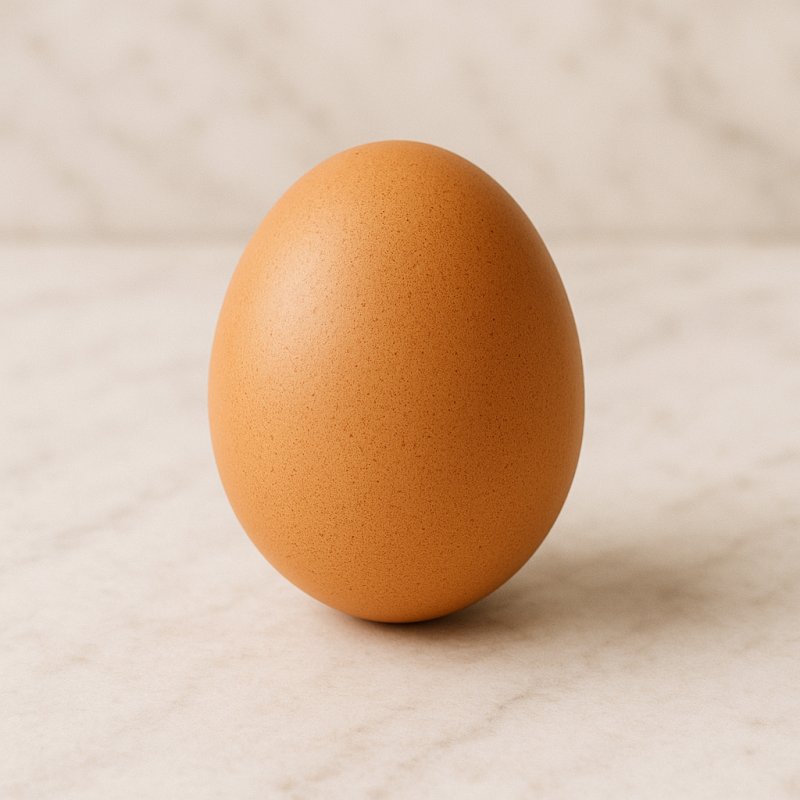
Chicken egg

Versatile source of protein for cooking and baking.

Wiki about egg Nutri-Score B Vegan No Gluten-free Yes Lactose-free Yes Nut-free Yes
NUTRITION / 100 g
143 kcal 12.6 g Protein 0.7 g Kohlenhydrate 9.5 g Fett

Introduction

Fresh chicken egg
I love the chicken egg because it is wonderfully contradictory: unassuming in the kitchen and yet a true all-rounder. I still remember a rainy weekend when I had nothing in the fridge but a few eggs, bread and a can of tomatoes, and from exactly those ingredients the best dish of the day was born. Since then I see eggs as little culinary wonder capsules.

The chicken egg provides not only quick energy but also valuable protein, vitamins like B12 and D and important minerals. The yolk is rich in fat, lecithin and flavors, which is why it works excellently as an emulsifier for mayonnaise and creams. The white consists almost entirely of water and protein and is the basis for meringues, soufflés and everything that should become airy.

In practice I have learned some simple rules that make the difference:


  • For meringue the eggs should be at room temperature; for separating the eggs, however, cold is helpful.
  • The color of the shell says nothing about taste or quality; brown eggs are not automatically more flavorful.
  • A quick rinse in cold water and the float test help check freshness.
Cooking is chemistry and eggs are a textbook for it: egg white coagulates already at about 63 °C, the yolk at somewhat higher temperatures. That's why poached and soft-boiled eggs succeed so seductively when you master the timing. I once hosted too many guests and served perfect 6-minute eggs at the first try; since then I am convinced that practice is everything.

Of course there are also safety aspects: those who use raw egg in dressings or desserts should use pasteurized eggs or fresh, reliable sources. The husbandry system is also important for taste and conscience; a small anecdote: a colleague of mine swears by eggs from the farmers' market because there the hens peck herbs and sunlight — you can taste it, he says, and I tend to believe him.

In short: the chicken egg is practical, versatile and indispensable. It's worth knowing a few basic rules, experimenting a bit and letting its plain elegance surprise you again and again.

Availability & types

Availability and types

The chicken egg is an ingredient you can buy almost everywhere and all year round. Chickens have been laying eggs for thousands of years – domestic chickens originally descend from wild Asian junglefowl. Today chickens are kept in many countries because eggs are nutritious, inexpensive and versatile. Therefore you constantly find eggs at the supermarket, since farms lay throughout the year. In winter chickens sometimes lay a little less, but stocks and farm planning ensure we still get enough eggs.

Where do these eggs come from exactly? It varies:

  • From the local farm: often fresh eggs sold around towns come from here. Many people buy there because they know the animals or the family.
  • From the supermarket: large retailers supply eggs from different regions or countries. This stabilizes supply.
  • From industry: in some regions eggs are produced in very large quantities and then packaged and distributed.
There are different kinds and labels of eggs. The most important things in simple words:

  • Sizes: eggs come in sizes like S, M, L and XL. It's like shoes – a larger egg has more content.
  • Shell color: some eggs are white, others brown or even greenish. The color depends on the hen breed, not the taste. It's like cars: different colors, same function.
  • Housing systems: the carton often shows a number (0–3). This number indicates how the hens were kept:
    • 0 – Organic: hens have more space, outdoor access and organic feed.
    • 1 – Free-range: hens can go outside, they have space and outdoor access.
    • 2 – Barn: hens live in a barn, but not in cages.
    • 3 – Caged: hens live in cages. Many countries have rules about cage size.
  • Special eggs: some eggs have special properties:
    • Omega‑3 eggs: hens received feed that increases healthy omega‑3 fat. It's like a "plus" of certain nutrients.
    • Double yolk: sometimes a hen lays an egg with two yolks – it's rare and amusing, but edible.
  • Processed forms: eggs are not only available fresh:
    • Boiled eggs (hard or soft boiled) are ready to eat.
    • Pasteurized liquid eggs or egg powder are often used in the food industry because they last longer.
When shopping you can check the label: it states where the eggs come from, what size they are and the housing system. If you want to know how the hens are kept, look for terms like Organic or Free-range. Overall eggs are a very available and diverse ingredient – from simple supermarket eggs to special organic farm eggs.
Details & nutrition

Property Value
Unit g
Average weight per piece 60
Calories per 100 143
Protein per 100 12.6
Carbohydrates per 100 0.7
Sugar per 100 0.7
Fat per 100 9.5
Saturated fat per 100 3.1
Monounsaturated fat 3.6
Polyunsaturated fat 1.4
Fiber per 100 0
Vitamin C (mg) per 100 0
Vitamin D (IU) per 100 87
Calcium (mg) per 100 56
Iron (mg) per 100 1.8
Nutri-Score B
CO₂ footprint 0.45 kg CO2e/100 g
Origin Germany/EU (depending on producer and labeling)
Gluten-free Yes
Lactose-free Yes
Nut-free Yes
Vegan No
Note Raw consumption is recommended only with very fresh eggs and good kitchen hygiene; for risk groups (e.g. pregnant women, immunocompromised) it is better to cook thoroughly.

Technical & scientific information

Chicken egg — Description and structure

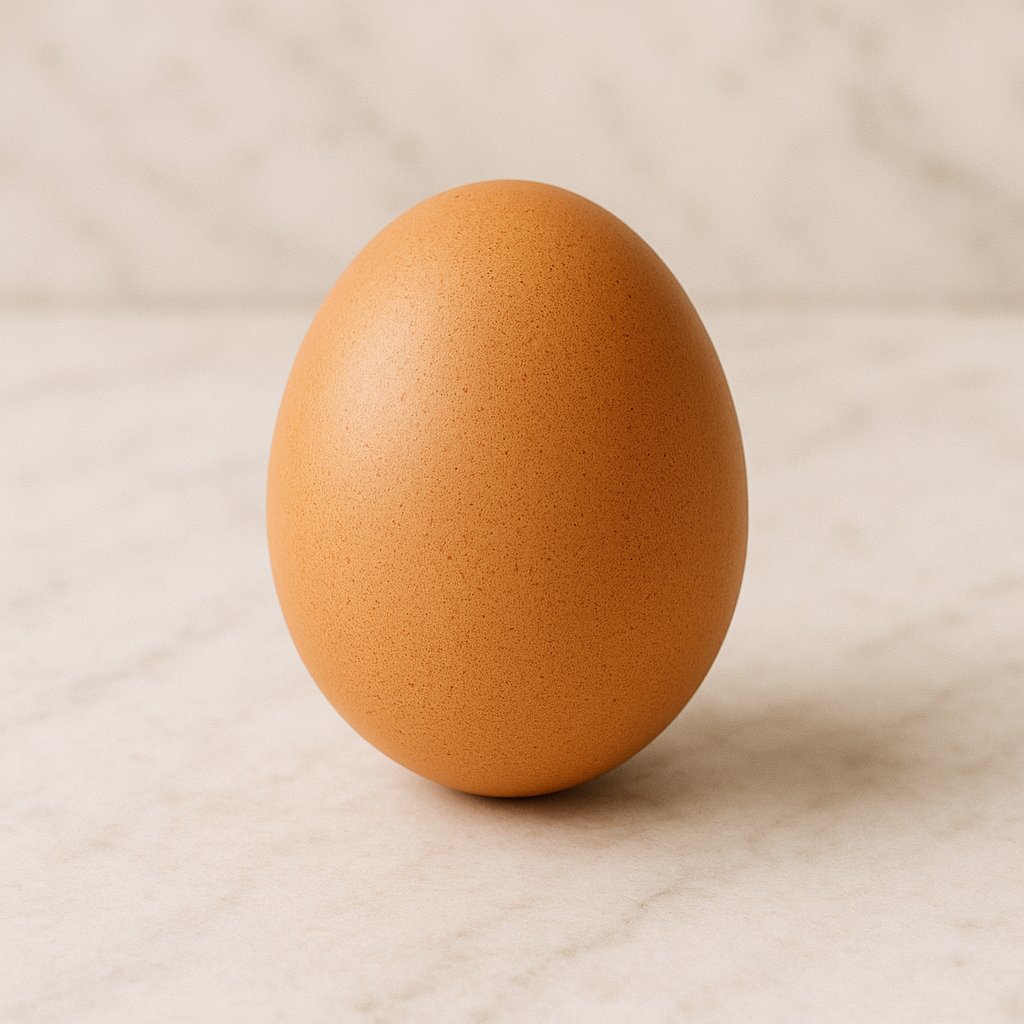
The chicken egg is a complex biological structure that serves as a complete nutrient source for the embryo and therefore also exhibits versatile functional properties in the kitchen and food industry. It consists of the hard calcareous shell, the protective shell membranes, the liquid egg white (albumen) and the cell‑richer egg yolk. Inside the yolk supports, the chalazae, are visible and center the yolk.

Chemical composition and nutritional values

  • Macronutrients: an average chicken egg (approx. 50–60 g) provides high‑quality protein (complete amino acid profile), lipids mainly in the yolk and very low carbohydrates. Per 100 g of raw egg typical laboratory values are around 12–13 g protein, 9–10 g fat and about 140–150 kcal energy.
  • Proteins: in the egg white ovalbumin, ovotransferrin, lysozyme and ovomucin predominate; in the yolk are phosvitin and lipovitellin. These proteins are biologically complete and highly utilizable.
  • Fats and lipids: yolk lipids contain triglycerides, phospholipids (particularly lecithin) and cholesterol. Phospholipids provide emulsifying properties used in sauces and mayonnaise.
  • Vitamins and minerals: eggs provide fat‑soluble vitamins (A, D, E, K) as well as B‑vitamins, especially B12 and riboflavin. Minerals like phosphorus and selenium are present in relevant amounts.
Functional properties in food technology

  • Emulsification: yolk lecithin stabilizes oil‑water emulsions.
  • Gelation/coagulation: upon heating proteins denature and form a network; this underlies dishes from poached eggs to baked goods.
  • Foam formation: egg white proteins can trap air when whipped; stability depends on pH, temperature and absence of fat.
Processing and preservation

Industrial and domestic processes include freezing, drying (egg powder), pasteurization and standard storage. Pasteurization of liquid egg products or in specialized plants reduces microbiological risks while minimally affecting functionality. The shell is a natural barrier film; in regions where eggs are washed before sale refrigeration is therefore common, elsewhere the cuticle is left and refrigeration is less frequently imposed.

Food safety and health aspects

  • Pathogen risks: Salmonella infections (e.g. S. Enteritidis) are the primary microbiological hazard. Raw or insufficiently cooked eggs increase the risk; pasteurized eggs are recommended for immunocompromised people, pregnant women, infants and the elderly.
  • Allergy: egg white proteins are common allergens, especially in children. Some allergens, like ovomucoid, are heat‑stable and can react even after cooking.
  • Cholesterol and heart health: the yolk contains cholesterol, long considered a risk factor. Current scientific assessments view the effect of dietary cholesterol on blood lipids as individually variable; total fat and saturated fatty acid intake remain important factors for cardiovascular risk.
Storage and quality changes

With storage time the pH of the egg white increases due to CO2 loss, the white becomes thinner and the air cell enlarges. Quality controls like candling are used for visual inspection of internal defects and foreign particles. For culinary applications fresh and older eggs may offer different advantages (e.g. better foam stability with fresh eggs).

In summary, the chicken egg is a nutritionally dense ingredient with versatile technological properties. Its proteins and phospholipids enable emulsions, foams and gel formation, while nutrient content and food safety require particular attention in storage, processing and consumption.

Wiki entry for: egg
Active now: 20 visitors of which 2 logged-in members in the last 5 minutes