Menu & categories

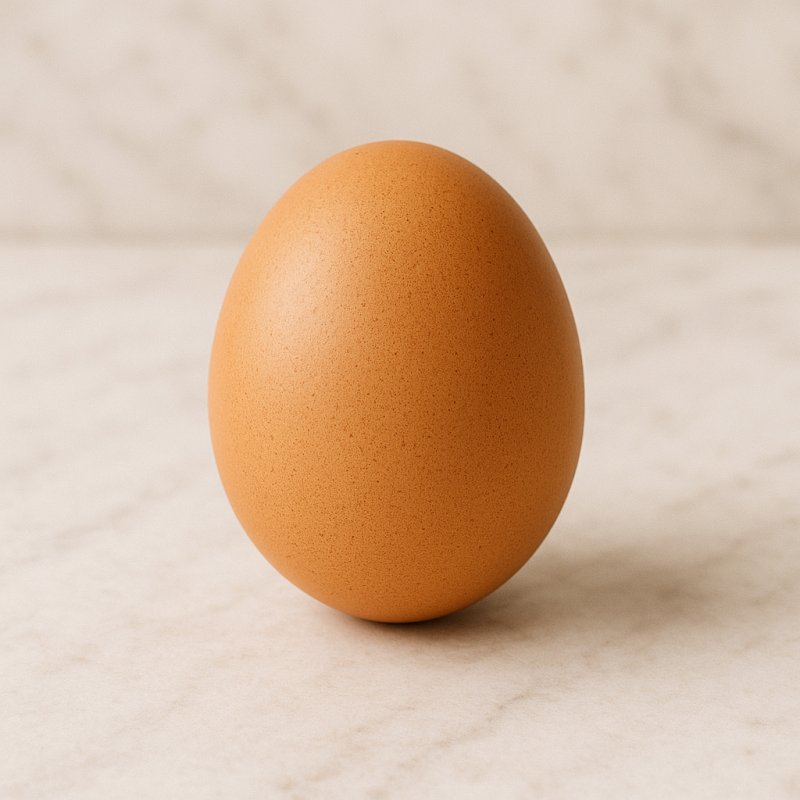
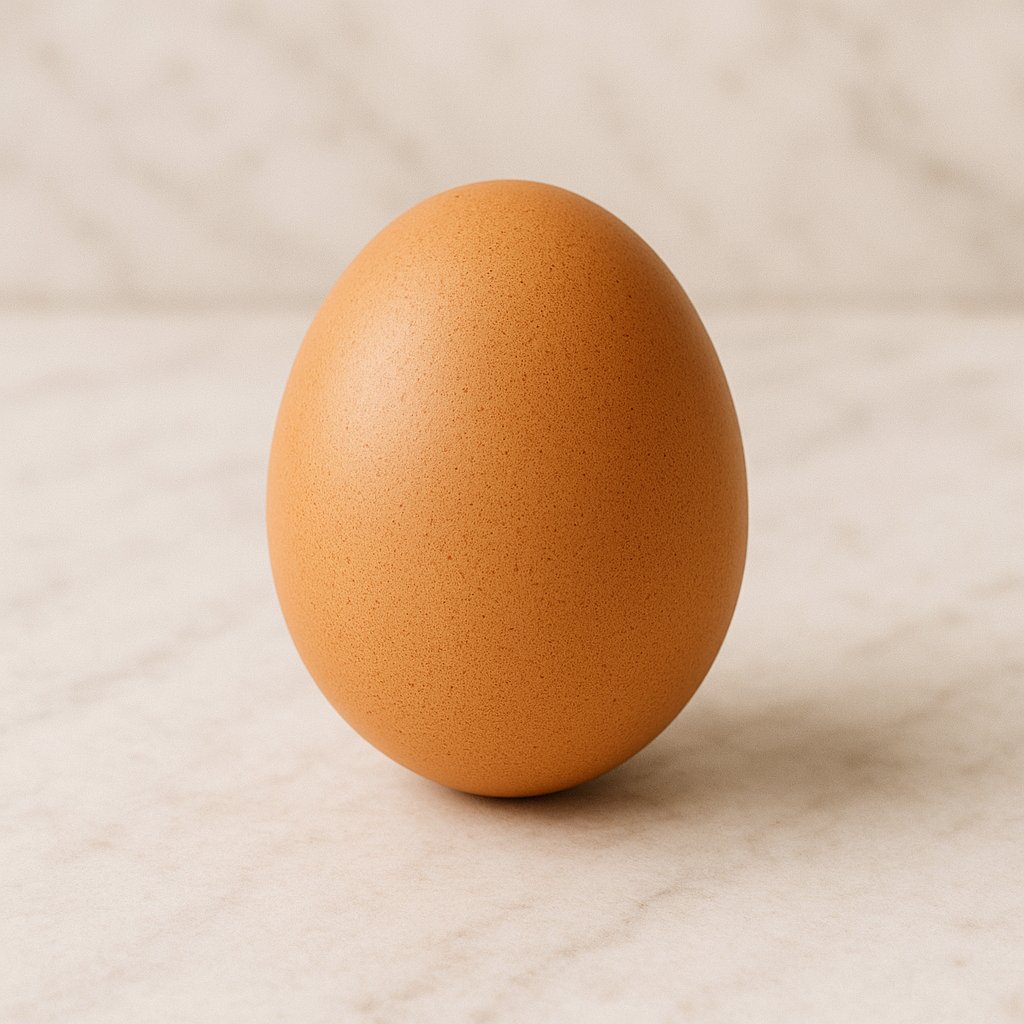
Chicken egg

Versatile source of protein for cooking and baking.

Wiki about chicken egg Nutri-Score B Vegan No Gluten-free Yes Lactose-free Yes Nut-free Yes
NUTRITION / 100 g
143 kcal 12.6 g Protein 0.7 g Kohlenhydrate 9.5 g Fett

Introduction

Chicken egg on a wooden board
Chicken egg (Class: M) is for me one of those ingredients that somehow keeps writing new stories. I still remember a rainy Sunday when a stray breakfast egg upended my plans for an artistic omelette and taught me that the simplest ingredient can have the greatest impact. Class M means in practice: a medium-sized egg with a weight including shell of about 53–63 grams, ideal for most recipes where precision is not the decisive factor.

What I love about eggs is their versatility. They are a binder, leavening agent, emulsifier and glaze all in one. Whether making meringues, sponge cake or a simple carbonara – the egg often plays the leading role. A colleague of mine swears by separating whites and yolks to get especially airy meringues, after a memorable lesson where adding sugar too early ruined the volume. Such anecdotes accompany every kitchen and remind us how sensitive eggs are.

Practical tips I pass on:

  • Test freshness: An egg floats in water when it is older; fresh eggs stay on the bottom.
  • Storage: Keep cool and pointy end down to keep the air cell stable.
  • Cooking: Soft: approx. 4–6 minutes, medium-soft 7–8 minutes, hard: 9–12 minutes – times vary depending on pot and size.
  • Processing: For whipped egg whites always use fat-free bowls; yolk binds sauces thanks to lecithin.
Of course, eggs require caution: people with egg allergy or when preparing raw dishes should use pasteurized eggs. I have often seen how a seemingly small tip – letting eggs come to room temperature before baking – significantly improves texture and flavor. Ultimately the Chicken egg (Class: M) is an all-rounder that achieves great things with a few sensible steps and should have a place in every kitchen.

Availability & types

Availability and types of the Chicken egg (Class: M)

A chicken egg of Class M is a medium egg – not too small, not too large. You can find such eggs year-round in supermarkets, farm shops or at the farmers' market. Hens lay almost constantly, but in winter some hens lay a bit less because there is less daylight. It's a bit like playing outside more in summer than in deep winter.

Where do the eggs come from?

  • Mostly from farms in your region or from abroad. In Germany, for example, many eggs come from northern regions, but also from neighboring countries.
  • Large operations supply many eggs to supermarkets. Small farms sell directly on the farm or at the market.
  • The packaging (egg carton) often shows where the egg comes from. It displays the producer code or the region of origin.
Common housing systems (simply explained)

  • Barn/floor systems: Hens live in a large hall and can move around, but not go outside.
  • Free-range: Hens have housing and are also allowed outside to a pasture.
  • Organic: Similar to free-range but with stricter rules for feed and space. Organic means: less chemicals in feed and more space for the hens.
  • Cage systems (historical): In these systems hens had less space. In many countries these cages have been restricted or banned.
The egg carton often shows a number at the start of the producer code (e.g. 0 = Organic, 1 = Free-range, 2 = Barn/floor, 3 = Cage). That helps with quick recognition.

Types and variants of eggs

  • Shell color: Brown or white. The color comes from the hen breed and does not change taste or quality – like the color of a cup.
  • Omega-3 eggs: These eggs come from hens fed special feed so the egg contains more of certain fatty acids. It is like a "nutrient upgrade."
  • Double yolk: Sometimes an egg has two yolks. It is unusual but completely edible – a small surprise egg!
  • Processed forms: Liquid eggs in cartons, whisked eggs or separated whites and yolks, as well as dried egg powder for bakers. These are practical when many eggs are needed or they need to be shelf-stable.
  • Boiled or pickled eggs: Already prepared and ready to eat – convenient to take away.
In summary: Chicken eggs (Class M) are widely available, produced in various housing systems and come in many variants – from organic and free-range to special Omega-3 eggs or processed products. The carton provides information on origin and husbandry so you can easily choose which type of egg to buy.
Details & nutrition

Property Value
Unit g
Average weight per piece 58
Calories per 100 143
Protein per 100 12.6
Carbohydrates per 100 0.7
Sugar per 100 0.4
Fat per 100 9.5
Saturated fat per 100 3.1
Monounsaturated fat 3.6
Polyunsaturated fat 1.9
Fiber per 100 0
Vitamin C (mg) per 100 0
Vitamin D (IU) per 100 87
Calcium (mg) per 100 56
Iron (mg) per 100 1.8
Nutri-Score B
CO₂ footprint 0.45 kg CO2e/100 g
Origin Germany/Europe (depending on origin and labeling)
Gluten-free Yes
Lactose-free Yes
Nut-free Yes
Vegan No
Note Nutritional values refer to raw, whole egg. Avoid raw consumption (risk of Salmonella), especially for risk groups; observe the cold chain.

Technical & scientific information

Chicken egg (Class: M) denotes a medium-sized chicken egg, as classified by commercial standards. In the European Union the weight class M corresponds to eggs with a total weight of about 53–63 g per egg including shell. The chicken egg is a complex biological product composed of shell, albumen (egg white) and yolk, and exhibits a variety of nutritional, chemical and techno-functional properties.

Structure and shell
The shell is composed mainly of calcium carbonate (approx. 95 %) with an outer organic protein layer (cuticle). Pores in the shell allow gas and moisture exchange during embryo development; shell thickness and porosity are influenced by hen age, feeding and housing. The cuticle acts as the first barrier against microorganisms.

Composition
Chemically a fresh egg is about 75 % water; the remaining dry matter is distributed among proteins, lipids and minerals. Important components include:

  • Proteins: Albumen contains mainly ovalbumin, ovotransferrin, lysozyme and ovomucin. These proteins have enzymatic activity, antibacterial effects and form stable gels when heated.
  • Lipids: The yolk contains triacylglycerols, phospholipids (notably lecithin) and phosvitin. Lecithin acts as a powerful emulsifying molecule.
  • Vitamins and minerals: Fat-soluble vitamins (A, D, E, K) and B-vitamins (e.g. B12, riboflavin, folate) as well as iron, phosphorus and selenium are primarily concentrated in the yolk.
  • Carotenoids: Xanthophylls such as lutein and zeaxanthin determine yolk color and contribute to eye health.
Nutritional values and portion information
As a rough guide 100 g of edible egg contains about 150–160 kcal, around 12–13 g protein, 10–11 g fat and low carbohydrates. A commercial Class M egg provides depending on exact size and shell removal approximately 60–90 kcal and about 6–7 g protein. Cholesterol is concentrated in the yolk; typical values are in the range of a few hundred mg per 100 g, so individual recommendations should be considered for specific diets.

Functional properties in food technology
Eggs possess outstanding techno-functional properties:

  • Emulsification: Lecithin stabilizes oil-in-water emulsions (e.g. mayonnaise).
  • Foam formation: Beaten egg white forms stable foams (meringues), dependent on pH and water loss during storage.
  • Gelation/Coagulation: Protein denaturation during heating leads to coagulation of egg white at around 62–65 °C and yolk at around 65–70 °C, which is critical for puddings, creams and baked goods.
Processing, shelf life and food safety
Eggs can be used fresh, pasteurized (liquid egg products or shell pasteurization) or dried. Pasteurization reduces Salmonella risks; defined temperature–time combinations are applied for liquid products to achieve microbiological safety while retaining functionality. Storage affects quality: over time CO2 escapes, the pH of the albumen rises, viscosity decreases and foaming properties change. Unwashed eggs with intact cuticle have lower contamination risk; washing and refrigeration systems differ between countries.

Health aspects
Eggs are nutrient-dense and provide high-quality proteins and essential micronutrients. However they are among common allergens, particularly in children (allergens: ovalbumin, ovomucoid). In immunocompromised individuals, pregnant women and young children consumption of not fully cooked eggs is not recommended due to Salmonella infection risk. The role of dietary cholesterol intake on cardiovascular risk depends on individual metabolic characteristics; current dietary guidelines generally consider eggs as part of an overall balanced diet.

Quality control
Internal quality is often assessed using the Haugh unit, which compares albumen height and weight. Other quality indicators are yolk position, air cell size and shell strength.

Wiki entry for: chicken egg
Active now: 18 visitors of which 2 logged-in members in the last 5 minutes