Menu & categories

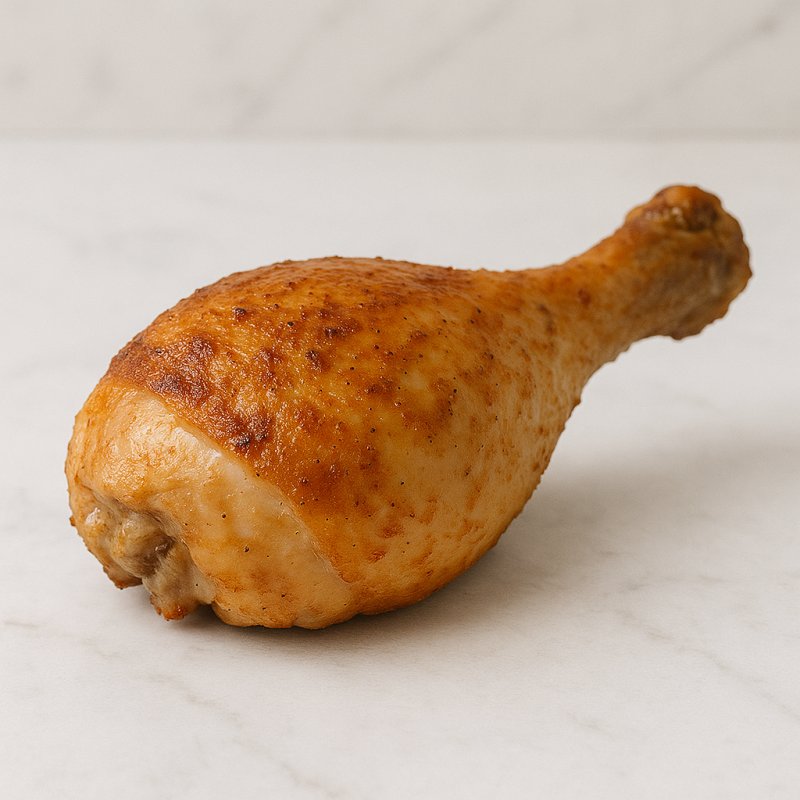
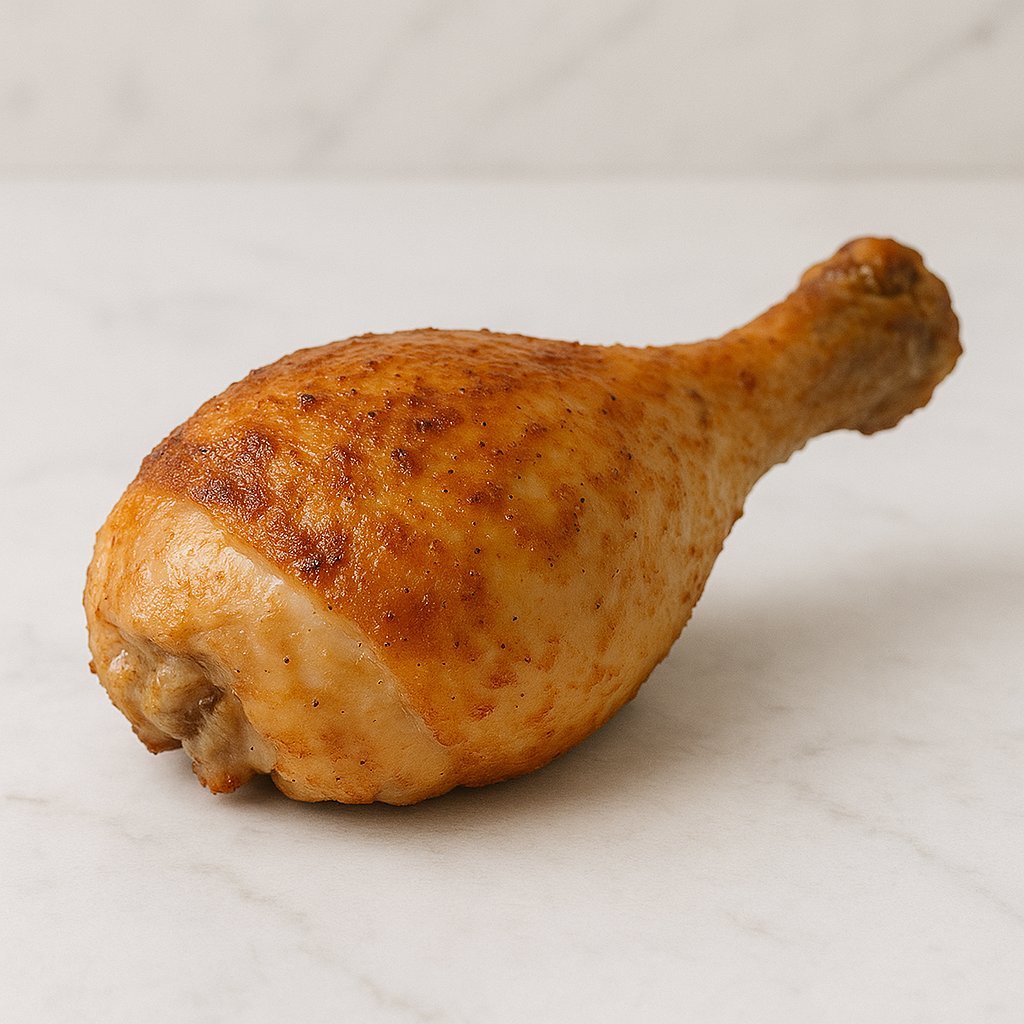
Chicken leg

Juicy chicken portion with high protein content

Wiki about chicken drumstick Nutri-Score C Vegan No Gluten-free Yes Lactose-free Yes Nut-free Yes
NUTRITION / 100 g
215 kcal 18.0 g Protein 0.0 g Kohlenhydrate 15.0 g Fett

Introduction

Raw chicken leg on a cutting board
I have a soft spot for chicken drumsticks, and it's probably a very practical weakness: sturdy, versatile and always somewhat comforting. When I hear a drumstick sizzle in the pan, something in me relaxes — maybe it's the combination of crackling skin, spicy aroma and the promise of juicy meat. A drumstick is not an elegant fillet, it is honest, down-to-earth and full of flavor, and I appreciate that directness.

My relationship with the chicken drumstick began with a simple dinner when a friend spontaneously mixed a marinade of honey, mustard and lemon juice. I still remember how we both scraped off the skin to get to the golden meat and shared childhood memories of grandmother's plates and joint cooking attempts. Since then I like to vary: sometimes slow roasted with rosemary and garlic, sometimes Asian with soy and sesame, sometimes simply in the oven with paprika and potatoes. Each method brings out a new facet of this unpretentious ingredient.

What makes the chicken drumstick special is its adaptability. It stands up to bold spices as well as delicate flavors and is ideal for recipes that reward time and patience. The drumstick is perfect for

  • slow-braised dishes, where the meat becomes tender and the sauce gains intensity,
  • grilling-night classics, where the skin develops caramelization and smoky flavor,
  • quick pan dishes, when you need something fast but still juicy.
A colleague of mine swears by a method where he first sears the drumsticks in a hot pan and then deglazes with beer — a little trick he told me during a cooking evening and that has lived in my recipe box ever since. And because drumsticks are often cheaper than fillets, they open many doors: for hearty family meals, for creative leftover use the next day and for experiments with marinades, rubs and glazes.

In the end the drumstick is for me more than just a piece of meat. It is the basis for cozy evenings, for simple pleasures and for the comforting feeling of sharing something warm and hearty. When I have guests, I often deliberately choose the drumstick: it speaks of hospitality, of flavor without showmanship and of the beauty of the everyday on the plate.

Availability & types

Availability and types

The chicken drumstick is one of the most popular parts of the chicken and is very widely available. If you go to a supermarket, a weekly market or a butcher you will almost always find drumsticks. This is because chickens are raised in large numbers worldwide, as they grow quickly and provide a lot of meat. You can think of it like apples in the supermarket: there is always a standard supply because many people buy them.

Origin and production areas
Drumsticks naturally come from chickens. Chickens are raised in many countries, especially where there is enough space and feed. Major producers include countries such as Germany, the Netherlands, Poland, Brazil and the USA. In Europe many chickens are raised on nearby farms, while in other parts of the world larger operations are often used. Important: chickens do not grow in fields like plants, but live in yards and barns.

Available varieties and variants
There are different kinds of chicken drumsticks that differ in size, flavor and type of husbandry. Here is a clear overview to make it easy to understand:

  • Regular chicken drumstick: This is the standard variant commonly found. It usually comes from fast-growing breeds. These chickens are often cheaper and have tender meat.
  • Organic chicken drumstick: Organic chickens are raised according to specific rules. They generally have more space, are allowed outside longer and receive feed without certain additives. Organic meat often costs more because the husbandry is more labor-intensive.
  • Free-range chicken drumstick: These chickens can roam and scratch outdoors. The meat sometimes tastes slightly more flavorful than that of animals kept only in barns. Free-range is an intermediate system between conventional barn rearing and organic.
  • Label origin (e.g. regional or protected brands): Some drumsticks carry special seals or names that indicate they come from a particular region or are produced under specific rules. It's like a branded apple juice — you know where it comes from.
  • Pre-cooked or marinated: Supermarkets also sell drumsticks that are already marinated (i.e. soaked in spices) or even pre-cooked. They are convenient because they are quick to prepare, but sometimes contain more salt or additives.
  • Conventional vs specialty breeds: Some drumsticks come from specialty breeds that grow more slowly but have a more intense flavor. These variants are often found in delicatessens or at butchers.
Tips for selection
When you buy drumsticks you can check the packaging: it often states whether it is organic, free-range or where it comes from. Fresh drumsticks appear pink to light red and smell neutral. If they are slimy or smell off, better not to buy. For special occasions or if you want a more intense flavor, choose organic or free-range. For everyday use, regular drumsticks are an affordable and versatile choice.

Overall drumsticks are easy to obtain and come in many varieties — from cheap and practical to more expensive and specially raised options. That way you can find the suitable drumstick depending on taste and budget.
Details & nutrition

Property Value
Unit g
Average weight per piece 200
Calories per 100 215
Protein per 100 18.0
Carbohydrates per 100 0.0
Sugar per 100 0.0
Fat per 100 15.0
Saturated fat per 100 4.3
Monounsaturated fat 6.5
Polyunsaturated fat 3.0
Fiber per 100 0.0
Vitamin C (mg) per 100 0.0
Vitamin D (IU) per 100 40
Calcium (mg) per 100 12
Iron (mg) per 100 1.2
Nutri-Score C
CO₂ footprint 5.5
Origin Poultry, usually from barn or free-range farming
Gluten-free Yes
Lactose-free Yes
Nut-free Yes
Vegan No
Note Nutritional values refer to raw chicken leg with skin; cooking method can change fat and calorie content.

Technical & scientific information

Chicken drumstick refers to the composite meat cut consisting of the thigh and drum (lower leg) of a chicken (Gallus gallus domesticus). Anatomically the drumstick contains muscle as well as bone, tendons and skin; it is darker than breast meat and has a higher proportion of intramuscular fat. In cooking and food processing the drumstick is frequently used roasted, braised or grilled, because its fat content and the connective tissue structure give flavorful and tender results after appropriate cooking.

Composition and nutritional values
The chemical composition of a chicken drumstick varies depending on husbandry, diet and processing state. On average 100 g of cooked drumstick meat without skin contains about 26–30 g protein, 8–12 g fat and negligible amounts of carbohydrates. With skin the fat content increases markedly, typically to 15–20 g fat per 100 g. Energy content ranges depending on preparation between approx. 150 and 300 kcal per 100 g. Important micronutrients include:

  • Iron: mainly in haem-bound form, contributes to oxygen transport in the blood.
  • Zinc: important for immune function and cell division.
  • B vitamins, especially niacin (B3), pyridoxine (B6) and vitamin B12 in small amounts, involved in metabolic pathways and energy metabolism.
  • Selenium: a trace element with antioxidant activity.
Molecular and physical properties
Thigh muscle tissue consists mainly of type I and type II muscle fibers, with darker fibers (more myoglobin) responsible for the characteristic color. Texture is determined by the arrangement of actin and myosin filaments and by the amount and crosslinking of connective tissue (collagen, elastin). When heated proteins denature, collagen converts at about 60–70 °C into soluble gelatin, which contributes to tenderness. Lipids consist of triacylglycerols with a mixture of saturated and unsaturated fatty acids; the proportion of mono- and polyunsaturated fatty acids depends on the bird's diet.

Processing methods
Drumsticks are sold fresh, chilled or frozen. Common processing steps include slaughter, evisceration, cutting, cleaning, cooling and packaging under controlled hygienic conditions. Marinating, curing or sous-vide cooking are common techniques to modify flavor and improve texture. Sous-vide uses low temperatures over long times to convert collagen to gelatin without drying by overheating.

Food safety and microbiological aspects
Poultry meat carries risks of microbial contamination, particularly with Campylobacter, Salmonella and, if stored improperly, spoilage bacteria or Clostridia. Sufficiently high core temperatures (often recommended ≥ 75 °C for poultry, depending on guidelines) inactivate pathogens. Cross-contamination in the kitchen is a common problem; hygienic handling, clean cutting surfaces and thorough cooking are central protective measures. Freezing does not completely kill microorganisms but inhibits their growth.

Health aspects
Drumsticks are a protein-rich source with essential amino acids and important micronutrients. Because of the higher fat content compared to breast meat, calories and saturated fatty acids increase, which can have metabolism-relevant effects if consumed in excess. Furthermore the cooking method can influence the health assessment: frying increases energy and trans fat content, whereas gentler cooking methods (steaming, braising) better preserve nutrients and do not add additional fat. Allergic reactions to poultry are rare, but histamine formation can occur with improper storage.

Environmental and regulatory notes
The environmental footprint of chicken meat is relatively favorable compared with many other meats, but varies greatly with husbandry system, feed and transport. Food law regulations define hygiene requirements, labeling and maximum residue limits for medications and contaminants that are monitored in poultry surveillance.

In summary the chicken drumstick offers a versatile food with high protein density, specific micro- and macronutrient profiles and particular microbiological and technological characteristics that provide both culinary potential and requirements for safe processing and responsible consumption.

Wiki entry for: chicken drumstick
Active now: 20 visitors of which 2 logged-in members in the last 5 minutes