Menu & categories

Chestnut

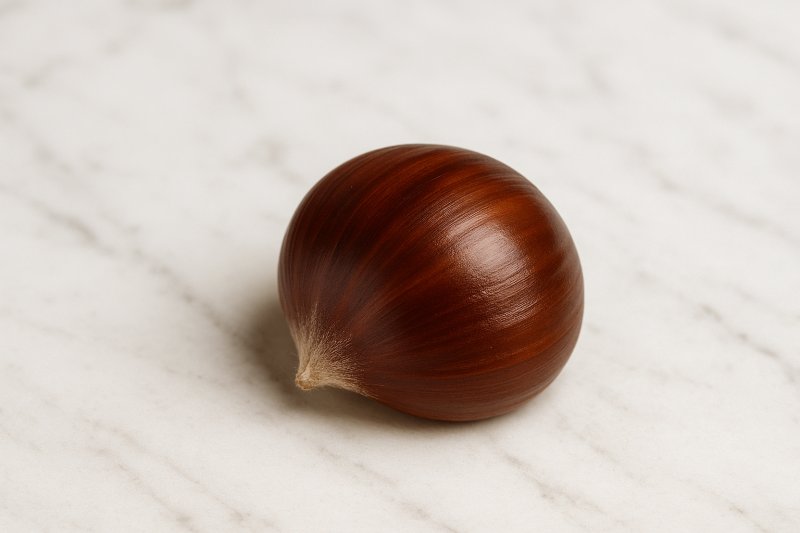
Edible chestnuts (marrons) with a nutty aroma and high carbohydrate content

Wiki about chestnut Nutri-Score A Vegan Yes Gluten-free Yes Lactose-free Yes Nut-free No
NUTRITION / 100 g
196 kcal 2.0 g Protein 42.0 g Kohlenhydrate 1.3 g Fett

Introduction

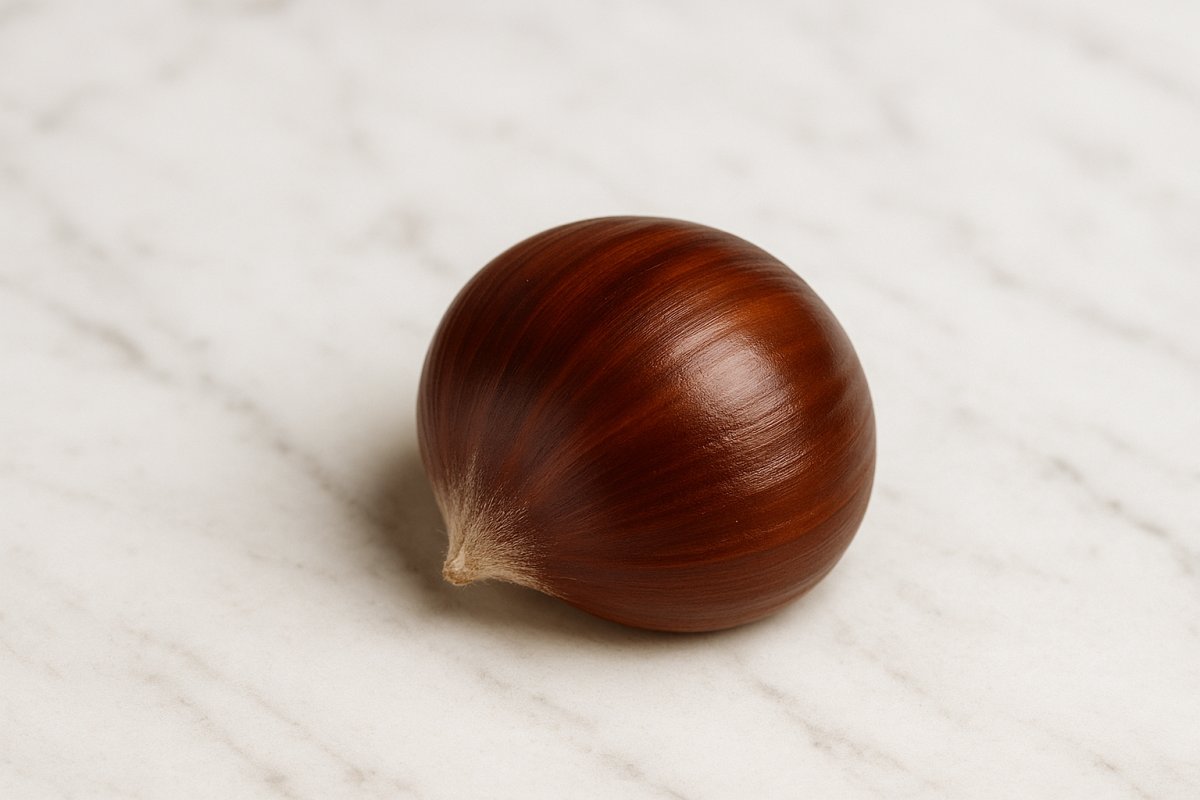
Fresh chestnuts in brown shells
I still remember my first encounter with the chestnut: a November morning, the market smelled of wood smoke, and a vendor handed me a warm bag full of shiny brown spheres. I opened one, bit into it and was immediately enchanted by that mildly sweet, buttery texture. Since then the chestnut has not let me go. It is an ingredient that feels both down-to-earth and surprisingly versatile.

The chestnut brings warmth to every dish and works with both sweet and savory combinations. I like it in classic chestnut purée, which is simply unbeatable with game or roasted poultry. I also love it in a simple salad with arugula, goat cheese and a splash of balsamic — surprisingly elegant yet uncomplicated. An anecdote: a colleague once brought chestnuts to the canteen to test whether coworkers were willing to experiment. The looks on their faces at the first taste were priceless; in the end the plate was empty.

What makes this ingredient so interesting are its culinary qualities and cooking techniques. Chestnuts can be roasted, boiled, puréed and milled into flour. Chestnut flour is a great gluten-free alternative for pasta doughs or savory pancakes. When I have time, I like to make a chestnut soup: it is velvety, aromatic and excellent as a starter for a festive menu.

When handling chestnuts a few simple rules help: I score the shell lightly to make peeling easier, then roast them over medium heat until the shell splits. Patience pays off, because freshly peeled chestnuts taste noticeably better than any that were half-heartedly prepared. I also like to store cooked chestnuts in the refrigerator – they keep there for several days and are quickly at hand.

Conclusion:
The chestnut is an amazingly adaptable ingredient that gives warmth, texture and depth to cooking. Whether roasted at a street stall, processed into flour or used as a silky base for soups and purées: once you discover its gentle sweetness, you will keep coming back to it.

Availability & types

Availability and Types

Chestnuts are the fruits of trees that grow in many parts of the world. When you think of chestnuts, warm autumn days and the smell of roasted chestnuts often come to mind. But where do they actually come from and what kinds are there?

Origin
Chestnuts originally come from Europe, Asia and North America. Some chestnut trees have been growing for hundreds or even thousands of years in regions with mild summers and cool winters. A helpful image: imagine that chestnuts prefer places that are not too hot like a desert, but also not too cold like very high mountains.

Growing regions
Chestnuts are grown especially in countries around the Mediterranean such as Italy, France, Spain and Portugal. There are many hills and forests there that provide ideal conditions for chestnut trees. They also grow widely in parts of Austria, southern Germany and Turkey. In Asia, China, Japan and Korea are particularly important growing areas. In North America many native species grew in the past; today there are also cultivated varieties.

Available varieties and types
There are several main types of chestnuts that can be distinguished. The most important are:

  • Sweet chestnut (edible chestnut): This is the chestnut most commonly eaten. It has a smooth shell and a sweetish taste when boiled or roasted. It is often sold fresh or called a "marron" when it is particularly large and juicy.
  • Horse chestnut: This chestnut looks similar on the outside but is not suitable for eating. It is hard and slightly bitter and is rather used for decoration or as a lucky charm (in autumn in children's hands). It is also called horse chestnut.
  • Japanese and Chinese varieties: In Asia there are chestnuts that can be somewhat larger or firmer. Some of them are prepared differently there, for example in sweet or savory dishes.
  • Hybrids and cultivated forms: Farmers and researchers have bred chestnuts to make them more disease-resistant or to produce larger fruits. These varieties can differ in size, taste and shell hardness.
Forms in which chestnuts can be bought
Chestnuts are available not only fresh from the market. You can also find them in other forms:

  • Fresh – with shell, as they fall from the tree. These are often available only in autumn.
  • Pre-cooked or vacuum-packed – already soft and ready to eat or further process.
  • Roasted – often sold at markets or packaged; they have a rounded, warm flavor.
  • Flour and purée – chestnuts are also available ground as flour, used for baking, or as purée, used in desserts.
  • Canned and dried – for longer shelf life, practical if you want to enjoy chestnuts again in winter.
Season and everyday availability
Fresh chestnuts are especially easy to find in autumn – that is their main season. You will see them more often in supermarkets or weekly markets then. If you want chestnut products year-round, flour, purée or canned goods are a good choice. And remember: horse chestnuts sometimes look exactly like edible chestnuts, but they are not suitable for eating. A simple tip: edible chestnuts are often shinier and have a more elongated tip, horse chestnuts are rounder and duller.

This way you can obtain chestnuts fresh, processed or as a favorite ingredient for recipes depending on the season and your needs. Whether at the Christmas market, on the supermarket shelf or as flour in a jar – chestnuts are versatile and available in many variants.
Details & nutrition

Property Value
Unit g
Average weight per piece 15
Calories per 100 196
Protein per 100 2.0
Carbohydrates per 100 42.0
Sugar per 100 10.0
Fat per 100 1.3
Saturated fat per 100 0.3
Monounsaturated fat 0.6
Polyunsaturated fat 0.4
Fiber per 100 8.0
Vitamin C (mg) per 100 26
Vitamin D (IU) per 100 0
Calcium (mg) per 100 30
Iron (mg) per 100 1.0
Nutri-Score A
CO₂ footprint 0.5
Origin Europe
Gluten-free Yes
Lactose-free Yes
Nut-free No
Vegan Yes
Note Nutritional values refer to raw, edible chestnuts (marrons) without shell.

Technical & scientific information

Chestnut in culinary and botanical contexts usually refers to the edible fruit of Castanea species, especially the sweet chestnut (Castanea sativa). Botanically, they are nut fruits that mature inside spiny husks and have a high starch content. Chestnuts differ from the poisonous horse chestnuts (Aesculus hippocastanum) by their oval shape, shiny brown shell and sometimes pointed end.

Morphology and cultivation
The sweet chestnut is a deciduous tree that grows in temperate regions and is deep-rooted. Trees often reach heights of 20–35 meters. The fruiting bodies consist of several nuts within a spiny husk (cupula). Climate, soil conditions and variety selection influence yield, size and starch content of the nuts. Major growing regions are southern Europe, parts of Asia and North America.

Chemical composition and nutritional values
Chestnuts are characterized by a relatively high content of carbohydrates in the form of starch and soluble sugars. Average nutritional values (per 100 g raw edible chestnuts): about 160–200 kcal, 30–45 g carbohydrates, 2–3 g protein, 1–2 g fat and 5–8 g fiber. The fat content is considerably lower than in other nuts. Mineral-wise, chestnuts are a good source of potassium, with moderate amounts of phosphorus, magnesium and calcium, and trace elements such as manganese and copper. In terms of vitamins, they provide notable amounts of vitamin C, B vitamins (particularly B6) and folate.

Bioactive compounds
In addition to macronutrients, chestnuts contain phenolic compounds, including gallic acid, flavonoids and tannins, whose levels vary with variety and processing. These secondary plant metabolites possess antioxidant properties that can neutralize free radicals in vitro. Starch and sugar profiles also affect glycemic response, with processed products (e.g. flour) sometimes providing more rapidly available carbohydrates.

Processing and products
Chestnuts are consumed fresh, roasted, boiled or dried. Common processed forms include:

  • Roasted chestnuts: Traditional preparation by heating, which partially gelatinizes starch and intensifies the aroma profile through Maillard reactions and caramelization.
  • Boiled chestnuts: Gentle cooking that softens the texture and increases volume through water uptake.
  • Chestnut flour: Obtained from dried and milled fruits, gluten-free and rich in starch, used for baked goods, pasta and confections.
  • Purées and canned products: Processed forms, often with added sugar or flavorings, used in sweets and fillings.
Technological aspects
The starch in chestnuts has a specific composition of amylose and amylopectin that influences gelling and binding properties. Upon heating, the starch gelatinizes at temperatures around 60–75 °C, depending on moisture content and origin. During drying, control parameters such as temperature and air humidity are critical to minimize enzymatic browning and quality losses. Fermentation can alter the aroma profile and improve digestibility.

Health aspects
Chestnuts are nutritionally valuable due to their low fat content and fiber. The minerals and vitamin C they contain contribute to nutrient intake. Phenolic constituents may exert antioxidant effects, although health effects in humans depend on amount and bioavailability. Cross-reactions are possible in people allergic to tree fruits, however severe allergies to edible chestnuts are less common than to some other nuts. Differentiation from horse chestnut is important, as the latter is not edible.

Storage and shelf life
Fresh chestnuts have a limited shelf life because they dry out easily and can spoil microbiologically. Refrigeration (0–4 °C) and high humidity extend shelf life. Freezing after blanching or puréeing is a common method for long-term storage. Before processing, peeling and removal of the inner skin layer is often recommended, as it contains tannins that can taste bitter.

Overall, edible chestnuts are a versatile, starch- and fiber-rich ingredient with specific technological properties, useful nutrients and a characteristic aroma that can be deliberately influenced by different processing methods.

Wiki entry for: chestnut
Active now: 18 visitors of which 2 logged-in members in the last 5 minutes