Menu & categories

Sweet cherry

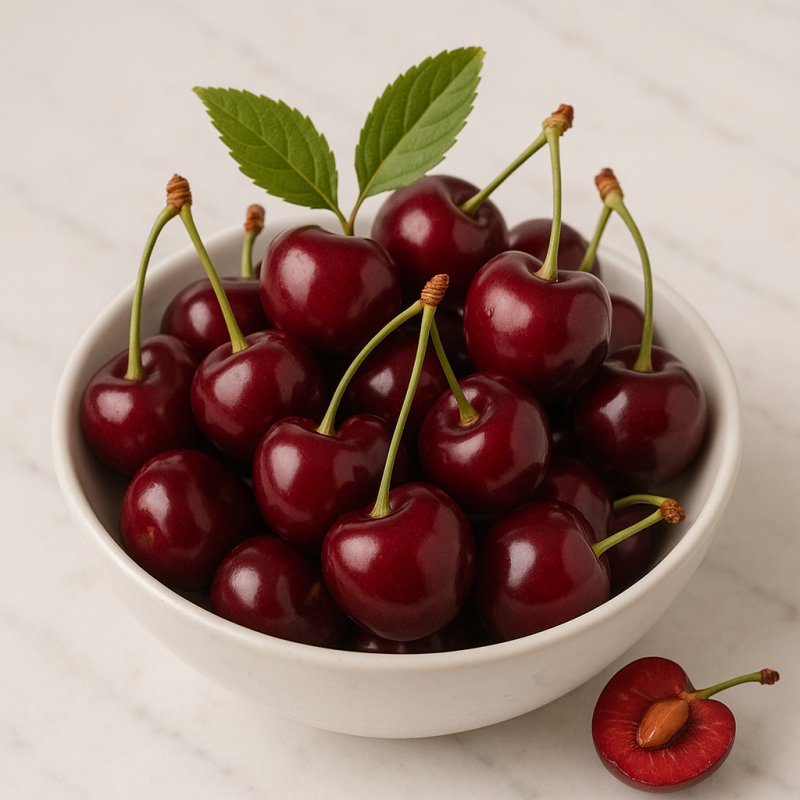
Juicy sweet cherries – fruity, aromatic and ideal as a snack or dessert ingredient.

Wiki about cherry Nutri-Score A Vegan Yes Gluten-free Yes Lactose-free Yes Nut-free Yes
NUTRITION / 100 g
63 kcal 1.1 g Protein 16.0 g Kohlenhydrate 0.2 g Fett

Introduction

Fresh sweet cherries
Sweet cherry for me is the small red temptation that turns summer into a forkful. I still remember the first market stall where I secretly stole a little bag because the scent was so enticing. The taste is a mix of sun warmth, a slight honey note and a pleasant acidity that balances the sweetness. This fruit can be uncomplicated and at the same time feel elegant.

I have learned that the best way to enjoy cherries is often very plain: fresh, cool and without fuss. A colleague of mine swears by pairing them with dark chocolate; I, on the other hand, love them with creamy ricotta and a drizzle of lemon oil. Cherries pair surprisingly well with savory dishes if you have the courage to allow some contrast.

A few practical tips I have picked up over the years:

  • Storage: cherries stay fresh longer if stored unwashed in the refrigerator.
  • Pitting: sometimes the handle of a spoon is enough, but for larger quantities a cherry pitter is worth it.
  • Processing: compote, chutney, ice cream or jam are classics that evoke summer memories in winter.
Nutritionally, sweet cherries are not just a sugary treat. They contain valuable antioxidants, vitamin C and phytochemicals that can help reduce inflammation. I like to add them as a little health boost to smoothies or porridge.

What always fascinates me is the range of varieties: from deep dark, intense types to yellow-red, juicy variants that taste almost floral. Each variety tells its own story of climate, soil and breeding skill. When shopping I now pay more attention to sound and weight than just color.

Whether as a quick snack, a dessert star or a surprising element in a savory dish: the sweet cherry has a versatility I never tire of exploring. It brings lightness to the plate and again a small piece of summer into my everyday life.

Availability & types


Availability and types of the cherry (sweet)

Sweet cherry is a popular fruit to enjoy fresh in summer. It originally comes from regions around the Black Sea and Anatolia, but was introduced long ago to many other countries. Today sweet cherries grow in warm regions with cool winters, because the trees need a certain number of cold days to flower well in spring. These cold days are sometimes called chill hours — it simply means the trees must experience some days of winter cold so they will later produce many fruits.

Important growing regions include:

  • Europe: countries like Turkey, Spain, Italy and Greece produce large quantities of cherries.
  • USA: especially Washington, Oregon and California are known for their cherry harvest.
  • Southern Hemisphere: Chile, Australia and New Zealand supply cherries when Europe and North America are in winter — so cherries are often available outside summer.
Sweet cherries come in many different varieties and shapes. Some are dark red to almost black, others are light red or even yellow with a red blush. Here are some well-known varieties you might have seen:

  • Bing: large, dark red and very juicy — one of the best-known varieties.
  • Rainier: lighter, yellow with pinkish cheeks, very sweet and delicate in flavor.
  • Lapins: dark red, large and sweet, good for fresh eating.
  • Stella: sturdy and sweet, often suitable for shipping because they keep longer.
  • Sweetheart and Van: other popular varieties often found in trade.
Besides fresh cherries there are also various processed forms available year-round:

  • Fresh: best seasonally in summer, often the tastiest option.
  • Frozen: good option to have cherry flavor all year — ideal for smoothies or pies.
  • Dried: small sweet snacks with longer shelf life.
  • Canned and jams: cherries in jars or as spreads are practical and long-lasting.
  • Maraschino cherries: very sweet, often colored cherries used in drinks or as decoration.
If you want to buy fresh cherries, this simple tip helps: choose fruits that are firm and shiny and still have a green stem — that means they are fresh. Don’t worry if you see cherries in winter: they often come from Southern Hemisphere countries or are frozen or jarred. This way you can enjoy cherries almost year-round, even though the natural peak season is summer.

Details & nutrition

Property Value
Unit g
Average weight per piece 8
Calories per 100 63
Protein per 100 1.1
Carbohydrates per 100 16.0
Sugar per 100 12.8
Fat per 100 0.2
Saturated fat per 100 0.0
Monounsaturated fat 0.0
Polyunsaturated fat 0.1
Fiber per 100 2.1
Vitamin C (mg) per 100 7
Vitamin D (IU) per 100 0
Calcium (mg) per 100 13
Iron (mg) per 100 0.4
Nutri-Score A
CO₂ footprint 0.6
Origin Germany/Europe (seasonal), depending on season also imported
Gluten-free Yes
Lactose-free Yes
Nut-free Yes
Vegan Yes
Note Wash and pit before consumption; stones are not edible.

Technical & scientific information


Sweet cherry (botanically usually Prunus avium) is a stone fruit valued worldwide both as fresh fruit and in processed products. The fruit is characterized by a juicy flesh surrounding a central hard pit (stone) and varies in size, color and sweetness depending on the variety. Sweet cherries differ from sour cherries both in organoleptic composition and in dominant phytochemicals.

Chemical composition and main constituents: sweet cherries consist mainly of water (about 80–83 %), followed by carbohydrates (approx. 10–16 %), mainly simple sugars such as fructose, glucose and sucrose. The content of organic acids is moderate; the dominant compound is malic acid (malate). Dietary fiber (mainly pectin) is present in smaller amounts. Fat and protein content is minimal.

Nutritional values (approx. per 100 g of fruit):

  • Calories: approx. 45–60 kcal
  • Carbohydrates: 10–16 g (of which sugars 8–12 g)
  • Fiber: 1–2 g
  • Protein: approx. 1 g
  • Fat: approx. 0.2–0.5 g
  • Important minerals: potassium (~200–300 mg), magnesium, calcium, trace iron
  • Vitamins: notable amounts of vitamin C (≈5–10 mg), small amounts of provitamin A and B vitamins
Phytochemicals determine color and health-related properties. Anthocyanins (especially cyanidin‑3‑glucoside and related glycosides) are responsible for red to purple hues. Other phenolic compounds include flavonoids, hydroxycinnamates and proanthocyanidins. These substances have antioxidant and inflammation-modulating properties in vitro and in some clinical studies.

Biochemical aspects and postharvest physiology: sweet cherries show high metabolic activity after harvest. The fruit has a relatively short shelf life, which can be extended by cold storage, controlled atmosphere (reduced O2, elevated CO2) and rapid cooling. The enzyme polyphenol oxidase causes browning when tissues are damaged. Respiration and transpiration lead to moisture loss and quality decline.

Processing and technological applications: sweet cherries are eaten fresh or processed into juice, canned products, jams, dried fruit, concentrates and alcoholic products. Industrial processing uses draining, pitting (e.g. hydraulic pitters), pasteurization and concentration. Anthocyanins are also used as natural colorants for foods and cosmetic applications. When pitting, it should be noted that cherry pits can contain amygdalin, a cyanogenic glycoside that can be toxic if crushed and ingested in large amounts.

Health aspects: the content of antioxidants and polyphenols suggests that regular moderate consumption may have positive effects on markers of oxidative stress, inflammatory mediators and possibly on recovery after intense physical exercise. Some studies indicate a possible effect on gout and improvement of sleep quality, although many findings have been investigated mainly for sour cherries. Because of the sugar content, people with diabetes should monitor portion sizes.

Safety and storage instructions: fresh sweet cherries should be stored cool (0–4 °C) and consumed within a few days. Freezing significantly extends shelf life. Due to the pit, cherries can be a choking hazard for small children; pits should not be eaten or crushed.

Overall, the sweet cherry is a low-energy, water-rich fruit with characteristic polyphenols and a pronounced aroma profile, which can be used both gastronomically and nutritionally in many ways.

Wiki entry for: cherry
Active now: 14 visitors of which 2 logged-in members in the last 5 minutes