Menu & categories

Cherry tomato

Small, sweet and aromatic — ideal for salads & snacks.

Wiki about cherry tomato Nutri-Score A Vegan Yes Gluten-free Yes Lactose-free Yes Nut-free Yes
NUTRITION / 100 g
18 kcal 0.9 g Protein 3.9 g Kohlenhydrate 0.2 g Fett

Introduction

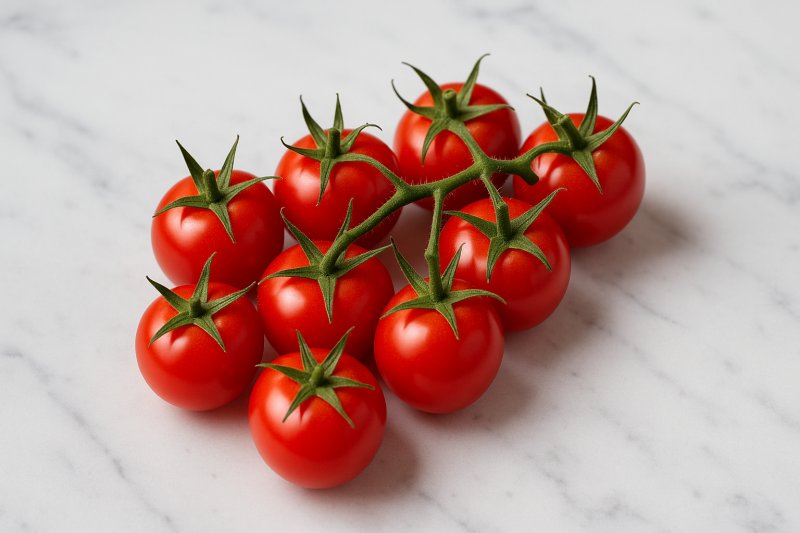
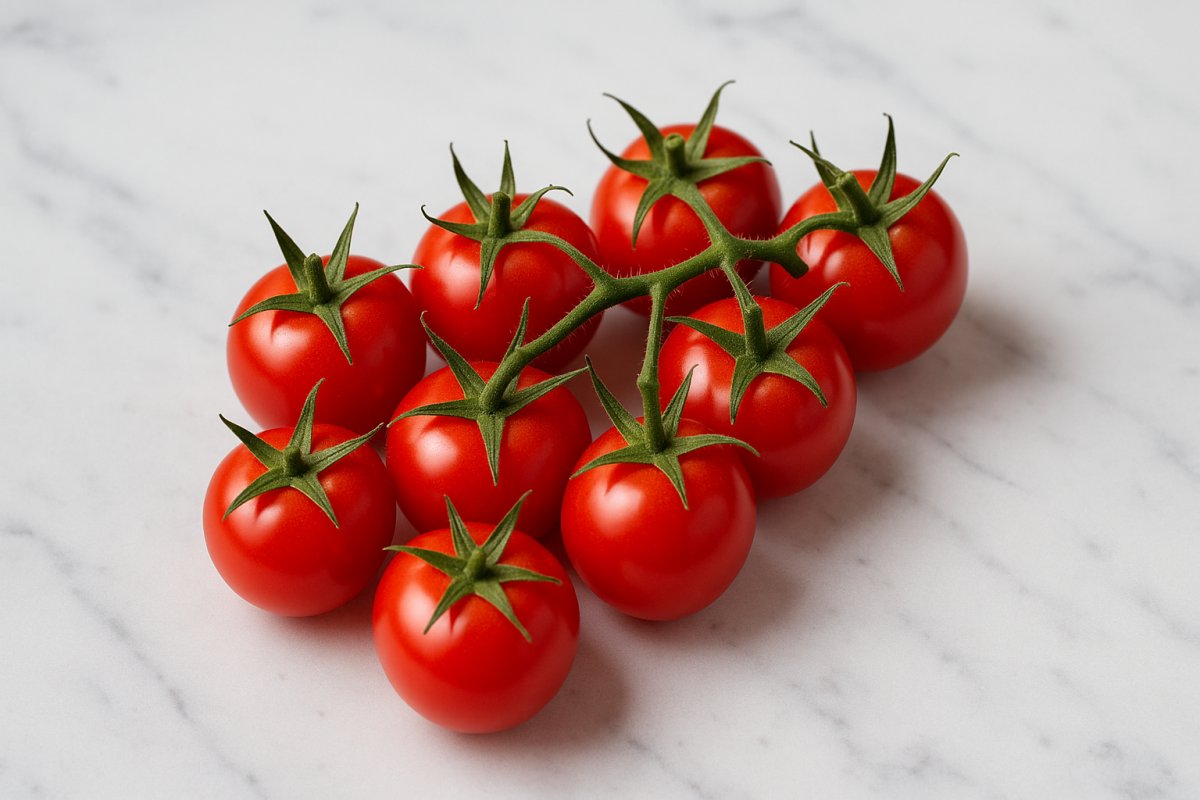
Fresh red cherry tomatoes on the vine
I'm always amazed how such a small fruit can connect kitchen and memory: cherry tomatoes are, for me, the epitome of summer on a plate. Already the first bite, when the skin gives slightly and a sweet-tart juice explodes, brings me feelings of happiness. I still remember a street festival where someone passed around a bowl of sun-red cherry tomatoes and I spontaneously spent the whole evening trying out different combinations.

What makes these tomatoes so special is their versatility. They are sweet enough to shine raw as a salad ingredient, and sturdy enough to caramelize in the oven. A colleague of mine once served a simple pasta with pan-fried cherry tomatoes, in which each fruit felt like a little burst of flavor; since then it's one of my quick comfort dishes.

A few practical facts I often share:

  • Storage: At room temperature cherry tomatoes ripen best; in the refrigerator they quickly lose aroma.
  • Preparation: A quick sauté or roasting in the oven brings out their sweetness; raw they are wonderful in salads and bruschetta.
  • Varieties: There are yellow, orange and even dark purple varieties — each brings its own nuance.
I love playing with contrasts: salty feta, a squeeze of lemon, a hint of fresh basil — and the cherry tomato in the middle that holds everything together. Sometimes I simply put them raw into a jar with olive oil and herbs, shake everything up and have a quick marinade for bread or grilled vegetables.

To me cherry tomatoes are more than just an ingredient; they are a small memory machine, a quick mood lifter and a culinary chameleon. When I have guests, they are often the secret star of the buffet because they are so uncomplicated and at the same time surprisingly delicate. Try different colors and preparations — and always keep a small bowl ready, because few things are as inviting as the smell of warm roasted cherry tomatoes.

Availability & types

Cherry tomatoes are small, round tomatoes that usually taste sweet and juicy. When we talk about availability and types we mean where they come from, when you can buy them and what different kinds there are. I'll explain this now in an easy-to-understand way – like a small shopping and growing guide.

Origin: Cherry tomatoes originally come from wild tomato plants in South America. These wild plants looked different from the tomatoes we know today – they were smaller and wilder. Over time people bred tomatoes, that is crossed different plants, to get better traits: sweeter taste, larger fruits or plants that yield more. The result today is many different varieties, including the cherry tomato.

Growing regions and availability: Cherry tomatoes are grown almost everywhere. Important growing regions are:

  • Europe: Countries like Spain, Italy and the Netherlands supply many tomatoes, especially in spring and autumn.
  • North Africa and Turkey: These regions supply in winter because the climate there is warmer.
  • Germany and other Central European countries: In summer many cherry tomatoes grow in fields there; in spring and autumn they often come from greenhouses.
Thanks to greenhouses (these are glass or plastic houses where plants are kept warm) and imports, cherry tomatoes are now available almost year-round in supermarkets. Still they are tastiest and often cheaper when they come from the region in summer.

Available types and variants: There are many different types of cherry tomatoes. Here are the most important, simply explained:

  • Round and red: This is the classic cherry tomato – small, round, sweet.
  • Yellow and orange: These are often even sweeter and fruitier; the color resembles small sun-like balls.
  • Grape or cluster tomatoes: Slightly more elongated, like small grapes; they are particularly firm and good as a snack.
  • Colorful/striped varieties: Sometimes there are two-coloured tomatoes with stripes – they look pretty in salads.
  • Black or purple variants: These have a darker colour and often a more intense aroma.
  • Bush vs. stake tomatoes: Some plants grow compact as a bush (good for balconies), others climb on stakes and fruit for longer (good for gardens).
  • Conventional vs. organic: Organic cherry tomatoes are grown without certain chemical agents. Both types are available in stores.
  • Heirloom vs. Hybrid: Heirloom varieties are old, unchanged varieties that often have distinctive flavour. Hybrid varieties are created by intentionally crossing two varieties to obtain improved traits – it's like combining two favourite features.
In supermarkets you often find cherry tomatoes loose, in trays or on the vine (i.e. still on the stem). For home it's nice to choose the vine because the tomatoes stay fresh longer. In summer they taste best fresh from the field; in winter greenhouse or imported produce is a practical alternative.

In short: cherry tomatoes come in many colors and shapes, are grown almost everywhere and thanks to trade and greenhouses are available year-round. If you want the sweetest variety, try different colors and buy local produce in summer – it's like snacking on fruit from your own garden.
Details & nutrition

Property Value
Unit g
Average weight per piece 15
Calories per 100 18
Protein per 100 0.9
Carbohydrates per 100 3.9
Sugar per 100 2.6
Fat per 100 0.2
Saturated fat per 100 0.03
Monounsaturated fat 0.05
Polyunsaturated fat 0.08
Fiber per 100 1.2
Vitamin C (mg) per 100 15
Vitamin D (IU) per 100 0
Calcium (mg) per 100 10
Iron (mg) per 100 0.3
Nutri-Score A
CO₂ footprint 0.7 kg CO2e/kg
Origin Germany/Europe (seasonal), otherwise imported
Gluten-free Yes
Lactose-free Yes
Nut-free Yes
Vegan Yes
Note More flavorful at room temperature than when refrigerated; wash before consumption.

Technical & scientific information

Cherry tomato (Solanum lycopersicum var. cerasiforme) refers to small, round to slightly oval tomato fruits characterized by a compact size and often intense sweetness. Botanically they belong to the Solanaceae family; the fruit is a pseudo-fruit organ carrying juice and seeds, whose composition strongly depends on variety, ripeness and growing conditions. Cherry tomatoes are cultivated both outdoors and in greenhouses and are common as fresh table produce as well as in processed forms.

Chemically the cherry tomato is composed predominantly of water (about 90–95 %), the remaining dry matter profile consists of carbohydrates, organic acids, fiber, proteins and very small amounts of lipids. The main constituents are:

  • Carbohydrates: mainly simple sugars such as glucose and fructose (total sugars typically 2–4 g/100 g).
  • Dietary fiber: cell wall components such as pectins and cellulose (about 1–2 g/100 g).
  • Organic acids: mainly citric and malic acid; the typical pH value is in the range of 4.0–4.5.
  • Minerals: potassium is dominant (around 200–300 mg/100 g), with smaller amounts of calcium, magnesium and phosphorus.
  • Vitamins and secondary plant compounds: vitamin C (ascorbic acid, approx. 10–25 mg/100 g), provitamin A (carotenoids), especially lycopene, which depending on variety and ripeness can be several milligrams per 100 g.
Odor and flavor profiles are shaped by complex volatile compounds, including aldehydes (e.g. hexanal), ketones (e.g. 6‑methyl‑5‑hepten‑2‑one) and terpenes. Amino acids such as glutamate contribute to umami perception.

From a technological perspective cherry tomatoes are versatile for processing: suitable for fresh consumption, pickling, drying, freezing and for further processing into sauces or pastes. In processing, water content and cell structure play a role for texture and juiciness. For industrial processes varieties with homogeneous ripening and firm skin are often preferred.

Postharvest properties: cherry tomatoes are climacteric fruits, they undergo increased respiration and ethylene production during ripening. Storage below 10 °C can lead to chilling injury and texture loss; optimal storage conditions are rather at moderate temperatures (10–13 °C) and high relative humidity. Mechanical damage favors microbial spoilage, while the acidic character restricts the growth of many pathogenic bacteria, although surface contamination always remains a risk.

Health-wise cherry tomatoes are valuable for their content of antioxidants such as lycopene and vitamin C. Epidemiological and experimental data suggest that lycopene may be associated with a reduced incidence of certain cardiovascular diseases and some cancers, although causality and effectiveness depend on dose and context. For sensitive individuals proteins such as profilin or lipid-transfer proteins can trigger cross-reactions with pollen allergies.

From an agronomic and nutritional science perspective variety, ripeness and processing steps are decisive for nutrient density and sensory quality. Cherry tomatoes are a low-calorie, water-rich source of vitamins, minerals and secondary plant compounds and are well suited for integration into a balanced diet, provided that trade and storage conditions minimize quality losses.

Wiki entry for: cherry tomato
Active now: 18 visitors of which 2 logged-in members in the last 5 minutes