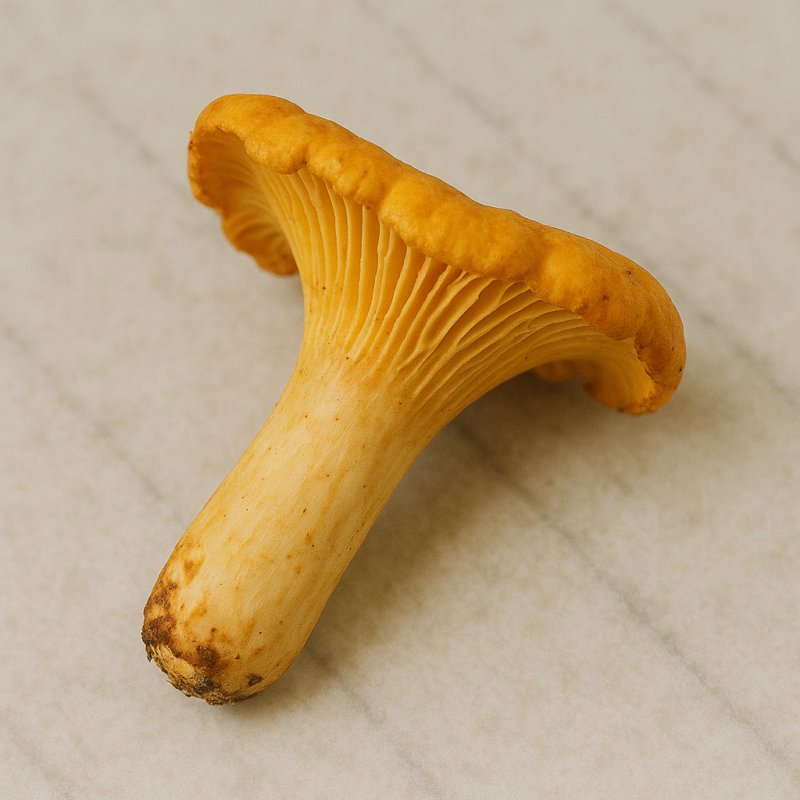
Availability and types of chanterelles
Chanterelles are popular wild mushrooms known for their fruity scent and peppery taste. They are easily recognized by their bright yellow to orange color and the downward-running, slightly folded gill-like ridges which are actually fine folds. To help you get familiar, here you will learn when and where chanterelles are found, how they are harvested, which species exist and what to watch for when buying them – clear and concise.
Availability: when are chanterelles available?
Chanterelles grow in nature and are not typical cultivated mushrooms like button mushrooms. Therefore they are mainly seasonal.
- Season: in Central Europe the main season usually begins in June and can last until October. The best time is often July to September, when it is warm and it rains occasionally.
- Weather: chanterelles like a combination of warmth and moisture. After rainfall they often emerge from the ground within a few days. Extended dry periods reduce availability.
- Regions: in Germany, Austria and Switzerland they can be found in many forests. Larger quantities for trade also come from Eastern Europe and Scandinavia, where extensive, near-natural forests exist.
Outside Europe, chanterelles sometimes come from North America or Eastern Europe, depending on trade routes. - Availability in trade: fresh chanterelles are available during the season at weekly markets and in many supermarkets. Outside the season they are often available as dried or frozen products.
Origin and habitat
Chanterelles live in symbiosis with trees. That means they help the tree take up nutrients from the soil and in return receive sugars from the tree. Therefore they grow in certain forests and are hard to cultivate artificially.
