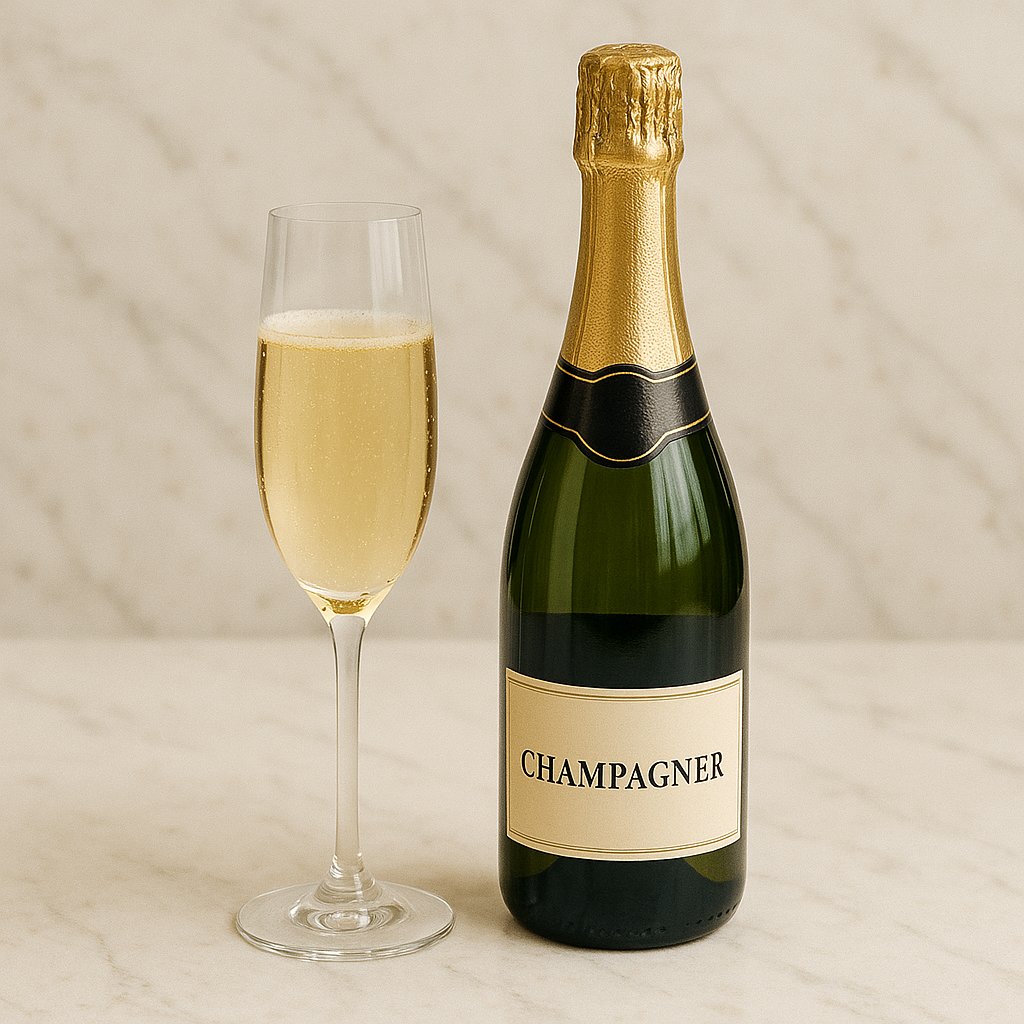
Champagne – Availability and types
Origin: Champagne comes only from a specific area in France called Champagne. You can think of it like protected names: only chocolate from a certain region may sometimes be called differently – and only sparkling wine from Champagne may be called “Champagne”. This rule protects the uniqueness and the good reputation of this beverage.
Growing areas: The vineyards lie in the northern Champagne region, about an hour's drive east of Paris. The weather there is cooler than in many other wine regions, and this helps the grapes retain acidity. The vineyards are divided into many small towns and hills. Large well-known places are Épernay and Reims, but there are hundreds of small villages with vineyards.
Available types and variants – simply explained: Champagne comes in several kinds. You can compare it to different kinds of apples processed into juice – depending on which grapes you use and how you blend them, the result tastes different.
- By grape varieties:
- Chardonnay – makes Champagne fresh and often lemony. If only Chardonnay is used, it is called Blanc de Blancs (white from white grapes).
- Pinot Noir – brings body and red fruit aromas. If only red grapes are used (but without color), it is called Blanc de Noirs (white from black grapes).
- Pinot Meunier – rounds out the flavor and makes Champagne approachable and fruity.
- By vintage:
- Non-vintage (NV) – this is the most common type; different years are blended so that the taste remains similar.
- Vintage – only grapes from a particularly good year; these bottles are often more expensive and change more over time.
- By sweetness level:
- Brut – dry (not sweet), very popular.
- Extra Brut – even drier.
- Demi-Sec – noticeably sweeter, often for dessert.
- Rosé Champagne: It has a delicate pink color because part of red grapes is processed or some red wine is added. It often tastes fruitier.
- Large houses vs. grower producers: There are well-known large brands (Maisons) that produce a lot of Champagne, and smaller growers who produce only a few bottles. Large houses are easy to find everywhere; grower Champagne can be more special and not available everywhere.
Availability: Champagne is available worldwide in supermarkets, specialist shops, restaurants and online. Prices range from inexpensive bottles for special occasions to very expensive vintage bottles. If you want something similar but cheaper, there are alternatives like Prosecco (from Italy), Cava (from Spain) or Crémant (French sparkling wine from other regions). These may not be called “Champagne” because they come from elsewhere, but many are also very good.
In summary: Champagne comes only from Champagne, is made from a few grape varieties and is available in many variants – dry or sweet, white or rosé, from large houses or small growers. It is easy to find, but prices and tastes can vary greatly, just as shoes or phones have different models for different needs.