Availability and types of celery
Celery is a very well-known plant found in many kitchens around the world. Originally celery comes from Europe and the eastern Mediterranean. There wild variants grew that people gathered long ago and later cultivated intentionally. Today celery is grown almost everywhere it is not too hot or too dry.
Where celery grows
Celery likes fresh, nutrient-rich soils and sufficient water. Therefore it is widely grown in countries such as Germany, France, Italy, the Netherlands and parts of the USA. In warmer countries celery is often grown in higher, cooler regions. In fields celery shows green leaves and long stalks or round roots, depending on the variety.
Celery likes fresh, nutrient-rich soils and sufficient water. Therefore it is widely grown in countries such as Germany, France, Italy, the Netherlands and parts of the USA. In warmer countries celery is often grown in higher, cooler regions. In fields celery shows green leaves and long stalks or round roots, depending on the variety.
Main types of celery
There are several types of celery you can buy in the shop or at the market. The three main ones are:
There are several types of celery you can buy in the shop or at the market. The three main ones are:
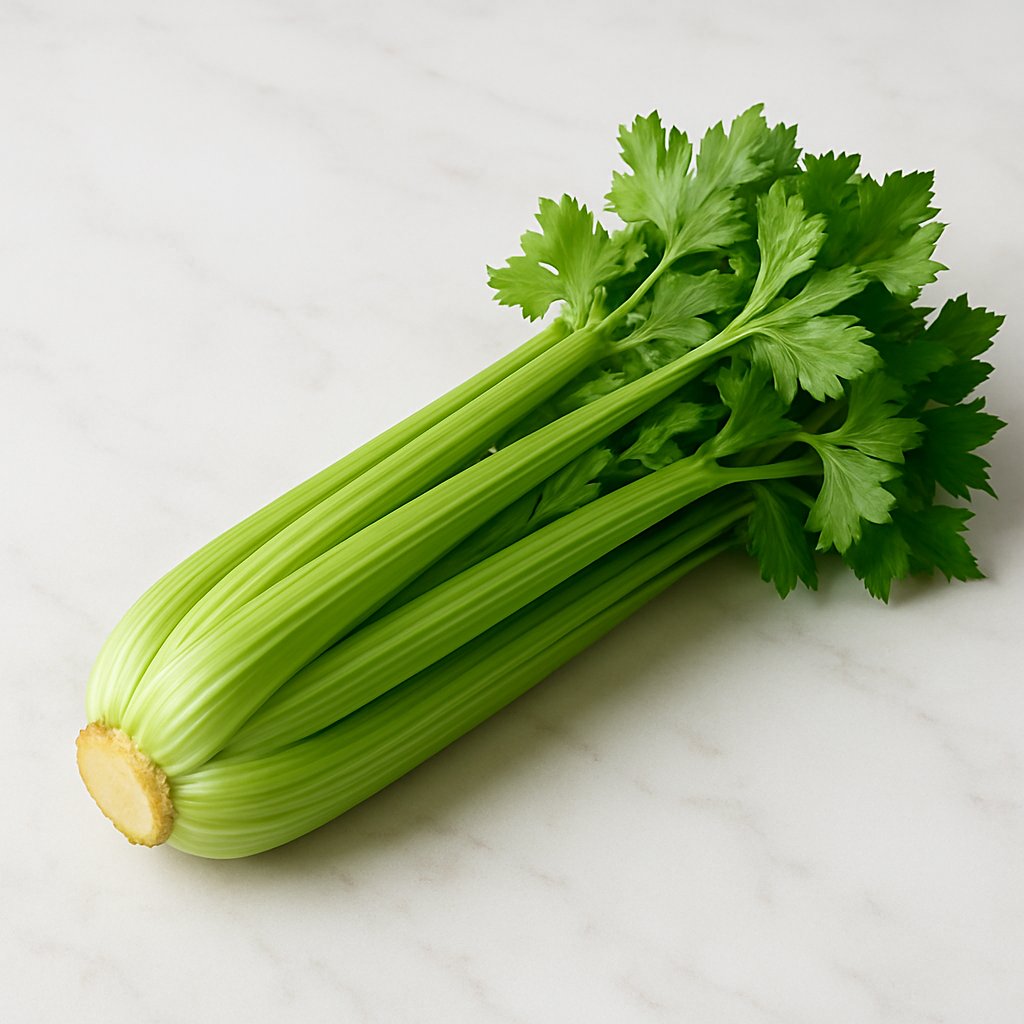
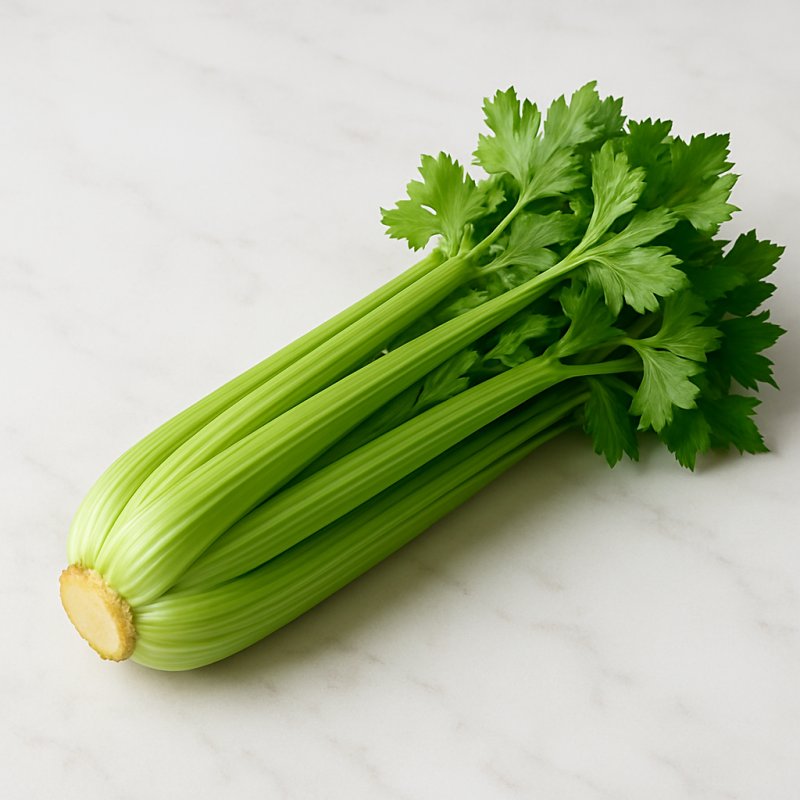
- Stalk celery (stalk celery, also called blanched celery): This is the variety with long, crunchy stalks that are often eaten raw or used in salads, soups and for dipping. The stalks are fibrous but have a fresh, slightly peppery flavor. You can also eat the green leaves on top or use them for seasoning.
- Celeriac (root celery): This variety forms a round, knobbly root that grows underground. On the outside it is somewhat rough and brown, but inside it is firm and pale. Celeriac is usually cooked, roasted or baked, for example in stews or puréed as a side dish. It tastes aromatic and somewhat nutty.
- Leaf celery: This is a smaller, herb-like variety where mainly the leaves and thin stalks are used. Leaf celery tastes strong and is well suited as an herb substitute for seasoning soups, sauces or salads.
Variants and cultivar names
Within these categories there are many cultivars with different names. Some varieties are specially bred to have particularly long stalks, round growth or very aromatic taste. Examples include varieties like "Pascal" for stalk celery (popular for its long, thick stalks) or "Vertus" for celeriac (a round, firm root). In the supermarket you often see packaged stalk celery, whole roots or fresh bunches with leaves.
Within these categories there are many cultivars with different names. Some varieties are specially bred to have particularly long stalks, round growth or very aromatic taste. Examples include varieties like "Pascal" for stalk celery (popular for its long, thick stalks) or "Vertus" for celeriac (a round, firm root). In the supermarket you often see packaged stalk celery, whole roots or fresh bunches with leaves.
Season and availability
Celery is available year-round in many regions because different countries harvest at different times. In Europe celery is freshest in autumn and winter, when it is harvest season. Nevertheless supermarkets import celery from warmer countries so that it is also offered in spring and summer. Fresh celery smells pleasant and feels firm — that is a good sign.
Celery is available year-round in many regions because different countries harvest at different times. In Europe celery is freshest in autumn and winter, when it is harvest season. Nevertheless supermarkets import celery from warmer countries so that it is also offered in spring and summer. Fresh celery smells pleasant and feels firm — that is a good sign.
Simple example for comparison
Think of celery like apples: there are many types (Granny Smith, Gala, etc.), and each has its own taste and shape. Likewise celery comes as stalk, celeriac and leaf celery — all belong to the same family but look different and are used differently.
Think of celery like apples: there are many types (Granny Smith, Gala, etc.), and each has its own taste and shape. Likewise celery comes as stalk, celeriac and leaf celery — all belong to the same family but look different and are used differently.
In summary: celery is widespread and available in various forms. Whether crunchy stalks, aromatic roots or flavorful leaves — there is a suitable celery variant for almost every dish, and thanks to imports and local cultivation it is available in shops almost year-round.