Menu & categories

Cayenne pepper

Hot spice powder made from dried chili peppers

Wiki about cayenne pepper Nutri-Score B Vegan Yes Gluten-free Yes Lactose-free Yes Nut-free Yes
NUTRITION / 100 g
318 kcal 12.0 g Protein 56.6 g Kohlenhydrate 17.3 g Fett

Introduction

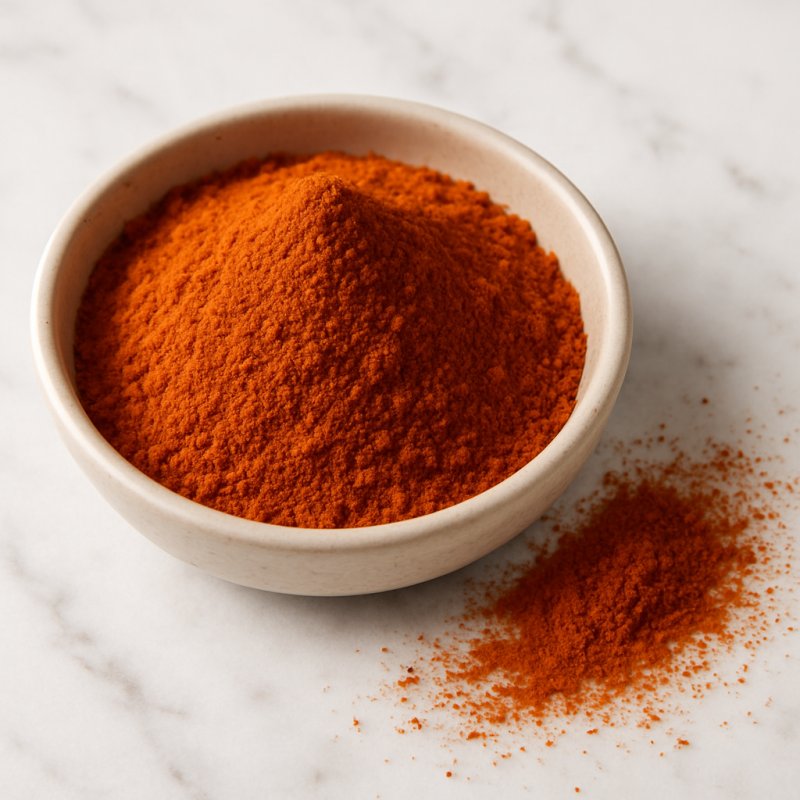
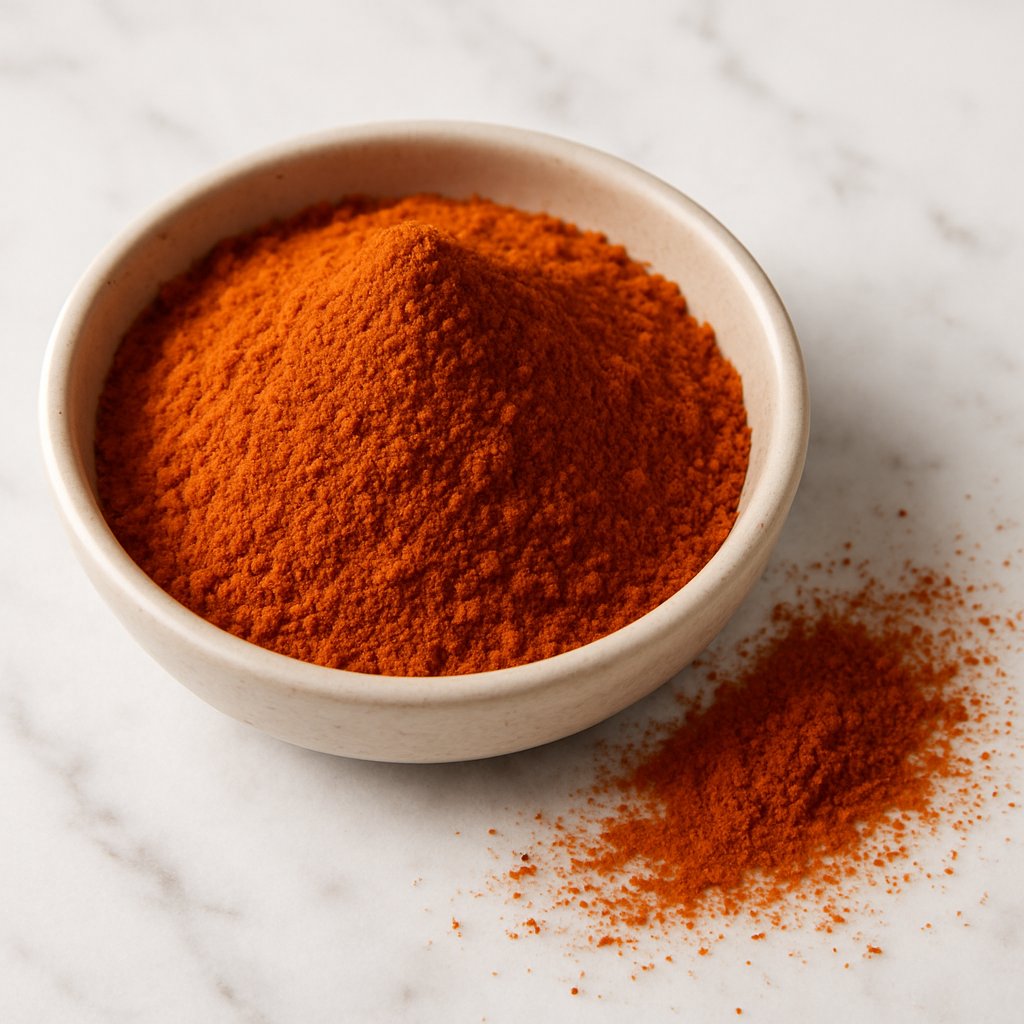
Ground cayenne pepper in a small bowl
I still clearly remember the first holiday when cayenne pepper turned my kitchen upside down. A small market restaurant served a stew that seemed so simple yet awakened my sense of taste within seconds. Since then cayenne pepper has become a permanent fixture in my spice rack—not out of principle, but because it enlivens dishes without dominating them.

I love the clear, sharp note of this ground chili pod. Unlike more complex blends, cayenne pepper delivers a direct, controllable hit of heat that can be measured and varied. A pinch in tomato sauce, a whisper over roasted vegetables or a small knife-tip in chocolate — and the taste experience noticeably lifts. A colleague of mine swears by stirring a tiny amount into his breakfast yogurt; I tried it and was surprised how well sweet and spicy harmonize.

A few practical details help when handling it: cayenne pepper usually consists of dried, finely ground chili peppers and is relatively fiery, so it's better to start with restraint. It blends excellently into oils and marinades, dissolves quickly in liquids and distributes its heat evenly. For sensitive noses or children's dishes I often replace it with milder chilies or drastically reduce the amount.

  • Taste: hot, clear, slightly fruity
  • Use: soups, sauces, marinades, baked goods, beverages
  • Storage: dark, dry, airtight – this preserves the heat
What fascinates me most about cayenne pepper is its versatility: it can mellow a dish and at the same time fire it up, depending on the dosage. At a dinner with friends I once served a chili foam starter; the surprise in the room was priceless when the foam gently tickled the tongue and later the warmth crept in. Moments like that make cooking come alive for me.

In conclusion: cayenne pepper is not a loud spice that demands attention, but a clever enhancer of flavors. Used with a light touch, it transforms everyday food into memorable dishes while remaining the quiet, fiery companion in the background.

Availability & types

Availability and types of cayenne pepper

Cayenne pepper is a hot spice made from dried, ground chili peppers. Its origin lies in Central and South America, where people long ago cultivated various chilies and used them as spice and medicine. Today cayenne pepper is popular worldwide and easy to find in many kitchens.

Where is cayenne pepper grown?
Cayenne chiles grow best in warm, sunny regions. Important growing areas include:

  • Latin America: origin of many chili varieties; there is great diversity here.
  • Asia: countries like India and China grow a lot of chili, often for export and local use.
  • Africa: in parts of Africa chiles thrive and are part of many dishes.
  • Europe: cayenne is also grown in warmer regions and in greenhouses, for example in Spain.
Imagine cayenne plants as sun-lovers: the warmer and sunnier it is, the better they grow and the more fruit they produce.

What varieties and variants are there?
Cayenne pepper is not just a single powder — there are different variants that vary in heat, color and flavor. Some are very hot, others milder. Here are the main types, simply explained:

  • Pure cayenne powder: this is the classic red powder made from dried cayenne chiles. It typically has an even heat and a fruity, slightly smoky aroma.
  • Coarsely ground chili flakes: instead of finely ground powder there are also crushed pieces of the dried pod. These flakes give small, intense bursts of heat when cooking or on pizza.
  • Milder cayenne: for people who do not like strong heat, sometimes milder-bred varieties are offered or the powder is mixed with paprika to reduce the heat.
  • Very hot variants: there are also cultivars and blends that are extra hot. They often contain higher capsaicin levels (that's the compound that causes heat). Such variants should be used sparingly.
  • Organic and Fairtrade products: some cayenne products are produced organically (organic) or traded fairly. That means the plants were cultivated without certain chemicals or the farmers received a fair wage.
How do you find cayenne pepper in the store?
Cayenne pepper is available in supermarkets, markets, spice shops and online. It is usually sold in small jars or tins. Pay attention to the best-before date, because the aroma fades over time. Fresher powder smells stronger and tastes better.

A simple tip: if you're unsure which heat level you like, start with a milder variant or buy a small pack. Use sparingly, because a little cayenne often suffices to give a dish a lot of flavor.

In summary: cayenne pepper originates from the Americas, now grows in many warm regions of the world and is available in various forms and heat levels. Whether finely ground, coarsely flaked, mild, extra hot or as an organic product — there is a variant for every taste, and cayenne is usually easy to find in stores.
Details & nutrition

Property Value
Unit g
Calories per 100 318
Protein per 100 12.0
Carbohydrates per 100 56.6
Sugar per 100 10.3
Fat per 100 17.3
Saturated fat per 100 3.3
Monounsaturated fat 2.8
Polyunsaturated fat 8.7
Fiber per 100 27.2
Vitamin C (mg) per 100 76
Vitamin D (IU) per 100 0
Calcium (mg) per 100 148
Iron (mg) per 100 7.8
Nutri-Score B
CO₂ footprint 2.0
Origin Originally from Central and South America, nowadays mainly cultivated in India, China and Africa
Gluten-free Yes
Lactose-free Yes
Nut-free Yes
Vegan Yes
Note Cayenne pepper is ground hot chili and, due to its intense heat, should be used sparingly. Nutritional values refer to 100 g of pure spice powder; in practice, much smaller amounts are consumed.

Technical & scientific information

Cayenne pepper refers to a fine, hot spice obtained mainly from dried and ground fruits of Capsicum species, particularly Capsicum annuum and Capsicum frutescens. Botanically these plants belong to the family Solanaceae. Cayenne pepper is characterized by its red color, fine texture and pronounced heat, which is largely determined by a group of lipophilic alkaloids, the capsaicinoids. The most important of these is capsaicin, complemented by dihydrocapsaicin, nordihydrocapsaicin, homocapsaicin and homodihydrocapsaicin.

Chemical composition and constituents
Capsaicin (chemically: trans-8-methyl-N-vanillyl-6-nonenamide) is the primary pain- and heat-sensitive molecule and is responsible for the burning sensation in the mouth and thermal perception. Total capsaicinoid concentration varies by cultivar, growing conditions and maturity, typically in the range of a few milligrams to several hundred milligrams per gram of dried material. In addition to capsaicinoids, cayenne pepper contains secondary plant compounds such as carotenoids (e.g. capsanthin, capsorubin), flavonoids, vitamin C as well as fiber and small amounts of vitamins and minerals. Essential oil content is low; the characteristic smell arises mainly from volatile esters and aldehydes.

Nutritional values
Dried cayenne pepper provides energy per 100 g, although typical serving sizes are much smaller (a teaspoon ≈ 2–3 g). It contains fiber, small amounts of protein and fat as well as minerals such as potassium, magnesium and iron. Vitamin C content is reduced by drying, but remains present in trace amounts. Because of the intense aroma and heat, cayenne pepper is used in small amounts, so the nutritional contribution to macronutrients is typically negligible.

Processing and quality characteristics
Production includes harvesting ripe red fruits, drying (sun-drying or controlled mechanical drying), possibly removing stems and seeds and grinding to powder. Particle size affects grindability and flavor release. Commercial cayenne powder can be ground from whole fruits or made from flesh without seeds; seeds and fruit walls each contain different amounts of capsaicinoids. Quality indicators are color (intense red to orange), uniform texture, fresh smell and a defined heat level that can be expressed in Scoville Heat Units (SHU). For standardization, analyses using high-performance liquid chromatography (HPLC) are used to quantitatively determine capsaicinoid profiles.

Physiological and health aspects
Capsaicin binds to the Transient Receptor Potential Vanilloid 1 (TRPV1) receptor in sensory nerves, leading to the perception of heat and pain. At low doses capsaicin can affect gastrointestinal motility and slightly increase energy expenditure. Clinically capsaicin is used topically for pain relief in neuropathic pain by desensitizing sensory fibers. At higher oral doses cayenne pepper can cause gastrointestinal irritation; sensitive individuals may experience heartburn, diarrhea or nausea. There is evidence of antimicrobial and antioxidant properties of extracts, although clinical relevance remains subject to research.

Safety, storage and use
Cayenne pepper should be stored dry, protected from light and in airtight containers to minimize loss of aroma and pigments. Avoid contact with eyes and mucous membranes; when processing in larger quantities protective gloves and, if necessary, respiratory protection are recommended. Culinarily cayenne pepper is used as a spice in numerous cuisines to add heat and color. Industrially it is also used in spice blends, sauces and as part of stimulus formulations for animal deterrent products. Scientific studies continue to investigate spectra of effects, bioavailability of capsaicinoids and potential health benefits and risks in nutrition and medical contexts.

Wiki entry for: cayenne pepper
Active now: 20 visitors of which 2 logged-in members in the last 5 minutes