Menu & categories

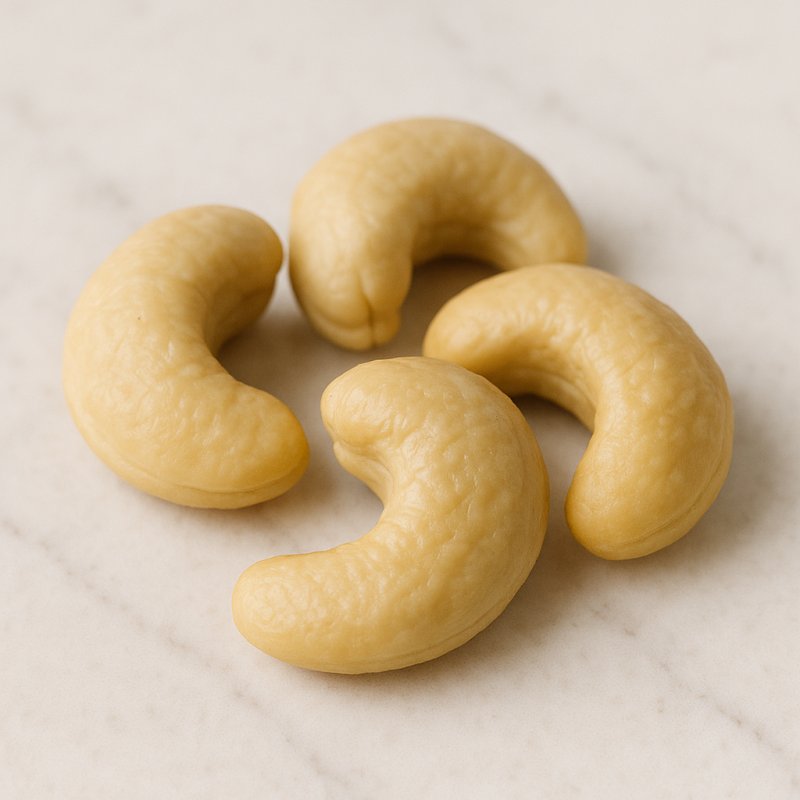
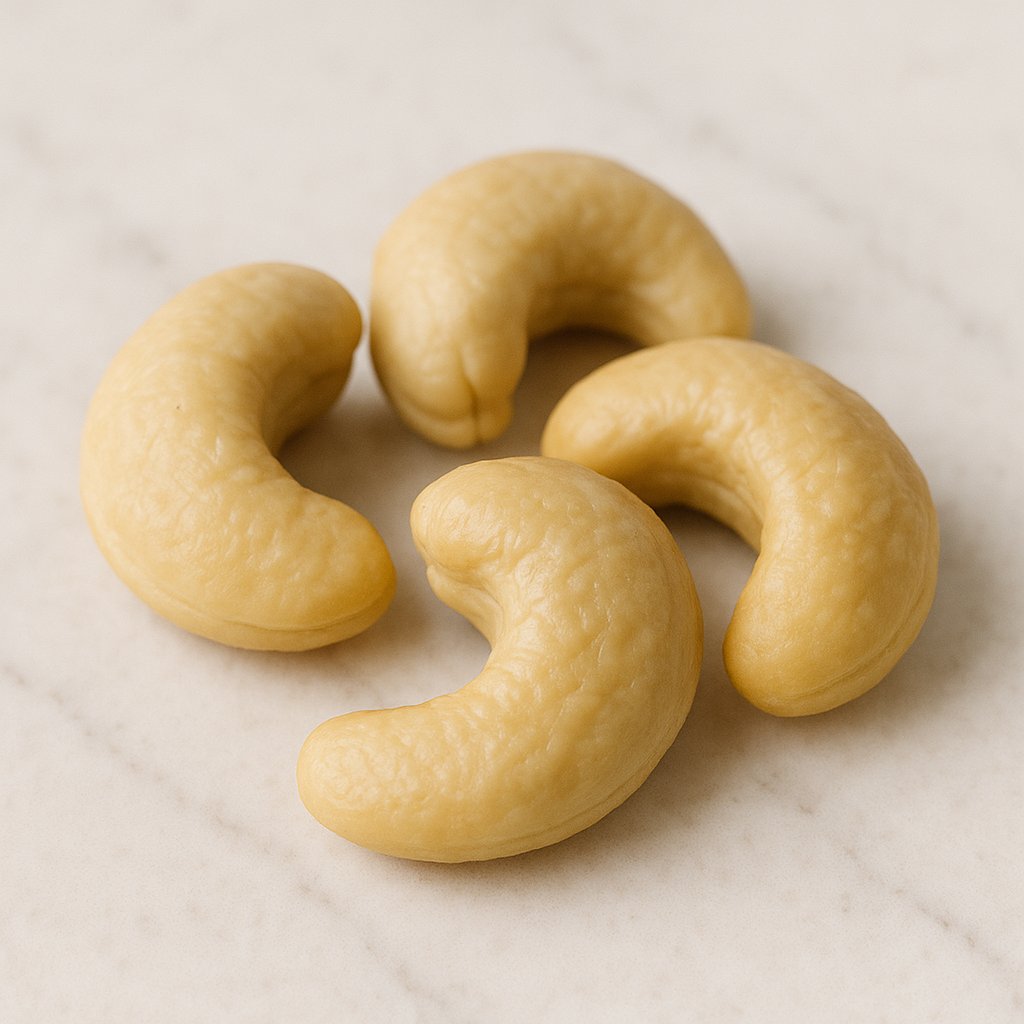
Cashew nut

Mildly nutty kernel with a high proportion of unsaturated fatty acids.

Wiki about cashew Nutri-Score C Vegan Yes Gluten-free Yes Lactose-free Yes Nut-free No
NUTRITION / 100 g
553 kcal 18.2 g Protein 30.2 g Kohlenhydrate 43.9 g Fett

Introduction

Raw cashew nuts
I still clearly remember the first time I tried to crack a cashew and had to realize that my idea of "raw" and the reality on the market are two very different things. Since then I have developed a small passion for this curved nut, which is more than just a snack. The cashew grows at the end of the cashew apple and has a surprisingly complex history, from tropical plantations to my kitchen table.

Cashew nuts have a mild, slightly sweet taste and a buttery texture that works wonderfully in many dishes. I like to use them:

  • Whole or chopped as a snack or salad topping.
  • Roasted as a flavorful ingredient for curries and stir-fries.
  • As a base for vegan creams, sauces and cheese alternatives, because they puree so smoothly.
A colleague of mine swears by homemade cashew cream as a secret weapon against dull vegetable platters, and I can only confirm that. Nutritionally, cashews are rich in unsaturated fatty acids, magnesium, copper and plant protein, but they are also calorie-dense, so moderation is wise.

Processing is important: cashews sold as "raw" are usually already treated, because the raw shell contains an irritating substance. Therefore it is advisable to buy cashews intended for raw consumption that are specifically labeled as such or already roasted. You should also pay attention to origin and fair production conditions, because processing is labor-intensive.

I've picked up some practical tips over the years. Store cashews cool and dry; they last longer in the fridge. For homemade nut milk I soak the nuts briefly to make the mixture creamier. And when baking I often spare myself the trouble of chopping by leaving half whole and roughly chopping the other half.

Cashew nuts are impressive in their versatility and at the same time easy to use in everyday life. They bring warmth to curries, creaminess to desserts and a tart crunch to savory dishes. That's why they remain a constant companion in my kitchen.

Availability & types

The cashew nut originally comes from the tropical rainforest of Brazil. In the past cashew trees only grew there, but people brought them to other warm countries hundreds of years ago. Today cashew trees grow mainly in warm, humid regions around the equator, because the trees like lots of sun, warmth and rain — similar to many fruit trees in warm countries.


Important growing areas

  • Vietnam: A large country in Southeast Asia that today exports many cashews. Many nuts are also processed there (roasted and packaged).
  • India: Especially in states like Maharashtra, Goa and Kerala. India is both a producer and a processor.
  • West Africa: Countries such as Ivory Coast, Nigeria and Benin grow many cashews.
  • Brazil: The origin — there is still cultivation here, but not as much as in Vietnam or India.
  • East Africa: Countries like Mozambique and Tanzania also grow cashews.
In addition to the nut, cashew trees bear a fleshy fruit called cashew apples. These apples are juicy and sweet but are often not transported far because they spoil quickly. The nut sits beneath the apple in a hard shell. The shell contains an irritating substance, so it is normally removed in factories before the nuts are ready to eat.


Available types and variants

  • Whole cashews: The whole nut is the most attractive and often more expensive. It is enjoyed as a snack or used decoratively on dishes.
  • Halves and broken pieces: Often called “pieces”. They are cheaper and used in baked goods or muesli.
  • Blanched (skinless): The nuts are briefly heated so that the thin brown skin can be removed. This makes them appear lighter and taste milder.
  • Roasted and salted: Many cashews are roasted, sometimes with salt or spices. This changes the taste — similar to popcorn vs. fresh corn.
  • Raw: “Raw” often only means they have not been further roasted; but they were usually treated to remove the shell. People like to use raw cashews for nut butter or vegan desserts.
  • In cans or as paste: Cashew butter, cashew cream and cashew milk are processed products you can find in many supermarkets.
  • Organic vs conventional: “Organic” means fewer or no chemical pesticides were used during cultivation. This is important for some people.
Availability
Cashews are available year-round in stores and online. Freshly harvested nuts are seasonal — after harvest the nuts are dried and stored, which is why you can buy them at any time. Whole, blanched cashews are often more expensive than broken pieces or cashew butter, because shelling and peeling are labor-intensive.

In many countries small farmers work on plantations, so cashews are often seen as a well-traveled product: the nut starts on a farm, is processed in factories and finally ends up as a snack in supermarkets. The next time you eat a cashew, you can imagine how many hands and stages were needed before it reached your plate.
Details & nutrition

Property Value
Unit g
Average weight per piece 1.5
Calories per 100 553
Protein per 100 18.2
Carbohydrates per 100 30.2
Sugar per 100 5.9
Fat per 100 43.9
Saturated fat per 100 7.8
Monounsaturated fat 23.8
Polyunsaturated fat 7.8
Fiber per 100 3.3
Vitamin C (mg) per 100 0.5
Vitamin D (IU) per 100 0
Calcium (mg) per 100 37
Iron (mg) per 100 6.7
Nutri-Score C
CO₂ footprint 4.5 kg CO2e/kg
Origin India/Vietnam (common), depending on the batch
Gluten-free Yes
Lactose-free Yes
Nut-free No
Vegan Yes
Note Depending on processing, traces of peanuts and other tree nuts may be present; nutritional values can vary depending on roasting/salting.

Technical & scientific information

The cashew nut (seed of Anacardium occidentale) is an oil-rich food with a characteristic composition, multiple processing steps and notable nutritional properties. Botanically it is the seed that sits on the underside of the cashew apple fruit. In commerce cashews appear shelled and often roasted or salted; seeds sold as raw are in many cases already thermally pretreated to remove toxic substances from the shell.

Chemical composition and macronutrients: Cashews are energy-dense and provide predominantly fat, with lesser amounts of carbohydrates and protein. The fat fraction consists mainly of monounsaturated fatty acids (particularly oleic acid) and a share of polyunsaturated fatty acids (primarily linoleic acid), while the saturated fatty acid proportion is comparatively low. Proteins in cashews contain a broad amino acid profile but show relative limitations in certain essential amino acids compared to animal sources. The carbohydrate fraction includes both readily digestible sugars and dietary fiber.

Vitamins, minerals and secondary plant compounds: Cashews are a good natural source of minerals such as copper, magnesium, manganese, phosphorus and zinc. Vitamins are present in smaller amounts; B vitamins and vitamin K are present, while the vitamin E content is moderate. Additionally, cashews contain phytosterols, phenolic compounds and tocopherols, which possess antioxidant properties and can influence fat stability.

Anti-nutrients and allergens: Like many nuts, cashews contain phytic acid and oxalates, which can partially reduce mineral absorption. Clinically important are the specific allergens (e.g. Ana o 1, Ana o 2, Ana o 3) which in sensitive individuals can trigger severe allergic reactions and show cross-reactivity with other tree nut and peanut allergens. The unprocessed shell also contains phenolic substances (cashew nut shell liquid, CNSL) with anacardic acids and cardanol compounds; these can be skin irritants and require controlled removal processes.

Processing and food safety: Industrial processing includes harvesting, drying, mechanical or manual cracking of the hard shell and thermal treatments such as steam shelling, roasting or short hot-air treatment. The goal is to eliminate toxic shell constituents, reduce microbial load and achieve the desired sensory properties. CNSL is used technically, for example in resins and lubricants, so safe separation of food and industrial processes is important. Heat treatment alters proteins and lipids and can have both beneficial effects for shelf life and hygiene and undesirable Maillard reaction products.

Shelf life and storage: Due to the high proportion of unsaturated fatty acids, cashews are susceptible to lipid oxidation and thus rancidity. Preservative measures are low temperature, reduced oxygen exposure (vacuum or inert gas), dry storage conditions and opaque packaging. Natural or added antioxidants and refrigeration extend sensory shelf life.

Health aspects: When consumed in moderation, cashews can show metabolically positive effects, such as favorable changes in lipid profile, contributions to mineral supply and antioxidant effects from secondary plant compounds. Because of their energy density, portion control is important to avoid unwanted calorie intake. Allergies and potential contamination with mold toxins under improper storage are relevant risks that can be minimized by proper processing and storage.

In summary, cashew nuts are nutrient- and lipid-rich seeds with specific benefits and risks: they provide important minerals and unsaturated fats but require controlled processing because of skin-irritating shell constituents and carry allergenic potential in sensitive individuals. For safe quality, hygiene management, appropriate thermal steps and correct storage are decisive.

Wiki entry for: cashew
Active now: 6 visitors of which 2 logged-in members in the last 5 minutes